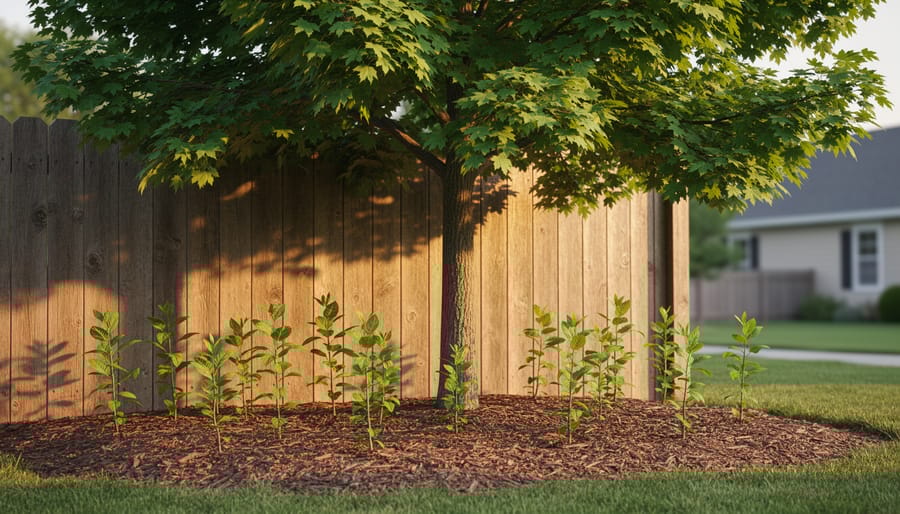
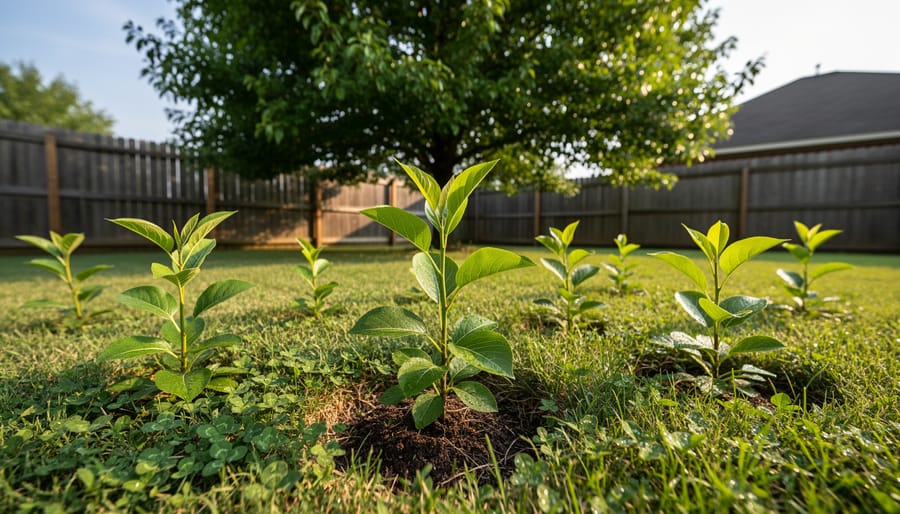
Check your property line trees first—many invasive species like tree-of-heaven, Norway maple, and Russian olive were originally planted as ornamental trees decades ago and spread aggressively through root suckers or wind-dispersed seeds. Walk your garden perimeter and look for saplings sprouting far from parent trees, unusually dense seedling clusters beneath mature specimens, or trees with berries that birds eagerly consume and distribute throughout your neighborhood.
Remove young invasive trees immediately by digging out the entire root system when soil is moist, ensuring you extract roots at least 12 inches deep to prevent resprouting. For established specimens, cut the trunk near ground level and immediately apply concentrated herbicide to the fresh stump surface within minutes—waiting even an hour dramatically reduces effectiveness as the cut surface seals.
Identify invasive tendencies before they become your problem by researching any unfamiliar tree volunteers in your landscape and checking your local invasive species list before purchasing new trees. Many innocent-looking seedlings grow into ecological nightmares that choke out native vegetation, alter soil chemistry, and create maintenance headaches for decades.
If you’ve inherited a property with mature invasive trees, you’re not alone and there’s no judgment here—countless gardeners face this challenge. Understanding which trees threaten your local ecosystem empowers you to make informed decisions about removal priorities, replacement natives, and preventing future spread. Taking action now protects your garden’s diversity and your community’s natural spaces for years to come.
What Makes a Tree a ‘Weed Tree’?
The Warning Signs in Your Yard
So how do you know when that pretty tree you planted five years ago has become a neighborhood nuisance? The signs are usually pretty obvious once you know what to look for.
The most telltale indicator is finding baby trees popping up everywhere. I’m not talking about one or two seedlings near the parent tree—that’s normal. We’re talking about dozens, sometimes hundreds, of volunteers sprouting throughout your garden beds, along fence lines, in your lawn, and yes, even in your neighbors’ yards. If you’re constantly yanking out seedlings that look suspiciously like that tree in your backyard, that’s your first red flag.
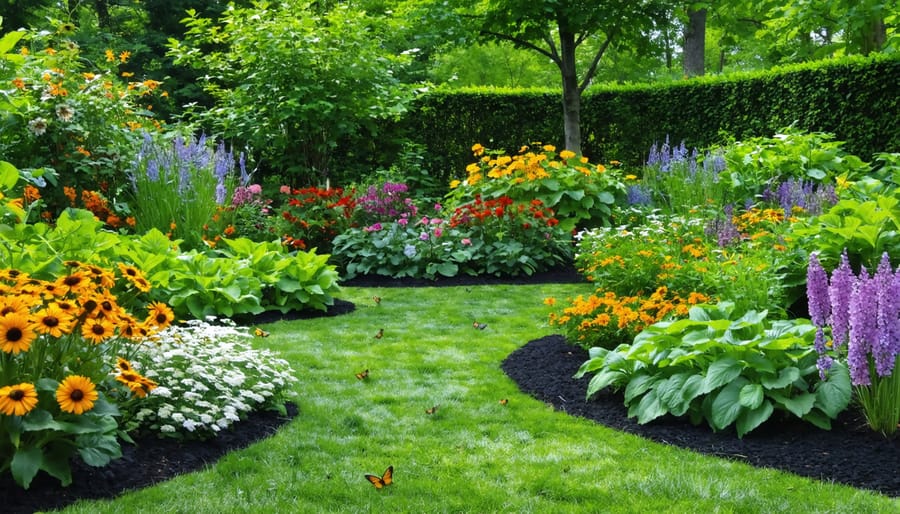
Take a walk around your property and really observe what’s happening. Are those volunteer seedlings starting to crowd out your native wildflowers or shade out other plants? Do you notice fewer butterflies visiting than in previous years? Native plants support local ecosystems, and when invasive trees take over, they disrupt these delicate relationships.
Another warning sign is when tree management becomes a never-ending chore. If you’re spending every weekend removing seedlings, or if those young volunteers grow so quickly they’re suddenly three feet tall despite your best efforts, you’re fighting a losing battle.
Perhaps the most concerning indicator is discovering seedlings in wild areas beyond your property—local parks, nature preserves, or undeveloped land nearby. At that point, your ornamental tree has officially escaped cultivation and is impacting the broader environment. That’s when it’s time to consider removal and replacement with better-behaved alternatives.
The Most Common Invasive Weed Trees (And Why They’re Still Being Planted)
Bradford Pear: The Pretty Tree with an Ugly Secret
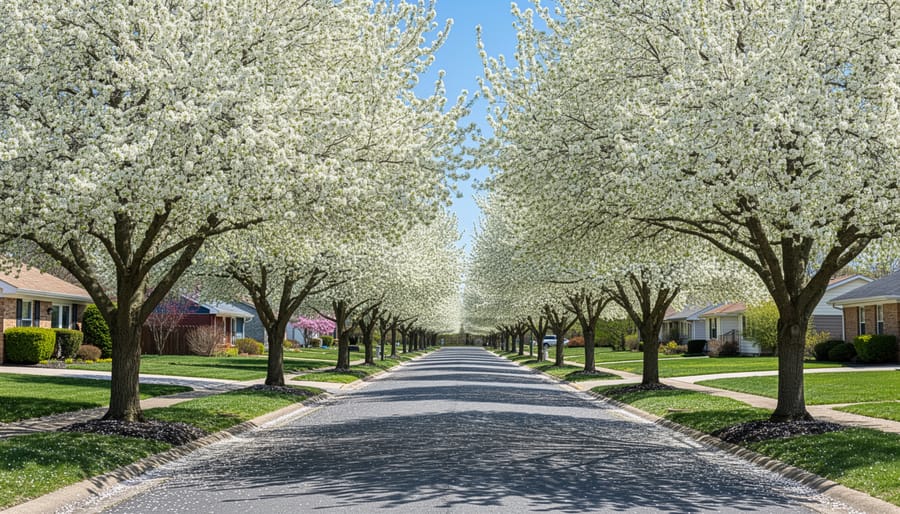
You’ve probably seen Bradford pears lining suburban streets and parking lots, their spectacular white spring blooms announcing the arrival of warmer weather. For decades, landscape architects and homeowners adored this tree for its tidy pyramidal shape and stunning floral display. Here’s the problem: what was once a gardening darling has become an ecological disaster.
Bradford pears were originally bred to be sterile, but nature had other plans. Different cultivars planted near each other cross-pollinate freely, producing fertile seeds that birds eagerly spread across the countryside. Within twenty years of that first planting wave, wild Bradford pear offspring began colonizing fields, forests, and roadsides with alarming speed. These trees grow rapidly, forming dense thickets that choke out native vegetation and provide little value to wildlife.
Beyond their invasive tendencies, Bradford pears have a structural Achilles heel. Their branches grow at narrow angles, creating weak connections that split apart during storms, ice, or even gentle winds. Master gardener Tom Reinhardt shared with me that he’s removed dozens of these trees after they’ve split down the middle, often damaging property in the process.
If you have a Bradford pear, consider replacing it with native alternatives like serviceberry or flowering dogwood. Your local ecosystem will thank you, and you’ll avoid the inevitable cleanup when those branches fail.
Tree of Heaven: The Fast-Growing Troublemaker
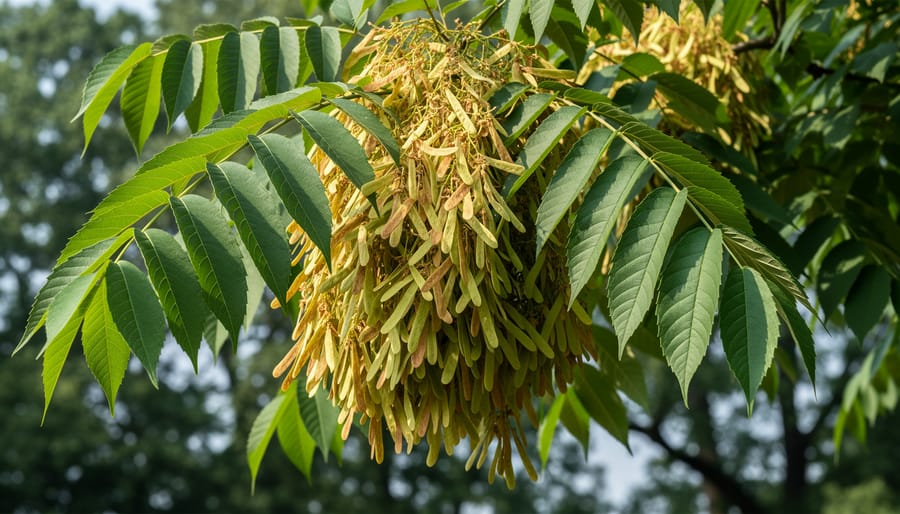
If you’ve seen a tree shoot up seemingly overnight in your yard, there’s a good chance it’s Tree of Heaven (Ailanthus altissima). I once watched a neighbor’s specimen grow nearly six feet in a single season—impressive, until you understand the havoc it wreaks on your garden ecosystem.
This Chinese native earned its heavenly name from its towering height, but there’s nothing divine about its behavior. Tree of Heaven produces allelopathic chemicals through its roots and decomposing leaves, essentially poisoning the soil around it to eliminate competition. Your beloved perennials and vegetables simply can’t compete with this chemical warfare.
The spread happens alarmingly fast. A single tree sends out aggressive root suckers that pop up dozens of feet away, creating dense thickets. Cut one down, and it responds by sending up multiple shoots from the stump and roots—often more vigorous than the original.
What makes removal so challenging? The extensive root system can regenerate from even tiny fragments left in the soil. Herbicide treatment requires patience and persistence, typically applied to cut stumps or carefully to new growth. Many gardeners find success with repeated cutting combined with targeted chemical treatment during the growing season.
The key is catching it early, before that root system becomes established and turns your removal project into a multi-year battle.
Norway Maple: The Shade Tree That Shades Out Everything Else
I’ll be honest with you—when I first started learning about invasive trees, I was shocked to discover that Norway Maples were on the list. They’re everywhere in older neighborhoods, lining streets with their beautiful canopy of leaves. But here’s the problem: that gorgeous, dense shade comes at a serious cost to your garden’s ecosystem.
Norway Maples create such thick shade that practically nothing can grow beneath them. While our native Sugar Maples allow dappled sunlight to reach the forest floor, supporting wildflowers and native plants, Norway Maples form an impenetrable canopy. Their shallow, aggressive roots also outcompete other plants for water and nutrients, leaving you with bare, compacted soil underneath.
So how do you identify one? Look for leaves with pointed lobes and a milky sap that oozes from the leaf stem when you break it—that’s your telltale sign. In fall, they turn yellow rather than the brilliant oranges and reds of native maples. The bark on mature trees develops narrow, interlacing ridges.
If you’ve inherited a Norway Maple with your property, don’t feel discouraged. Understanding what you’re working with is the first step toward making informed choices about your landscape’s future and supporting native biodiversity in your garden.
Mimosa Tree: Fragrant Flowers, Persistent Problems
The mimosa tree might win beauty contests with its pink, silk-like blooms and delicate, fern-like foliage, but don’t let its charming appearance fool you. While these fragrant flowers attract butterflies and hummingbirds throughout summer, the tree comes with serious baggage that most gardeners discover too late.
Each mimosa produces thousands of seeds annually, and they remain viable in soil for years, creating a persistent seed bank that springs to life whenever the ground is disturbed. I’ve talked with gardeners who removed their mimosa trees only to battle dozens of seedlings for years afterward. The trees grow incredibly fast—sometimes six feet in a single season—and they’re particularly aggressive in colonizing disturbed areas like roadsides, forest edges, and abandoned lots.
What makes mimosas especially problematic is their ability to spread through root suckers and broken branches that take root. They’re also short-lived and prone to breakage, creating both mess and safety concerns. If you’re drawn to their tropical look, consider native alternatives like fringetree or redbud that offer similar visual appeal without the invasive headache.
Russian Olive and Autumn Olive: The Wildlife ‘Friendly’ Invaders
Russian and autumn olive trees were once darling recommendations from conservation agencies. Promoted heavily in the mid-1900s for erosion control and wildlife food, these silvery-leaved shrubs seemed perfect—until they weren’t. Both species produce abundant berries that birds adore and spread everywhere, creating dense thickets that crowd out native plants. What makes them particularly troublesome is their nitrogen-fixing ability. Unlike most trees, they pull nitrogen from the air and deposit it in the soil, fundamentally changing soil chemistry. This might sound beneficial, but it actually gives them an unfair advantage over native plants adapted to less nitrogen-rich conditions, allowing them to spread even faster and transform entire ecosystems into monocultures.
How Invasive Weed Trees Impact Your Garden (And Beyond)
The Ripple Effect on Native Wildlife
Here’s what many gardeners don’t realize: when we plant invasive weed trees, we’re essentially creating food deserts for wildlife. Native insects have evolved alongside native trees over thousands of years, developing specialized relationships that simply can’t transfer to non-native species. Research shows that invasive trees like Norway maple or tree-of-heaven support far fewer caterpillar species than their native counterparts—sometimes up to 90% fewer.
This might seem like a small issue, but it creates a domino effect throughout your local ecosystem. Those missing caterpillars are the primary food source for baby birds during nesting season. A single clutch of chickadees needs thousands of caterpillars to fledge successfully. When invasive trees replace native ones in our neighborhoods, songbird populations often decline dramatically.
The impact extends beyond birds, too. Fewer native insects mean less food for bats, frogs, and beneficial predators that help keep garden pests in check. Even the soil suffers, as many invasive trees alter the chemistry and microbial communities below ground. The good news? By removing invasive species and replacing them with native alternatives, you’re actively restoring these vital connections and creating a thriving habitat right in your own backyard.
Your Action Plan for Managing Invasive Weed Trees
Prevention: What to Plant Instead
The good news? You don’t have to sacrifice beauty or functionality when choosing native and non-invasive alternatives to problematic invasive trees. In fact, native trees often perform better with less maintenance once established, and they support local wildlife in ways that non-native species simply can’t match.
If you’re seeking fast growth and quick shade, consider red maple, tulip poplar, or river birch instead of tree-of-heaven or empress tree. These fast-growing shade trees can add several feet per year while providing habitat for native birds and beneficial insects. River birch, in particular, offers gorgeous peeling bark that adds winter interest.
For spring flowering beauty similar to Bradford pear or mimosa, serviceberry trees are absolute showstoppers. They produce clouds of white flowers in early spring, followed by edible berries that birds adore, and finish with stunning fall color. Eastern redbud provides the pink-purple blooms many gardeners crave, and it’s perfectly suited to our climate.
Looking for small ornamental trees for tight spaces? Flowering dogwood, fringe tree, and pawpaw offer manageable size with incredible visual appeal. Fringe tree produces delicate, fragrant white flowers that look like floating clouds.
For autumn color that rivals burning bush or invasive maples, native sugar maples, black gum, and oak species deliver breathtaking displays while supporting hundreds of caterpillar species that feed our songbirds.
The key is matching the tree to your specific needs and site conditions. Visit local nurseries specializing in native plants, where staff can help you select species that thrive in your particular soil and sunlight conditions while enhancing your local ecosystem.
Early Intervention: Catching Problems Before They Spread
The secret to managing invasive weed trees is surprisingly simple: catch them early! Young seedlings are far easier to remove than established trees, and a few minutes of vigilance during your regular garden walks can save hours of backbreaking work later.
Start by learning to recognize seedling leaves, which often look different from mature tree foliage. Keep a photo reference on your phone for quick identification during garden strolls. I make it a habit to scout my property every few weeks during growing season, focusing on areas where birds perch or beneath existing trees where seeds tend to collect.
For seedlings less than a foot tall, hand-pulling works wonderfully, especially after rain when soil is loose. Grasp the stem close to the ground and pull steadily upward, ensuring you get the entire root system. For slightly larger saplings, a basic weeding tool or narrow trowel provides excellent leverage. Insert the tool about six inches from the base, rock it gently to loosen roots, then pull.
The key is persistence without perfection. You won’t catch every seedling on the first pass, and that’s perfectly okay. During one conversation with a veteran gardener in my neighborhood, she shared her philosophy: “I pull three invasive seedlings every time I walk through my yard. Some days I find more, some days less, but those three add up to thousands prevented over a season.”
Keep a small bucket handy for collecting pulled seedlings, and dispose of them in household trash rather than compost piles where seeds might survive.
Removal Strategies for Established Trees
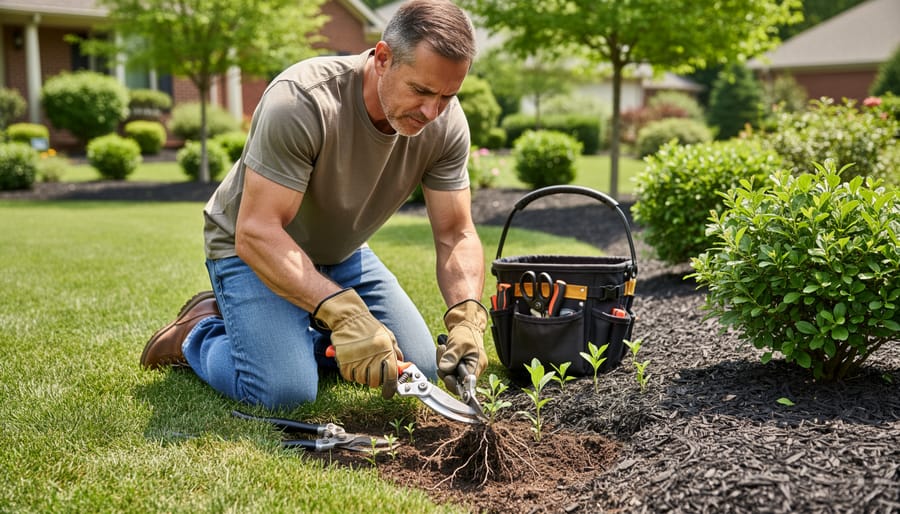
Removing established invasive trees requires a thoughtful approach, and I’ll be honest with you—it’s one of those jobs where knowing your limits is crucial. For smaller trees under 10 feet with trunks less than 4 inches in diameter, most gardeners can tackle removal themselves. Anything larger, especially near structures or power lines, deserves a call to certified arborists. Trust me, this isn’t the time for weekend warrior heroics.
If you’re ready to DIY, timing matters. Late winter or early spring, before leaf-out, gives you the best advantage. The tree has fewer energy reserves, and you’ll have better visibility of the trunk and branches. Start by cutting branches from the bottom up, working your way to the top. This prevents dangerous splitting and gives you control over where debris falls.
Here’s where many gardeners make a critical mistake: they stop at cutting the tree down. Most invasive species are champion resprouters, sending up new shoots from the stump with surprising vigor. Immediately after cutting—and I mean within minutes—apply herbicide containing triclopyr or glyphosate to the freshly cut stump surface. Paint it on the outer ring where the cambium layer sits; that’s the tree’s highway for moving nutrients.
For those preferring chemical-free methods, you’ll need patience. Cover the stump with a thick black tarp secured with stakes, or try the drill-and-fill method: bore deep holes into the stump and pack them with salt, checking monthly to prevent sprouting. Some gardeners successfully use repeated cutting of new shoots to exhaust the root system, though this requires vigilant monitoring for two to three years.
The principles of proper tree removal apply here too—safety first, clean cuts, and appropriate tools. Document your progress with photos; you’ll appreciate seeing how far you’ve come when managing these persistent plants.
Living with Invasive Trees: Damage Control and Maintenance
I completely understand if removing a massive invasive tree feels overwhelming right now. Maybe you’re renting, perhaps it’s too close to power lines, or the removal cost isn’t in this year’s budget. The good news? You can absolutely minimize damage while you plan for eventual removal.
Think of this as damage control with a purpose. Your main goal is preventing these trees from creating more invasive trees. Start with what I call “seedling patrol”—a weekly walk-through of your property during growing season. You’ll be amazed how many baby invasives pop up far from the parent tree, thanks to birds and wind. Pull these seedlings when they’re young and the soil is moist. They come up easily, roots and all, saving you enormous effort later.
Next, tackle seed production head-on. For trees like tree of heaven or Norway maple, this means removing seed clusters before they mature. I know a gardener in Ohio who sets calendar reminders each spring to clip developing samaras from her Bradford pears. It’s tedious, yes, but it prevents thousands of potential offspring.
Create a “no-spread zone” by maintaining a buffer around invasive trees. Keep this area mowed or mulched heavily to catch and smother seedlings before they establish. Some gardeners install landscape fabric in a ring around problem trees, though this works best for smaller specimens.
If your invasive tree sends up root suckers—like autumn olive or Russian olive often do—cut them immediately. Don’t let them photosynthesize and strengthen the root system. Some folks paint cut suckers with herbicide to weaken the parent plant gradually.
Document your efforts with photos and notes. This helps you see progress and creates a removal timeline. You’re not giving up—you’re managing responsibly until complete removal becomes possible. That’s smart, sustainable gardening.
Talking to Neighbors About Invasive Trees (Without Starting a Feud)
Approaching your neighbor about their invasive tree requires diplomacy and genuine care for the relationship. I’ve found that starting with curiosity rather than complaints makes all the difference. Consider beginning the conversation with something like, “I noticed you have a beautiful Bradford pear in your yard. Have you heard about some of the concerns people are raising about these trees lately?”
This opening invites dialogue instead of triggering defensiveness. Remember, your neighbor likely planted that tree with good intentions, perhaps even paying a premium for it at a garden center. Many homeowners genuinely don’t know their ornamental tree is considered invasive.
Bring resources to share rather than demands. Print out a helpful article or fact sheet from your local extension office about the specific species. Mention the practical downsides they might care about too. For instance, Bradford pears often split in storms, creating costly damage. Autumn olive might seem pretty, but those seedlings sprouting everywhere create extra yard work.
If their tree is actively spreading into your property, acknowledge the awkwardness upfront. Try saying, “This feels a bit uncomfortable to bring up, but I’m dealing with dozens of seedlings coming from the tree between our properties. Could we talk about some solutions together?”
Consider suggesting a collaborative approach. Perhaps you could split the cost of removal and replacement with a native alternative that benefits both properties. Some communities even offer grants or free native trees for invasive species removal.
Building awareness neighborhood-wide helps too. Share information through community groups or social media without singling anyone out. When everyone learns together, no one feels targeted or embarrassed.
Managing invasive weed trees might feel overwhelming at first, but here’s the truth: every single decision you make in your garden matters. Whether you’re removing an established tree of heaven that’s been sending up shoots for years or choosing native alternatives for a new planting bed, you’re making a positive difference for your local ecosystem.
I won’t sugarcoat it—dealing with invasive trees requires commitment. Some will resprout from roots multiple times before you finally win the battle. Others might have already scattered thousands of seeds across your property. But don’t let this discourage you. Think of it as an ongoing conversation with your garden rather than a one-time project. Each season brings new opportunities to make better choices and course-correct where needed.
Start small if you need to. Maybe this year you focus on removing those Bradford pear seedlings popping up along the fence, and next year you tackle the larger mimosa. Progress is progress, regardless of pace.
And here’s where you become even more valuable: share what you’ve learned. When your neighbor admires those fragrant white blooms on your property, mention they’re from an invasive tree you’re planning to replace. Recommend native alternatives to fellow gardening club members. Your knowledge creates ripples far beyond your own garden fence.
Being a responsible gardener means staying informed, making thoughtful choices, and being willing to correct past mistakes—even the well-intentioned ones. You’ve got this, and your garden will thank you for it.