Transform your garden into a pest-free sanctuary using powerful eco-friendly pest control methods hiding in your kitchen cabinets. Sprinkle fresh coffee grounds around plant bases to repel slugs, snails, and cats while enriching your soil with nitrogen. Create an all-purpose pest spray by steeping crushed garlic and hot peppers in water overnight, then misting troubled plants to ward off aphids, spider mites, and whiteflies. Plant aromatic herbs like rosemary, lavender, and mint strategically throughout your garden – their natural oils confuse and deter unwanted insects while attracting beneficial pollinators. Companion planting with marigolds, nasturtiums, and chrysanthemums naturally protects your vegetables through their pest-repelling properties, creating a resilient garden ecosystem that maintains itself. These time-tested solutions harness nature’s own defense mechanisms, proving that effective pest management doesn’t require harsh chemicals or expensive treatments.

Kitchen Ingredients That Keep Pests Away
Spicy Solutions: Garlic, Pepper, and Cinnamon
Looking for effective natural alternatives to chemical pesticides? Your spice rack might hold the answer! Common kitchen spices can be powerful allies in your garden’s pest defense strategy.
Garlic is particularly effective against a wide range of insects. Create a potent spray by blending 4-5 cloves with 2 cups of water and letting it steep overnight. Strain the mixture and spray it directly on affected plants, focusing on the undersides of leaves where pests often hide.
Black pepper packs quite a punch against crawling insects. Mix one tablespoon of ground black pepper with two cups of water and a few drops of liquid soap. Apply this solution around the base of plants or on paths where you’ve spotted unwanted visitors. The pepper creates a barrier that most crawling insects won’t cross.
Cinnamon is your secret weapon against fungal problems and ants. Sprinkle ground cinnamon directly on soil around plants to prevent damping-off disease in seedlings. For ant control, create a protective barrier by sprinkling cinnamon powder along their trails and entry points.
Remember to reapply these spicy solutions after rain or heavy dew. While these ingredients are safe for plants, always test on a small area first and avoid applying during the hottest part of the day to prevent leaf burn. These aromatic defenders work best as part of a comprehensive garden protection strategy, offering both immediate and long-term benefits.
Citrus and Vinegar Solutions
Citrus peels and vinegar are powerful natural allies in your pest control arsenal, offering an eco-friendly solution that’s both effective and budget-friendly. The strong scent of citrus naturally repels many common garden pests, while vinegar’s acidic properties make it an excellent deterrent for numerous unwanted visitors.
To create a basic citrus spray, collect peels from oranges, lemons, or grapefruits and steep them in boiling water for 24 hours. Strain the mixture and add a splash of white vinegar for extra deterrent power. This solution works particularly well against ants, aphids, and various crawling insects.
For a more potent vinegar-based spray, mix equal parts water and apple cider vinegar, adding a few drops of liquid soap to help the solution stick to plant leaves. This mixture is especially effective against soft-bodied insects and can help prevent fungal growth.
When applying these solutions, spray early in the morning or late in the evening to prevent leaf burn. Focus on the undersides of leaves where pests often hide, and reapply after rain or heavy dew. Remember to test the solution on a small area first, as some plants may be sensitive to acidic sprays.
Store unused portions in clearly labeled spray bottles, and refresh your mixtures every few weeks to maintain effectiveness. These natural solutions not only keep pests at bay but also contribute to a healthier garden ecosystem.
DIY Natural Pest Sprays and Solutions
All-Purpose Garden Spray
This versatile garden spray combines several natural ingredients to create a powerful pest deterrent that’s safe for your plants and the environment. To make the spray, you’ll need 2 cups of water, 2 cloves of garlic (minced), 1 tablespoon of neem oil, 1 teaspoon of mild liquid soap, and a handful of fresh herbs like rosemary, mint, or lavender.
Start by bringing the water to a boil and adding the minced garlic. Remove from heat and let the mixture steep for 30 minutes. Strain out the garlic pieces, then add your chosen herbs and let them steep until the liquid cools completely. Strain again, then add the neem oil and liquid soap, stirring gently to combine.
Pour the mixture into a spray bottle and shake well before each use. Apply the spray in the early morning or late evening when beneficial insects are less active. Focus on both the top and bottom of leaves where pests often hide. Reapply every 7-10 days or after rain for best results.
This spray is effective against a wide range of common garden pests, including aphids, spider mites, and whiteflies. The combination of garlic’s natural sulfur compounds, neem oil’s pest-repelling properties, and aromatic herbs creates a multipurpose solution that most garden pests find unpalatable.
Remember to test the spray on a small area first to ensure your plants don’t have any adverse reactions. Store any unused portion in a cool, dark place for up to two weeks.

Targeted Solutions for Common Pests
When it comes to dealing with common garden pests, nature provides us with some incredibly effective solutions. Let’s explore some tried-and-true recipes for specific garden troublemakers.
For Aphids:
Mix 2 tablespoons of neem oil with 1 teaspoon of mild liquid soap and 1 quart of water. Spray this solution directly on affected plants in the early morning or late evening. For a simpler alternative, blend 4-5 cloves of garlic with 2 cups of water, strain, and spray on plants every few days until the aphids disappear.
Slug Solutions:
Create a natural barrier using crushed eggshells or diatomaceous earth around vulnerable plants. For a more active approach, set out shallow dishes of beer – slugs are attracted to the yeast and will fall in. Remember to replace the beer every couple of days. You can also sprinkle coffee grounds around your plants, which slugs hate crossing.
Caterpillar Control:
Combine 2 tablespoons of hot pepper sauce, 6 drops of liquid soap, and 1 gallon of water. Spray this mixture on leaves where you spot caterpillar activity. Another effective solution is to mix 3 tablespoons of baking soda with 2 tablespoons of olive oil and 1 gallon of water. This combination helps deter cabbage moths and their caterpillars.
For Spider Mites:
Create a potent spray by steeping rosemary leaves in boiling water for 30 minutes. Once cooled, strain and add a few drops of liquid soap. This solution works especially well for indoor plants and can be applied weekly.
Japanese Beetle Defense:
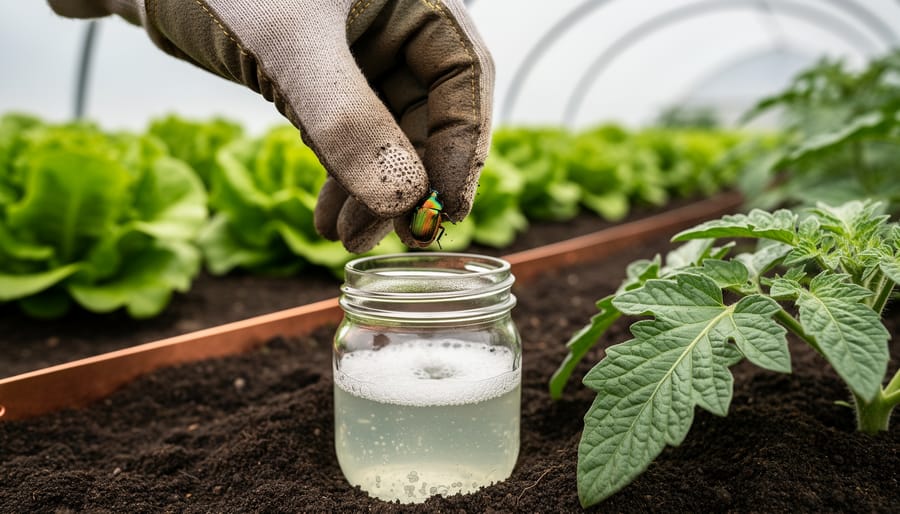
Mix 4 tablespoons of neem oil, 2 tablespoons of liquid soap, and 1 gallon of water. Spray on affected plants in the evening, making sure to coat both sides of leaves. You can also plant geraniums nearby, as these flowers naturally repel Japanese beetles.
Remember to reapply these natural solutions after rain and test them on a small area first to ensure your plants don’t have any adverse reactions. Most of these ingredients are probably already in your kitchen, making them both cost-effective and convenient alternatives to chemical pesticides.
Strategic Placement and Application
Timing Matters
The success of natural pest deterrents largely depends on when you apply them. Early morning or late evening applications are most effective, as these times avoid the harsh midday sun that can quickly evaporate your natural solutions. Plus, many pests are most active during these periods, making your deterrents more likely to work.
Timing also means being proactive rather than reactive. Start applying deterrents before pest problems become severe – ideally, at the first sign of unwanted visitors or even before they appear. For example, apply garlic or hot pepper sprays early in the growing season when you spot the first few aphids, rather than waiting until they’ve colonized entire plants.
Weather plays a crucial role too. Apply deterrents on dry, calm days when rain isn’t forecast for at least 24 hours. This gives your natural solutions time to work effectively. If it rains shortly after application, you’ll need to reapply the deterrent.
Remember to maintain a regular schedule. Most natural deterrents need frequent reapplication, typically every 7-14 days, or after heavy rain. During peak pest seasons, you might need to apply them more often. Keep a garden journal to track your applications and their effectiveness – this will help you develop the perfect timing strategy for your specific garden needs.
Consider seasonal pest patterns in your area. Apply preventive measures before typical pest emergence times, such as treating for cabbage moths before spring plantings or preparing for cucumber beetles in early summer.
Application Methods
Applying natural pest deterrents effectively requires matching the right method to both your pest problem and plant type. For leafy vegetables and small plants, a simple spray bottle application works best, allowing you to target specific areas without oversaturating the foliage. Mist your plants in the early morning or late evening to prevent leaf burn and maximize effectiveness.
For ground-dwelling pests, create a protective barrier by sprinkling your deterrent mixture directly around the base of plants. This method works particularly well with diatomaceous earth, coffee grounds, or crushed eggshells. Reapply after heavy rain to maintain the barrier’s effectiveness.
For climbing plants and larger shrubs, consider using sachets or bundles of dried herbs tied with natural twine. Hang these throughout your garden, focusing on areas where pests frequently gather. This method provides continuous protection while adding a lovely natural fragrance to your garden space.
When dealing with raised beds or container gardens, mix your chosen deterrent directly into the top layer of soil. This creates a long-lasting protective zone that deters pests from settling in. For extra protection, combine multiple application methods – for instance, use both a spray and soil barrier approach for vegetables that are particularly susceptible to pest damage.
Remember to always test your deterrent on a small area first and adjust the concentration if needed. Regular reapplication every 1-2 weeks, or after rain, helps maintain consistent protection throughout the growing season.
Companion Planting for Extra Protection
When it comes to natural pest control, strategic companion planting can be your secret weapon. By thoughtfully combining your plants with natural deterrents, you’ll create a robust defense system that keeps unwanted visitors at bay while promoting a healthy garden ecosystem.
Start by surrounding your vulnerable plants with aromatic herbs. Basil, for instance, works wonderfully when planted alongside tomatoes – not only does it enhance the tomatoes’ flavor, but it also helps repel aphids and hornworms. Similarly, marigolds make excellent garden guardians, as their strong scent deters various pests while adding a cheerful splash of color to your beds.
Create protective borders using plants like lavender, rosemary, or sage around the perimeter of your garden. These fragrant herbs not only smell wonderful but also confuse and deter many common garden pests. For an extra layer of protection, interplant these herbs with your vegetables and flowers throughout the garden.
Consider the power of plant combinations: nasturtiums act as a sacrificial plant, drawing aphids away from your prized vegetables, while garlic and onions help protect carrots from root flies. Plant dill near cucumbers to ward off cucumber beetles, and incorporate chrysanthemums throughout your garden – they contain pyrethrin, a natural insecticide.
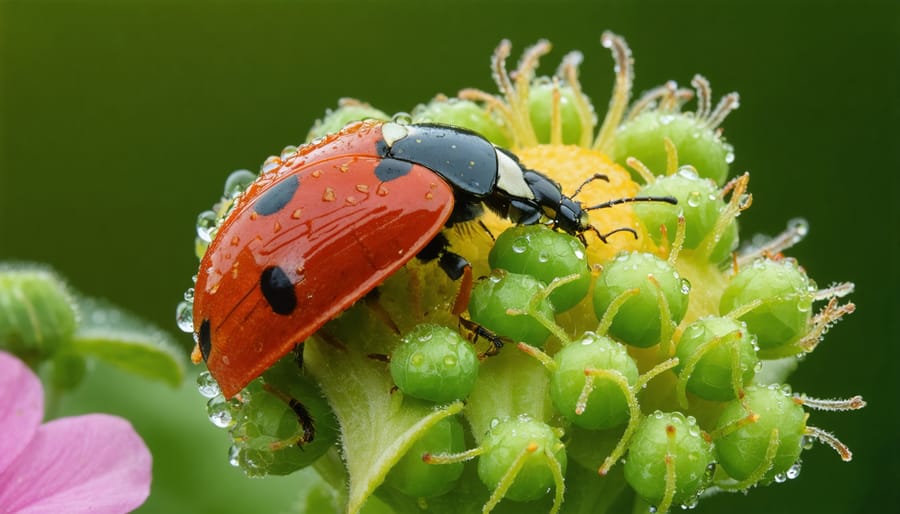
Remember to maintain some diversity in your plantings. Mix tall and short plants, creating natural barriers that make it harder for pests to locate their favorite crops. Include flowers like calendula and borage, which attract beneficial insects that prey on garden pests, establishing a natural balance in your garden ecosystem.
For maximum effectiveness, combine these planting strategies with your homemade natural deterrents. Spray your companion plants with diluted neem oil or garlic solution to enhance their protective properties, creating a multi-layered approach to pest management that’s both effective and environmentally friendly.

Natural pest control offers a safe, effective, and environmentally friendly way to protect your garden from unwanted visitors. By using common household ingredients and companion planting techniques, you can create a thriving garden ecosystem without relying on harmful chemicals. Whether you choose to make your own garlic spray, plant aromatic herbs, or use coffee grounds around your plants, these natural solutions are both cost-effective and sustainable. Remember to observe your garden regularly and adjust your pest control strategy as needed. With a little patience and persistence, you’ll discover which methods work best in your garden. Why not start today by trying one of these natural deterrents? Your plants, beneficial insects, and the environment will thank you for making the switch to natural pest control methods.