Every time you tie up tomatoes or secure climbing beans, you’re making a choice that affects your garden’s future. Traditional plastic garden twine might seem convenient, but those synthetic strands don’t disappear when the season ends. They break down into microplastics, contaminating your soil and the very plants you’re nurturing. The good news? Biodegradable garden twine offers the same strength and support while naturally decomposing back into the earth, leaving nothing behind but healthy soil.
Switching to biodegradable options isn’t just about feeling good—it’s practical gardening sense. Natural fiber twines made from jute, hemp, or cotton break down completely within one growing season, eliminating the tedious spring cleanup of tangled plastic remnants. You can simply cut down your spent plants and toss everything straight into the compost pile, twine and all. No more picking out synthetic strands from last year’s tomato stakes or finding plastic fragments mixed into your raised beds.
Whether you’re supporting heavy squash vines, creating pea trellises, or bundling herbs for drying, the right biodegradable twine matches your task while protecting the environment you’ve worked so hard to cultivate. Understanding which natural materials suit different garden jobs helps you garden smarter and greener.
The Problem with Traditional Garden Twine
If you’ve been gardening for a while, you’ve probably reached for that bright blue or green synthetic twine countless times. It’s cheap, readily available at any garden center, and seems to do the job perfectly well. But here’s something that might surprise you: that convenient polypropylene or nylon twine could be creating problems in your garden that last for decades.
Unlike natural materials that break down over time, conventional synthetic twines are essentially plastic. When exposed to sun, weather, and handling throughout the growing season, these materials don’t truly decompose. Instead, they fragment into smaller and smaller pieces, eventually becoming microplastics that work their way into your soil. Think about it – every time you’ve accidentally tilled a piece of old twine into your beds, or left bits behind after removing tomato supports, you’ve added plastic particles to your garden.
The real concern is what happens over multiple growing seasons. These microplastics accumulate year after year, building up in the very soil you’re working so hard to nurture. Research shows that these tiny plastic fragments can affect water retention, interfere with beneficial microorganisms, and potentially be taken up by plant roots. It’s a bit disheartening to realize that while we’re composting kitchen scraps and mulching with organic materials, we might simultaneously be contaminating our gardens with persistent plastics.
I spoke with Master Gardener Sarah Chen, who manages a community garden in Vancouver, and she put it perfectly: “We spend so much time building healthy soil, and then we unknowingly undermine that work with synthetic materials that never truly leave.” The impact on soil health and garden ecosystems becomes more significant the longer you garden in the same space.

What Makes Garden Twine Truly Biodegradable
Natural Fiber Options Compared
Choosing the right natural fiber twine can feel overwhelming at first, but understanding how each type performs makes the decision much easier! Let’s break down the most popular options.
Jute twine is the garden workhorse you’ll reach for most often. It offers moderate strength and typically breaks down within one to two growing seasons. This golden-brown twine works beautifully for training annual vegetables like tomatoes and beans, and it won’t break your budget. I’ve found it holds up well through summer but starts weakening once autumn rains arrive.
Hemp twine takes the crown for strength and durability. If you need something that can support heavier plants or last through multiple seasons, hemp is your answer. It’s naturally resistant to mold and UV damage, decomposing in two to three years. Use it for perennials, trellising structures, or anywhere you need extra holding power.
Cotton twine is the softest option, making it gentle on delicate plant stems. It’s perfect for tying up herbs, flowers, or seedlings that need a tender touch. The tradeoff? It breaks down quickly, usually within six months to a year, especially in wet conditions.
Sisal twine sits between jute and hemp in terms of strength. It’s quite rough in texture, which gives excellent grip but can occasionally damage tender stems. Expect it to decompose within one to two years. Many gardeners love sisal for bundling harvested vegetables or creating plant supports that need serious grip.

Real-World Benefits for Your Garden
Beyond helping the planet, biodegradable garden twine offers surprising practical advantages that make your gardening life easier and more rewarding. Let me share why so many gardeners I’ve spoken with are making the switch and never looking back.
First, there’s the beautiful benefit of soil enrichment. As your twine naturally breaks down over time, it releases organic matter directly into your garden beds. Materials like jute and cotton add valuable nutrients to the soil, improving its structure and feeding beneficial microorganisms. It’s like getting a bonus compost contribution from something you were using anyway! I’ve watched gardeners smile when they realize they’re literally feeding their soil while supporting their plants.
The cleanup factor is genuinely life-changing, especially during those hectic spring and fall seasons. Remember frantically gathering all those synthetic twine pieces before tilling or mulching? With biodegradable options, you can simply turn leftover twine into the soil or toss it on your compost pile. No more hunting for tiny plastic fragments that somehow multiply when you’re not looking. One experienced gardener told me she saves hours each season simply by not having to meticulously collect and dispose of old twine.
There’s also an important safety consideration for our wildlife friends. Traditional plastic twine can persist in the environment for years, posing serious entanglement risks to birds, small mammals, and beneficial insects. Biodegradable twine naturally disappears, eliminating this hidden danger. It’s a small change that aligns perfectly with sustainable gardening practices, creating a safer habitat for the creatures that help our gardens thrive.
Choosing the Right Biodegradable Twine for Your Tasks
For Training and Supporting Plants
When it comes to supporting your climbing plants, not all biodegradable twines are created equal. I learned this the hard way when my tomato plants took down some lightweight twine mid-season!
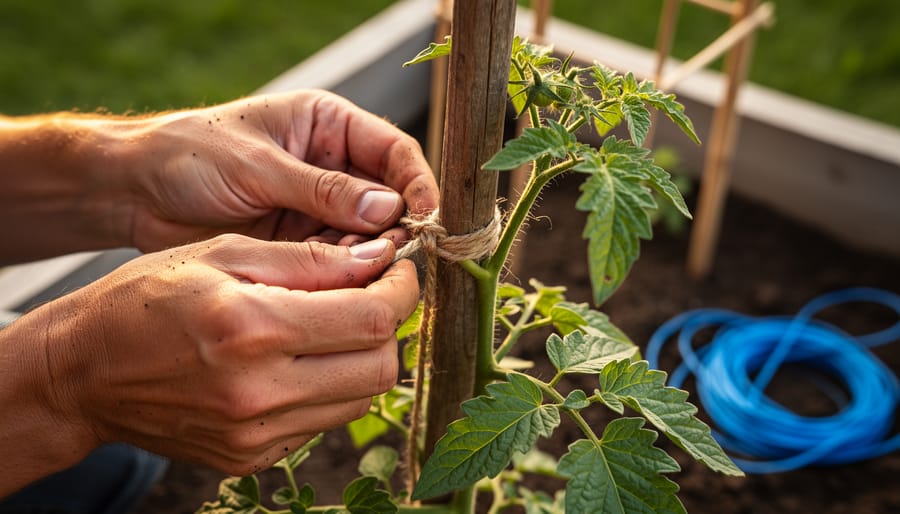
For heavyweight climbers like indeterminate tomatoes and pole beans, you’ll want jute or hemp twine with at least three-ply thickness. These natural fibers offer impressive strength while still breaking down at season’s end. Hemp is particularly excellent because it resists moisture better than jute, which matters when you’re dealing with humid summer conditions or frequent watering.
Peas and lighter climbers do beautifully with two-ply cotton or jute twine. These thinner options are easier to work with and still provide ample support for delicate vines.
Here’s a pro tip from master gardener Ellen Rodriguez, who I interviewed last spring: “Replace your support twine annually, even if it looks fine. Biodegradable materials begin breaking down throughout the growing season, and weakened fibers can fail when plants are heaviest with fruit.”
For season-long reliability, install your twine at the start of spring. If you’re succession planting, check your existing twine for wear before training new growth. This simple habit prevents disappointing mid-season collapses and keeps your vertical garden thriving.

For Securing and Bundling
Biodegradable twine truly shines when it comes to everyday garden tasks that require temporary support. I’ve found it perfect for tying back floppy perennials like peonies and tall sedums as they grow throughout the season. The twine provides gentle support without cutting into stems, and if you accidentally leave some behind, it naturally breaks down over winter.
For bundling harvested herbs and flowers, biodegradable twine is my go-to choice. Whether you’re hanging lavender bundles to dry or creating fresh-cut bouquets, the natural fibers grip well without slipping. I particularly love using jute or hemp twine for this purpose since they complement the rustic charm of herb bundles beautifully.
Temporary fencing applications are another excellent use. When establishing new garden beds or protecting seedlings from curious pets, biodegradable twine works wonderfully with wooden stakes. It holds firmly throughout the growing season but won’t persist in the soil indefinitely like plastic alternatives. Just remember that for these applications, thicker twines or multiple strands provide better durability against weather and tension.
For Trellising and Long-Term Support
When you’re setting up trellises for tomatoes, beans, or climbing squash, you’ll need something more robust than lightweight jute. This is where stronger natural fibers really shine. Hemp twine offers exceptional strength and can easily support heavy vines throughout an entire growing season without breaking down prematurely. Cotton twine works beautifully too, especially for moderate-weight climbers, and typically holds up well for 4-6 months before showing wear.
I learned this lesson the hard way when my flimsy twine snapped under the weight of vigorous cucumber vines mid-season! Now I always reach for 3-4mm thick hemp or cotton for vertical structures. The key is matching the twine thickness to your plants’ mature weight. Heavy producers like indeterminate tomatoes need that extra strength, while pole beans do fine with medium-weight options.
These sturdier twines cost a bit more upfront, but they’ll reliably support your plants when it matters most. Once the season ends and you’ve harvested everything, they’ll still decompose naturally in your compost pile over winter.
What to Look for When Shopping
Shopping for biodegradable garden twine doesn’t have to feel overwhelming once you know what to look for. Start by checking the material composition on the label. Truly biodegradable products will clearly list natural materials like jute, hemp, or cotton, not vague terms like “eco-friendly” or “natural blend” that might contain hidden synthetics.
Watch out for greenwashing, which happens when products use green packaging or buzzwords without backing them up with substance. If a label says “biodegradable” but doesn’t specify how long decomposition takes or under what conditions, that’s a red flag. Genuine biodegradable twine should break down within a growing season or two when exposed to normal garden conditions.
Look for third-party certification marks like USDA BioPreferred or similar standards that verify environmental claims. These badges mean someone besides the manufacturer has tested the product. When comparing options, thicker twine isn’t always better. Consider what you’re supporting in your garden and choose accordingly, since heavier materials take longer to decompose.
Price can be an indicator too. Authentic natural fiber twine typically costs a bit more than synthetic alternatives because the materials and processing are more sustainable. If something seems suspiciously cheap while claiming to be biodegradable, dig deeper into those claims before purchasing.
Making the Switch: Tips from Experienced Gardeners
Making the switch to biodegradable twine is easier than you might think, especially with advice from gardeners who’ve already made the transition. Master gardener Claire Henderson shares her top tip: “Store your natural fiber twine in a cool, dry place, just like you would seeds. I keep mine in an airtight container in my shed to prevent moisture from breaking it down prematurely.”
The texture difference catches some gardeners off guard at first. Jute and hemp twines can feel rougher than synthetic options, but experienced gardener Tom Martinez sees this as an advantage: “The natural fibers actually grip plants better. I’ve found my tomatoes need less adjustment throughout the season.”
When it comes to tying techniques, you might need a slightly firmer knot initially. Natural fibers can loosen as they settle, so double-knotting works wonders for heavier plants. Don’t worry though – these twines still provide excellent support once properly secured.
Let’s talk about cost, because it matters. While biodegradable twine typically costs a bit more upfront, the difference is usually just a few dollars per roll. Consider it an investment in your soil’s future health. As gardener Sarah Kim points out, “I used to buy new synthetic twine every year anyway. Now I buy natural twine once and let it compost right into my beds. It actually saves me cleanup time.”
Start with one roll for a single season to test which material works best in your garden’s conditions.
Making the switch to biodegradable garden twine might seem like a small change, but these choices add up in beautiful ways. Every spool you use breaks down naturally, feeding your soil instead of leaving behind plastic fragments that linger for decades. You’re not just supporting your plants today—you’re building healthier soil for seasons to come.
The best part? Getting started couldn’t be easier. Pick up just one spool of biodegradable twine for your next trellising project or when you’re staking tomatoes this spring. You’ll quickly discover it works just as well as conventional options, and you’ll feel good knowing you’re treading more lightly on the earth. As you explore other biodegradable alternatives for your garden, you’ll find that sustainable choices become second nature.
Remember, we don’t need to transform our entire gardening practice overnight. Small, intentional decisions—like choosing natural twine—create ripples that extend far beyond our garden gates. Together, these mindful choices nurture not just our plants, but the planet we all share.