Transform your garden into a climate-resilient biodiversity hub by diversifying plant species, incorporating native varieties, and adapting to challenging climates through strategic planning. Climate change presents both challenges and opportunities for gardeners committed to preserving local ecosystems. Rising temperatures and unpredictable weather patterns are reshaping how we approach garden design, plant selection, and maintenance practices. By embracing climate-smart gardening techniques, we can create thriving spaces that support local wildlife, enhance soil health, and build resilient plant communities. From selecting drought-tolerant species to implementing water-wise irrigation systems, every garden can become a powerful force in protecting biodiversity. Our changing climate demands innovative solutions, but it also offers exciting possibilities to reimagine our gardens as dynamic, adaptive ecosystems that contribute to global conservation efforts while bringing joy and beauty to our daily lives.
The New Normal: Understanding Your Changing Garden Environment
Temperature Fluctuations and Growing Seasons
As our climate continues to shift, gardeners are noticing significant changes in traditional growing patterns. Plants that once thrived in specific seasons are now experiencing confused growth cycles, with some flowering too early and others struggling to adapt to unpredictable temperature swings.
These fluctuations affect not just when plants grow, but how well they develop. Warmer winters can trick plants into breaking dormancy too early, leaving them vulnerable to late frosts. Meanwhile, extended growing seasons might seem beneficial, but they can lead to pest problems and throw off the natural timing of pollinator relationships.
Many gardeners report seeing spring bulbs emerging weeks earlier than usual, and fall plants staying active longer into winter. While this might temporarily increase production in some regions, it also creates new challenges for maintaining healthy plant communities. The key is to work with these changes rather than against them, selecting varieties that can handle temperature swings and implementing season extension techniques when needed.
To help your garden adapt, consider creating microclimates using wind barriers and shade structures, and experiment with different planting dates to find new rhythms that work in your changing environment.

Rainfall Patterns and Water Management
Climate change is dramatically altering rainfall patterns worldwide, creating new challenges for gardeners. Many regions are experiencing longer dry spells punctuated by intense downpours, rather than the steady, gentle rains that gardens traditionally relied upon. This shift means we need to rethink our approach to water management.
Smart water collection and conservation strategies are becoming essential. Installing rain barrels or creating rain gardens helps capture those heavy downpours for later use. Mulching becomes even more crucial, helping soil retain moisture during dry spells while protecting plant roots from temperature extremes.
Consider incorporating drought-resistant plants into your garden design, but don’t forget about managing excess water too. Creating swales or gentle berms can help direct and slow water flow during heavy rains, preventing erosion and allowing better soil absorption. Water-wise irrigation systems, like drip lines or soaker hoses, deliver moisture directly to plant roots with minimal waste.
Remember that healthy soil is your best ally in water management. Adding organic matter improves both drainage during wet periods and water retention during dry spells, helping your garden stay resilient through changing weather patterns.
Protecting Plant Diversity in Your Garden
Climate-Resilient Plant Selection
As our climate continues to shift, selecting the right plants for your garden becomes increasingly crucial. By implementing climate-resilient gardening practices, you can create a thriving space that withstands environmental challenges while supporting local biodiversity.
Start by choosing native plants that have naturally adapted to your region’s conditions. These hardy champions have evolved to handle local weather patterns and typically require less maintenance. Look for species with deep root systems, which help them survive both drought and heavy rainfall events.
Consider plants that demonstrate flexibility in various conditions. Drought-tolerant varieties like lavender, yarrow, and native grasses are excellent choices, as they can handle both wet and dry spells. Plants with silvery or fuzzy leaves often indicate natural drought resistance, while those with thick, waxy leaves tend to retain moisture better.
Don’t forget to include a mix of flowering times throughout the growing season. This approach not only creates year-round interest but also provides consistent support for pollinators and other wildlife. Try incorporating early bloomers like spring ephemerals alongside late-season performers such as asters and goldenrod.
Remember that successful plant selection isn’t just about survival – it’s about creating a resilient ecosystem that can adapt and thrive as conditions change. By choosing diverse, adaptable plants, you’re building a garden that will continue to flourish while supporting local wildlife for years to come.
Creating Microhabitats
Creating protective microhabitats in your garden is one of the most effective ways to shield sensitive plants from climate extremes. Think of these spaces as nature’s umbrella, offering shelter from harsh weather while maintaining ideal growing conditions. By incorporating raised bed gardens with strategic placement, you can control soil conditions and provide better drainage during heavy rains.
Start by identifying areas in your garden that naturally offer protection, such as spots near fences or mature trees that create windbreaks. Layer your plantings vertically, using taller, hardy plants to shelter more delicate species. Consider adding features like trellises or temporary screens that can be adjusted as weather patterns change.
Water-wise design is crucial for microhabitat success. Create shallow depressions or swales to capture and direct rainfall to where it’s needed most. Mulching heavily around sensitive plants helps retain moisture and regulate soil temperature. Adding rocks or decorative stones can create warm pockets that protect tender plants on cold nights.
For extra protection, incorporate portable covers or cold frames that can be deployed during extreme weather events. Group plants with similar water and temperature needs together, making it easier to maintain ideal conditions for each species. Remember to monitor these microhabitats regularly and adjust your design as you observe what works best in your specific garden environment.

Adaptive Gardening Techniques
Soil Health and Climate Resilience
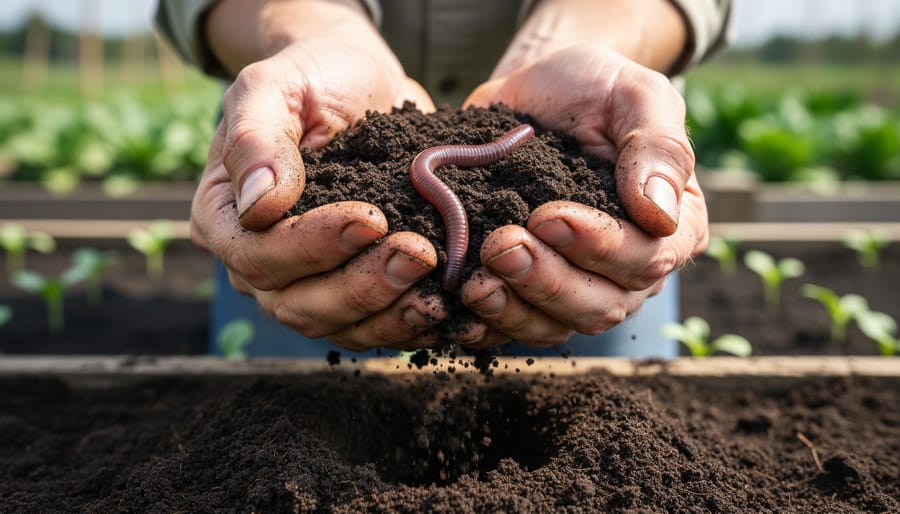
Healthy soil is the foundation of a biodiverse garden that can withstand climate challenges. Think of soil as a living ecosystem – it’s home to billions of microorganisms that help plants thrive and adapt to changing conditions. By nurturing this underground network, we create resilient gardens that better handle temperature swings and extreme weather.
The key to building climate-resilient soil starts with organic matter. Adding compost, leaf mulch, and other natural materials helps soil retain moisture during dry spells and drain effectively during heavy rains. This improved structure also creates perfect homes for beneficial organisms like earthworms and mycorrhizal fungi, which form partnerships with plant roots to enhance nutrient uptake and disease resistance.
Cover crops are another powerful tool for soil health. Plants like clover, rye, and buckwheat protect bare soil from erosion while adding nutrients naturally. When turned into the soil, they improve its structure and feed the beneficial microbes that support plant diversity.
Consider reducing tillage in your garden, as excessive soil disturbance can damage these delicate underground networks. Instead, try top-dressing with compost and using mulch to suppress weeds. This gentler approach preserves soil structure and keeps carbon stored in the ground, where it benefits both your garden and the planet.
Remember to test your soil regularly and adjust organic amendments based on your specific conditions. A balanced, living soil creates the perfect environment for diverse plant communities to flourish, even as our climate changes.
Season Extension Methods
As climate patterns become more unpredictable, savvy gardeners are turning to various season extension methods to protect their plant diversity. These techniques act as insurance against extreme weather events while helping maintain a longer growing season for your precious plants.
Cold frames and cloches are excellent starter options for winter garden protection. Think of them as mini-greenhouses that create a microclimate around your plants. Cold frames can be as simple as a wooden box with a clear lid, while cloches can be made from recycled glass jars or plastic bottles.
Row covers and floating row covers offer flexible protection against both cold and intense heat. These lightweight fabrics allow sunlight, air, and water to reach your plants while providing a barrier against extreme temperatures and harsh winds. They’re particularly effective for protecting tender seedlings and extending the growing season of cold-sensitive crops.
For more permanent solutions, consider installing high tunnels or hoop houses. These structures create protected growing spaces that can extend your growing season by several weeks on both ends. They’re especially valuable for maintaining biodiversity, as they allow you to grow plants that might not otherwise survive in your climate zone.
Don’t forget about mulching – a simple yet effective method for regulating soil temperature and moisture. A thick layer of organic mulch helps protect plant roots from temperature fluctuations while supporting beneficial soil organisms.
Supporting Wildlife in Your Climate-Adapted Garden
Creating Wildlife Corridors
Creating wildlife corridors in your garden is one of the most effective ways to support local biodiversity and help species adapt to climate change. Think of these corridors as nature’s highways, connecting different habitat patches and giving wildlife safe passage through your garden.
Start by identifying existing natural features in your neighborhood, such as tree lines, hedgerows, or waterways. Then, plan your garden elements to extend these connections. A simple corridor might include a mix of native shrubs, perennial flowers, and ground cover plants that provide food and shelter throughout the seasons.
Leave some areas deliberately “messy” with fallen leaves, brush piles, and unmowed grass sections. These create perfect hiding spots and travel routes for small mammals, insects, and amphibians. Water features, even small ones like bird baths or shallow ponds, become vital stopping points along these wildlife pathways.
Consider vertical space too – climbing plants and varying heights of vegetation create multiple layers of habitat. By connecting your garden to neighboring green spaces, you’re helping create a larger, more resilient ecosystem that helps wildlife thrive despite changing climate conditions.

Year-Round Food Sources
Creating a year-round food supply for wildlife is essential as climate change disrupts natural feeding patterns. Start by mapping out your garden’s current offerings throughout the seasons, then fill in gaps to ensure continuous sustenance. Early spring bulbs like crocuses provide vital nectar for emerging pollinators, while summer-flowering plants keep food flowing during peak activity periods.
For autumn and winter, incorporate late-blooming asters and berry-producing shrubs like winterberry holly. Leave seed heads standing on perennials like coneflowers and black-eyed susans to feed birds during lean months. Consider planting native fruit trees that hold their fruit well into winter, such as crabapples and persimmons.
Layer your plantings vertically to maximize feeding opportunities – ground cover for insects, mid-height shrubs for birds, and tall trees for various wildlife. Include water sources year-round, from simple bird baths to small ponds, keeping them accessible even in freezing weather. Remember that diversity in plant types and bloom times creates resilience, helping wildlife adapt as seasonal patterns shift due to climate change.
As we face the challenges of climate change, each of us has the power to make a positive impact through our gardens. By embracing adaptive gardening practices, we not only create resilient spaces but also contribute to the preservation of vital biodiversity. Remember that even small changes, like incorporating native plants, creating wildlife corridors, or implementing water-wise irrigation systems, can make a significant difference.
The key is to start somewhere and remain flexible in our approach. Whether you’re a seasoned gardener or just beginning your journey, there’s always room to learn and adapt. Consider starting with one or two changes this season – perhaps installing a rain garden or introducing pollinator-friendly plants – and gradually expanding your efforts as you gain confidence.
Stay connected with your local gardening community, share experiences, and don’t be afraid to experiment with new techniques. Monitor your garden’s response to different practices and adjust accordingly. Every garden is unique, and what works in one space might need modification in another.
Together, we can create gardens that not only survive but thrive in changing conditions while supporting local ecosystems. Your garden can become a sanctuary for biodiversity and a model for climate-resilient practices in your community. The future of gardening lies in our ability to adapt, learn, and work in harmony with nature. Let’s embrace this challenge as an opportunity to grow and create more sustainable, diverse, and resilient gardens for generations to come.