Every child deserves the chance to feel soil between their fingers, watch seeds transform into plants, and experience the quiet confidence that comes from nurturing something alive. For young people with special needs, gardens become more than outdoor classrooms—they’re therapeutic spaces where sensory exploration, motor skill development, and social connection flourish naturally.
Gardening offers unique benefits that traditional learning environments often can’t replicate. The repetitive motions of digging, watering, and harvesting build fine and gross motor skills. Bright flowers, fragrant herbs, and textured leaves engage multiple senses simultaneously, helping children with autism or sensory processing disorders regulate their responses. The predictable rhythms of planting seasons provide structure that benefits kids with ADHD or anxiety, while the no-pressure environment allows everyone to progress at their own pace.
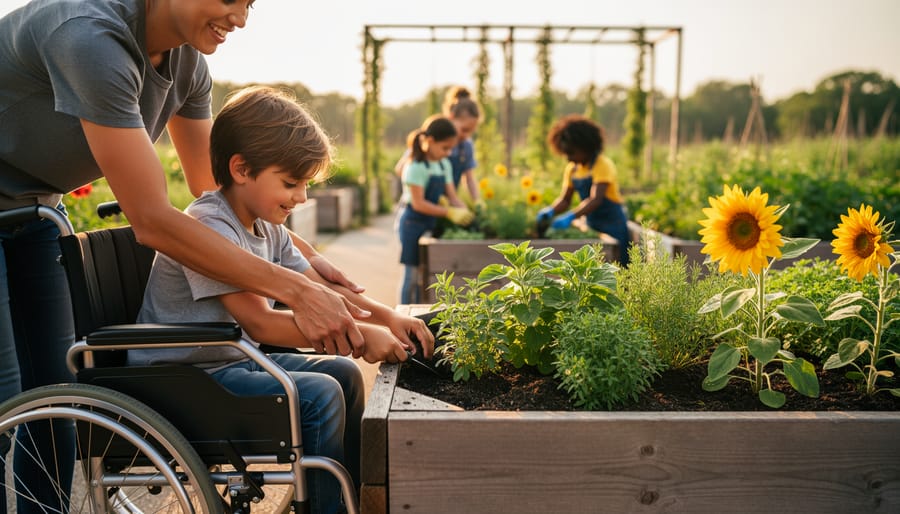
Creating an accessible garden starts with thoughtful design. Raised beds eliminate the need for kneeling, making gardening possible for children using wheelchairs or mobility aids. Wide, smooth pathways accommodate walkers and wheelchairs while reducing trip hazards. Container gardens bring plants to comfortable heights, and vertical structures like trellises transform growing spaces for those with limited reach or balance challenges.
The real magic happens when we match activities to abilities rather than limitations. Fast-growing plants like radishes and sunflowers deliver quick wins that maintain interest. Sensory-rich choices like lamb’s ear, mint, and snapdragons invite safe exploration. Simple tools with adaptive grips, visual schedules, and consistent routines transform gardening from overwhelming to empowering, giving every young gardener the support they need to succeed.
Understanding the Unique Benefits for Special Needs Youth
Sensory Integration and Regulation
For many young people with sensory processing challenges, the garden offers a wonderfully rich environment for exploration and regulation. The simple act of running fingers through cool, damp soil provides deep pressure input that can be incredibly calming. This hands-on contact with different textures—smooth seeds, fuzzy leaves, rough bark—helps children process sensory information in a safe, natural setting.
Water play in the garden is particularly beneficial. Whether gently misting plants, filling watering cans, or feeling rain on their skin, these experiences help regulate the nervous system. I’ve spoken with occupational therapists who specifically recommend gardening activities because they engage multiple senses simultaneously without overwhelming children.
The garden naturally provides what therapists call “heavy work”—activities like digging, carrying pots, or pulling weeds that give proprioceptive feedback. This physical engagement helps children understand where their bodies are in space and can improve focus and emotional regulation.
Start slowly with sensory-rich activities. Let children squeeze wet soil, smell fragrant herbs like mint and lavender, or listen to rustling leaves. Some days might be about exploring textures rather than completing tasks, and that’s perfectly okay. The goal is creating positive sensory experiences that help young gardeners feel grounded and regulated while building confidence in their abilities.

Building Motor Skills and Physical Strength
Gardening naturally builds physical strength and coordination in young people through hands-on activities that feel more like play than exercise. Digging, raking, and turning compost develop gross motor skills and upper body strength, while tasks like planting seeds, pinching off spent blooms, and transplanting seedlings refine fine motor control and hand-eye coordination. For children with special needs, these activities can be particularly beneficial when adapted to their abilities. Consider providing tools with larger grips for easier handling, or create raised beds at wheelchair-accessible heights. I’ve seen occupational therapists incorporate simple tasks like filling pots with soil or watering with small cans to strengthen hand muscles and improve dexterity. The repetitive nature of gardening tasks also helps develop muscle memory and bilateral coordination as children learn to work both sides of their body together, whether they’re using pruning shears or carrying watering cans.
Cognitive Development and Life Skills
Gardening naturally teaches children essential life skills through hands-on experience. When young gardeners plant seeds, water regularly, and watch seedlings emerge, they’re learning sequencing—understanding that certain steps must happen in order. This process beautifully demonstrates cause-and-effect: water and sunlight lead to growth, while neglect results in wilting plants.
For children with special needs, these concrete, visible relationships are particularly valuable. They can see their actions directly impact living things, which builds confidence and decision-making abilities. One occupational therapist I spoke with shared how her students chart their plants’ progress weekly, connecting daily care routines to long-term outcomes.
Responsibility grows organically in the garden. When a child knows their tomato plant depends on them for water, they develop ownership and accountability in a gentle, forgiving environment. Unlike digital games with instant results, gardening teaches patience—perhaps its greatest gift. Understanding that strawberries take months to fruit, not minutes, helps young people develop realistic expectations and persistence. These lessons extend far beyond the garden bed into everyday life.
Designing an Accessible Garden Space for Young Gardeners
Raised Beds and Container Gardens
Raised beds and container gardens are game-changers for young gardeners with mobility challenges or limited strength. By elevating the planting surface to wheelchair height (typically 24-30 inches) or comfortable standing levels, you eliminate the need for bending, kneeling, or stooping. This opens up gardening to children who might otherwise struggle with traditional ground-level beds.
Building a raised bed is simpler than you might think. Start with untreated cedar or composite boards, construct a rectangular frame, and ensure it’s sturdy enough to support the soil weight. For wheelchair users, leave at least 30 inches of clear space underneath so they can roll right up to the bed. Many accessible gardening solutions also include wide edges where kids can rest their arms while working.
Container gardens offer even more flexibility. Large pots, fabric grow bags, or wooden planters can be positioned at any height using sturdy tables or stands. Choose lightweight containers for easier moving, and consider self-watering varieties to reduce maintenance demands. The confined space also makes it easier for young gardeners to manage their plants independently, building confidence and ownership over their growing success.

Safe Pathways and Navigation
Creating pathways that welcome young gardeners with special needs starts with thinking about width and surface. Aim for paths at least four feet wide to accommodate wheelchairs, walkers, or children who need extra space for balance. Smooth, firm surfaces like compacted gravel, wide pavers, or rubber mulch work beautifully, reducing tripping hazards while providing stability.
Clear boundaries make all the difference for independence. Edge your paths with raised borders, textured materials like rope or wood, or even fragrant plants like lavender that signal where the path ends through touch and scent. These sensory markers help children navigate confidently without constant adult guidance.
Consider adding tactile cues at decision points—perhaps a smooth stone where paths intersect or a wind chime marking the entrance to the vegetable garden. One teacher I spoke with uses different colored stepping stones to create a navigation system her students quickly learned to follow independently. These thoughtful touches transform ordinary walkways into confidence-building adventures that celebrate each child’s growing autonomy in the garden.
Sensory Garden Elements That Engage
Young people thrive when they can explore the world through all their senses, and creating sensory gardens provides endless opportunities for discovery. Start with touch-friendly plants like lamb’s ear, with its impossibly soft leaves, or let kids brush against aromatic herbs such as mint and lavender that release their scents when touched.
Color variety keeps young eyes engaged, so mix bright sunflowers with deep purple salvia and cheerful orange marigolds. For auditory experiences, ornamental grasses whisper in the breeze, while a simple DIY wind chime made from recycled materials adds musical notes to the space.
Don’t forget taste! Edible flowers like nasturtiums, cherry tomatoes that pop with sweetness, and snap peas create excitement and teach valuable lessons about where food comes from. I’ve watched countless children light up when discovering strawberries hiding beneath green leaves.
Consider adding interactive elements like water features that babble gently or seedheads that rustle and crackle. These multi-sensory experiences transform a simple garden into an engaging classroom where every visit brings new discoveries and builds lasting connections with nature.
Shade and Comfort Considerations
Young gardeners with special needs often benefit from well-planned rest areas within the garden space. Consider installing a simple bench or shaded pavilion where children can retreat when feeling overwhelmed or tired. Natural shade from trees works beautifully, but for quicker solutions, try pop-up canopies or large umbrellas positioned near garden beds.
Temperature regulation matters tremendously for youth with sensitivities. Schedule gardening sessions during cooler morning hours, and always have water stations readily accessible. Misting fans can create comfortable microclimates without significant expense. Remember that some medications increase sun sensitivity, so communicate with parents about individual needs. Creating these comfortable spaces shows young gardeners that their wellbeing matters just as much as the plants they’re nurturing.
Choosing the Right Plants and Projects
Best Plants for Quick Success
Nothing beats the excitement of watching a plant shoot up seemingly overnight! For young gardeners, especially those who need extra encouragement, choosing fast-growing plants makes all the difference between staying engaged and losing interest.
Sunflowers are absolute champions here. These cheerful giants can grow several inches in a week, and kids love measuring their progress. Plant a few different varieties to create a sunflower forest they can walk through later in the summer.
Radishes are ready to harvest in just three to four weeks, making them perfect for impatient hands. Let young gardeners pull them up themselves—there’s something magical about discovering that bright red or purple bulb hiding underground.
Bush beans grow quickly and keep producing, giving children regular harvesting tasks that build responsibility. Plus, they’re simple to pick and fun to snap for dinner.
Herbs like basil and mint are wonderfully forgiving and provide sensory experiences through their distinct scents. Crushing a basil leaf between fingers creates an immediate connection to the garden’s rewards. Cherry tomatoes, while taking a bit longer, produce abundantly and taste deliciously sweet right off the vine—an irresistible treat that keeps kids coming back to check on their plants daily.

Engaging Themed Gardens
Themed gardens transform gardening into storytelling adventures that young people find irresistible. A pizza garden, arranged like slices of a pie, features all the ingredients for homemade pizza—tomatoes, basil, oregano, and peppers—teaching children about food origins while making them excited to eat their harvest. Rainbow gardens organize flowers and vegetables by color, creating stunning visual displays with red tomatoes, orange marigolds, yellow sunflowers, green lettuce, blue cornflowers, and purple eggplants.
Butterfly gardens are particularly magical for youth with special needs, offering sensory stimulation through movement and color. Plant milkweed for monarchs, zinnias, and coneflowers to attract these gentle visitors. The predictable life cycle of caterpillar to butterfly provides wonderful learning opportunities.
Consider a fairy garden with miniature structures, smooth pebbles, and small-leaved plants that encourage imaginative play and fine motor skill development. Sensory gardens featuring lamb’s ear, mint, and lavender engage touch and smell.
These educational gardening activities work beautifully because they give young gardeners clear, achievable goals while sparking creativity. Each theme creates a framework that makes gardening purposeful and fun, building confidence through success.
Year-Round Activities to Maintain Interest
Keeping young gardeners engaged throughout the year requires creativity and flexibility. During spring and summer, focus on outdoor projects like planting sensory gardens with fragrant herbs or creating butterfly habitats. As autumn arrives, transition to harvesting activities and seed saving, which teach patience and planning for next season.
Winter doesn’t mean gardening stops! Indoor projects keep enthusiasm alive. Try growing microgreens on windowsills, starting seedlings under grow lights, or creating terrariums in clear containers. These activities require minimal space and offer quick results that maintain momentum.
I’ve found that seasonal crafts bridge the gap beautifully. Press flowers in summer for winter art projects, build bird feeders in fall, or plan next year’s garden layout during cold months. Young gardeners can also maintain houseplants, learn about composting kitchen scraps, or explore garden planning through journals and drawings.
Rotating activities based on abilities and interests prevents burnout. Some children love the physical work of digging and planting, while others prefer observing and recording plant growth. Adapting to the seasons while respecting individual preferences ensures gardening remains an exciting, year-round adventure that grows alongside them.
Adaptive Tools and Equipment That Make a Difference
Ergonomic and Lightweight Options
Young gardeners with special needs benefit tremendously from tools designed with comfort and ease of use in mind. Look for hand trowels and cultivators with cushioned, non-slip grips that reduce hand fatigue and provide better control. Extended handles on tools like weeders and rakes allow children to work from standing or seated positions without excessive bending or reaching.
Lightweight materials make a world of difference. Choose tools made from aluminum or reinforced plastic rather than heavy steel versions. Many adaptive gardening tools originally designed for adults with arthritis work wonderfully for youth, featuring easy-grip handles and spring-loaded mechanisms that minimize the strength needed for digging and cutting. Consider tools with bright colors too, as they’re easier to spot in the garden and add a fun element to gardening activities.

Visual Aids and Organization Systems
Creating a visual framework in your garden helps young gardeners with special needs navigate tasks confidently and build independence. Picture schedules are wonderful tools—think simple laminated cards showing each step of watering plants or harvesting vegetables. I’ve watched children who struggle with verbal instructions absolutely thrive when they can reference visual step-by-step guides mounted at their eye level.
Color-coding makes a remarkable difference too. Assign each child a specific color for their tools, watering can, and garden gloves. This simple system eliminates confusion and gives everyone ownership of their equipment. One occupational therapist I spoke with shared how her students could identify their responsibilities just by matching colored tags on raised beds to their personal tool sets.
Labeled stations work beautifully for organizing different garden activities. Use picture labels alongside words for areas like “Seed Starting,” “Watering Station,” or “Harvest Basket.” Clear plastic bins with photo labels help children independently gather supplies for specific tasks. Consider adding texture cues too—perhaps a smooth stone at the watering area or a rough piece of bark near the composting zone. These multi-sensory markers create an intuitive environment where young gardeners can work with minimal adult direction, building both skills and self-confidence.
Teaching Strategies That Work
Breaking Tasks into Simple Steps
Young gardeners thrive when we present activities in manageable chunks rather than overwhelming them with complex tasks. Start by breaking down each gardening activity into three to five simple steps. For example, planting a seedling becomes: dig a hole, place the plant inside, cover with soil, pat gently, and water. This approach builds confidence and creates a clear path to success.
Visual supports work wonderfully here. Create picture cards showing each step, or use a simple checklist with images that children can mark off as they complete each task. You might photograph your own garden steps to make them more relatable. Some families find success with laminated step-by-step guides attached to garden stakes, keeping instructions right where the action happens.
Consider pairing verbal instructions with demonstrations. Show the task once, then guide their hands through it, finally letting them try independently. This multi-sensory approach reinforces learning and accommodates different learning styles. Remember, patience is your best gardening tool when working with youth.
Celebrating Small Wins and Progress
Every gardening moment deserves recognition when working with young people, especially those with special needs. Rather than focusing solely on harvest or perfect blooms, celebrate the journey itself. Did they water plants independently today? That’s worth acknowledging! Successfully transferred a seedling without getting overwhelmed? Fantastic progress!
Create simple visual tracking systems like sticker charts or photo journals to document growth—both of the plants and the gardener. Take before-and-after pictures showing how their tomato plant grew, or how they’ve become more comfortable getting their hands dirty in the soil.
Remember, effort matters far more than perfection. A slightly crooked row of seeds planted with determination teaches more than flawlessly spaced transplants done by someone else. When young gardeners see you celebrating their attempts and improvements rather than criticizing mistakes, they develop confidence and resilience that extends beyond the garden.
Share their successes with family members or display their harvest at mealtimes. These small acknowledgments reinforce that their contributions have real value and build the intrinsic motivation that keeps them engaged with gardening long-term.
Encouraging Self-Directed Exploration
While structure and guidance help young gardeners feel secure, leaving room for self-directed exploration truly sparks their creativity and confidence. Think of yourself as a facilitator rather than a director. Set up an inviting space with various tools, seeds, and materials, then step back and let curiosity lead the way.
Allow children to choose which plants they’d like to grow, where to place them, and how to arrange their garden beds. If they want to plant sunflowers next to tomatoes or create a rainbow garden with colorful flowers, encourage these choices. Even if their ideas seem unconventional, these decisions build ownership and investment in their garden’s success.
Create opportunities for discovery by asking open-ended questions rather than giving direct instructions. “What do you think this plant needs?” or “How might we help these seedlings grow stronger?” prompts critical thinking and problem-solving. When challenges arise, resist the urge to immediately fix things. A wilted plant or slow-growing vegetable becomes a valuable learning moment.
Designate a special corner as their experimentation zone where they can test ideas freely without fear of making mistakes. Perhaps they’ll try growing potatoes in a bucket or creating a fairy garden. These personal projects, guided by their imagination rather than rigid rules, often become their proudest achievements and teach lessons that structured activities simply cannot.
Real Stories from Gardeners and Caregivers
There’s nothing quite like hearing from those who’ve witnessed the magic firsthand. Sarah, a special education teacher in Portland, shares her experience: “When Marcus first joined our garden program, he struggled with following multi-step instructions. After just six weeks of planting and caring for tomatoes, I watched him independently plan, prepare, and execute his own seed-starting project. The garden gave him confidence he could transfer to the classroom.”
Parent testimonials tell similar stories of growth. Jennifer, mother to 8-year-old Emma who has autism, noticed remarkable changes: “Emma was hesitant about getting her hands dirty and wouldn’t try new foods. Now she requests the cherry tomatoes she grew herself and actually looks forward to our garden time together. It’s become our special bonding activity where she feels completely comfortable.”
Occupational therapist Michael has incorporated gardening into his practice for five years: “I’ve seen children improve their fine motor skills through activities like transplanting seedlings. One student who couldn’t hold a pencil properly developed the hand strength and coordination needed through regular garden tasks. The outdoor environment reduces anxiety, making therapy feel less clinical and more enjoyable.”
These transformations aren’t isolated incidents. Youth garden coordinator Lisa observes: “Every season, we see shy children blossom into leaders, teaching newcomers how to water properly or identify beneficial insects. The garden levels the playing field, allowing every child to contribute meaningfully and experience genuine success.”
The most important thing to remember as you begin this gardening journey with young people is this: start small and celebrate every tiny victory. Whether you’re working with a single potted plant on a windowsill or dedicating a corner of your yard to accessible raised beds, what matters most is taking that first step together.
Every child can garden in their own way, at their own pace. There’s no such thing as a perfect garden, and honestly, that’s what makes the experience so wonderful. The wilted tomato plant teaches resilience. The surprise of a volunteer sunflower sprouting where you didn’t plant it brings joy. The beetles munching on leaves open conversations about nature’s balance. These are all valuable lessons that happen naturally when we give children space to explore and learn.
Remember, your role isn’t to create flawless garden beds or expert young horticulturists. You’re there to nurture curiosity, support exploration, and make outdoor learning accessible and fun. The journey itself, with all its messy moments and unexpected discoveries, is where the real growth happens, both in the soil and in the hearts of the children you’re guiding.
Ready to begin? Start with one plant, one tool, one afternoon together. That’s all you need to open a world of possibility.