Removing invasive weeds from your Minnesota garden requires identifying the specific species you’re dealing with, then using the right combination of manual removal, targeted herbicide application, or repeated cutting to exhaust the plant’s root reserves. Most Minnesota gardeners encounter buckthorn, garlic mustard, spotted knapweed, or creeping bellflower, and each demands a slightly different approach to eliminate successfully.
These aggressive non-native plants didn’t just wander into your landscape. They arrived through contaminated topsoil, bird droppings, or neighboring properties, and they thrive in Minnesota’s climate because they lack the natural predators and diseases that keep them in check elsewhere. Once established, they outcompete native plants, reduce biodiversity, and can take over entire yards in just a few seasons.
The good news? You can reclaim your garden beds and restore balance to your landscape. Success depends on acting before these invaders set seed, understanding which removal method works for each species, and committing to monitoring for at least two growing seasons. A garlic mustard rosette pulled in early spring won’t return, but a buckthorn shrub cut at the wrong time will resprout with even more vigor.
Throughout this guide, we’ll walk you through identifying Minnesota’s most problematic invasive weeds, choosing the safest and most effective removal methods for your situation, and preventing reinfestation. You’ll also hear from restoration ecologist Dr. Sarah Blanchette, who has spent twenty years helping Minnesota landowners win the fight against invasive species.
Understanding Minnesota’s Most Common Invasive Weeds
Why These Plants Become Problems
Invasive weeds succeed because they’ve escaped the natural checks and balances that kept them in line back home. Without their native predators, diseases, or competing plants, they grow unchecked in Minnesota gardens.
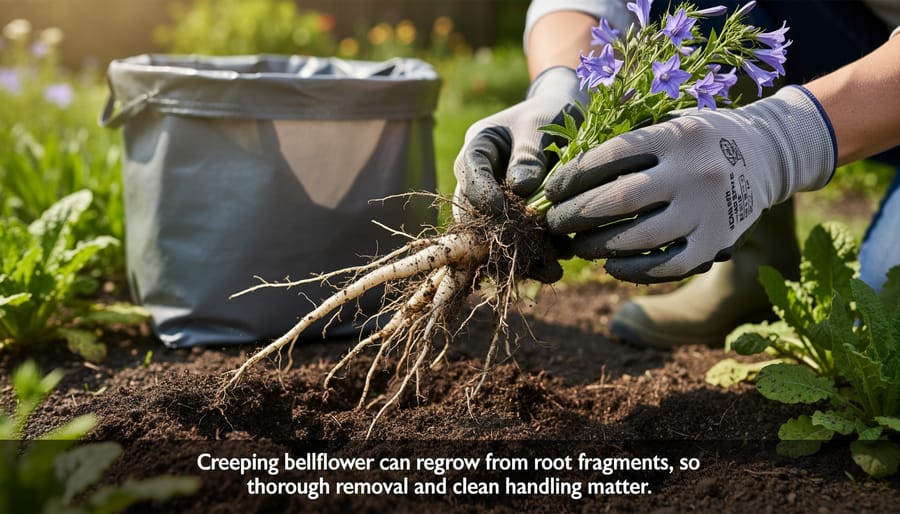
These plants typically share aggressive traits that give them unfair advantages. Many produce thousands of seeds per plant, garlic mustard can drop 5,000 seeds that remain viable in soil for five years. Others spread through persistent root systems; creeping bellflower’s brittle roots break during removal, and each fragment regrows into a new plant. Buckthorn leafs out earlier and holds leaves longer than native shrubs, hogging sunlight and resources for months while your ornamentals sit dormant.
The damage goes beyond competition. Dense invasive stands alter soil chemistry, making it harder for native plants to establish. They create monocultures that look monotonous and offer little value to pollinators and songbirds that evolved alongside Minnesota’s native flora. In your garden, this means fewer butterflies, struggling perennials, and landscapes that lose their seasonal interest.
Perhaps most frustrating, invasives force you into constant maintenance mode. Left unchecked for even one season, they’ll smother the hostas, daylilies, and native plantings you’ve carefully cultivated.
Tools and Materials You’ll Need
Tackling invasive weeds in Minnesota requires the right arsenal of tools and protective gear. Having everything ready before you start saves time and prevents half-finished removal jobs that let invasives rebound. Here’s what you’ll need for effective, safe removal work.
Essential hand tools form your first line of defense. A hori-hori knife cuts through tough roots and pries out deep-rooted plants like buckthorn seedlings. Dandelion diggers work perfectly for extracting taprooted invaders cleanly, minimizing soil disturbance. For larger woody invaders, quality loppers and a hand saw let you cut mature buckthorn and honeysuckle stems at ground level. A sturdy trowel handles smaller herbaceous weeds, while a garden fork loosens soil around stubborn root systems.
- Hori-hori knife: cuts roots and digs out established plants
- Dandelion digger: extracts taprooted weeds with minimal soil disruption
- Loppers and hand saw: removes woody stems up to 2 inches diameter
- Garden fork: loosens compacted soil around root masses
- Leather gloves: protects hands from thorns and plant irritants
- Long sleeves and pants: prevents contact with sap from wild parsnip and other irritating plants
- Safety glasses: shields eyes during cutting and chemical application
- Heavy-duty garbage bags: contains seeds and plant material for disposal
- Herbicide sprayer (optional): applies targeted treatments to persistent species
- Native plant replacements: fills gaps to prevent reinvasion
Protection matters as much as cutting power. Thick leather gloves shield your hands from thorns and potential skin irritants. Long sleeves and pants are non-negotiable, especially when dealing with wild parsnip, which causes severe burns. Safety glasses protect your eyes during overhead cutting and herbicide application.
Heavy-duty contractor bags contain removed plant material, preventing seed spread during transport to disposal sites. If you’re tackling persistent invasives, a pump sprayer dedicated solely to herbicides ensures precise application. Finally, have native plant replacements ready, filling gaps immediately prevents invasives from reclaiming cleared ground.
Safety Warnings and Precautions
Before you begin removing invasive weeds, protect yourself and your garden from potential hazards. Wild parsnip, a common Minnesota invasive, produces sap that causes severe burns and blisters when exposed to sunlight, while other species harbor ticks or trigger allergic reactions.
Wear thick gloves, long pants, and closed-toe shoes for every removal session. Choose a calm day to prevent spreading seeds during removal, windy conditions can scatter thousands of seeds across your yard and into neighbors’ gardens. When cutting woody invasives like buckthorn, apply the same safe pruning technique you’d use for ornamentals: clean cuts with sharp tools to avoid bark tearing that could damage nearby desirable plants.
If you’re using herbicides, read labels completely before application and keep children and pets away from treated areas for the recommended period. Seal removed plant material in heavy-duty bags immediately, don’t compost invasives or leave them in piles where seeds can mature and spread. Mark desirable native plants with bright flagging tape before starting removal work to avoid accidental damage.
Call a professional if you’re dealing with large infestations covering more than 500 square feet, invasives near water bodies, or plants you can’t positively identify. Some situations require specialized equipment or permits.
Step-by-Step Removal Process for Each Invasive Type
Removing Woody Invasives (Buckthorn and Honeysuckle)
Cut buckthorn and honeysuckle shrubs as close to the ground as possible using loppers for stems under two inches or a pruning saw for larger trunks. Work in late fall through early spring when sap flow is minimal and other plants are dormant, making the invasives easier to spot and reducing collateral damage to your garden.
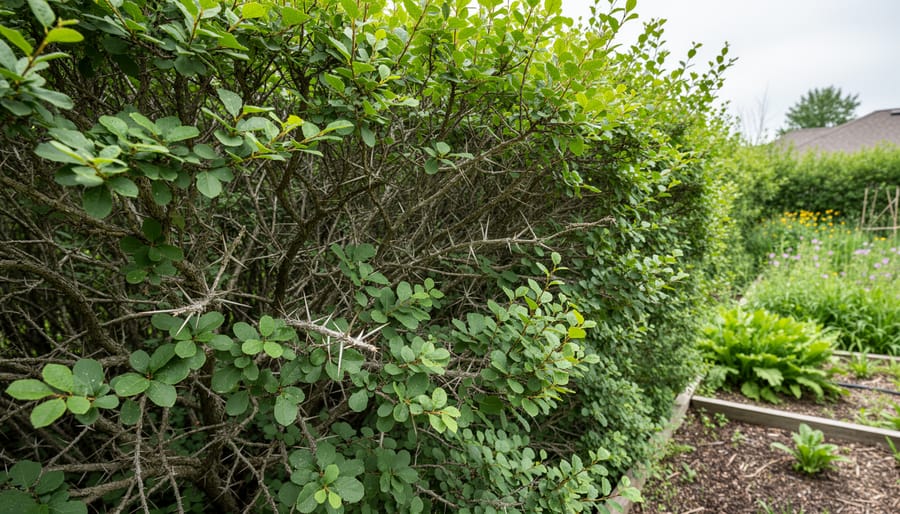
Immediately after cutting, within minutes, not hours, apply a 20-25% glyphosate solution or triclopyr herbicide directly to the freshly cut stump surface using a small paintbrush or spray bottle. Focus on coating the outer ring of the stump where the cambium layer actively transports nutrients. This step is critical: buckthorn and honeysuckle are champion resprouters, and you must treat stumps to prevent sprouting from the extensive root systems these plants develop.
For small seedlings under a foot tall, hand-pulling works if soil is moist and you remove the entire root. Grip the base firmly and pull steadily upward, checking that you’ve extracted the full taproot rather than snapping it off.
Bag all cut material in heavy-duty garbage bags and dispose of it with household trash. Never compost invasive woody plants or leave cuttings in brush piles, buckthorn berries remain viable and honeysuckle stems can root from nodes touching soil. Mark treated stumps with flagging tape so you can monitor them over the next growing season and retreat any resprouts that emerge before they regain strength.
Tackling Herbaceous Invasives (Garlic Mustard and Creeping Bellflower)
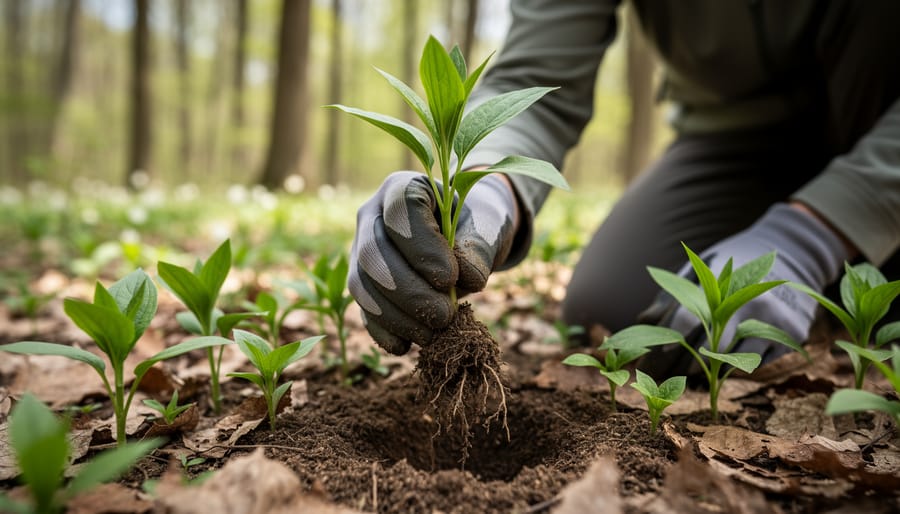
Herbaceous invasives like garlic mustard and creeping bellflower may look delicate compared to woody buckthorn, but their aggressive root systems and prolific seed production make them formidable opponents in Minnesota gardens. Success comes down to timing and thoroughness.
For garlic mustard, your window of opportunity opens in early spring when rosettes emerge and closes the moment those white flowers appear. You must hand-pull before seed development because a single plant produces thousands of seeds that remain viable in soil for five years. Grasp the stem at ground level and pull straight up with steady pressure, aiming to extract the entire taproot. If the taproot breaks, dig out remaining fragments with a dandelion digger or hori-hori knife, since even small pieces left behind can resprout. The soil should be moist but not waterlogged when you pull, making extraction easier and more complete.
Creeping bellflower presents a tougher challenge because its brittle white roots snap easily during removal, and every fragment left underground generates a new plant. When tackling this aggressive spreader, you need to remove all root parts down to at least eight inches deep. Work systematically through infested areas, loosening soil with a spading fork before pulling to minimize root breakage. Sift through the surrounding soil with your fingers to catch broken pieces. Check these areas weekly during the growing season because new shoots signal missed fragments that need immediate attention.
Managing Wetland Invasives (Purple Loosestrife)
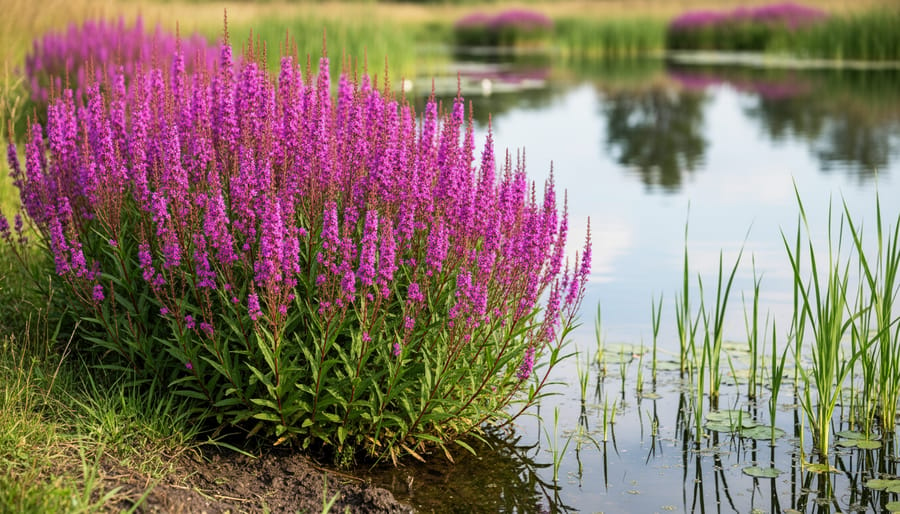
Purple loosestrife presents unique challenges because it thrives in wet areas where working conditions are difficult and traditional removal methods can damage fragile ecosystems. If you’ve spotted those distinctive magenta flower spikes near your pond or rain garden, you’ll need a specialized approach.
Mechanical removal works best in small populations and early spring when soil is workable but not waterlogged. Dig deeply, at least 12 inches, to extract the entire taproot and woody crown. The waterlogged conditions actually help here: roots pull more cleanly from saturated soil. Bag all plant material immediately since each spike produces hundreds of thousands of tiny seeds that spread through water.
For larger infestations, Minnesota has approved biological control using Galerucella beetles, which feed specifically on purple loosestrife without harming native plants. Your local Soil and Water Conservation District can advise on beetle release programs in your area. These programs work gradually but sustainably, weakening plants over several seasons.
Never use herbicides near water without checking Minnesota Department of Agriculture regulations, most products aren’t approved for aquatic use. For persistent stands, combining early-season cutting with fall herbicide application of aquatic-approved formulas gives the best results while protecting water quality.
When and How to Use Herbicides Responsibly
Sometimes invasive weeds simply won’t yield to mechanical removal alone, especially when dealing with extensive buckthorn stands or deep-rooted creeping bellflower that regenerates from tiny root fragments. In these cases, targeted herbicide use can be the most effective tool, but it requires careful selection and precise application to protect your desirable plants and Minnesota’s environment.
The timing of herbicide application dramatically affects its success. For woody invasives like buckthorn, apply a concentrated herbicide (such as triclopyr or glyphosate) immediately after cutting the stem, painting it directly onto the fresh stump surface within minutes. This “cut-stump treatment” prevents regrowth while using minimal product. For herbaceous invasives like garlic mustard, foliar sprays work best in early spring when the rosettes are actively growing but before native plants emerge, giving you a clean window to target only the invaders.
Spot-treatment techniques are essential for protecting your ornamental gardens. Use a small spray bottle or foam applicator brush rather than broadcast spraying, carefully applying herbicide only to the target weed’s foliage or cut stem. Shield nearby desirable plants with cardboard or plastic during application, and choose calm days with no wind to prevent drift. Products containing triclopyr (like Garlon or Brush-B-Gon) selectively target broadleaf plants while sparing grasses, making them useful in lawn areas overtaken by creeping Charlie or ground ivy.
Always read and follow label directions completely. The label isn’t just a suggestion; it’s the law, and it contains critical information about protective equipment, environmental precautions, and re-entry intervals for treated areas. Minnesota gardeners should look for products registered with the Minnesota Department of Agriculture and consider the herbicide’s half-life in soil if you plan to replant natives in treated spots.
Verification and Next Steps: Ensuring Complete Removal
Removing invasive weeds isn’t a one-and-done task, it’s the start of a monitoring relationship with your garden. After your initial removal efforts, inspect treated areas weekly for the first month. You’re looking for tiny green shoots that signal regrowth from root fragments you missed or seeds that germinated after you cleared the adults.
Different invasives have different comeback timelines. Garlic mustard seedlings pop up within weeks if you didn’t catch every plant before it set seed, so scan cleared areas in early spring and again in fall. Buckthorn stumps can resprout from the root crown for up to two years after cutting, sending up vigorous new shoots that need immediate attention. Creeping bellflower is the marathon runner of regrowth, root pieces the size of a grain of rice can generate new plants, so expect to pull stragglers for two to three seasons. Purple loosestrife typically shows regrowth within one growing season if herbicide treatment wasn’t thorough.
Here’s your first-year monitoring checklist:
- Weeks 1-4: Weekly inspections of all treated areas for immediate regrowth
- Months 2-6: Bi-weekly checks, pulling any new shoots before they establish
- Months 6-12: Monthly walk-throughs, focusing on spring and fall flush periods
- Year-round: Document what you find with photos to track progress and problem spots
Once you’re confident the invasives are gone, fill those empty spaces quickly. Bare soil is an invitation for new invaders. Plant native alternatives like ninebark instead of buckthorn, wild geranium where garlic mustard grew, or swamp milkweed to replace purple loosestrife. These natives establish strong root systems that physically block invasive seedlings while supporting pollinators, and they don’t need the constant babysitting that maintaining cleared ground demands. Apply similar vigilance to garden maintenance as the best timing for trimming your ornamentals, staying ahead of problems before they spiral.
Preventing Future Invasions in Your Ornamental Gardens
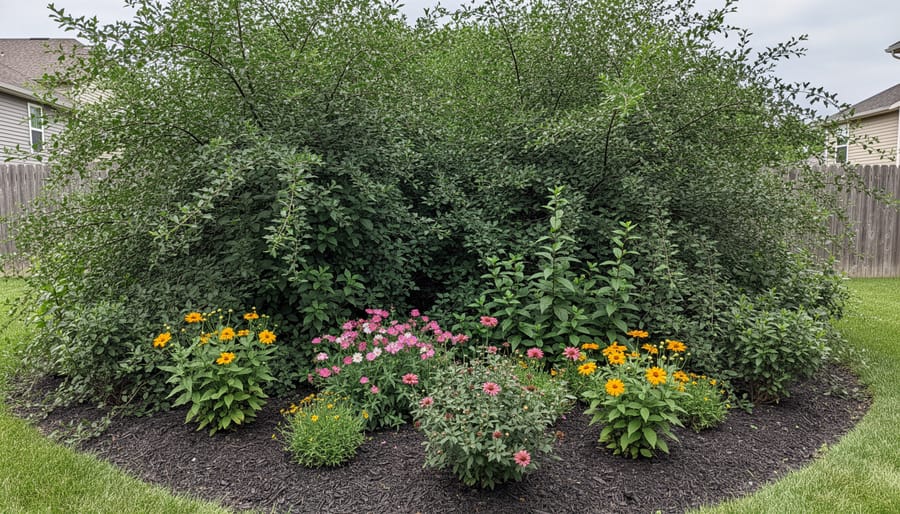
The best defense against invasive weeds is building a garden so healthy they can’t get a foothold. Start by filling empty spaces with native ornamental alternatives like purple coneflower, wild geranium, or native hydrangeas, plants adapted to Minnesota conditions that grow vigorously enough to shade out weed seedlings. Dense plantings leave nowhere for invaders to establish.
Apply 2-3 inches of shredded bark mulch around ornamentals each spring, keeping it pulled back from plant stems. This suppresses weed germination while retaining moisture for your desirables. Replenish as it decomposes.
Walk your garden weekly during growing season, especially in early spring and after rain. Catch new invasive seedlings when they’re finger-sized and easy to pull. Learn to recognize the first leaves of common culprits, garlic mustard’s kidney-shaped cotyledons, buckthorn’s distinctive oval leaves with curved veins.
Understanding ornamental plants purpose helps you select species that serve multiple functions: ground covers that exclude weeds, mid-layer perennials that fill vertical space, and shrubs that create shade. Layered plantings mimic natural ecosystems, making invasion difficult.
Never accept free plants from unknown sources or transplant “pretty wildflowers” from roadsides, that’s how many invasives arrive. Purchase from reputable nurseries that guarantee invasive-free stock. Clean tools and shoes after working in infested areas to avoid spreading seeds to clean beds.
A thriving, occupied garden is your strongest ally.
Expert Insight: Interview with a Minnesota Invasive Species Specialist
I recently sat down with Jennifer Larson, an invasive species coordinator with the Minnesota Department of Natural Resources who’s spent over fifteen years helping landowners reclaim their properties from invasive plants. Her practical insights resonated with what many of us face in our own yards.
What’s the biggest mistake you see Minnesota gardeners make when dealing with invasives?
“They wait too long to act. I get calls from people saying, ‘I noticed this plant last year, and now it’s everywhere.’ Invasives don’t take breaks. If you spot something suspicious, identify it immediately and remove it before it sets seed. One garlic mustard plant can produce thousands of seeds that remain viable in soil for five years.”
What’s your top advice for someone just starting their invasive removal journey?
“Start with one species and one manageable area. Don’t try to tackle your entire property at once. Pick your worst problem spot, maybe a 10-by-10-foot section, and commit to monitoring it weekly. Success in a small area motivates you to keep going, whereas trying to do everything leads to burnout.”
How can gardeners tell if they’re actually making progress?
“Keep a simple notebook or take monthly photos of the same spot. Progress with invasives isn’t linear. You’ll have setbacks. But when you compare this June to last June, you’ll see fewer stems, slower regrowth, and native plants filling in. That visual proof matters when you’re frustrated pulling the same buckthorn sprout for the third time.”
Any final encouragement for gardeners feeling overwhelmed?
“Every invasive plant you remove matters. You’re not just improving your garden, you’re preventing thousands of seeds from spreading to natural areas, parks, and your neighbors’ yards. The work you’re doing today protects Minnesota’s landscapes for decades. That’s worth celebrating.”
Frequently Asked Questions
Gardeners tackling invasives often have the same questions, and getting clarity on these points can make the difference between success and frustration. Here are answers to the concerns Minnesota gardeners most frequently raise.
When is the best time to remove invasive weeds in Minnesota?
Spring and early summer work best for most herbaceous invasives like garlic mustard, which you should pull before they set seed in late May. Woody invasives like buckthorn can be cut anytime, but treat stumps immediately after cutting for best results.
Can I compost invasive plants I’ve removed?
No, never compost invasive species. Seeds and root fragments can survive typical backyard composting temperatures and spread when you use the finished compost. Bag them in heavy-duty garbage bags for landfill disposal or burn them where local ordinances allow.
What if invasives keep coming back from my neighbor’s yard?
Have a friendly conversation with your neighbor, sharing what you’ve learned about identification and removal. Many people don’t realize they’re harboring invasives, and a collaborative approach benefits both properties and the broader community.
How do I tackle a large infestation without spending a fortune?
Start with the edges and work inward, focusing on preventing seed spread first. Hand-pulling costs nothing but time, and removing just the flowering plants each year will gradually weaken the population while you work on complete removal section by section.
Do I need to report invasive species I find?
Minnesota doesn’t require homeowners to report common invasives on their property, but reporting new or rare invasive sightings to your county’s Cooperative Extension helps track spread patterns. You’re responsible for managing invasives on your land, but not legally required to eliminate them in most residential situations.
How long until my garden is truly invasive-free?
Most herbaceous invasives require three to five years of consistent removal to exhaust their seed banks. Woody invasives like buckthorn may resprout for two to three years if you miss root fragments, so plan for ongoing monitoring rather than a one-time fix.
The key takeaway across all these questions is persistence paired with patience. Invasive management isn’t a weekend project, but breaking it into manageable steps and staying consistent with monitoring makes it entirely achievable for home gardeners working with typical budgets and timeframes.
Reclaiming your Minnesota garden from invasive weeds isn’t a one-time project, it’s an ongoing commitment that gets easier with each season. Start with one problem area rather than tackling your entire property at once. Celebrate when you pull that last garlic mustard plant from a formerly overrun bed, or when native columbines finally have room to thrive where buckthorn once dominated.
You don’t have to manage this alone. Connect with your local native plant society or county extension office. These communities offer plant swaps, identification help, and the encouragement that comes from working alongside neighbors facing the same challenges.
Every invasive you remove creates space for Minnesota’s stunning native ornamentals to flourish. That’s not just good stewardship, it’s restoring the vibrant, resilient landscapes our gardens were meant to be.