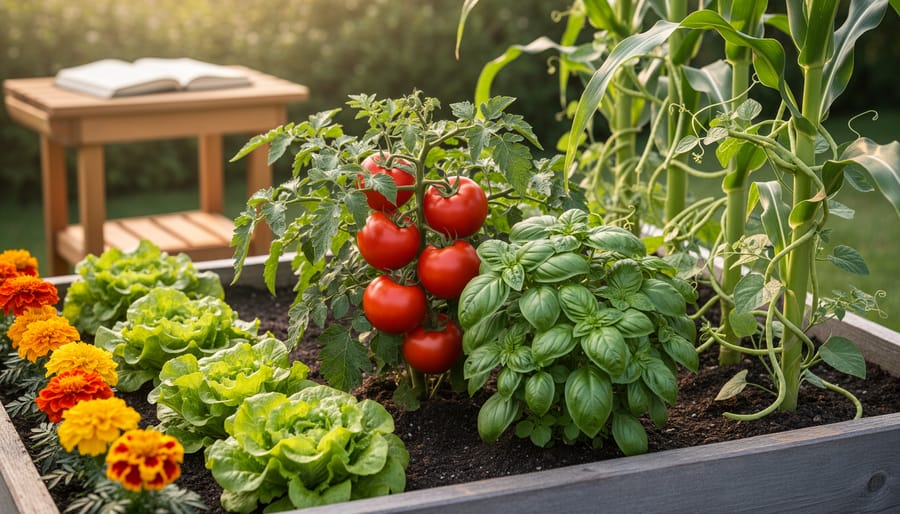
Picture this: Your tomatoes thriving beside basil that naturally repels pests, your beans enriching soil for neighboring corn, and your marigolds standing guard around vulnerable lettuce—all without synthetic chemicals. The right companion gardening book transforms this vision into reality, but choosing among dozens of titles can feel overwhelming when you’re standing in the bookstore aisle or scrolling through endless online reviews.
I’ve spent five growing seasons testing recommendations from twelve different companion planting guides in my own garden beds. Some books delivered incredible results—my carrot-onion pairing yielded 40% more harvest after following one author’s specific spacing advice. Others gathered dust on my potting bench, filled with vague suggestions that didn’t translate to actual garden success. Through trial, error, and plenty of dirt under my fingernails, I’ve learned exactly what separates truly useful companion gardening books from pretty covers with disappointing content.
The best companion gardening book for you depends on three factors: your experience level, your garden size, and whether you prefer scientific explanations or quick-reference charts. Understanding companion planting principles matters, but you need a book that presents information in a way that matches how you actually garden. A beginner needs different guidance than someone managing a quarter-acre homestead.
This guide walks you through the top companion gardening books I’ve personally used, explaining what each does well and who benefits most from its approach, so you can choose confidently and start planting smarter combinations this season.
What Makes a Companion Gardening Book Actually Useful
I’ve spent years collecting gardening books, and I’ll be honest—some of my companion planting books are gathering dust while others are splattered with soil and dog-eared from constant use. The difference? Truly useful companion gardening books share specific qualities that transform them from pretty shelf-fillers into invaluable garden tools.
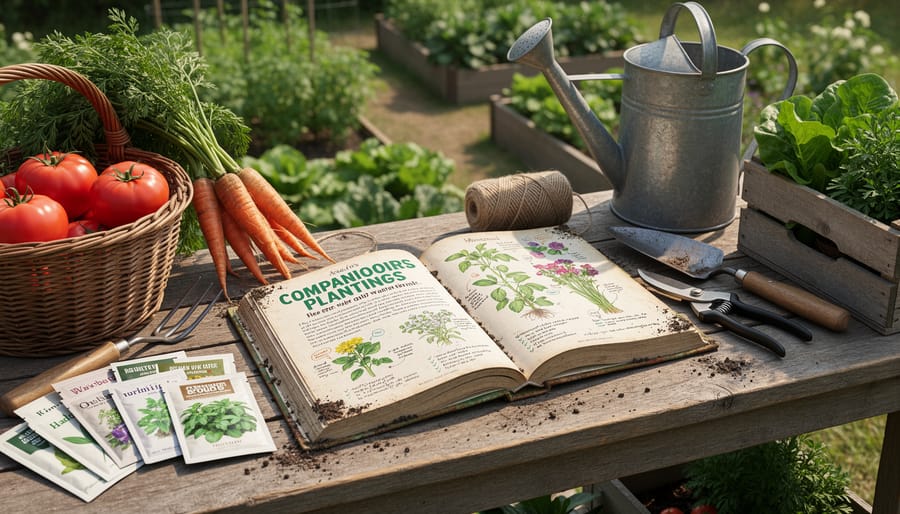
The most essential feature is a clear, easy-to-reference plant pairing chart. You don’t want to flip through pages of prose when you’re standing in your garden bed wondering if tomatoes and peppers make good neighbors. The best books include visual charts or matrices where you can quickly cross-reference plants. I look for charts organized alphabetically or by plant family, ideally printed on sturdy paper that can withstand being propped open outdoors.
Beyond the charts, look for books that explain the why behind companion planting. Understanding that basil repels aphids from tomatoes because of specific aromatic compounds helps you make informed decisions about substitutions. However, this scientific grounding shouldn’t read like a botany textbook. The most useful books strike that perfect balance—giving you enough knowledge to understand the principles without overwhelming you with Latin names and chemical formulas.
Regional considerations matter tremendously. A book recommending planting schedules for Zone 9 won’t help my Zone 5 garden much. Seek out books that either focus on your specific region or provide adaptable information across climate zones. The best authors acknowledge that companion planting works differently in humid Florida versus arid Arizona.
I’ve also learned to avoid books that present companion planting as an endless list of combinations without practical garden layouts. You need actionable advice—how to actually arrange these plants in a bed, spacing requirements, and which companions to prioritize when you can’t fit everything. Books with illustrated garden plans or step-by-step project guides showing real implementation beat theoretical discussions every time.
Finally, watch for books loaded with untested folklore versus garden-tested results. The most reliable authors share their own experiences, include interviews with renowned gardeners, or cite research. They’re honest about what works consistently versus what remains unproven.
Top Companion Planting Books Reviewed
For Beginners: The Most Approachable Starting Point
If you’re just dipping your toes into the world of companion planting, I can’t recommend “Carrots Love Tomatoes” by Louise Riotte enough. This classic has been guiding newcomers since 1975, and there’s a good reason it’s still going strong nearly fifty years later.
What makes this book perfect for beginners is its refreshingly simple approach. Riotte doesn’t overwhelm you with complex botanical terminology or expect you to memorize endless charts. Instead, she introduces companion planting through easy-to-follow plant pairings that actually work. The title itself gives away one of the most reliable combinations you’ll use season after season.
The book is organized alphabetically by plant, which means you can quickly flip to whatever you’re growing and discover its best friends and worst enemies. When I started out, I appreciated that I could look up “tomatoes” and immediately find practical partners without wading through scientific explanations. Each entry includes straightforward advice about spacing, timing, and why certain plants help each other thrive.
While this book doesn’t have the glossy photographs you’ll find in newer publications, the simple line drawings are actually quite helpful for identifying plants and visualizing garden layouts. The lack of fancy visuals keeps the focus where it belongs: on proven companion combinations that deliver results.
Riotte writes like a friendly neighbor sharing hard-won wisdom over the garden fence. She includes just enough explanation about how companion planting works to satisfy your curiosity, but never gets bogged down in unnecessary detail. You’ll find reliable pairings like beans with corn, marigolds with vegetables, and basil with tomatoes, all presented with confidence born from real experience.
For anyone feeling overwhelmed by companion planting’s possibilities, this book provides the perfect foundation to build upon.
For Vegetable Gardeners: Maximum Harvest, Minimum Pests
If you’re growing vegetables, you know that keeping pests at bay while boosting your harvest is always top of mind. Thankfully, several companion planting books focus specifically on these challenges, offering tried-and-true strategies that really work.
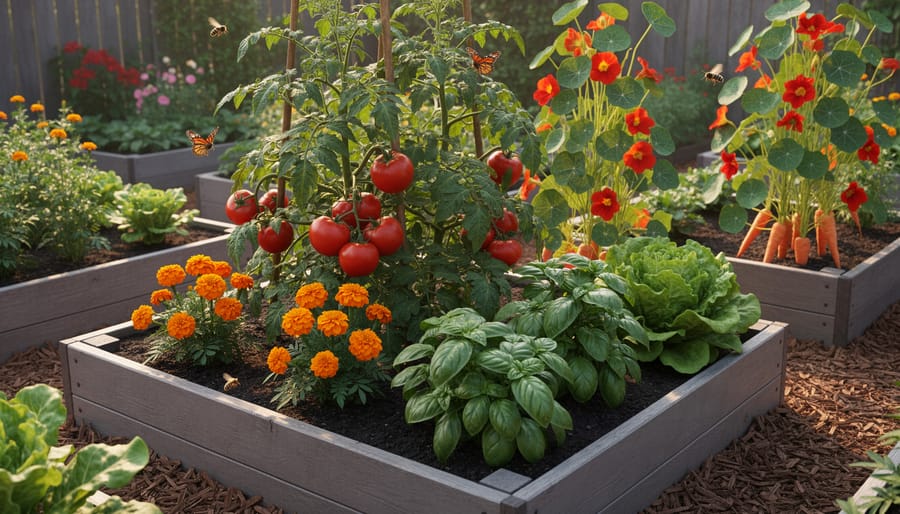
Louise Riotte’s “Carrots Love Tomatoes” remains the gold standard for vegetable gardeners. What I love about this classic is how Riotte breaks down plant relationships in simple terms. She explains exactly which vegetables thrive together and why. For instance, her advice on planting basil near tomatoes isn’t just folklore—she explains how the basil’s strong scent confuses pests while enhancing tomato flavor. The book’s organized alphabetically by plant, making it incredibly easy to look up companions for whatever you’re growing.
For those seeking more modern, science-backed approaches, “The Vegetable Gardener’s Guide to Permaculture” by Christopher Shein offers excellent companion planting strategies within a broader sustainable framework. Shein’s chapters on natural pest management through companion planting are particularly valuable, combining traditional wisdom with contemporary research.
Another standout is “Great Garden Companions” by Sally Jean Cunningham, which I find especially practical for maximizing yields. Cunningham provides specific planting ratios and spacing recommendations, not just vague suggestions. Her charts showing which combinations reduce pest damage by measurable percentages help you prioritize which companions to plant first.
What sets these books apart is their focus on real results. They don’t just list plant pairings—they explain the mechanisms behind successful combinations and offer troubleshooting advice when things don’t go as planned. For vegetable gardeners serious about reducing pest problems while increasing productivity, investing in at least one of these specialized guides will pay dividends throughout your growing season.
For Scientific Minds: Evidence-Based Companion Planting
If you’re the type of gardener who wants to understand the science behind your planting choices, you’ll appreciate books that go beyond simple compatibility charts. These evidence-based resources explain the fascinating mechanisms at work when plants help each other thrive.
One standout title is “The Science of Companion Planting” by Stuart Farrimond, which breaks down complex concepts like allelopathy (how plants release chemicals that affect neighbors) and mycorrhizal networks into digestible explanations. I remember reading the chapter on how marigolds actually work against pests and finally understanding it wasn’t just folklore. The book includes studies and research citations without feeling like a textbook, making it perfect for curious gardeners who want facts without overwhelm.
Another excellent choice is “Plant Partners: Science-Based Companion Planting Strategies” by Jessica Walliser. What I love about this book is how Jessica bridges the gap between academic research and practical application. She interviews scientists and presents peer-reviewed studies, then translates findings into actionable garden plans. Her section on trap cropping, where you use specific plants to lure pests away from crops, completely changed how I approach pest management.
For those interested in soil science, “The Hidden Half of Nature” by David Montgomery explores the microbial relationships between plants. While not strictly a companion planting guide, it provides crucial understanding of why diverse plantings create healthier gardens. These books transform companion planting from simple recipes into an informed practice you can adapt confidently to your unique conditions.
For Small Spaces: Container and Urban Companion Planting
Don’t let limited square footage hold you back from experiencing the benefits of companion planting! Several excellent books focus specifically on making the most of small spaces, whether you’re working with a tiny balcony, a sunny patio, or just a few containers by your front door.
I’ve found “Compact Companion Planting” by Amy Stross to be incredibly practical for anyone new to container gardening. What I love most is how Amy breaks down which plant partnerships actually work in pots, since not all traditional garden companions translate well to containers. She includes specific pot size recommendations and clever vertical growing techniques that I’ve used successfully on my own apartment balcony.
Another gem is “The Postage Stamp Vegetable Garden” by Karen Newcomb, which dedicates several chapters to companion planting in ultra-small spaces. Karen’s approach is refreshingly realistic, acknowledging the challenges of limited soil volume and root competition. Her spacing charts have saved me from overcrowding mistakes more than once.
For urban gardeners, “Vertical Vegetables and Fruit” by Rhonda Massingham Hart offers creative solutions for growing up instead of out. While not exclusively about companions, it brilliantly addresses how to pair climbing plants with shade-loving crops underneath, maximizing every inch.
These books share a common strength: they understand that small-space gardeners need adapted strategies, not just scaled-down versions of traditional methods. They’ll help you create thriving plant communities, no matter how modest your growing area.
What to Look for When Choosing Your Companion Gardening Book
Finding the perfect companion gardening book for your needs doesn’t have to feel overwhelming. I’ve been through quite a few myself, and I’ve learned that the right book really depends on where you are in your gardening journey and what you’re hoping to achieve.
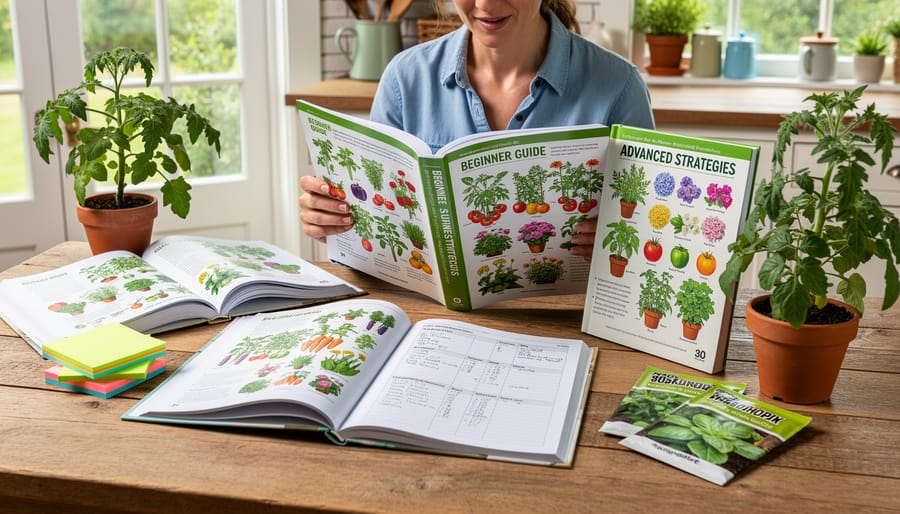
First, consider your experience level. If you’re just starting out, look for books that explain the basics of companion planting without assuming you already know plant families or soil science. Beginner-friendly books typically include glossaries, simple plant pairing charts, and plenty of photos. More experienced gardeners might appreciate books that dive deeper into the science behind companion planting or explore unconventional pairings you haven’t tried yet.
Your garden’s size matters too. Container gardeners and balcony growers need different advice than someone with a sprawling backyard plot. Some books focus specifically on small-space solutions, while others assume you have room for sprawling squash vines and companion herb borders. Think about your actual growing space when making your choice.
Climate zone coverage is something I wish I’d paid more attention to early on. A book written for Pacific Northwest gardeners won’t always translate perfectly to a Southern garden or a high-desert climate. Look for books that either focus on your specific region or provide guidance across multiple zones. The best comprehensive books include zone-specific planting calendars and acknowledge that companion planting strategies can vary by climate.
Visual learners, this one’s for you. Some books are packed with beautiful photographs and colorful charts that make vegetable garden planning a breeze. Others rely more on text-heavy descriptions. Flip through the preview pages if you can. Do the illustrations and diagrams speak to you? Can you easily find the information you need? A gorgeous book that you actually reference is worth more than a cheaper option that sits unopened on your shelf.
Budget considerations are practical and important. Hardcover editions with full-color photos throughout cost more but often become cherished garden references you’ll use for years. Paperback editions or digital versions can be gentler on your wallet while still delivering solid information. Remember, the best companion gardening book is the one you’ll actually read and use, regardless of price. Consider checking your local library first to test-drive a few options before committing to a purchase.
Common Myths These Books Should (But Don’t Always) Debunk
Not all companion gardening books are created equal, and some actually perpetuate myths that can lead you astray in your garden. When choosing a book, it’s worth checking whether it addresses these common misconceptions.
The biggest myth you’ll encounter is the idea that companion planting is a magic formula where certain plants absolutely must go together. Many books present rigid pairing charts without explaining that companion planting success varies wildly based on your climate, soil type, and growing conditions. A trustworthy book will acknowledge these variables rather than offering one-size-fits-all solutions.
The famous tomato-basil pairing is a perfect example. While they’re wonderful together in the kitchen, the scientific evidence for basil improving tomato growth or flavor is surprisingly thin. Some books repeat this as gospel truth, but the best ones will distinguish between traditional garden folklore and scientifically validated relationships. There’s nothing wrong with planting them together if you like the convenience, but don’t expect miraculous results.
Another oversimplification involves pest control claims. You’ll see statements like “marigolds repel all garden pests” or “garlic protects everything nearby.” Quality books should explain that while some plants do have pest-deterrent properties, the effects are often modest and specific to certain insects. Marigolds might discourage some nematodes, but they won’t create an impenetrable fortress around your vegetables.
Watch out for books that rely heavily on biodynamic or astrological planting guides without acknowledging these are belief-based systems rather than scientifically proven methods. While some gardeners swear by moon phase planting, a good book should clearly separate cultural practices from research-backed techniques.
The most helpful companion gardening books admit when evidence is anecdotal, cite actual studies when available, and encourage you to experiment in your own garden. They empower you to think critically rather than just follow instructions blindly. After all, the best teacher is your own experience observing what works in your unique growing space.
How I Use My Companion Planting Book in the Actual Garden
I’ll be honest—when I first got my companion planting book, I felt a bit overwhelmed trying to remember which plants liked each other while standing in the garden with muddy gloves. So I developed a system that actually works for me in real time.
My game-changer was creating waterproof quick-reference cards. I laminated index cards with my most-used combinations like tomatoes with basil, carrots with onions, and the three sisters trio. I keep these in a small plastic pocket attached to my garden tool belt. No more running inside to check the book when I’m halfway through planting!
At the start of each season, I sit down with my companion planting book and sketch out my beds on paper. I don’t just copy the companion charts blindly, though. I consider what did well last year and what my family actually eats. The book provides the framework, but my garden journal fills in the reality.
Speaking of which, keeping garden notes has been absolutely essential. I jot down what combinations thrived or failed in my specific conditions. For example, my book suggested planting dill near tomatoes, but in my hot climate, the dill bolted too quickly. Now I know to plant it in partial shade instead. These personal observations are gold.
I also flag pages in my book with sticky notes for quick access during peak planting season. The general principles stay in the book, but my practical, tried-and-true combinations get transferred to those laminated cards. This way, the book taught me the concepts, but my own experience shapes how I actually garden.
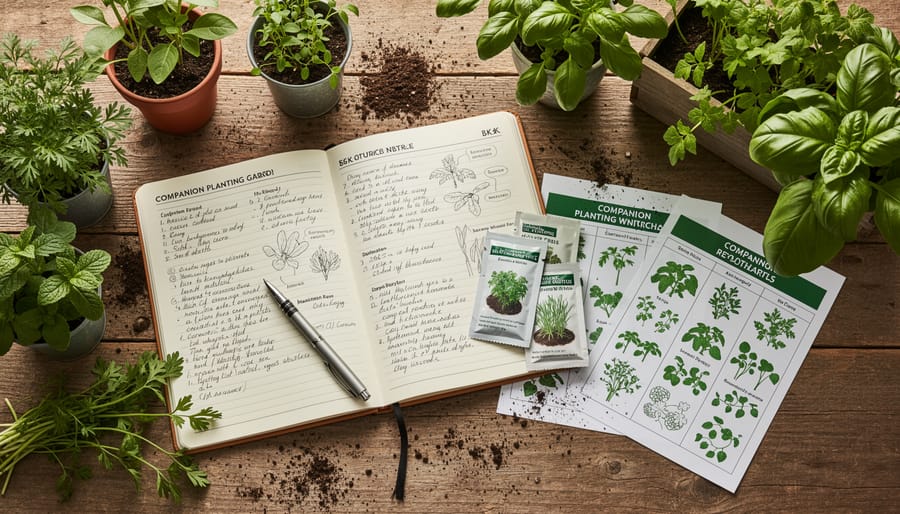
Here’s the truth I’ve learned from years of companion gardening: the best book isn’t the one with the fanciest photographs or the thickest spine gathering dust on your shelf. It’s the one that becomes so worn and soil-stained that you have to tuck it into a plastic bag before bringing it to the garden. The one with dog-eared pages marking your favorite plant combinations and margin notes about what worked in your space.
I recommend starting with just one reliable companion gardening book rather than accumulating a collection. Choose a guide that speaks to your experience level and matches your climate, then really get to know it. Take it outside, test its recommendations, and make notes in the margins about your successes and surprises. This focused approach helps you build confidence and develop your gardening intuition without feeling overwhelmed by conflicting advice.
Remember, though, that even the most comprehensive book is just a starting point. Your garden will teach you things no author could have predicted. Pay attention to which plants thrive when planted together in your specific soil, with your weather patterns, and under your care. Some of my best companion planting discoveries have come from happy accidents and careful observation rather than following instructions to the letter.
Let your chosen book be a trusted friend and advisor, but trust yourself too. The combination of a solid reference and your own growing experience will create a garden that truly flourishes.