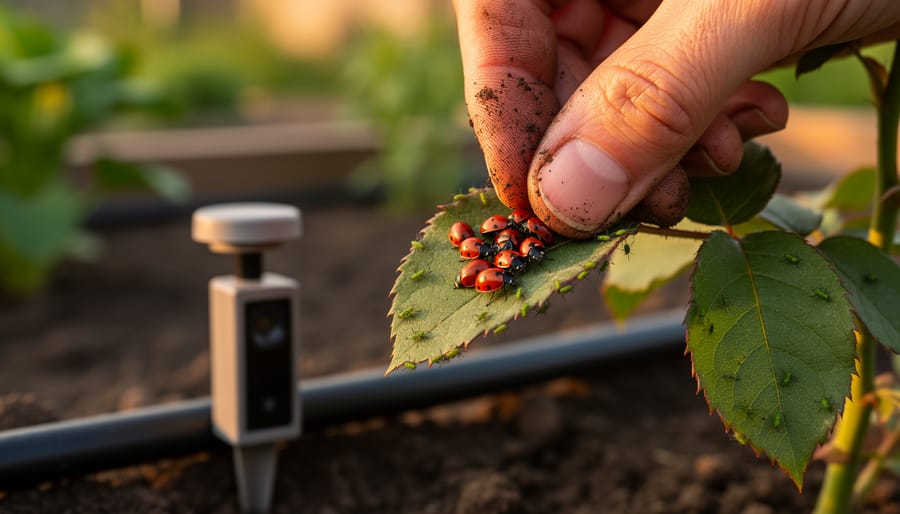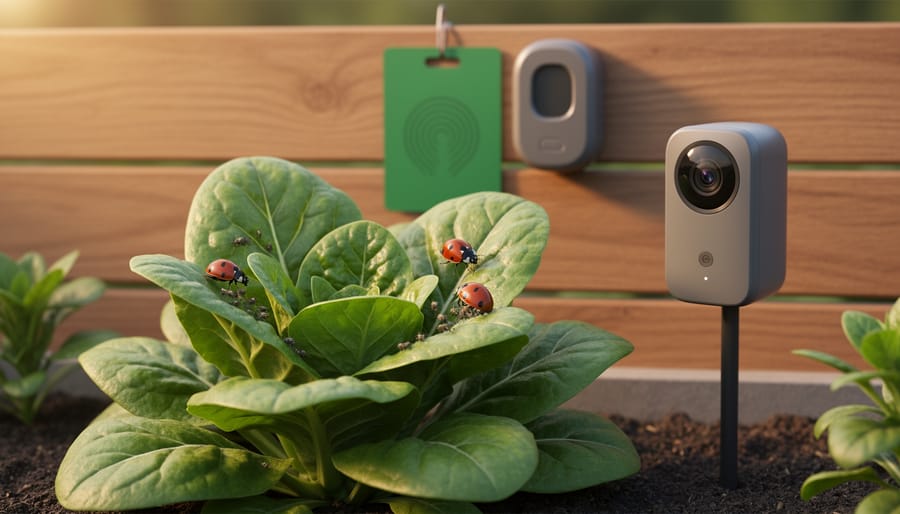
Rethink your approach to garden pests by introducing beneficial insects like ladybugs and lacewings that naturally hunt aphids, mites, and other destructive bugs. Purchase these biological warriors from garden centers or online suppliers, then release them during cool evening hours when they’re less likely to fly away immediately. Water your garden beforehand to encourage them to stay and hydrate.
Install motion-activated ultrasonic devices around your garden perimeter to deter rodents and larger pests without chemicals or traps. These smart sensors emit high-frequency sounds undetectable to humans but uncomfortable for unwanted visitors, offering a humane solution that aligns with modern garden trends toward sustainable practices.
Deploy pheromone traps strategically to disrupt pest breeding cycles rather than killing beneficial insects indiscriminately. These species-specific attractants lure target pests like codling moths or Japanese beetles into contained traps, preventing reproduction while leaving pollinators and predatory insects unharmed.
Integrate smartphone-connected monitoring systems that use AI-powered cameras to identify pest activity in real-time. These devices send alerts directly to your phone when they detect unusual insect patterns or plant damage, allowing you to intervene precisely when and where problems emerge rather than applying blanket treatments across your entire garden.
The shift from reactive chemical spraying to proactive biological and technological solutions represents more than just a trend. It transforms how we protect our gardens while nurturing the ecosystem around us, delivering effective pest management that works with nature instead of against it.
What Makes Pest Control ‘Next-Gen’?
The Science Behind Biocontrols
Nature has always had its own pest control system, and biocontrols simply harness that power for your garden. Think of it as recruiting a team of tiny helpers who see garden pests not as problems, but as lunch.
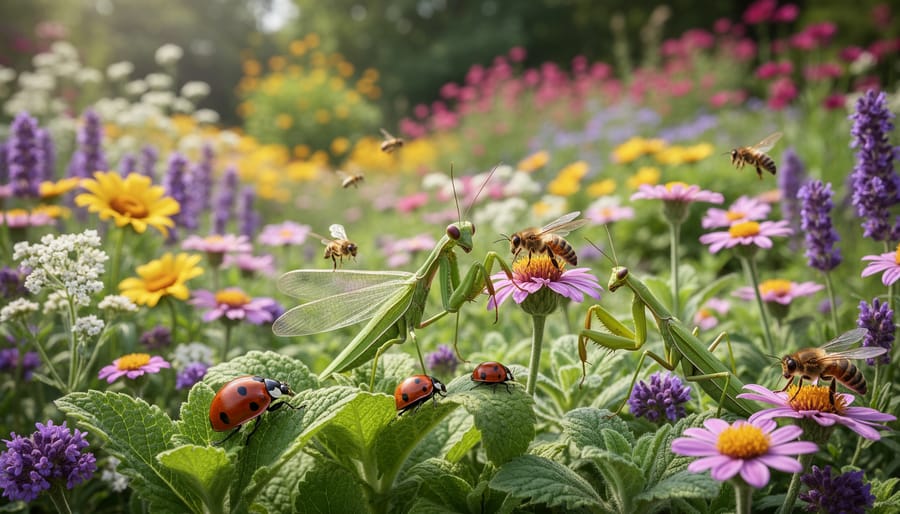
Beneficial insects are probably already working in your garden right now. Ladybugs, for instance, are absolute champions at devouring aphids—a single ladybug can eat up to 50 aphids per day! Lacewings are another garden ally, with larvae that feast on soft-bodied pests like mealybugs and whiteflies. Even those intimidating-looking praying mantises are friends, snacking on caterpillars and beetles that might otherwise demolish your tomato plants.
Then there are the microscopic heroes: beneficial microorganisms. Bacillus thuringiensis, often called Bt, is a naturally occurring soil bacterium that targets specific caterpillars without harming other insects, pets, or people. When caterpillars ingest it, it disrupts their digestive system. Sounds intense, but it’s remarkably selective and breaks down quickly in the environment.
Natural predators extend beyond insects too. Many gardeners welcome birds, toads, and even certain nematodes (microscopic roundworms) that attack soil-dwelling pests like grub larvae.
The beauty of biocontrols is their specificity. Unlike broad-spectrum chemical pesticides that wipe out everything in their path, these natural allies target particular pests while leaving beneficial pollinators and other garden visitors unharmed. It’s precision pest management that works with nature’s rhythms rather than against them.
How Smart Technology Enters Your Garden
Imagine having a garden assistant that never sleeps, constantly watching for the first signs of trouble. That’s exactly what modern smart farming technology brings to pest control, and it’s more accessible than you might think.
Today’s smart garden sensors are like tiny weather stations combined with pest detectives. These compact devices monitor temperature, humidity, and soil conditions while also tracking insect activity. Some use tiny cameras to identify specific pests, while others detect the subtle changes in plant health that signal an infestation before you’d ever notice with the naked eye.
The real magic happens when these sensors connect to apps on your smartphone. You’ll receive alerts when conditions favor certain pests or when actual invaders are detected. Instead of guessing whether those yellowing leaves mean aphids or just thirsty plants, you get concrete data to guide your response.
I spoke with Maria Chen, an organic gardener from Vancouver, who shared her experience: “My monitoring system caught a thrip problem three days before I would have noticed it myself. That early warning meant I could use beneficial insects instead of scrambling for a quick fix.”
These systems range from simple moisture sensors under fifty dollars to comprehensive monitoring setups. The beauty is that you can start small with one sensor in your vegetable patch and expand as you see results. The technology learns your garden’s patterns, becoming smarter and more helpful over time.
Beneficial Insects That Do the Heavy Lifting
Ladybugs, Lacewings, and Parasitic Wasps
Let’s meet three of the garden’s most powerful allies! These beneficial insects work tirelessly to keep pests in check, and the best part? They’re surprisingly easy to attract to your garden.
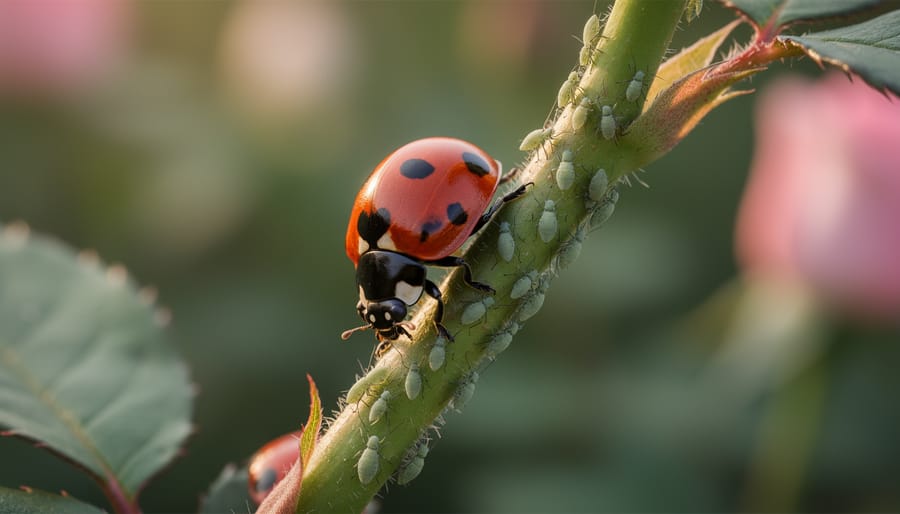
Ladybugs are perhaps the most recognizable beneficial insects, and for good reason. A single ladybug can devour up to 5,000 aphids in its lifetime! They also feast on mites, scale insects, and other soft-bodied pests. You can purchase them online or at garden centers, though I’ve found the most success by planting pollen-rich flowers like yarrow, fennel, and dill to attract them naturally.
Lacewings are the undercover heroes of pest control. Their larvae, sometimes called “aphid lions,” have an insatiable appetite for aphids, thrips, mealybugs, and even small caterpillars. Adult lacewings prefer nectar and pollen, so plants like cosmos, sweet alyssum, and coreopsis will make your garden irresistible to them.
Parasitic wasps might sound intimidating, but these tiny insects (most are smaller than a grain of rice!) are completely harmless to humans. They lay their eggs inside pest insects like caterpillars, aphids, and whiteflies, effectively eliminating future generations. Attract them with small-flowered herbs like cilantro, parsley, and thyme.
When purchasing beneficial insects, release them in the evening when they’re less likely to fly away immediately. Mist your plants first to provide drinking water, and remember that creating a welcoming habitat with diverse plantings will encourage them to stay and multiply naturally.
Nematodes and Microbial Warriors
Some of the most effective pest warriors work completely out of sight, right in your soil. Think of them as your garden’s secret defense team!
Beneficial nematodes are microscopic roundworms that hunt down and eliminate soil-dwelling pests like grubs, root weevils, and fungus gnat larvae. Don’t worry—these aren’t the harmful nematodes that damage plant roots. The beneficial varieties are incredibly selective hunters, seeking out only pest insects while leaving earthworms, plants, and other helpful organisms completely alone. You simply mix them with water and apply to your soil. They’re particularly effective because they reproduce in the bodies of their prey, creating a lasting presence in your garden.
Another invisible hero is Bacillus thuringiensis, or Bt for short. This naturally occurring soil bacterium produces proteins that are toxic to specific insects when ingested but completely harmless to humans, pets, and beneficial insects. Different strains target different pests—one variety controls caterpillars like cabbage worms, while another handles mosquito larvae. I’ve watched Bt save my tomato plants from hornworm devastation within days.
The beauty of these biocontrols? They’re incredibly targeted, breaking the cycle of harmful broad-spectrum pesticides while working with nature’s own pest management systems.
Creating a Habitat They’ll Love
Think of beneficial insects as guests you want to stick around—they need food, water, and shelter to call your garden home. Start by planting a diverse mix of flowers that bloom at different times. Favorites like yarrow, dill, fennel, and sweet alyssum provide nectar and pollen that keep predatory insects well-fed and happy.
Create little insect hotels using bundles of hollow stems or small piles of rocks where beneficial bugs can overwinter and raise their young. A shallow dish with pebbles and water gives them a safe drinking spot without the drowning risk.
Here’s a tip from Master Gardener Elena Rodriguez: “I tuck borage and cosmos throughout my vegetable beds. They’re like magnets for lacewings and hoverflies, and honestly, they make the whole garden prettier too.”
Don’t forget that a healthy soil ecosystem supports the entire food chain, from ground beetles to the plants themselves. Leave some areas a little wild—those messy corners often become thriving habitats for your helpful garden allies.
Smart Monitoring Tools You Can Actually Use
Pest-Detecting Sensors and Traps
Think of pest-detecting sensors and traps as your garden’s early warning system. Just like a smoke detector alerts you before a small fire becomes a disaster, these smart devices catch pest problems when they’re still manageable.
Modern smart traps have come a long way from the traditional sticky boards you’d forget to check. Today’s versions use motion sensors and cameras to photograph intruders, then send notifications straight to your phone. Some even use artificial intelligence to identify specific pests, so you’ll know whether you’re dealing with aphids, whiteflies, or Japanese beetles without having to become an entomology expert yourself.
I recently spoke with Sarah Chen, a certified master gardener from Oregon, who installed moisture sensors in her greenhouse. “I was amazed,” she told me. “The sensors detected unusual humidity patterns that attracted fungus gnats before I even saw the first one. I adjusted my watering schedule and avoided what could have been a major infestation.”
Temperature and humidity monitors work similarly, alerting you to conditions that pests love. Spider mites thrive in hot, dry environments, while slugs prefer cool, moist areas. When your sensors detect these conditions, you can take preventive action.
For those just starting out, begin with one or two wireless traps in problem areas. Many affordable options connect via Bluetooth and require minimal setup. As you get comfortable with the technology, you can expand your monitoring network to cover your entire garden, creating a comprehensive pest surveillance system that works while you sleep.
Apps That Tell You What’s Bugging Your Plants
Gone are the days of flipping through dusty field guides while squinting at a mysterious bug munching your tomatoes. Today’s pest identification apps put an expert entomologist right in your pocket, ready to help whenever you spot trouble in the garden.
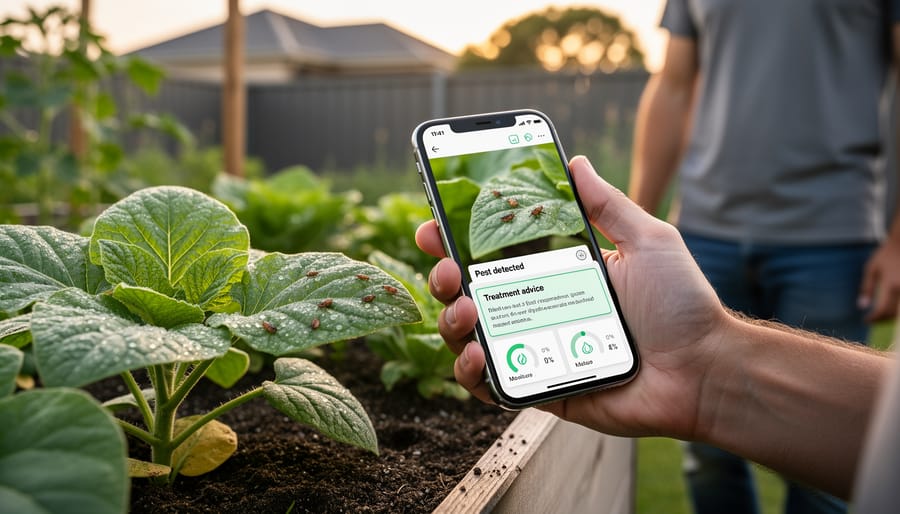
These smart apps work like magic. Simply snap a photo of the pest or damage, and artificial intelligence analyzes the image against thousands of possibilities. Within seconds, you’ll know whether that caterpillar is a beneficial butterfly larvae or a destructive pest. Popular options like Picture Insect, iNaturalist, and Plantix have transformed how gardeners tackle pest problems.
What makes these apps truly next-generation is their personalized approach. They track your specific location, local weather conditions, and seasonal pest patterns to provide targeted recommendations. Instead of generic advice, you’ll receive treatment suggestions that actually work for your region and current conditions.
I recently interviewed master gardener Rebecca Chen, who told me, “These apps have completely changed my IPM strategy. I discovered what I thought was a pest outbreak was actually beneficial lacewing larvae. The app saved me from making a costly mistake.”
Many apps also include treatment escalation guides, starting with the gentlest organic solutions before suggesting stronger interventions. They’ll remind you when to check your plants again and track which treatments worked best.
The best part? Most of these apps offer free versions with robust features, making next-gen pest control accessible to everyone. Your smartphone becomes a powerful diagnostic tool, helping you make informed decisions quickly and confidently.
Combining Old Wisdom with New Technology
Building Your Next-Gen IPM Strategy
Creating your own next-generation IPM strategy might sound complex, but I promise it’s more straightforward than you think. The key is building your approach in layers, each one supporting the next. Let me walk you through a framework that’s worked wonderfully in my own garden and countless others I’ve visited.
Start with prevention as your foundation. Walk through your garden with fresh eyes and identify what might attract pests in the first place. Are there spots with poor drainage? Overcrowded plants that limit airflow? Dead plant material piling up? Address these issues first. Choose plant varieties known for disease resistance, rotate your crops each season, and maintain healthy soil through composting and proper watering. Think of this step as pest-proofing your space before problems even start.
Next, establish your monitoring system. Set aside time each week to truly observe your plants. Check undersides of leaves, inspect new growth, and keep simple notes about what you see. You might use sticky traps in your greenhouse or take photos to track changes over time. This regular attention helps you catch issues when they’re tiny and manageable, not when they’ve become full-blown infestations.
Layer three brings in your biological allies. Introduce beneficial insects gradually, starting with one or two types that address your most common problems. Plant flowers that provide nectar and pollen to keep these helpers around. Create habitat with small water sources and undisturbed areas where predatory insects can shelter.
Finally, keep targeted interventions as your backup plan. When prevention, monitoring, and biocontrols need support, reach for the least disruptive option first. Insecticidal soaps, horticultural oils, or hand-picking often do the job beautifully. Save stronger measures for true emergencies, and always spot-treat rather than blanket-spraying your entire garden.
When (and How) to Intervene
Here’s the thing about pest control: not every bug you spot requires action. I learned this the hard way when I panicked over a few aphids and wiped out the ladybug population that would’ve handled them naturally!
Think of intervention as a ladder you climb only when necessary. Start by monitoring your garden weekly. A handful of pests? That’s usually fine. Your beneficial insects need something to eat, after all. But if you notice curling leaves, sticky residue, or damage spreading across multiple plants, it’s time to act.
Begin with the gentlest approach. Release beneficial insects like ladybugs for aphids or lacewings for thrips. They’re your first line of defense. If problems persist after a week or two, try physical removal—yes, hand-picking works—or a strong spray of water to dislodge pests.
Save organic sprays like neem oil or insecticidal soap for genuine infestations. Even organic options affect beneficial insects, so use them thoughtfully and only on affected areas. The goal isn’t a pest-free garden (impossible!), but a balanced ecosystem where good bugs keep the troublemakers in check naturally.
Real Gardens, Real Results
When Sarah Martinez decided to tackle the aphid invasion destroying her heirloom tomatoes last spring, she knew she wanted something different from the chemical sprays her neighbors recommended. “I’d spent months building healthy soil and creating this little ecosystem in my backyard,” she explains. “Dousing it with harsh pesticides just felt wrong.”
Sarah’s journey into next-gen pest control started with releasing ladybugs, a beneficial insect that devours aphids with remarkable efficiency. “I’ll admit, I was skeptical at first,” she laughs. “How could a bunch of cute beetles possibly save my garden?”
The results surprised her. Within a week, the aphid population had noticeably declined. But Sarah didn’t stop there. She installed a simple motion-activated sprinkler system that deterred rabbits from her lettuce beds without harming them. “It’s like having a gentle garden guardian that works while I sleep,” she says.
The biggest challenge? Patience. “Modern pest control requires a different mindset,” Sarah notes. “Instead of seeing instant results like with chemical sprays, you’re building a balanced system. It took about three weeks before I really saw the full benefits.”
She also discovered that success came from combining methods. Alongside her beneficial insects, she planted marigolds and nasturtiums as companion plants to naturally repel certain pests. “I learned that next-gen pest control isn’t just about one magic solution. It’s about creating layers of protection that work together.”
Today, Sarah’s garden thrives with minimal intervention. Her tomatoes produced their best harvest yet, and she’s noticed more butterflies and bees visiting her flowers. “What started as a pest problem became an opportunity to create something better,” she reflects. “My garden feels alive now, not just managed. That’s the real victory.”
Getting Started Without Overwhelm
Transitioning to next-gen pest control doesn’t require a complete garden overhaul or a massive investment. The beauty of this approach is that you can start small and build gradually as you learn what works in your unique space.
Begin with observation. Spend a week simply watching your garden. When do pests appear? Where do beneficial insects hang out? This information becomes your baseline. I like to keep a simple garden journal on my phone, just quick notes about what I see each day.
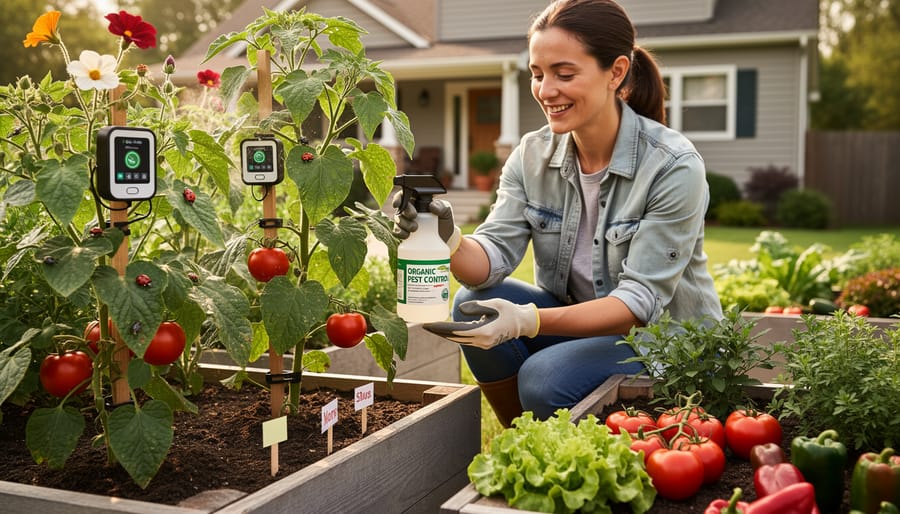
Your first physical step should be introducing beneficial insects. Ladybugs or lacewings cost about the same as a bag of chemical pesticide but offer longer-lasting results. Release them in the evening when they’re less likely to fly away immediately. At the same time, plant a few pest-deterrent companions like marigolds or nasturtiums among your vulnerable plants. These cost just a few dollars and provide season-long protection.
Budget-wise, expect to invest between twenty and fifty dollars initially for beneficial insects, companion plants, and perhaps some neem oil as a natural backup option. This is comparable to traditional pest control products but with better environmental outcomes.
For technology enthusiasts, smart monitoring tools start around one hundred dollars. However, these aren’t essential when beginning your journey. Master the basics first, then explore time-saving gardening strategies through technology later.
Set realistic expectations. Next-gen pest control focuses on balance rather than elimination. You’ll see some pest damage, but it will be manageable and won’t compromise your harvest. Results typically become noticeable within three to four weeks as beneficial populations establish themselves.
Remember, every experienced gardener started exactly where you are now.
The beauty of next-gen pest control is that it’s not reserved for high-tech farms or professional gardeners with unlimited budgets. These solutions are accessible right now, whether you’re tending a few containers on your balcony or managing an expansive backyard garden. The shift toward biocontrols and smart monitoring represents a genuine upgrade from the spray-and-hope methods of the past, offering you more precision, better results, and peace of mind knowing you’re protecting beneficial insects and pollinators.
Remember, you don’t need to overhaul your entire approach overnight. Start small. Release a container of ladybugs to tackle aphids, or try a simple moisture sensor to catch problems before they spiral. Each step you take builds your confidence and deepens your understanding of your garden’s unique ecosystem.
The journey toward smarter, more sustainable gardening isn’t about perfection. It’s about progress, curiosity, and finding what works in your own patch of earth. As you explore these next-generation tools and techniques, you’ll likely discover that pest management becomes less of a battle and more of a balanced partnership with nature. Your garden will thank you for it, and so will the planet.