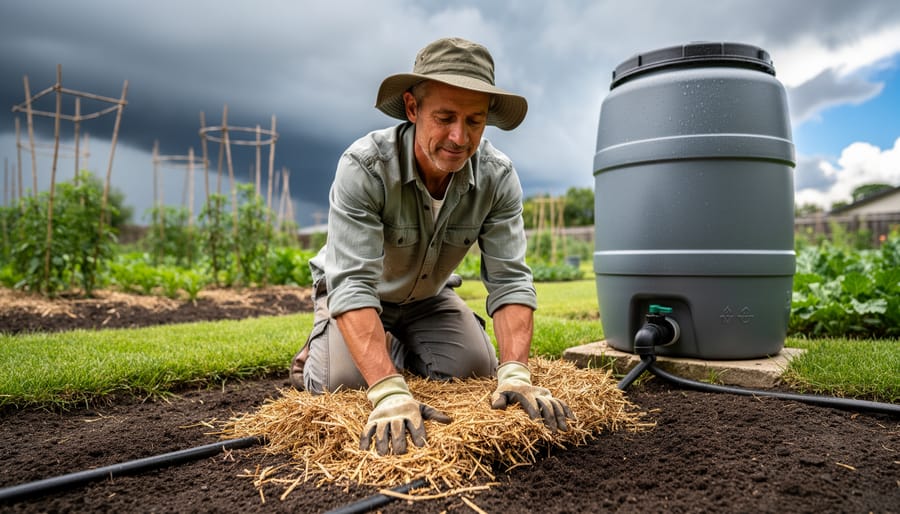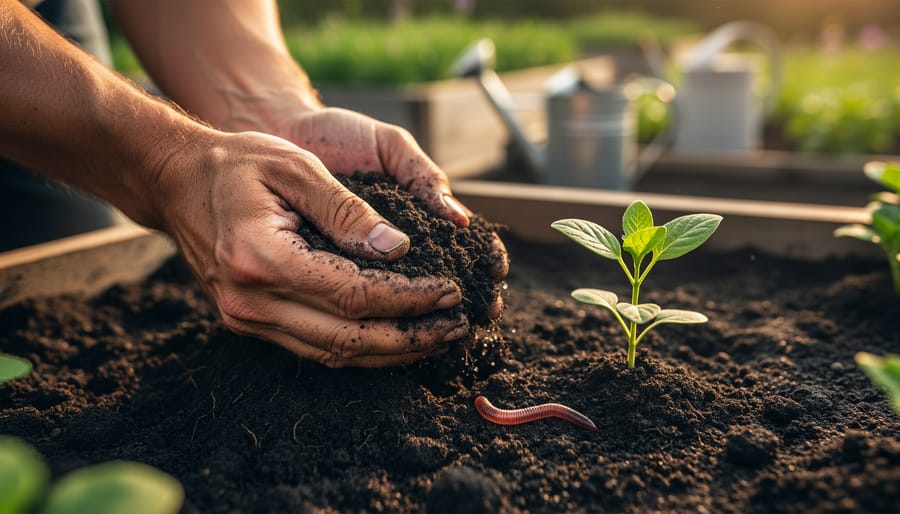
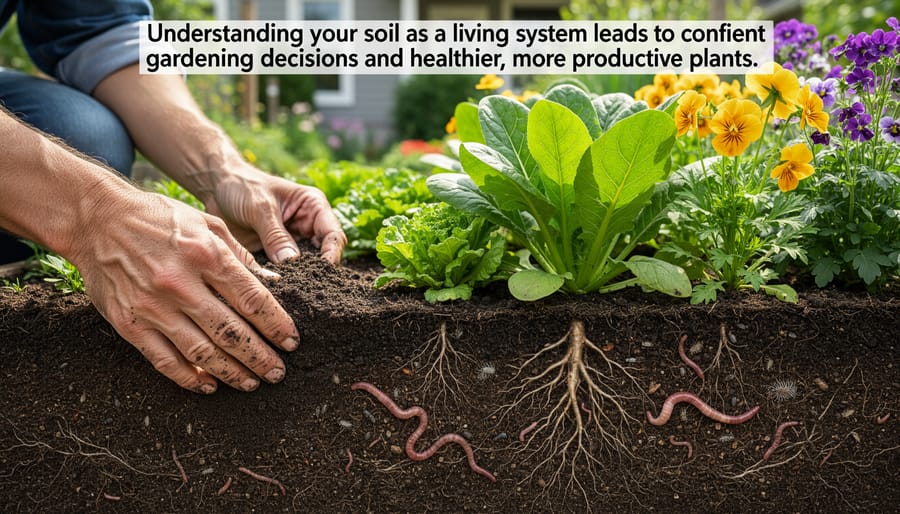
Think of your garden soil as a living ecosystem working day and night to support your plants. Understanding this dynamic system empowers you to make smarter decisions about when to water, fertilize, and plant, transforming guesswork into confident action.
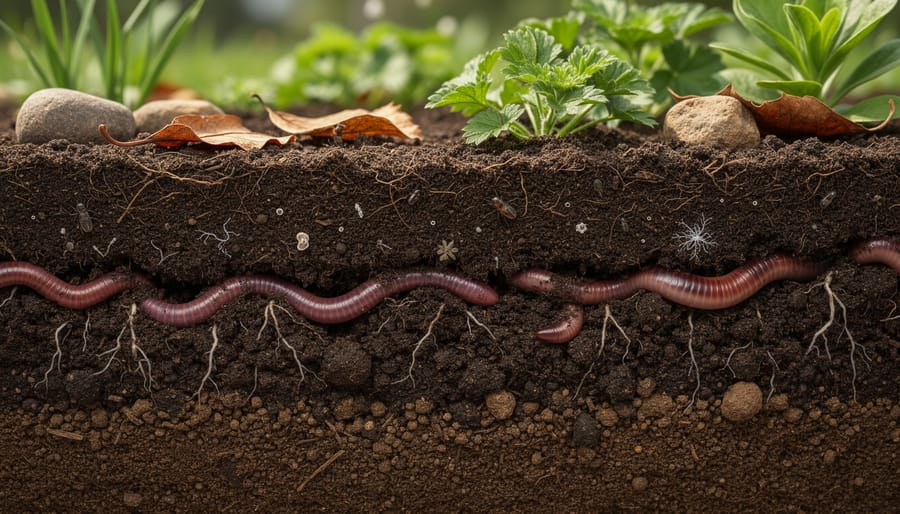
Your soil system comprises four essential components working together: mineral particles that provide structure, organic matter that feeds beneficial microbes, water that transports nutrients, and air spaces that let roots breathe. When these elements balance properly, your plants thrive with minimal intervention. When they fall out of sync, you’ll notice stunted growth, yellowing leaves, or poor harvests, no matter how much effort you invest.
Monitoring this system doesn’t require expensive lab tests or scientific training. Start by observing simple indicators: squeeze a handful of moist soil to check texture, watch how quickly water drains after rainfall, notice which weeds appear (they’re excellent soil condition reporters), and track how your plants respond throughout the season. These observations become your personal soil database, revealing patterns that guide your gardening choices.
Decision support means translating what you observe into targeted actions. Poor drainage signals the need for compost additions or raised beds. Compacted soil tells you to reduce foot traffic and add organic matter. Pale, slow-growing plants indicate nutrient deficiencies requiring specific amendments. By connecting observations to solutions, you’ll spend less time troubleshooting problems and more time enjoying a productive, flourishing garden that practically manages itself.
What Makes Soil a Living System (Not Just Dirt)
The Three Players in Your Soil’s Ecosystem
Think of your soil as a bustling city where three distinct groups work together to create the perfect growing environment. Understanding these players will help you become a better soil detective in your own backyard.
The physical component is what you can see and feel. Grab a handful of soil and squeeze it. Does it form a tight ball or crumble apart? Sandy soil feels gritty and drains quickly, while clay soil is smooth and sticky, holding water like a sponge. The best garden soil has a crumbly texture somewhere in between. Look closely at the structure too. Healthy soil has visible clumps with tiny air pockets, almost like miniature apartment buildings. These spaces let roots breathe and water move through. You can test this yourself: dig down a few inches and notice if your shovel glides easily or if you’re hitting compacted layers.
The chemical players include pH levels and nutrients that fuel plant growth. While you can’t see pH with the naked eye, simple test kits from garden centers reveal whether your soil is acidic, neutral, or alkaline. Watch how your plants respond. Are your hydrangeas turning pink instead of blue? That’s your soil’s pH talking. Nutrients like nitrogen, phosphorus, and potassium work behind the scenes, and you might spot signs of deficiency through yellowing leaves or stunted growth.
The biological world is where the magic happens. beneficial microbes, earthworms, and countless other organisms transform organic matter into plant food. Turn over some soil near your compost pile and count the earthworms you find. More worms generally mean healthier soil. These living players are your garden’s hardest workers, tirelessly breaking down last fall’s leaves into tomorrow’s nutrients.
Why Your Soil Needs More Than a One-Time Test
The Signs Your Soil Is Out of Balance
Your soil speaks to you every day—you just need to know what to look for! When your soil system falls out of balance, plants send clear distress signals that are surprisingly easy to spot once you know them.
Start by observing your plants themselves. Stunted growth is often the first red flag, where seedlings seem stuck at the same size week after week. Pale or yellowing leaves, especially on normally vibrant plants, usually indicate problems with nutrient management or pH imbalance. You might also notice leaves with scorched edges or unusual spotting patterns.
Water behavior tells its own story. Does water pool on the surface instead of soaking in? That’s poor drainage, often caused by compaction or clay-heavy soil. Conversely, if water disappears instantly and plants wilt quickly, your soil may lack organic matter to retain moisture.
Physical clues are equally revealing. Try the simple screwdriver test: push a long screwdriver into your soil. It should slide in relatively easily when moist. If you’re struggling, compaction is likely your culprit. Crusty, hard soil surfaces or areas where nothing seems to grow also signal trouble.
Finally, take note of weeds. Certain persistent weeds thrive in specific conditions—dandelions love compacted soil, while sorrel indicates acidity. These volunteer plants are actually helpful diagnostic tools, showing you exactly what needs attention in your garden.
Simple Tools That Help You Understand Your Soil System
The Budget-Friendly Monitoring Kit Every Gardener Needs
You don’t need to spend a fortune to start monitoring your soil effectively. Here’s my tried-and-true starter kit that won’t break the bank.
First up, grab a basic soil pH test kit. I recommend the paper strip testers, which run about $10-15 at any garden center or hardware store. They’re incredibly simple to use: just mix a soil sample with distilled water, dip the strip, and match the color. Test different areas of your garden, as pH can vary surprisingly from spot to spot.
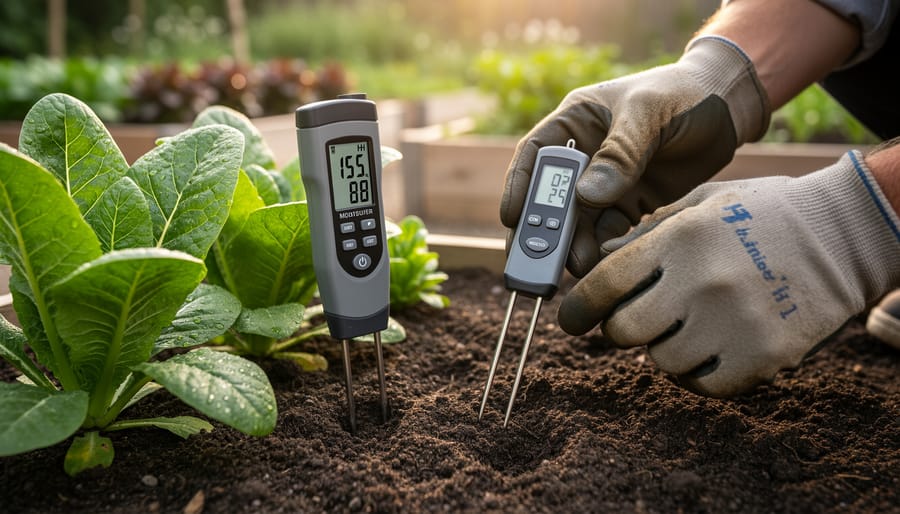
Next, invest in a soil moisture meter, available for $10-20 at most garden retailers or online. These handy tools eliminate the guesswork of when to water. Simply insert the probe into your soil at root depth and read the dial. I check mine twice weekly during growing season, noting patterns in a simple notebook.
A soil thermometer is another worthwhile addition at around $8-12. You’ll find these at farm supply stores or online marketplaces. Temperature affects everything from seed germination to beneficial microbe activity. I keep mine near my raised beds and check it every morning during spring planting season.
Finally, don’t overlook the humble trowel you already own. Use it to dig exploratory holes and examine soil structure, color, and texture. Look for earthworms, check root development, and observe how water drains.
Total investment? Under $50 to start understanding your soil system like never before.
When to Upgrade to Digital Soil Monitors
Digital soil monitors aren’t essential for every gardener, but they can be game-changers in specific situations. Think of them as helpful companions rather than must-have gadgets.
These smart sensors shine brightest when you’re managing container gardens. Pots dry out unpredictably, and a digital moisture monitor takes the guesswork out of watering, preventing both drought stress and overwatering. I’ve found them invaluable for my deck containers, especially during those scorching summer weeks when moisture levels can swing dramatically within hours.
If water conservation matters to you, whether you’re in a drought-prone region or simply want to garden more sustainably, digital monitors help you water with precision. You’ll know exactly when plants need moisture rather than following a fixed schedule that often wastes water.
Precision vegetable gardeners also benefit tremendously. Growing nutrient-demanding crops like tomatoes or peppers? Monitors that track pH, nitrogen, and moisture levels help you optimize conditions for peak production. One gardener I interviewed increased her tomato yields by 30 percent simply by adjusting her watering schedule based on sensor data.
Many monitors now connect to smartphone apps, creating accessible charts and sending watering reminders. Start with basic moisture-only sensors if you’re curious but hesitant. They’re affordable and provide immediate value without overwhelming you with data.
The key is matching technology to your actual needs. Manual observation works beautifully for most gardens, but digital tools become worthwhile when managing challenging microclimates, maximizing yields, or conserving precious resources.
Making Better Decisions With What Your Soil Tells You
Creating Your Personal Soil Care Calendar
The best way to truly understand your soil is to develop a simple tracking system that fits your gardening rhythm. Think of it as a journal for your soil—a place where you record observations, note changes, and plan seasonal interventions that support building healthy soil.
Start by creating a basic calendar framework. Mark the key points in your growing season: early spring when soil warms, mid-season when plants are actively growing, and fall when you’re preparing beds for winter. At each checkpoint, spend fifteen minutes observing and recording what you notice. Is the soil crumbly or compacted? Does water pool or drain away quickly? Are earthworms visible when you turn the top few inches?
Keep your notes simple and actionable. A small notebook works perfectly, or use a note-taking app on your phone if that feels more natural. Date each entry and jot down weather conditions—these context clues become invaluable over time. You might write: “May 15, after three days of rain: soil in raised beds drains well, clay area near fence still soggy.”
As seasons pass, patterns emerge. You’ll notice that certain beds need compost each fall, while others maintain their structure beautifully. Maybe your vegetable patch requires attention in early spring, but your perennial border stays balanced year-round.
The real magic happens when you review these notes before making decisions. Planning to add amendments? Check what worked last year. Wondering about drainage issues? Your calendar reveals whether it’s a recurring problem or just this season’s unusual weather. This personalized approach transforms soil care from guesswork into informed stewardship.
Real Gardeners Share Their Soil Success Stories
Nothing beats hearing from fellow gardeners who’ve transformed their growing spaces by simply paying closer attention to their soil systems. Their stories remind us that small observations can lead to remarkable results.
Take Maria from Oregon, who spent two frustrating seasons watching her tomatoes produce beautiful foliage but disappointing fruit. “I was feeding them regularly, but my plants just weren’t happy,” she recalls. After testing her soil and discovering extremely high nitrogen levels, she adjusted her approach. “I stopped adding compost that was too nitrogen-rich and introduced more balanced amendments. Within weeks, I saw flower clusters forming. That season’s harvest was incredible.” Maria’s experience shows how understanding your soil’s nutrient balance can solve puzzling plant problems.
Then there’s James, a retired teacher in Arizona who faced soaring water bills and wilting vegetables despite constant irrigation. By monitoring his soil moisture at different depths, he discovered his clay-heavy soil was staying waterlogged near the surface while roots below went thirsty. “I installed a simple moisture meter and learned to water less frequently but more deeply,” he explains. “My water use dropped by forty percent, and my squash plants finally thrived.” His success story demonstrates how soil observation leads directly to resource conservation.
Community gardener Priya transformed a neglected urban plot by tracking her soil’s pH monthly. “The soil was compacted and acidic from years of neglect,” she shares. “By documenting changes as I added compost and lime, I could see exactly when conditions improved.” Her careful monitoring helped her determine the perfect planting time, resulting in a flourishing vegetable garden that now feeds three families.
These gardeners didn’t need fancy equipment or advanced degrees. They simply started observing their soil systems consistently, kept basic records, and responded thoughtfully to what they discovered. Their success can be yours too.
Here’s the truth I’ve learned from years of getting my hands dirty: understanding your soil as a living, breathing system transforms you from someone who just plants things into a truly confident gardener. You stop guessing and start knowing. You recognize patterns, anticipate problems, and celebrate those small victories that come from really connecting with what’s happening beneath your feet.
The best part? You don’t need to tackle everything at once. This week, choose just one simple monitoring practice. Maybe it’s the squeeze test to check moisture before watering, or perhaps keeping a quick journal of what you observe when you dig. Start small and build from there.
Remember, every garden has its own personality shaped by climate, history, and the unique conditions of your little patch of earth. What works for your neighbor might need tweaking in your yard, and that’s perfectly normal. Learning your soil is a journey, not a destination. Some seasons will teach you more than others, and mistakes are simply data points for next year.
The investment you make in understanding your soil system today will reward you season after season, creating healthier plants, better harvests, and honestly, a whole lot more gardening joy.