Your garden’s water supply shares more than you might think with villages across Asia, Africa, and Latin America. When communities band together to eliminate open defecation and build proper sanitation systems, they’re doing exactly what we gardeners do when we protect our water sources from contamination—safeguarding health from the ground up.
Community Led Total Sanitation (CLTS) represents a powerful grassroots approach where entire communities collectively decide to end open defecation without relying on external subsidies or top-down mandates. Instead of individual households installing toilets one by one, everyone commits together, creating comprehensive sanitation coverage that truly protects shared water resources. This collective action model prevents the contamination that occurs when even a few people practice open defecation near water sources that entire communities depend upon.
For gardeners, this approach offers profound insights. Just as CLTS recognizes that partial solutions leave everyone vulnerable to waterborne diseases, your garden’s water safety depends on understanding the complete picture of contamination risks. Whether you’re collecting rainwater, drawing from a well, or connecting to municipal supplies, the principles that drive successful sanitation campaigns apply directly to maintaining clean irrigation water.
The connection runs deeper than surface similarities. CLTS succeeds because communities map their water sources, trace contamination pathways, and collectively commit to behavior changes. You can apply these same investigative techniques to your own property, identifying how runoff patterns, neighboring land uses, and your own practices affect water quality. This community-minded thinking transforms sanitation from an abstract public health concept into something immediately relevant: the foundation of safe, productive gardening that protects both your plants and your family’s wellbeing.
What Community-Led Total Sanitation Actually Means for Your Garden
The Water Connection You Might Be Missing
You might be surprised to learn that poor sanitation doesn’t just affect human health—it directly impacts the water you’re using in your garden. When human waste isn’t properly managed in a community, it creates a cascade of problems that flow right into our gardens.
Think about your well water or nearby streams. Without proper sanitation systems, harmful bacteria like E. coli and parasites can seep into groundwater through soil contamination. I spoke with master gardener Ellen Rodriguez, who discovered this firsthand when her vegetable garden kept failing despite her best efforts. Testing revealed her well water was contaminated from a neighbor’s failing septic system located uphill.
Surface water faces similar challenges. When rain falls, it carries waste particles from open defecation areas directly into rivers, ponds, and irrigation ditches. This contaminated runoff doesn’t just disappear—it ends up watering your tomatoes and lettuce. Beyond immediate health risks, there’s the soil story too. Soil exposed to untreated human waste develops harmful pathogen populations that can persist for months, affecting everything from beneficial earthworms to root health.
The connection between protecting groundwater sources and community sanitation might seem indirect, but it’s absolutely fundamental. Clean water starts with proper waste management—something Community Led Total Sanitation addresses at the source, keeping contaminants away from the water systems we all depend on for growing healthy, safe food.
Why Top-Down Approaches Often Fail
Think about the last time you struggled with a garden problem. Did a government pamphlet help more, or did chatting with your neighbor over the fence lead to real solutions? Most of us would choose the neighbor’s advice every time.
Top-down sanitation programs often fail for the same reason generic gardening instructions don’t work for your specific yard. When distant officials mandate toilet construction without understanding local conditions—just like suggesting “water regularly” without knowing your soil type or climate—communities resist or comply half-heartedly.
Here’s what typically goes wrong: External experts arrive with one-size-fits-all solutions, ignoring that communities understand their own water sources, soil conditions, and social dynamics far better than outsiders ever could. It’s like receiving a detailed rose-pruning guide when you’re growing vegetables in clay soil.
Government mandates also miss the power of peer influence. When your gardening buddy shows off their thriving tomatoes, you’re naturally motivated to improve your own garden. Similarly, effective community water management happens when neighbors inspire neighbors, not when distant authorities issue commands that feel disconnected from daily life.
When Better Sanitation Saved a Community Garden
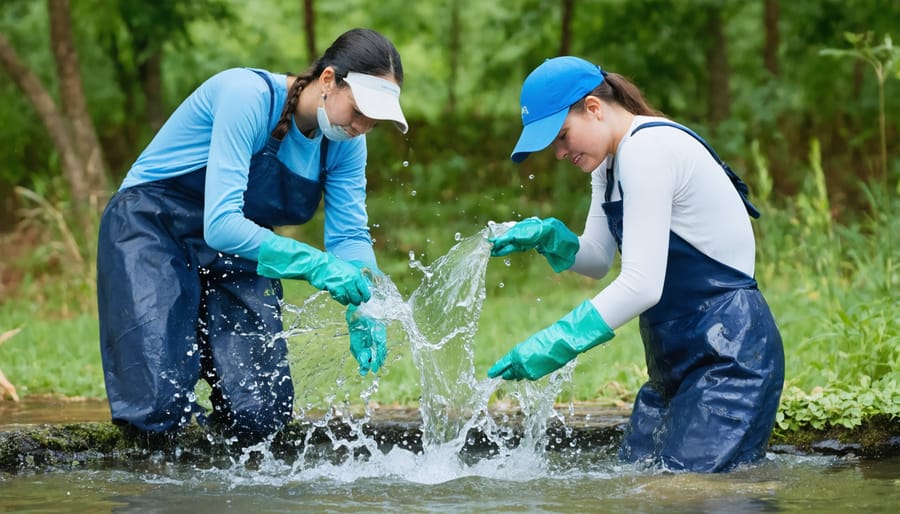
When the Riverside Community Garden in rural Pennsylvania faced a persistent problem with contaminated irrigation water in 2019, gardeners noticed their vegetables weren’t thriving despite their best efforts. Worse, several families reported stomach illnesses after consuming their homegrown produce. The culprit? Open defecation and poorly maintained pit latrines from nearby homes were seeping into the shallow wells the garden relied upon.
“We were heartbroken,” recalls Maria Chen, the garden coordinator. “Here we were, trying to grow healthy food for our families, and the water itself was making us sick.”
The turning point came when a local health worker introduced the community to CLTS principles. Rather than waiting for outside funding or infrastructure, the 47 households surrounding the garden decided to take action themselves.
**The Before Picture**
Testing revealed dangerous levels of E. coli in the garden’s water supply. Three of five wells showed contamination. Garden plots closest to the water sources produced stunted plants, and tomatoes showed signs of bacterial infection. Participation in the garden had dropped by half as worried families stayed away.
**Taking Community Action**
The community organized weekend meetings where members openly discussed sanitation practices—a topic many initially found uncomfortable. They mapped contamination sources together, identifying problem areas where runoff from improperly located latrines drained toward the garden.
Over six months, families built improved latrines with proper drainage, relocated problematic facilities, and established a 50-meter buffer zone around all water sources. Garden members contributed labor and local skills rather than waiting for grants.
“The biggest challenge wasn’t the physical work,” Maria explains. “It was getting everyone to acknowledge the problem without shame or blame. We framed it as protecting something we all loved—our garden.”
**The Transformation**
Within a year, water testing showed dramatic improvement. E. coli levels dropped by 90%. Plants flourished, yields increased, and families felt confident eating their harvest again. Membership rebounded, and the garden expanded by a third.
The community now maintains monthly “sanitation walks” to check infrastructure and has become a model for three neighboring gardens facing similar challenges.
Simple Steps to Support Clean Water in Your Neighborhood
Start Conversations at Your Community Garden
Starting conversations about sanitation doesn’t need to feel awkward or preachy. The key is connecting it to shared gardening experiences. When you’re both admiring someone’s tomato harvest, try asking, “What water source do you use? I’ve been thinking about testing mine.” This opens the door naturally.
Share your own journey rather than lecturing. Mention how you recently learned that compost toilets can actually benefit gardens, or how you discovered your rainwater collection could use improvement. Fellow gardeners respond well to personal stories because we’re all learning together.
Consider organizing a casual “water quality coffee chat” at your community garden. Frame it as a learning session where everyone brings questions. You might say, “I’ve been curious about our well water safety—anyone else interested in exploring this together?” This collaborative approach removes any finger-pointing and builds genuine interest.
Bring simple pH testing strips to share during a garden workday. Hands-on activities spark curiosity without feeling like homework. When people see their own results, questions naturally follow.
Remember, the goal isn’t converting everyone immediately. Plant seeds of awareness just as you’d plant seeds in soil—with patience, care, and trust that growth will come.
Test Your Water (And Help Others Test Theirs)
Testing your garden water is easier than you might think, and it’s one of the most practical ways you can protect both your plants and your family. I started testing my water after noticing some neighbors’ gardens thriving while mine struggled—turns out, knowing what’s in your water makes all the difference!
**Getting Started with Basic Testing**
Begin with an affordable home testing kit from your local hardware store or online retailer (typically $15-40). Look for kits that test for pH, nitrates, coliform bacteria, and heavy metals. These indicators often reveal upstream sanitation issues that could affect your garden and connect directly to water recycling practices.
**What to Watch For**
High nitrate levels (above 10 mg/L) often signal septic system leaks or agricultural runoff—both sanitation concerns. Coliform bacteria shouldn’t appear in clean water at all; their presence means contamination from human or animal waste. Unusual pH readings (below 6.5 or above 8.5) might indicate industrial contamination.
**Taking Action**
Collect samples early morning before watering, following kit instructions precisely. Test multiple locations if you use different water sources. Record results in a garden journal and share findings with neighbors—collective data helps identify community-wide issues.
If results show contamination, contact your local health department. They can investigate sources and connect you with community sanitation programs. Meanwhile, switch to municipal water for edibles and consider installing simple filtration for irrigation. Remember, you’re not just protecting your garden—you’re becoming a water guardian for your entire community!
Create a Neighborhood Water Watchdog Group
Gathering your neighbors to monitor water quality creates a powerful network of caring eyes on your shared resources. Start by inviting fellow gardeners for an informal meeting—perhaps over tea in your garden—to discuss common concerns like runoff, contamination, or drainage issues affecting your plots.
Together, you can establish simple monitoring routines: observing water clarity, noting unusual odors, and tracking where problems originate. I’ve seen communities pool resources to purchase basic water testing kits, making regular checks affordable for everyone. One neighborhood I know created a shared calendar where members take turns testing their local creek monthly.
Consider designating a “water champion” who coordinates communication and keeps everyone informed. Share findings through a group chat or neighborhood newsletter, celebrating improvements and addressing concerns collectively.
When you identify sanitation issues—like leaking septic systems or improper waste disposal—approach neighbors with kindness and solutions rather than blame. Often, people simply don’t realize the downstream impact on gardens and water sources. By working together, you’ll protect the water that nourishes both your plants and community.
Protecting Your Garden Water Source Right Now
Smart Composting That Protects Groundwater
Safe composting practices protect both your garden’s productivity and your community’s water supply. When done correctly, composting transforms waste into garden gold while keeping harmful pathogens away from groundwater sources.
First, let’s talk about what belongs in your compost. Human waste requires specialized hot composting systems that reach temperatures above 131°F for extended periods—honestly, this is best left to municipal facilities or professionally designed humanure systems. For home gardeners, stick with vegetable scraps, yard waste, and yes, pet waste can be composted, but in a separate system dedicated solely to that purpose, never mixed with food-producing garden compost.
Location matters tremendously. Position any compost bin at least 50 feet from wells, streams, or water sources—downhill if possible, so runoff naturally flows away from these areas. Think of it as creating a protective buffer zone.
I learned this firsthand from Master Gardener Janet Williams, who noticed her well water quality declining. After relocating her compost pile farther from the well and adding a gravel drainage bed underneath, her water tests improved within months. She now advocates for what she calls the “50-foot rule” in her community workshops.
Layer your compost properly—browns and greens in balance—to ensure hot, aerobic decomposition that naturally eliminates pathogens while creating nutrient-rich amendments for ornamental gardens.
Rainwater Collection as Your Backup Plan
When community water sources face contamination risks, having a backup plan isn’t just smart—it’s essential for keeping your garden thriving. Rainwater collection offers gardeners a reliable alternative that sidesteps ground-level contamination concerns entirely.
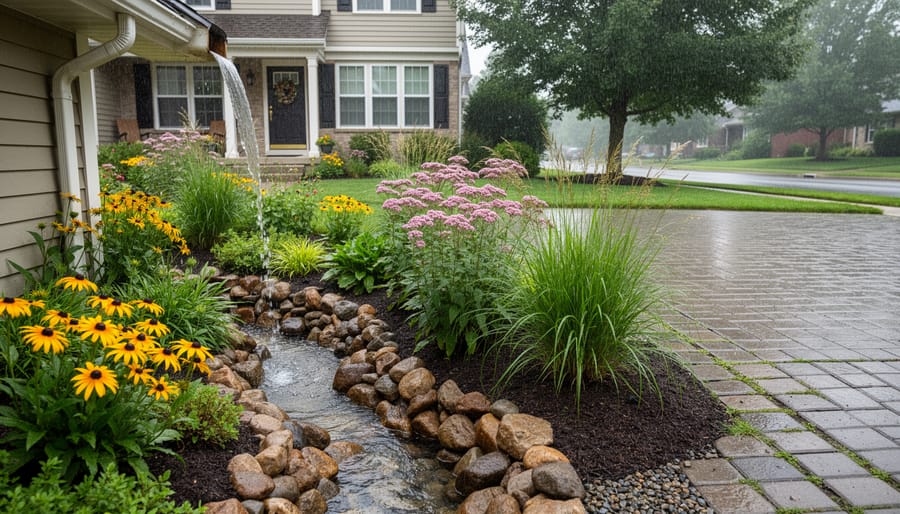
Think of it this way: rain falling on your roof hasn’t touched potentially contaminated soil or groundwater. It’s nature’s gift delivered straight from the sky! Even a modest rainwater harvesting system can capture hundreds of gallons during a single storm, giving you peace of mind and your plants a safe drink.
Getting started doesn’t require fancy equipment. Position clean barrels under your downspouts with simple mesh screens to filter out leaves and debris. For those wanting more capacity, connect multiple barrels with overflow pipes. During our chat with Master Gardener Patricia Chen, she shared how her three-barrel setup keeps her vegetable garden watered through dry spells: “I haven’t used municipal water on my tomatoes in two years!”
The beauty of rainwater collection is its dual benefit—you’re reducing dependence on questionable water sources while also capturing free irrigation. Your plants actually prefer rainwater since it lacks the chlorine and minerals found in treated water. Plus, you’re building resilience into your garden, ensuring you can maintain healthy growing conditions regardless of community water challenges. Start small with one barrel this season, and you’ll wonder why you didn’t begin sooner.
The Ripple Effect: Beyond Your Garden Gate
When neighbors come together around water and sanitation, something magical happens that extends far beyond individual garden plots. I’ve witnessed this transformation firsthand in communities where collective action created benefits nobody could have achieved alone.
Think about it: when an entire neighborhood commits to proper waste management and water protection, everyone’s gardens flourish. Soil quality improves across the board as contamination decreases. Disease-carrying pests find fewer breeding grounds, making your weekend gardening sessions more pleasant and safer. The native pollinators and beneficial insects we all depend on thrive in cleaner environments, naturally boosting everyone’s harvest.
I recently spoke with Maria Rodriguez, a community garden coordinator in Portland, who shared her neighborhood’s journey. “We started with six families worried about runoff contaminating our shared water source,” she told me. “Within two years, we had thirty households participating. Our community garden yield increased by forty percent, but more importantly, we actually *knew* our neighbors. We celebrated successes together and solved problems as a team.”
These social connections often become the most cherished outcome. Working alongside neighbors on environmental projects builds trust and creates support networks that extend into other areas of community life. Shared knowledge about composting, rainwater harvesting, and natural pest management spreads organically through conversations over garden fences.
The long-term vision is inspiring: imagine neighborhoods where every household contributes to water quality, where children can safely play in community spaces, and where collective environmental stewardship becomes second nature. It starts with one concerned gardener—perhaps you—sparking a conversation that grows into meaningful community action. Together, we cultivate not just healthier gardens, but stronger, more resilient communities.
As gardeners, we’re already environmental stewards—we understand soil health, water cycles, and how everything in nature connects. This awareness makes us perfectly positioned to champion clean water in our communities. Community Led Total Sanitation reminds us that protecting our water sources isn’t just a government responsibility; it starts with neighbors talking to neighbors, sharing knowledge, and taking collective action.
You don’t need to overhaul your entire life to make a difference. Start small. Test your garden water source to understand what you’re working with. Strike up a conversation with fellow gardeners about where your water comes from and how it’s protected. Attend a local watershed meeting or join a community garden group that prioritizes water safety. Share what you’ve learned about sanitation and water quality with friends who might not realize the connection.
Remember, every thriving garden begins with a single seed planted with intention. The same is true for community change. Your voice matters, your actions ripple outward, and your garden can become living proof that clean water and healthy communities grow together. What’s one step you’ll take this week?