Plant native wildflowers, shrubs, and trees that bloom at different times throughout the growing season to provide continuous nectar and pollen sources from early spring through late fall. Choose species like coneflowers, black-eyed Susans, and native asters that are proven performers in your region and require minimal maintenance once established.
Create layered habitats by combining flowering plants at various heights—ground covers, mid-height perennials, and taller shrubs—to attract diverse pollinator species from tiny native bees to butterflies and hummingbirds. Leave some bare soil patches and hollow stems standing over winter, as many native bees nest in the ground or overwinter in plant debris.
Skip the pesticides entirely, even organic ones, during bloom times when pollinators are actively foraging. Instead, build healthy soil with compost and choose naturally pest-resistant varieties that thrive without chemical intervention. The pollinator benefits you’ll see extend far beyond your garden borders, supporting entire ecosystems and food webs.
Group the same plant species in clusters of at least three to five rather than scattering single specimens throughout your beds. This concentrated approach makes it easier for pollinators to locate food sources and maximizes their foraging efficiency, meaning they’ll spend more time visiting your garden and less energy searching for their next meal. Think of it as setting up a buffet rather than individual appetizer plates scattered across a football field—your buzzing guests will thank you with increased activity and better pollination of nearby vegetables and fruit trees.
Why Pollinators Need Your Help Right Now
Have you noticed fewer bees buzzing around your flowers lately? Or perhaps those cheerful monarch butterflies that once visited your garden seem to have vanished? You’re not imagining things. Pollinator populations have been declining dramatically over the past few decades, and the situation is more urgent than many of us realize.
The numbers tell a sobering story. Bumblebee populations have dropped by nearly 90% in some regions, while monarch butterfly numbers have plummeted by more than 80% since the 1990s. Three main culprits are driving this crisis: habitat loss, pesticide use, and climate change.
As wild spaces disappear beneath parking lots and subdivisions, pollinators lose the native plants and nesting sites they’ve relied on for thousands of years. Meanwhile, widespread pesticide use, even in our own gardens, can be toxic to beneficial insects. Climate change throws another wrench into the system, disrupting the delicate timing between when flowers bloom and when pollinators emerge.
Here’s where your garden comes in, and why what you do genuinely matters. Every yard, balcony, or patio can become a vital refueling station for struggling pollinators. When you plant even a small patch of pollinator-friendly flowers, you’re creating habitat where it’s desperately needed. You’re providing food sources and safe spaces that have become increasingly scarce.
The beauty of this is that helping pollinators doesn’t require acres of land or expert-level gardening skills. A few well-chosen native plants can transform your space into a thriving pollinator haven. Each garden becomes part of a network, a stepping stone that helps these essential creatures survive and thrive. Your backyard might be small, but your impact isn’t.

The Three Golden Rules for Pollinator Planting

Plant a Variety of Flower Shapes and Colors
Think of your garden as a diverse restaurant, where each pollinator species has its own favorite menu and dining style. By offering a variety of flower shapes and colors, you’ll attract an incredible range of beneficial visitors, from tiny native bees to magnificent hummingbirds.
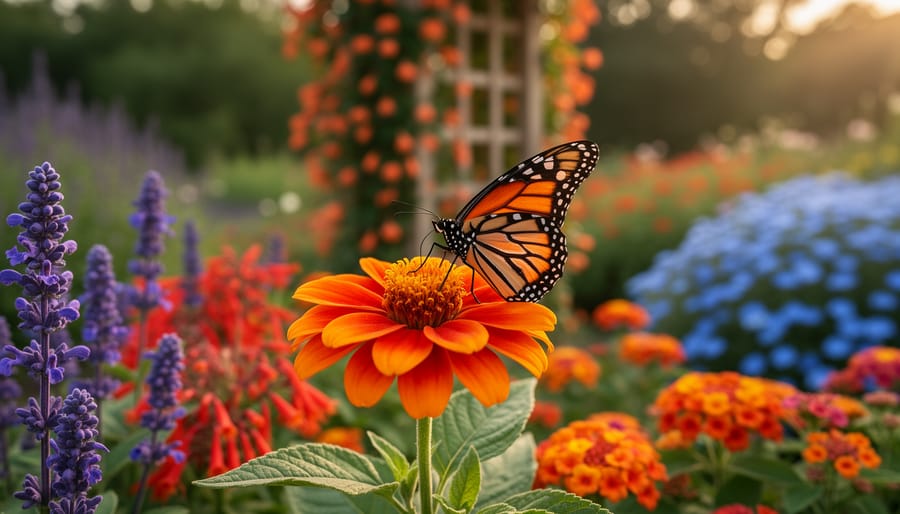
Different pollinators have evolved alongside specific flower types, so shape really matters. Hummingbirds, with their long beaks and hovering ability, adore tubular flowers like salvias and trumpet vines. Butterflies prefer flat or clustered blooms that provide a landing platform, such as zinnias, coneflowers, and yarrow. Native bees often favor simple, open flowers like poppies and sunflowers, where they can easily access pollen and nectar.
Color plays a surprising role too. Bees see ultraviolet light and gravitate toward blue, purple, and yellow blooms. Hummingbirds have excellent color vision and are particularly drawn to red and orange flowers. White and pale flowers often attract night-flying moths, which are essential but overlooked pollinators.
I learned this firsthand when I added just three varieties of different-shaped flowers to my existing garden. Within weeks, I spotted species I’d never seen before, including a gorgeous sphinx moth at dusk.
The key takeaway? Don’t plant just one type of flower, no matter how pretty it is. Mix tubular, flat, and clustered blooms in various colors throughout your beds. This diversity creates a pollinator paradise that supports the entire ecosystem, giving each species exactly what it needs to thrive.
Keep Something Blooming from Spring Through Fall
Imagine setting out a buffet for guests, but only serving appetizers for the first hour, then nothing until dessert arrives at midnight. That’s essentially what happens when we plant everything to bloom in spring, leaving pollinators scrambling for food the rest of the season.
The secret to truly supporting pollinators is keeping flowers blooming continuously from early spring through fall’s first frost. Bees, butterflies, and hummingbirds need consistent nectar and pollen sources to survive and thrive throughout their active seasons.
Here’s a simple framework I use for planning bloom succession: divide your garden into thirds. Aim for one-third of your plants blooming in early to mid-spring, one-third peaking in summer, and one-third flowering from late summer through fall. This doesn’t need to be exact, but it gives you a helpful guideline.
Start by noting when your current plants bloom. You’ll likely spot gaps—many gardeners discover their gardens go quiet in late summer. Fill those gaps strategically. Early bloomers like crocuses and Virginia bluebells feed hungry bees emerging from winter dormancy. Summer stalwarts like coneflowers and bee balm provide midseason sustenance. Fall heroes like asters and goldenrod offer critical fuel for pollinators preparing for migration or winter.
When you maintain overlapping bloom times, you’re essentially keeping the welcome mat out all season long. Your pollinator visitors will notice, and they’ll reward your thoughtfulness with their continued presence.
Choose Native Plants Whenever Possible
Native pollinators have evolved alongside native plants for thousands of years, creating partnerships that benefit both. Many bees, butterflies, and other pollinators have specialized relationships with specific native plants—they’ve developed the right tongue length to reach certain flowers or emerge from dormancy exactly when particular blooms appear. This co-evolution means native plants often provide better nutrition and more accessible nectar than exotic alternatives.
When I spoke with master gardener Susan Chen last spring, she shared a wonderful observation: “Within two weeks of adding native coneflowers and black-eyed Susans to my garden, I noticed three times as many butterflies visiting. The difference was remarkable.”
Getting started with creating a native garden doesn’t need to feel overwhelming. Begin by identifying just three to five native plants suited to your region. Your local native plant society or conservation authority can provide region-specific lists—these resources are goldmines for beginners.
Many garden centers now label native plants clearly, making shopping easier than ever. Start with reliable performers like milkweed for monarchs or wild bergamot for bees. These forgiving plants establish easily and reward you with abundant pollinator activity.
Remember, you don’t need to transform your entire garden overnight. Even replacing a few conventional plants with native alternatives creates meaningful habitat for pollinators while building your confidence and knowledge.
Best Plants for Common Pollinators
For Bees (Both Native and Honeybees)
Bees are among our hardest-working pollinators, and the good news is they’re relatively easy to please! Whether you’re supporting native bees or helping honeybees thrive, these six plants will have your garden buzzing with activity throughout the growing season.
Lavender is a bee magnet that blooms from early to midsummer. These fragrant purple spikes thrive in full sun and well-drained soil, making them perfect for hot, dry spots in your garden. I’ve watched dozens of bees work a single lavender plant on a sunny afternoon—it’s truly mesmerizing!
Black-eyed Susans are native perennials that bloom from July through September, providing crucial late-season nectar. They’re wonderfully low-maintenance, tolerating various soil conditions and requiring minimal water once established. Plus, their cheerful yellow blooms brighten any garden space.
Borage produces delicate blue, star-shaped flowers that bees absolutely adore. This annual herb self-seeds readily and blooms all summer long. It’s incredibly forgiving for beginners and actually prefers poorer soils.
Catmint offers clouds of purple-blue flowers from late spring through fall, especially if you deadhead spent blooms. It’s drought-tolerant once established and handles heat beautifully, making it reliable even during challenging summers.
For early spring when bees desperately need food, Crocuses are essential. These bulbs provide some of the first nectar and pollen of the season, often blooming while snow still lingers.
Finally, Anise Hyssop is a native perennial with striking purple flower spikes from midsummer through fall. It thrives in full sun, tolerates dry conditions, and provides abundant nectar when other plants are fading.
For Butterflies and Moths
Butterflies and moths have a unique relationship with gardens that goes beyond their need for nectar. While these enchanting visitors do need nectar-rich flowers to fuel their adult lives, they also require specific host plants where they can lay eggs and where their caterpillars can safely munch away. Understanding this dual need transforms how we approach planting for these beautiful pollinators.
The classic example is the monarch butterfly and milkweed. Monarchs will only lay eggs on milkweed plants because their caterpillars can only eat milkweed leaves. Without it, monarchs simply cannot complete their life cycle in your garden. This host plant concept applies to most butterfly and moth species, each having particular plants their caterpillars depend on.
For nectar, butterflies adore flowers with flat or clustered blooms that provide easy landing platforms. Coneflowers are garden workhorses that bloom for weeks and attract numerous butterfly species. Asters offer crucial late-season nectar when butterflies are preparing for migration or overwintering. Black-eyed Susans, bee balm, and Joe-Pye weed round out an excellent butterfly buffet.
When selecting butterfly-friendly native plants, remember to include both larval host plants and adult nectar sources. Native oaks, willows, and cherry trees support hundreds of moth and butterfly species as host plants, while their spring flowers provide early nectar. Even letting some parsley, dill, or fennel go to flower in your vegetable garden invites swallowtail butterflies to raise their families nearby.

For Hummingbirds
Hummingbirds are some of the garden’s most magical visitors, and they have a definite preference when it comes to flowers. These tiny dynamos are drawn to tubular blooms in vibrant reds, oranges, and pinks, though they’ll happily visit other colors too. The key is providing nectar-rich flowers with the right shape for their long beaks and tongues.
For reliable perennial performers, I always recommend starting with cardinal flower, bee balm, and salvia. Coral honeysuckle is a fantastic vine option that hummingbirds absolutely adore, blooming repeatedly throughout the season. Columbine provides early-season nectar when hummingbirds first arrive from migration, while penstemon keeps them fed well into summer.
Don’t overlook annuals for continuous blooms. Salvia ‘Black and Blue’ is a powerhouse that flowers from spring until frost, and petunias (especially the red varieties) are surprisingly popular with hummers. Fuchsias work beautifully in containers or hanging baskets, creating eye-level feeding stations you can enjoy from your patio.
The secret to keeping hummingbirds around all season is succession planting. Choose varieties that bloom at different times, creating an unbroken nectar buffet from spring through fall. Plant early bloomers like bleeding heart, follow with summer favorites like zinnias and trumpet vine, then finish strong with autumn sage and Mexican sunflower.
I spoke with hummingbird expert Maria Chen, who suggests grouping tubular flowers together rather than scattering them. Hummingbirds have excellent memories and will return repeatedly to reliable food sources. Creating dedicated feeding zones makes your garden an irresistible destination.
Creating Pollinator-Friendly Habitat Beyond Flowers
Water and Shelter Essentials
Pollinators need more than just flowers—they require fresh water and safe shelter throughout the growing season. I’ve found that adding these simple features has dramatically increased pollinator activity in my garden, and you’ll be amazed at the difference they make in yours too.
Creating a pollinator watering station is incredibly easy. Use a shallow dish, birdbath, or saucer and fill it with clean water. The key is providing landing spots—pollinators can’t swim, so they need something to perch on while drinking. Add pebbles, marbles, or small stones that break the water’s surface, creating tiny islands. I refresh the water every few days to prevent mosquito breeding and keep it clean. Position your water source in a sunny spot near your pollinator plants, making it easy for thirsty visitors to find.
Shelter is equally important. Leave some areas of your garden a bit wild—a small brush pile or undisturbed corner gives ground-nesting bees a home and offers protection from wind and predators. Dense shrubs and ornamental grasses create natural windbreaks where butterflies and other pollinators can rest during storms. Consider adding a simple bee house with hollow tubes for cavity-nesting species. These inexpensive additions provide vital safe spaces where pollinators can overwinter, raise their young, and escape danger while they work their magic in your garden.

Leaving the ‘Messy’ Bits
Here’s a secret that might change how you look at your garden: what appears messy to us often looks like five-star accommodation to pollinators. I’ll admit, it took me years to resist the urge to cut everything back in autumn, but leaving those untidy bits has transformed my garden into a thriving pollinator haven.
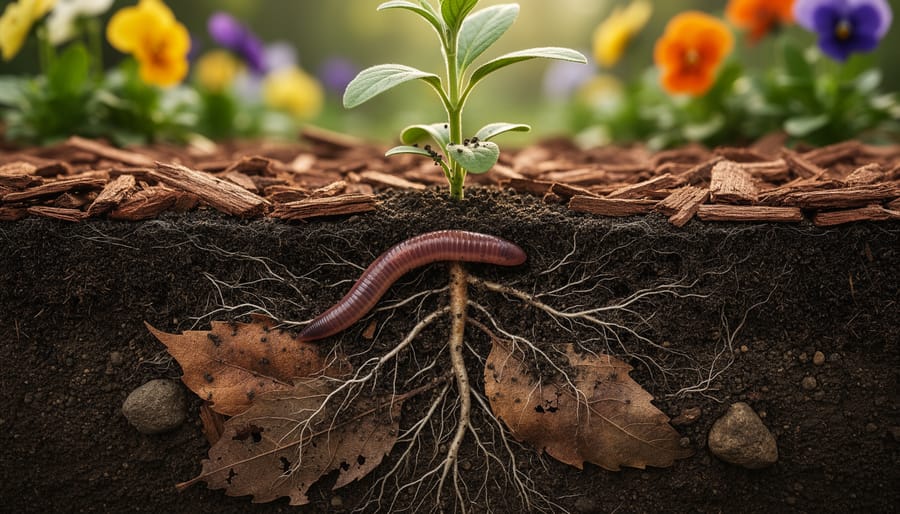
Bare ground patches are essential real estate for ground-nesting bees, which make up about 70% of native bee species. Simply leave small areas of soil exposed, free from mulch and plants. These spots don’t need to be large – even a few square feet will do.
Those brown, hollow stems standing in your winter garden? They’re not eyesores; they’re overwintering hotels. Many beneficial insects, including native bees and ladybugs, tuck themselves into dead plant stems to survive the cold months. Leave stems standing until late spring, when temperatures consistently warm up.
Leaf litter deserves a special mention too. That layer of fallen leaves provides crucial shelter for butterflies, moths, and countless other helpful insects. Instead of bagging everything up, try corralling leaves in garden beds or creating a dedicated pile in a corner.
The wonderful gardener I interviewed last month, Sarah Chen, puts it perfectly: “A tidy garden is a quiet garden. Once I embraced the mess, the buzz returned.”
Starting Small: Your First Pollinator Planting Project
Ready to welcome pollinators to your space? Let’s start with a simple container garden project that takes just an afternoon and delivers months of pollinator activity. I promise, this is easier than you think, and you don’t need a large yard or any special expertise.
For this beginner-friendly project, you’ll need a container that’s at least 12 inches wide and deep (think large pots, window boxes, or even a repurposed wooden crate with drainage holes). Good drainage is essential, so make sure your container has several holes in the bottom.
Start by filling your container about two-thirds full with quality potting mix. Regular garden soil is too heavy for containers, so choose a blend specifically designed for pots. Mix in some compost if you have it, but it’s not required for success.
Now comes the fun part: choosing your plants. For a single large container, select three to five plants with different heights and bloom times. Try combining a taller plant like salvia or catmint in the back, a medium-height option like coreopsis or lavender in the middle, and a trailing plant like creeping thyme along the edges.
When shopping at the nursery, look for plants already showing blooms or buds. This gives you immediate gratification and lets pollinators find your garden right away. Space your plants according to their mature size, usually 6 to 8 inches apart in containers.
After planting, water thoroughly until water drains from the bottom holes. Place your container in a spot that receives at least six hours of sunlight daily. Most flowering pollinator plants are sun lovers and won’t bloom well in shade.
Maintenance is straightforward: water when the top inch of soil feels dry (usually every other day in summer), and deadhead spent flowers to encourage more blooms. A light feeding with organic fertilizer every few weeks keeps plants healthy and flowering abundantly.
Within days, you’ll likely spot your first visitors. Bees, butterflies, and hummingbirds will discover your container garden, and you’ll have the satisfaction of knowing you’ve created a little oasis in what might have been empty space. This small success builds confidence for bigger pollinator projects ahead.
Common Mistakes to Avoid
We all make mistakes when we’re learning something new, and creating pollinator-friendly gardens is no exception. The good news? These common missteps are easily corrected once you know what to watch for.
One of the biggest challenges gardeners face is pesticide use. Even products marketed as “safe” can harm pollinators when applied to flowers they visit. If you’re dealing with pests, consider waiting until evening when pollinators are less active, or better yet, embrace natural predators like ladybugs and birds that will handle pest control for you. I learned this lesson the hard way years ago when I noticed fewer butterflies after treating my roses.
Another common pitfall is focusing exclusively on showy non-native ornamentals. While these plants can certainly support pollinators, native plants have evolved alongside local pollinators and often provide better nutrition. The solution isn’t abandoning your favorite exotics entirely, just aim for balance. Try mixing natives with your existing plants to create a diverse buffet.
The autumn clean-up urge trips up many well-intentioned gardeners. When we cut back every stem and deadhead every flower in fall, we’re removing crucial winter shelter for native bees and overwintering butterfly pupae. We’re also eliminating seeds that sustain birds through cold months. Instead, embrace a messier approach and delay major cutting back until spring warms up.
Finally, don’t fall into the “monoculture trap” of planting large swaths of just one or two species. While those Instagram-perfect drifts look stunning, pollinators need variety throughout the seasons. Mix it up with plants that bloom at different times, ensuring someone’s always invited to the party. Remember, every adjustment you make creates a more welcoming habitat for your buzzing and fluttering friends.
Creating a haven for pollinators doesn’t require transforming your entire garden overnight. Even planting just one or two pollinator-friendly species can make a genuine difference to the bees, butterflies, and hummingbirds in your neighborhood. I’ve watched gardeners light up with delight when they spot their first monarch butterfly or hear the gentle buzz of native bees discovering their freshly planted wildflowers. These small moments remind us why gardening matters beyond aesthetics.
The beauty of pollinator gardening is that it’s wonderfully forgiving. You don’t need extensive knowledge or a large space to get started. A single container of lavender on a balcony or a small patch of coneflowers in your yard can become a vital refueling station for hungry pollinators. Each plant you add strengthens the network of food sources these essential creatures depend on.
I encourage you to begin wherever you are today. Choose plants that excite you, and don’t worry about creating perfection. As your garden grows and pollinators visit, consider sharing your experience with fellow gardeners. Your journey might inspire someone else to plant their first pollinator garden, creating a ripple effect that extends far beyond your backyard.