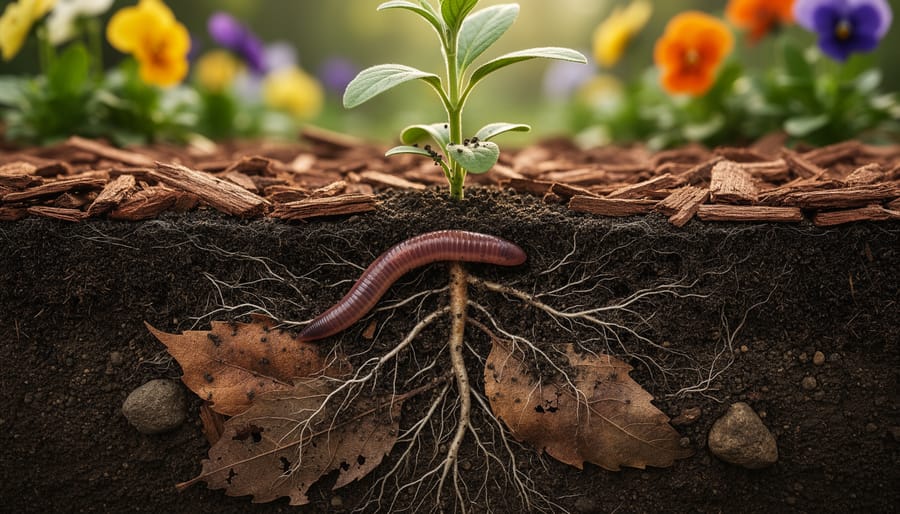
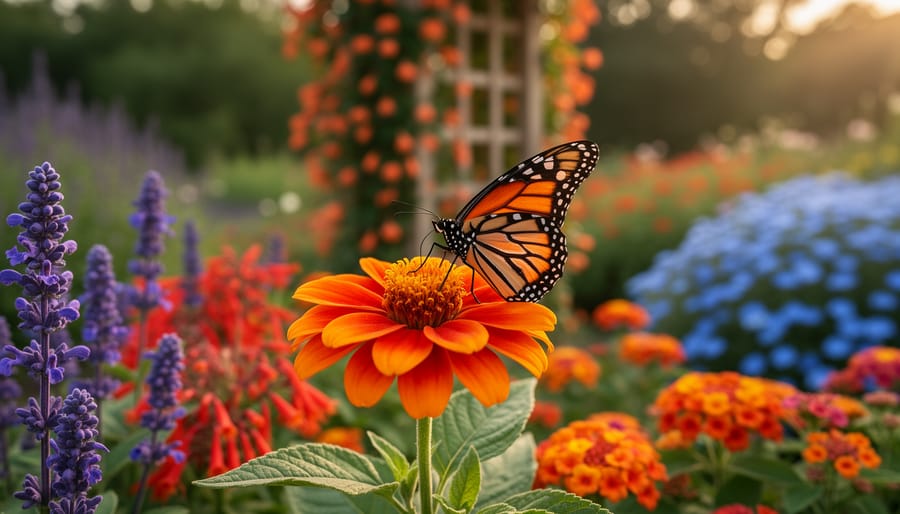
Transform your backyard into a vibrant wildlife sanctuary by layering native plants of varying heights – tall trees for nesting birds, flowering shrubs for butterflies, and ground cover for beneficial insects. Create dedicated zones within your garden, positioning water features near protective shrubs where creatures can drink safely, while maintaining clear sight lines to observe visiting wildlife. Add natural shelter elements like log piles, stone cairns, and brush heaps strategically throughout the space, providing essential cover for hedgehogs, amphibians, and beneficial insects. Plant flowering species that bloom in different seasons – early spring bulbs, summer perennials, and autumn seed-heads – ensuring year-round food sources for local fauna while maintaining visual interest in your garden.
This thoughtful approach to wildlife gardening doesn’t just support local ecosystems – it creates a living, breathing space that brings daily joy through natural encounters. Whether you’re working with a small urban plot or sprawling countryside garden, these fundamental elements attract and sustain diverse wildlife populations while creating a beautiful, low-maintenance outdoor space that connects you with nature’s rhythms.
Creating Natural Food Sources
Native Plants That Attract Pollinators
Creating a garden that can attract beneficial pollinators starts with choosing the right native plants for your region. Natives are perfectly adapted to your local climate and provide the exact nectar and pollen that local wildlife needs.
For sunny areas, try planting purple coneflower (Echinacea), which blooms throughout summer and attracts both butterflies and bees. Black-eyed Susans offer cheerful yellow flowers that goldfinches and native bees absolutely adore. Butterfly weed, despite its humble name, is a monarch butterfly magnet and adds brilliant orange blooms to your garden.
In partially shaded spots, consider wild columbine for hummingbirds and cardinal flower for a splash of dramatic red that pollinators can’t resist. Native salvia varieties work wonderfully in most regions and bloom for extended periods.
For late-season support, include New England asters and goldenrod – these plants provide crucial food sources when other blooms have faded. Don’t forget about native flowering shrubs like buttonbush and elderberry, which offer both nectar and shelter.
Remember to plant in clusters rather than single specimens. This makes your garden more visible to pollinators and provides them with efficient feeding stations. Also, try to include plants with different bloom times to ensure season-long support for your local wildlife visitors.
Bird-Friendly Berry Bushes
Berry-producing shrubs and small trees are like nature’s bird feeders, offering both delicious food and cozy shelter for our feathered friends. Serviceberry, with its early summer berries, attracts a variety of songbirds and provides excellent nesting spots. The versatile elderberry produces clusters of dark berries in late summer, beloved by robins and warblers, while also offering dense foliage for protection.
For smaller gardens, compact varieties of holly make perfect additions. Their bright red berries persist through winter, offering vital sustenance during harsh months. Native dogwoods are another excellent choice, producing berries that birds simply can’t resist, plus beautiful spring flowers that enhance your garden’s appeal.
Consider planting winterberry, a deciduous holly that creates stunning displays of red berries on bare branches – a true feast for winter birds. Viburnum varieties offer extended feeding opportunities, with some species producing berries that last well into winter after turning from red to blue-black.
For maximum wildlife benefit, plant these shrubs in groups or create a mixed border. This approach provides more substantial shelter and feeding areas for birds. Remember to include plants that fruit at different times throughout the year, ensuring a constant food supply for your garden visitors. Avoid heavy pruning during nesting season, and skip chemical pesticides to keep the berries safe for wildlife consumption.
Water Features That Wildlife Love
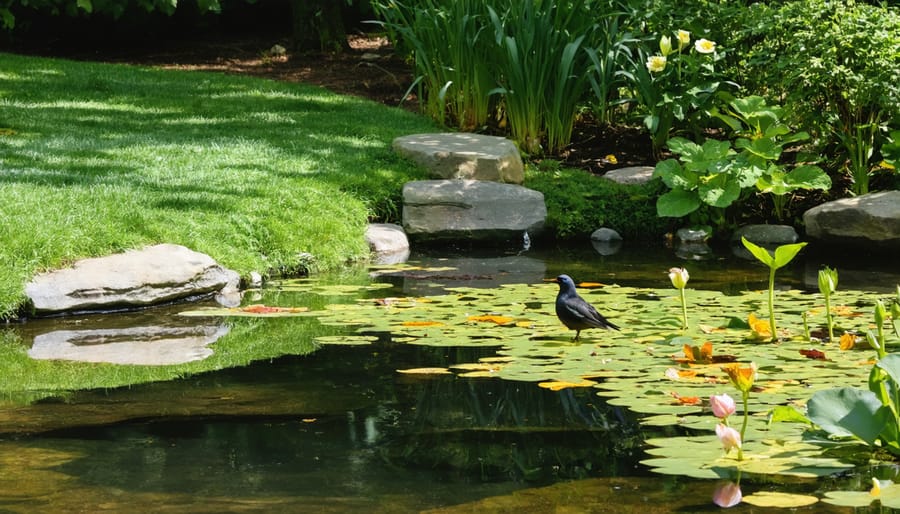
Simple DIY Wildlife Ponds
A small wildlife pond can become the heart of your garden ecosystem, attracting diverse creatures from dragonflies to hedgehogs. Creating one is simpler than you might think, and it’s a wonderful way to help create wildlife corridors in your neighborhood.
Start by selecting a sunny spot away from overhanging trees to prevent excess leaf fall. For a basic pond, you’ll need:
– A rigid pond liner or large container
– Aquatic soil
– A selection of native pond plants
– Small rocks and pebbles
– A gentle slope or ramp for wildlife access
First, dig a hole slightly larger than your container, ensuring it’s level. If using a flexible liner, shape the hole with different depths (ideally 60cm at its deepest point). Add a layer of sand before placing your liner.
Position larger rocks around the edges, creating shallow areas and hiding the liner’s edges. Add your aquatic soil and begin planting: underwater oxygenators for clear water, marginal plants for the edges, and floating plants for surface coverage.
The key to success is including various depths and a gradual slope, allowing creatures to enter and exit safely. Within weeks, you’ll notice insects arriving, followed by amphibians and birds. Remember to maintain water levels during dry spells and avoid using chemicals or fish food, as natural balance is best for wildlife.
Bird Baths and Shallow Water Sources
Even in the smallest gardens, providing water sources for wildlife can make a significant difference. A simple ceramic bird bath on a pedestal or mounted to your fence can attract various birds, butterflies, and beneficial insects. For tight spaces, consider wall-mounted or hanging water features that create gentle trickling sounds wildlife finds irresistible.
When setting up your water source, ensure it’s no more than 2-3 inches deep with gradually sloping sides, allowing smaller creatures to access the water safely. Adding a few flat stones or branches near the water’s edge creates perfect perching spots for birds and helps smaller visitors climb out if needed.
Maintenance is straightforward: refresh the water every few days to prevent mosquito breeding and clean the bath weekly with a gentle brush and water. During winter, consider using a small heating element to prevent freezing, ensuring year-round access for your garden visitors.
For an eco-friendly approach, collect rainwater to fill your bird bath, and position it where you can easily observe the wildlife from your window – it’s both practical and entertaining!
Shelter and Nesting Sites
Natural Cover with Strategic Planting
Creating natural cover in your wildlife garden is essential for providing safe spaces where creatures can rest, nest, and hide from predators. When designing with native plants, think about creating layers of vegetation that mimic natural habitats.
Start by establishing larger shrubs and small trees around the perimeter of your garden. These create the backbone of your wildlife corridors and offer excellent nesting sites for birds. Dense bushes like elderberry or hawthorn work wonderfully for this purpose.
In front of these larger plants, add medium-height perennials that create a natural transition. Plants like coneflowers, salvias, and black-eyed susans not only provide cover but also offer food sources through their seeds and nectar. Let these plants grow closely together to create small tunnels and hideaways at ground level.
Don’t forget about ground cover plants! Low-growing species like creeping thyme or wild strawberry create excellent shelter for beneficial insects and small creatures like toads. Leave some areas slightly wild and untidy – those fallen leaves and twisted stems make perfect hiding spots for hedgehogs and other garden visitors.
Create “wildlife highways” by connecting different planted areas, allowing animals to move safely through your garden. Remember to include some evergreen plants to maintain cover throughout the year, ensuring your garden remains a sanctuary in all seasons.
DIY Wildlife Homes
Creating shelter for wildlife is one of the most rewarding aspects of wildlife gardening. Let’s explore how to build three essential homes that will welcome diverse creatures into your garden.
For bird boxes, start with untreated wood that’s at least 15mm thick. Create a simple box design with a sloping roof for rain runoff and drainage holes at the bottom. The entrance hole size matters – 25mm for small birds like blue tits, or 32mm for larger species such as sparrows. Mount your box 2-4 meters high, facing between north and east to avoid strong sunlight and prevailing winds.
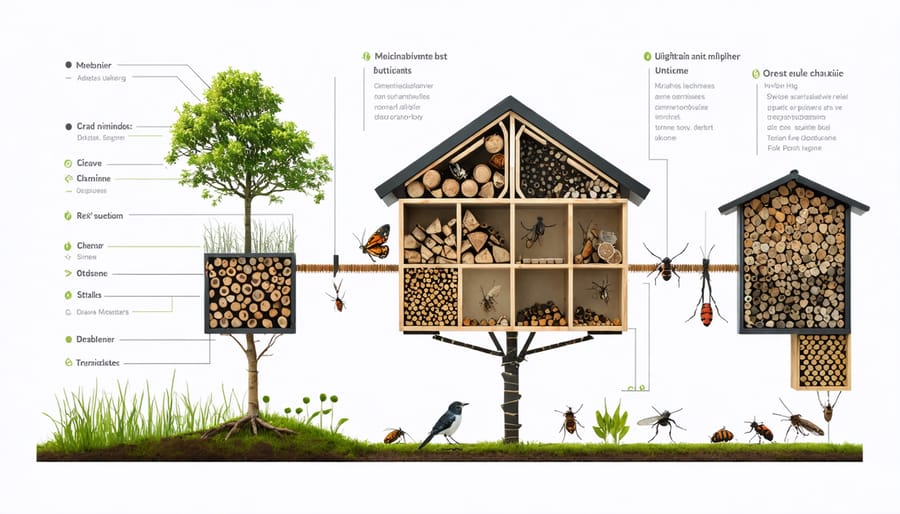
Bug hotels can be as simple or elaborate as you like. Begin with a basic frame using old pallets or wooden boxes. Fill different sections with natural materials: bamboo canes and drilled logs for solitary bees, straw and dry leaves for ladybugs, and pine cones for various insects. Position your hotel in a sunny spot, slightly tilted forward to prevent rain from pooling.
Hedgehog houses need to be sturdy and weatherproof. Use exterior-grade plywood to build a box roughly 40cm square with a tunnel entrance about 13cm wide. The tunnel should be L-shaped to keep predators out. Cover the house with waterproof roofing material and camouflage it with branches and leaves. Place it in a quiet, shaded area of your garden, ideally under shrubs or against a fence.
Remember to check and clean these homes annually during autumn when they’re least likely to be occupied.
Sustainable Maintenance Practices
Chemical-Free Pest Control
Managing garden pests doesn’t require harsh chemicals that could harm beneficial wildlife. Instead, embrace nature’s own pest control methods by encouraging helpful predators like ladybugs, lacewings, and birds that naturally keep pest populations in check. Create habitats for these garden allies by planting diverse native flowers and leaving some wild areas.
Companion planting is another effective strategy – try planting marigolds near vegetables to deter unwanted insects, or nasturtiums to act as a sacrificial crop for aphids. Strong-smelling herbs like lavender, mint, and rosemary naturally repel many common pests while attracting pollinators.
For persistent issues, try simple homemade solutions like a mixture of diluted neem oil or a soap spray. Physical barriers such as copper tape for slugs or fine mesh netting can protect vulnerable plants without causing harm to wildlife. Remember to accept some level of pest activity – a perfectly pristine garden isn’t natural or wildlife-friendly.
Consider installing bird and bat boxes nearby – these creatures are excellent natural pest controllers, consuming countless insects during their active hours. By working with nature rather than against it, you’ll create a balanced ecosystem where pests are managed naturally.
Seasonal Care Tips
Each season brings unique opportunities to support wildlife in your garden. In spring, leave early-blooming flowers intact for emerging pollinators and avoid disturbing nest sites. Summer calls for regular water source maintenance and letting some plants go to seed for birds. Come autumn, resist the urge to clear away all fallen leaves – they provide vital shelter for hibernating insects and hedgehogs. Instead, create neat leaf piles in quiet corners. Winter maintenance should be minimal; leave seedheads standing for birds and keep water sources ice-free. Remember that dead wood and plant stems offer essential shelter for overwintering insects, so save major pruning for late winter. Keep bird feeders stocked year-round, adjusting feed types seasonally to match available natural food sources.
Creating a wildlife garden is more than just a hobby – it’s a meaningful contribution to the natural world right in your own backyard. By implementing the ideas we’ve explored, you’ll not only create a beautiful outdoor space but also provide essential habitat for local wildlife, from buzzing bees to colorful butterflies and cheerful songbirds.
Remember that every garden, regardless of its size, can make a difference. Start small with a pollinator-friendly flower bed or a simple bird feeding station, then gradually expand your wildlife-friendly features as your confidence grows. The key is to maintain diversity in your plantings, provide year-round food sources, ensure reliable water access, and create various shelter options for different species.
Don’t be discouraged if wildlife doesn’t appear immediately – nature works on its own schedule. With patience and consistent care, you’ll soon notice increased activity as word spreads through the wildlife community about your welcoming habitat.
Most importantly, gardening for wildlife is a continually evolving journey. Each season brings new opportunities to learn, adapt, and enhance your space. Whether you’re transforming a small balcony or managing a sprawling yard, your efforts contribute to a larger network of wildlife-friendly spaces that help sustain our precious ecosystem.
Take that first step today – even planting a single native flower can start your wildlife gardening adventure. Your garden will soon become a thriving sanctuary that brings joy to both you and your wild visitors.