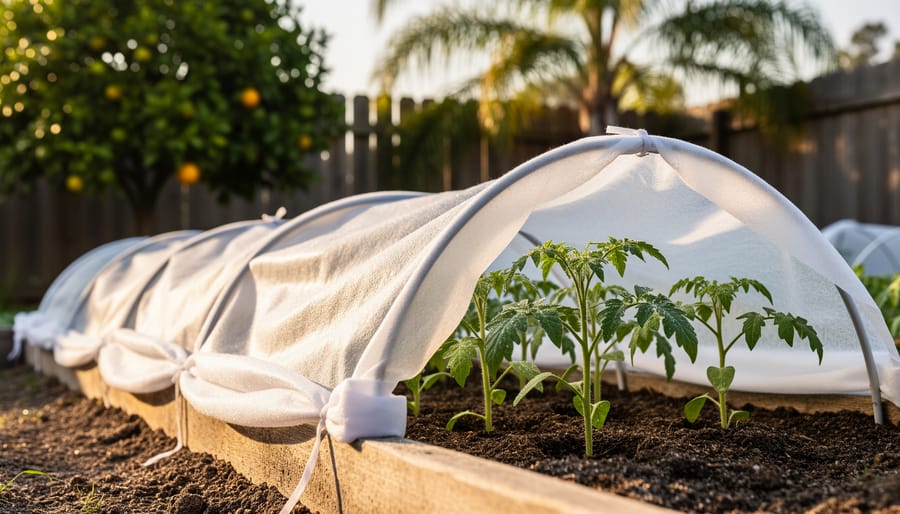
Your tomato seeds don’t care what state you live in—they care about your last spring frost date. That single piece of information, tied directly to your zip code, determines whether your seedlings thrive or freeze, whether your harvest arrives in July or September, and whether you’re replanting in frustration or picking ripe vegetables all season long.
Generic planting advice fails because a California gardener and a Michigan gardener can’t follow the same schedule, even when growing identical crops. The difference isn’t just climate zones—it’s the precise timing of your area’s frost patterns. Enter your zip code into the right tools, and you unlock a personalized roadmap showing exactly when to start seeds indoors, transplant seedlings outside, and direct-sow in your garden beds.
This matters more than you might think. Plant too early, and a surprise frost kills tender plants overnight. Wait too long, and heat-loving crops like peppers never reach maturity before fall arrives. The sweet spot exists in a narrow window that shifts dramatically every few miles, influenced by elevation, proximity to water, and local weather patterns.
Creating your own planting calendar transforms guesswork into confidence. You’ll discover why your neighbor’s tomatoes always fruit earlier, understand what “days to maturity” really means for your location, and finally stop wondering if today is the right day to plant. Your zip code holds the answers—you just need to know how to use them.
Why Your Zip Code Changes Everything About When to Plant
You’ve probably noticed that gardening advice from your cousin three states away doesn’t quite work for your backyard. That’s because your zip code is the secret decoder ring for understanding your unique growing conditions. Let me explain why location matters so much.
Your zip code connects directly to your USDA hardiness zone, which divides North America into regions based on average minimum winter temperatures. Someone in zip code 10001 in New York City gardens in zone 7b, while a friend in zip code 85001 in Phoenix gardens in zone 9b. That difference means completely different planting windows and even different varieties of the same vegetable.
But here’s where it gets interesting: your zip code also determines your frost dates, which are the game-changers for planting success. Your last spring frost date tells you when it’s safe to plant tender crops like tomatoes and peppers, while your first fall frost date signals when to harvest or protect sensitive plants. These dates can vary by several weeks between neighboring towns just twenty miles apart.
I learned this lesson the hard way when I moved from a coastal town to an inland community only fifteen miles away. My old planting schedule failed miserably because my new location had a two-week shorter growing season. The inland area cooled faster in fall and warmed slower in spring.
Then there are microclimates, those sneaky variations within your own zip code. Your neighbor on the south-facing hillside might plant a week earlier than you in the valley below, where cold air settles. Urban areas often stay warmer than surrounding suburbs, creating heat islands that extend growing seasons. Understanding these nuances helps with everything from vegetable timing to pest timing strategies.
This zip code-specific approach transforms generic gardening advice into a personalized roadmap for your exact location, giving you the confidence to plant at exactly the right moment for success.
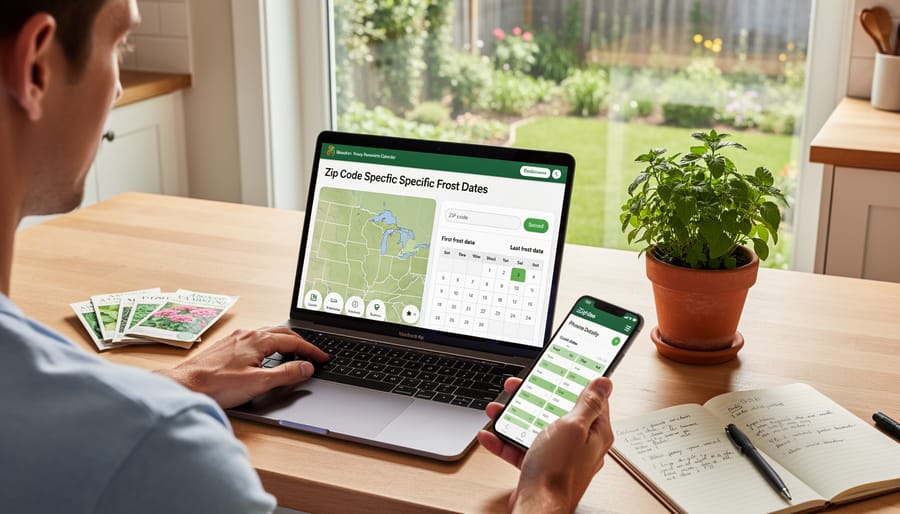
Finding Your Last and First Frost Dates
The Best Tools for Zip Code Planting Information
Finding reliable, location-specific planting information doesn’t have to feel like detective work. I’ve spent years testing different resources, and I’m excited to share the ones that have genuinely transformed my planting success.
The USDA Plant Hardiness Zone Map is your essential starting point. Simply enter your zip code at planthardiness.ars.usda.gov, and you’ll discover your hardiness zone plus detailed climate data. It’s free, accurate, and updated based on decades of weather patterns.
For frost dates specifically, the Old Farmer’s Almanac (almanac.com) offers wonderfully detailed zip code searches. Their frost date calculator gives you spring and fall dates with probability percentages, which helps you decide whether to take a calculated risk or play it safe. I check this every spring before planning my tomato transplants.
Don’t overlook your local Cooperative Extension office. These county-based resources provide hyper-local advice that accounts for microclimates and regional quirks no national database can capture. Find yours through the USDA’s National Institute of Food and Agriculture directory. I’ve learned more from my extension agent about my specific neighborhood’s growing oddities than any app could teach me.
Mobile apps like GrowVeg and Smart Gardener let you input your location and receive customized planting reminders. They’re perfect for busy gardeners who appreciate gentle nudges when it’s time to start seeds indoors or transplant seedlings outside. The convenience of having planting schedules in your pocket while standing in the garden center is genuinely game-changing.
What Those Frost Date Numbers Really Mean
When you look up your frost dates, you’ll see percentages like 10%, 50%, and 90% chance of frost. Think of these as your risk levels. The 10% date means there’s only a small chance of frost after this point, but it’s the earliest and riskiest option. The 50% date is your middle ground, where there’s an equal chance frost could occur before or after. The 90% date is your safest bet, with only a slim chance of frost happening later.
So which date should you use? It depends on what you’re planting and how much risk you’re willing to take. For hardy vegetables like lettuce, kale, and peas, you can confidently use the 50% date or even push it earlier. These plants laugh at light frosts. But for tender plants like tomatoes, peppers, and basil, I recommend waiting until the 90% date passes. Losing a whole tray of seedlings to one surprise freeze is heartbreaking.
Consider it like this: the 10% date is for the adventurous gardener willing to cover plants if needed, the 50% date works for most situations, and the 90% date is your insurance policy for precious transplants.
Building Your Personal Planting Calendar

Cool-Season Crops: Getting Started Early
Cool-season crops are the early birds of the gardening world, and they’re more forgiving than you might think! These cold-hardy champions actually prefer cooler temperatures and can handle a light frost without missing a beat. The key is knowing when to get them in the ground relative to your last frost date.
For most cool-season vegetables like lettuce, spinach, peas, and radishes, you’ll want to plant them 4-6 weeks before your last expected spring frost. Some particularly tough customers, like onion sets and garlic, can go in even earlier—as much as 6-8 weeks before that date. I remember my first spring planting peas in late March while snow was still piled along my fence line. I worried I’d jumped the gun, but those little seeds knew exactly what to do, and we were harvesting sweet pods by late May.
Cool-season flowers like pansies, snapdragons, and sweet peas follow similar timing. Plant transplants about 2-4 weeks before your last frost, while direct-sown seeds can go in 4-6 weeks ahead.
Here’s a helpful tip I learned from a master gardener friend: if your soil is workable (not frozen or muddy), your cool-season crops are ready to go. These plants need time to establish before hot weather arrives, so don’t wait too long. Your zip code-specific frost date is your anchor point—count backward from there, and you’ll have perfect timing for these springtime favorites.
Warm-Season Crops: Patience Pays Off
Here’s the truth about warm-season crops: they’re not just frost-sensitive, they’re cold-sensitive too. While tomatoes, peppers, squash, cucumbers, and basil can technically survive once your last frost date passes, they won’t thrive if you rush them into chilly soil.
I learned this lesson the hard way years ago when I planted tomatoes exactly one week after my last frost. They sat there looking miserable for nearly three weeks, barely growing, while my neighbor’s plants – set out two weeks later – quickly surpassed mine. Soil temperature matters just as much as air temperature for these heat-lovers.
The general rule? Wait at least two weeks after your last spring frost date before transplanting warm-season crops. For truly heat-demanding plants like peppers, eggplant, and basil, waiting three weeks is even better. You’re aiming for soil temperatures consistently above 60 degrees Fahrenheit, ideally closer to 70 degrees.
Master gardener Rebecca Chen, whom I interviewed last spring, puts it perfectly: “Patient gardeners get stronger plants with better yields. Those rushed seedlings face transplant shock and stress that invites disease and aligns with regional pest patterns that target weakened plants.”
Check your zip code’s average last frost date, then mark your calendar two to three weeks beyond that. Your warm-season crops will reward your patience with vigorous growth and abundant harvests.
Fine-Tuning Your Calendar for Local Conditions
When Your Garden Doesn’t Match the Averages
Your garden is as unique as a fingerprint, and those zip code averages are just a starting point. Even neighbors on the same street can have microclimates that shift planting times by a week or two!
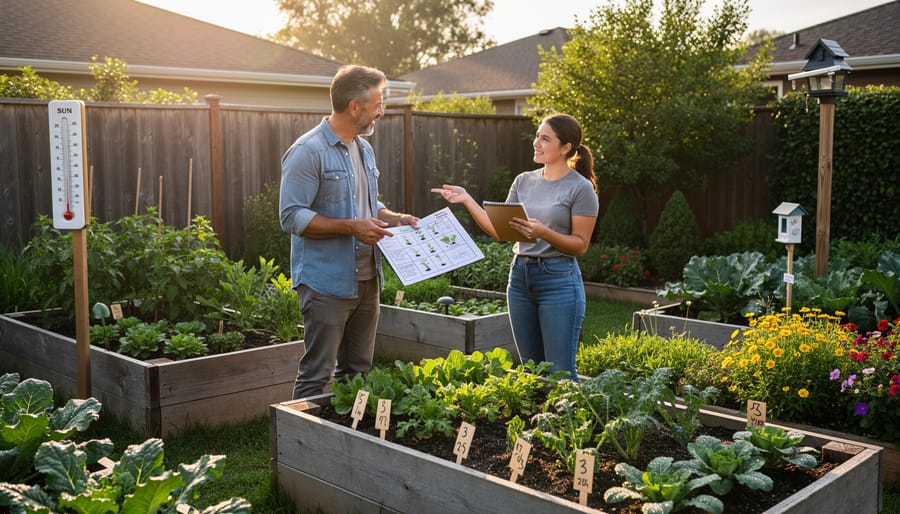
Start by becoming a detective in your own yard. Notice where frost lingers longest in spring—these cold pockets near low-lying areas or under trees might need an extra week before planting tender crops. Conversely, spots against south-facing walls or brick foundations can be 5-10 degrees warmer, giving you a head start.
Keep a simple garden journal to track what you observe. Note when you see your first and last frost, when specific plants start blooming, and how timing affects pests in your space. After just one season, patterns emerge.
Slope direction matters too—south-facing slopes warm faster than north-facing ones. If your garden sits on a hill, adjust planting dates accordingly.
I always tell fellow gardeners: the best teacher is your own backyard. Those calendar dates are guidelines, but your observations trump them every time.
Talking to Your Neighbors (The Secret Weapon)
While zip code data gives you a solid foundation, your neighbors might just be your most valuable resource. I learned this firsthand when I moved to a new zone and discovered my automated planting calendar didn’t account for the microclimate created by nearby hills.
Strike up conversations with people tending their yards, or better yet, join a community garden. These spaces are goldmines of hyper-local knowledge. Someone who’s gardened in your neighborhood for twenty years knows exactly when that sneaky late frost typically hits or which week the tomatoes really take off.
Don’t overlook older gardeners in your area. They’ve watched weather patterns shift over decades and often keep mental calendars more accurate than any app. When Mrs. Chen down the street told me to ignore the calendar and “plant beans when the lilacs bloom,” I was skeptical. She was absolutely right.
Local gardening clubs, farmers markets, and even your county extension office connect you with people who understand your specific conditions. They’ll share what actually works versus what the charts suggest should work. This combination of data-driven zip code calendars and real-world neighborhood wisdom creates an unbeatable planting strategy.
Season Extension: Bending the Rules in Your Zone
Once you understand your frost dates, you can push the boundaries of your growing season with some strategic protection methods. Think of these techniques as giving your plants their own cozy winter coats!
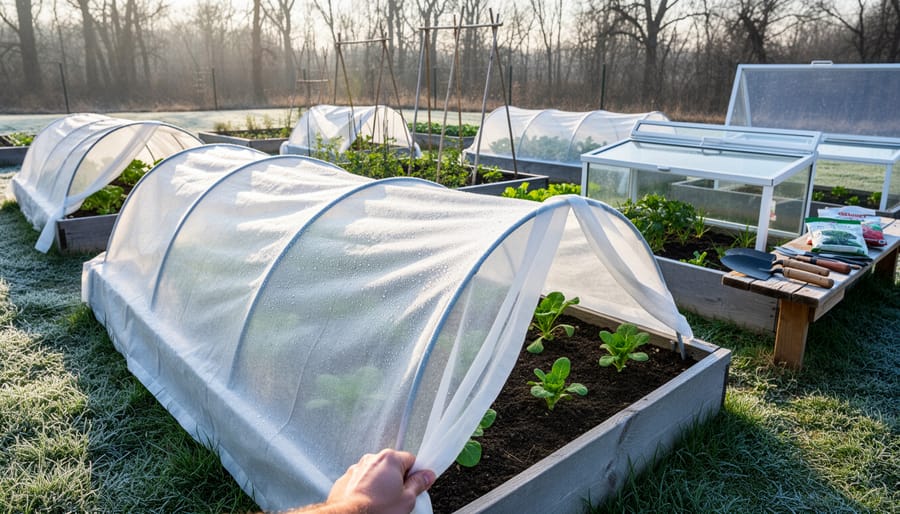
Row covers are your best friend for season extension. These lightweight fabric blankets can protect crops from temperatures 2-4 degrees below freezing while still allowing light, water, and air to reach plants. I drape them over hoops made from PVC pipe or wire to create mini tunnels over my early spring lettuce and late fall kale. They’re inexpensive, reusable for several seasons, and incredibly effective.
Cold frames take things up a notch. These box-like structures with transparent lids create a protected microclimate that can extend your season by 4-6 weeks on both ends. You can build a simple version using old windows placed over a wooden frame, or purchase ready-made options. Master gardener Elena Rodriguez from Vermont told me she starts her tomato seedlings in cold frames a full month before her last frost date, giving them a serious head start.
For even more protection, consider Wall O’ Water season extenders—water-filled tubes that surround individual plants and release warmth at night. These clever devices can protect tender plants like tomatoes and peppers from temperatures as low as 16 degrees Fahrenheit.
Don’t forget about mulch! A thick layer of straw or shredded leaves acts as insulation, moderating soil temperature swings and protecting root crops well into winter. Combined with smart garden timing strategies, these protection methods transform your zip code’s limitations into possibilities. Start experimenting with one method this season and watch your harvest window expand.
Common Planting Calendar Mistakes (And How to Avoid Them)
Even with a zip code-specific planting calendar in hand, it’s surprisingly easy to stumble into a few common traps. Let me share the mistakes I see gardeners make year after year, and more importantly, how you can sidestep them entirely.
The biggest culprit? Treating your calendar as gospel without checking actual conditions. I learned this lesson the hard way when I planted tomatoes on my “safe” date, only to watch them sulk in cold soil for weeks. Here’s the truth: your planting calendar gives you windows, not commands. Always check soil temperature before planting warm-season crops. A simple soil thermometer costs less than a packet of seeds and saves you from heartbreak. Most vegetables need soil at least 50-60°F to germinate properly, while heat-lovers like peppers and squash prefer 70°F or warmer.
Another frequent error involves ignoring the back end of the growing season. Many gardeners focus solely on spring frost dates but forget to count backwards from fall frost. Your zucchini might need 50 days to mature, but if you plant it in late July with only 45 days until frost, you’re setting yourself up for disappointment. Calculate maturity times and work backwards to find your last viable planting date.
Then there’s the calendar date trap. Just because it’s April 15th doesn’t mean spring has arrived everywhere in your zip code. Microclimates matter tremendously. Your neighbor on the sunny hillside might be two weeks ahead of your shaded valley garden. Effective seasonal garden planning means observing your specific conditions, watching soil warm-up patterns, and adjusting accordingly. Trust your thermometer and your observations over any predetermined date.
You’ve now got the knowledge to create a planting calendar perfectly suited to your exact location! Remember, your zip code-based calendar is a fantastic starting point, but it’s not set in stone. Think of it as your gardening compass rather than a rigid map you must follow without question.
The best gardeners are those who observe, experiment, and learn from each season. Keep a simple garden journal noting what you planted, when you planted it, and how it performed. Did your tomatoes thrive when you started them two weeks earlier than recommended? Write it down! Did late spring rains delay your bean planting? Make a note for next year.
Your garden will teach you lessons that no calendar can capture. Local microclimates, that shady corner that stays cool, or the south-facing bed that warms up early—these unique conditions make your garden special. Over time, you’ll develop an intuition for your space that combines calendar guidance with real-world experience.
Start with confidence this season, knowing you have science-backed timing tailored to your area. Then let your garden be your teacher, and watch your skills grow alongside your plants!