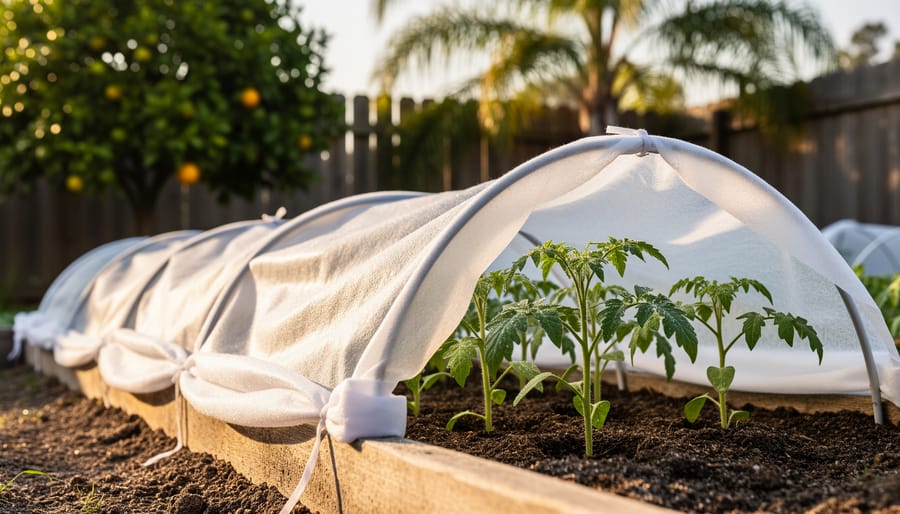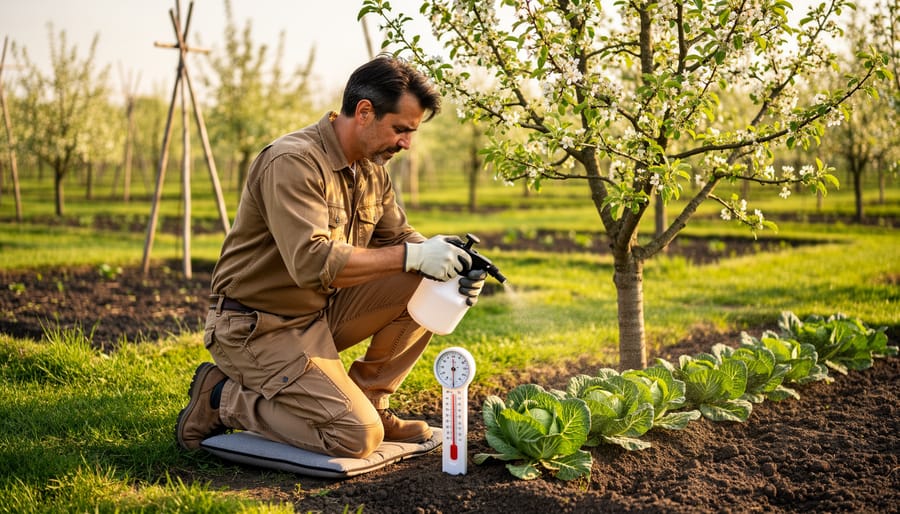
Mark your calendar with your local last frost date and count backward six weeks—that’s when you’ll need to apply dormant oil sprays to fruit trees before pests emerge from winter hibernation. Check your USDA hardiness zone’s average soil temperature milestones, because cabbage root maggots become active when soil reaches 50°F while Japanese beetles don’t emerge until 60°F, making your timing completely dependent on where you garden. Set monthly reminders to inspect plants during peak pest activity windows: aphids multiply fastest in cool spring weather, while spider mites explode during hot, dry summer stretches, meaning the same garden faces completely different threats in March versus July.
If you’ve ever felt frustrated applying pesticides only to see pests return within days, or wondered why your neighbor’s garden thrives while yours struggles despite using identical products, the answer lies in timing. Pest management strategies that work brilliantly in Georgia may fail spectacularly in Minnesota—not because the methods are flawed, but because pest life cycles shift dramatically based on your regional climate. A tomato hornworm emerges as a moth in Alabama by mid-April but won’t appear in Wisconsin until late June.
Understanding your region’s unique pest calendar transforms you from reactive to proactive. Instead of scrambling when aphids coat your roses or discovering squash vine borers after plants wilt, you’ll intercept these invaders during their most vulnerable stages. This article will guide you through creating a personalized pest management calendar tailored to your specific growing zone, teaching you to anticipate problems before they start and finally achieve the thriving, resilient garden you’ve been working toward.
Understanding Your Region’s Pest Patterns
How Climate Shapes Pest Life Cycles
Understanding how climate influences pest behavior is like having a secret decoder ring for your garden. Temperature, humidity, and seasonal patterns act as nature’s alarm clock, telling pests when to wake up, multiply, and hunker down for winter.
Let’s start with temperature, which is perhaps the biggest player in pest timing. Most insects are cold-blooded, meaning they can’t regulate their own body temperature. When spring warmth arrives, it triggers their emergence from dormancy. In warmer regions like the southern United States, this might happen in late February or early March, while gardeners in northern zones might not see pest activity until May. That’s why a pest management strategy that works beautifully in Georgia could completely miss the mark in Minnesota.
Humidity plays a supporting but crucial role. High moisture levels create perfect conditions for soft-bodied pests like aphids and slugs, while also encouraging fungal diseases that weaken plants and make them more vulnerable to insect damage. Coastal gardeners often battle different pest pressures than those in arid inland areas, even at similar latitudes.
Seasonal patterns create predictable pest life cycles you can plan around. Many insects complete multiple generations in a single growing season, with populations exploding during peak summer months. Others, like certain beetles, emerge just once annually during a specific window. By understanding these rhythms in your particular climate zone, you can time your preventive measures to interrupt pest reproduction before problems escalate rather than fighting established infestations.
Reading Your Local Pest Signals
Nature provides its own calendar if you know what to watch for! Instead of relying solely on dates, phenology—the study of seasonal natural events—gives you reliable signals that pests are becoming active in your specific location.
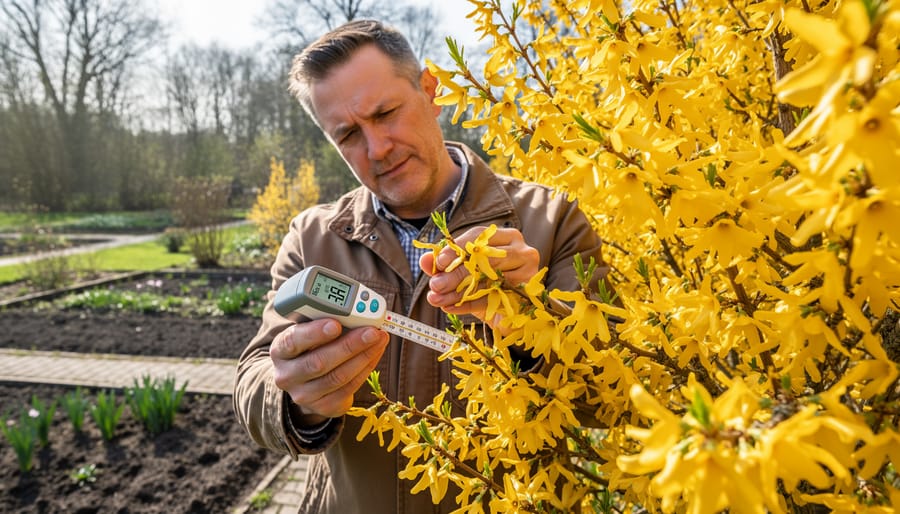
One of my favorite tricks is watching indicator plants. When forsythia blooms, it’s time to apply dormant oil sprays for scale insects. Lilac blooms signal that grubs are vulnerable to treatment in your lawn. Dogwood flowers tell you Japanese beetles will emerge soon, so protective measures should go up.
Temperature thresholds matter too, but they’re more than just looking at the thermometer. Soil temperature is key—many pests emerge when soil reaches specific degrees. A simple soil thermometer (about $10 at garden centers) becomes your best friend. For example, cutworms become active when soil hits 50°F, while cucumber beetles wait for 65°F.
Keep a simple garden journal noting when you spot pest damage alongside what’s blooming nearby. After a season or two, you’ll recognize your garden’s unique rhythm. Maybe your neighbor’s crabapple always blooms right before aphids appear, or perhaps the first warm spell after spring rain brings out slugs.
This personalized approach beats any generic calendar because it responds to your actual growing conditions, not assumptions about your region.
Creating Your Personal Pest Timing Calendar
Identifying Your Top Five Garden Threats
Before you can tackle garden pests effectively, you need to know exactly what you’re up against. Think of it like preparing for a road trip—you wouldn’t pack snow boots for a beach vacation, right? The same logic applies to pest management.
Start by tapping into local expertise. Your county extension office is an absolute goldmine of information tailored to your specific area. These folks know which aphids attack roses in Zone 7 versus Zone 9, and they’re usually thrilled to share their knowledge. I’ve found extension agents to be some of the friendliest resources available to gardeners.
Next, join local gardening groups or online community forums specific to your region. Fellow gardeners are dealing with the same challenges you face, and they’re often eager to swap stories and solutions. You’ll quickly hear repeated mentions of certain pests—those are your primary targets.
Keep a simple observation journal for one growing season. Note which plants get damaged, when problems appear, and what the culprits look like. Patterns will emerge. For example, Pacific Northwest gardeners might consistently battle slugs and root weevils, while Southwestern gardeners face different challenges like spider mites and whiteflies during hot, dry periods.
Consider your microclimate too. A shady, damp corner of your yard might harbor different problems than a sunny, well-drained bed. Once you’ve identified your top five threats, you can create a targeted management calendar that actually works for your unique situation.
Mapping Critical Intervention Windows
Understanding when pests are most vulnerable is like having a secret weapon in your gardening toolkit. Just as you wouldn’t plant tomatoes in February (well, not in most regions!), timing your pest interventions can mean the difference between success and frustration.
The key is identifying critical intervention windows, those golden opportunities when pests are most susceptible to control measures. Think of it as catching them at their weakest moment. For example, many beetles and caterpillars are easiest to manage during their larval stage, before they’ve caused significant damage or developed protective defenses.
I learned this lesson the hard way with Japanese beetles. For years, I’d spray adult beetles in July, watching helplessly as more arrived daily. Then a neighboring gardener shared her secret: targeting the grubs in late spring, right when they’re feeding near the soil surface. That single timing shift transformed my results.
Here’s how to identify your critical windows. First, research the complete life cycle of your target pest. Note when eggs hatch, when larvae are actively feeding, and when adults emerge. These transitions are typically your best intervention points. Spring is often crucial because many overwintering pests become active as soil temperatures rise above 50 degrees Fahrenheit.
Second, observe your garden closely throughout the season. Keep a simple journal noting when you first spot pest activity. Patterns emerge quickly, usually within two seasons. You’ll discover that aphids might explode during May’s warm spells, while squash vine borers appear consistently around mid-June.
Weather patterns matter too. Warm, wet springs accelerate fungal diseases and slug activity, shifting your intervention calendar earlier than usual.
Building Your Monthly Action Plan
Creating your personalized pest management calendar starts with gathering three key pieces of information: your USDA hardiness zone, your area’s last spring frost date, and first fall frost date. Once you have these basics, grab a simple monthly calendar template—a notebook page or digital spreadsheet works perfectly.
Begin by marking your frost dates, as these anchor your entire schedule. Next, list the specific pests you’ve encountered in previous seasons. For each pest, research its life cycle timing in your zone. For instance, if Japanese beetles plagued your roses last summer, note that adult beetles typically emerge in early June in zone 6, but late May in zone 7.
Work backward from pest emergence dates to schedule preventive actions. If aphids appear in April, plan your beneficial insect release for late March. Add monthly reminders for routine tasks like checking plant undersides, inspecting mulch for hiding pests, and monitoring trap effectiveness.
Color-code your calendar for easy reference: green for monitoring tasks, yellow for preventive treatments, and red for active intervention periods. Include weather-dependent notes like “apply neem oil only when temperatures are below 85°F.”
Review and adjust your calendar each season based on what worked and what didn’t. This living document becomes more valuable each year as you fine-tune timing to match your garden’s unique rhythm.

Regional Pest Management by Zone
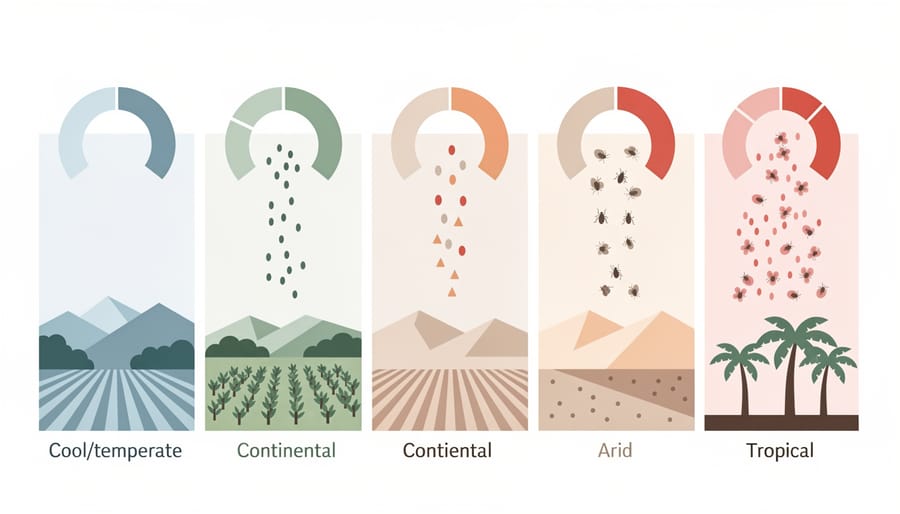
Cold Climate Zones (3-5): Short Season Strategies
If you’re gardening in zones 3-5, you’re working with a compressed timeline that requires strategic thinking. Your growing season might be just 90-120 days, which means every week counts when it comes to pest management.
The good news? Many destructive pests that plague southern gardens struggle in colder climates. The challenge is that late spring frosts can delay planting while early fall freezes arrive quickly, giving you a narrow window where pests are most active.
Start monitoring soil temperatures in late April or early May. Once the ground warms to about 50°F, overwintering pests like cutworms and root maggots become active. I learned this the hard way after losing an entire row of transplants to cutworms the first week of June—turns out they’d been waiting underground for weeks before I even planted.
Your peak pest pressure typically hits mid-July through August. This is when imported cabbageworms, potato beetles, and aphids reach their stride. Since you have less time than southern gardeners, focus on prevention: use row covers immediately after planting, scout daily during peak season, and don’t wait to address problems you spot.
By late August, start thinking about cleanup rather than control. Many northern pests only complete one generation per season, so removing plant debris before first frost eliminates overwintering sites. Cold-hardy crops like kale and Brussels sprouts planted for fall harvest need extra attention during this transition period, as desperate pests seek final feeding opportunities before winter arrives.
Moderate Climate Zones (6-8): Extended Season Management
If you’re gardening in zones 6-8, you’ve hit the sweet spot—a gloriously extended growing season that brings both opportunities and challenges. Your moderate climate means pests have more time to establish themselves, and many species produce multiple generations throughout the year. Let’s tackle this together!
In these zones, your pest management calendar needs to account for a longer active period. Aphids, for instance, might appear as early as March and continue breeding through October. Japanese beetles typically emerge in June and July, but warmer falls mean they linger longer than in northern regions. I learned this the hard way when I assumed my pest problems would end in September—only to find cabbage worms decimating my fall crops in early November!
The key here is thinking in waves rather than single events. Plan for at least two major pest pressure periods: spring through early summer, then late summer into fall. Monitor your garden weekly during these times, as a small aphid colony can explode into an infestation within days when conditions are favorable.
Your transitional weather creates unique challenges too. Mild winters mean overwintering pests survive more reliably. I’ve interviewed gardeners in zone 7 who swear by late-winter dormant oil sprays to catch overwintering insects before they wake up. Similarly, warm September weather often triggers a second wave of squash vine borers, so don’t pack away your row covers too early. Stay vigilant, stay flexible, and remember—your extended season means extended rewards when you time things right!
Warm Climate Zones (9-11): Year-Round Vigilance
If you’re gardening in zones 9-11, congratulations—you’ve got the longest growing season around! But here’s the tricky part: your pests never really take a break either. Without those hard freezes that knock back insect populations in colder regions, you’re dealing with year-round breeding cycles and multiple generations of pests overlapping throughout the calendar.
I spoke with Maria Gonzalez, a master gardener in South Florida, who reminded me that “vigilance is your best friend in warm climates.” She’s absolutely right. Aphids, whiteflies, spider mites, and scale insects can explode in population seemingly overnight. The key is regular monitoring—and I mean weekly walkthroughs of your garden, checking under leaves and along stems for early signs of trouble.
Timing your interventions becomes less about seasons and more about recognizing pest life cycle patterns specific to your area. For example, many subtropical pests peak during the transitional periods between wet and dry seasons rather than following traditional spring or fall patterns. Contact your local extension office to learn when specific pests are most active in your microclimate.
Here’s your action plan: establish a routine inspection schedule, rotate crops frequently to disrupt pest cycles, and embrace beneficial insects like lacewings and parasitic wasps as your frontline defense. Consider companion planting with strongly scented herbs that confuse pests year-round. Remember, consistent small efforts beat reactive panic spraying every time. Stay observant, stay proactive, and you’ll keep those persistent pests manageable.
Timing Your Preventive Measures
Early Season Preparation That Actually Works
The secret to successful pest management isn’t fighting harder during an infestation—it’s setting the stage before pests even arrive. Think of it like preparing your home before guests come over, except in this case, you’re making the space welcoming for the good guys and uninviting for the troublemakers.
Start by examining your soil about 4-6 weeks before your last expected frost. Healthy soil creates strong plants that naturally resist pest damage. Work in compost and aged manure, and consider adding beneficial nematodes if you’ve had issues with soil-dwelling grubs or larvae in previous seasons. These microscopic helpers patrol underground, keeping pest populations in check before plants go in the ground.
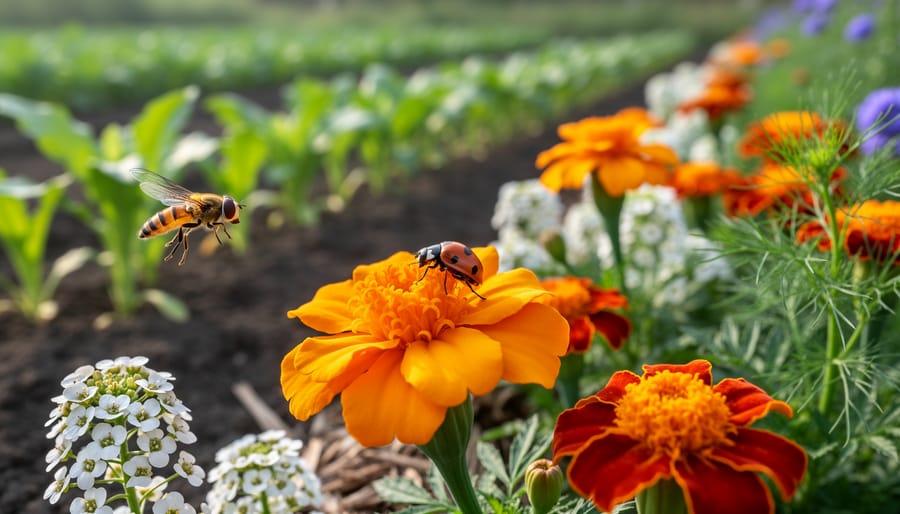
Next, create habitat for beneficial insects before pest pressure begins. Plant early-blooming flowers like alyssum, calendula, and phacelia around your garden borders. These provide nectar and pollen for ladybugs, lacewings, and parasitic wasps when they emerge from winter dormancy and are searching for reasons to stick around your garden.
Physical barriers work best when installed before pests arrive. Row covers protect young plants from flea beetles and cabbage moths, while copper tape around raised beds deters slugs. Installing these preventive measures takes minimal time in early spring but saves countless hours of pest management later. I learned this the hard way after losing an entire crop of seedlings to cutworms one year—now I use collars around every transplant from day one.
Mid-Season Monitoring and Adjustment
Once you’ve set your pest management calendar in motion, think of yourself as a garden detective keeping watch throughout the growing season. Regular monitoring helps you catch problems early and adjust your approach when Mother Nature throws you a curveball.
Start by walking through your garden at least once a week, ideally in the morning when pests are most active. Look under leaves, check new growth, and examine the soil around plant bases. I like to keep a simple notebook or use my phone to snap photos of anything unusual, which helps me track patterns over time.
Set up simple monitoring tools like yellow sticky traps for flying insects or cardboard collars around plant stems to check for crawling pests. These give you real numbers to work with rather than just a gut feeling. If you’re seeing more than a handful of pests per trap weekly, or noticing fresh damage on more than 10 percent of your plants, it’s time to intervene.
Weather variations can completely shift your pest timeline. An unusually warm spring might bring aphids two weeks early, while a wet summer could trigger a slug population boom. When the weather deviates from normal patterns, adjust your calendar accordingly. Move up treatments if you’re seeing early activity, or delay applications if cool temperatures have slowed pest development.
Remember, the goal isn’t perfection but staying one step ahead. By monitoring consistently and staying flexible, you’ll develop an intuition for your garden’s unique rhythm and pest pressures.
Tools and Resources for Regional Tracking
The good news is you don’t have to figure out pest timing all on your own! There are wonderful tools and resources designed specifically to help you track regional pest activity and time your interventions perfectly.
Start with mobile apps that take the guesswork out of pest tracking. Apps like GrowIt, iNaturalist, and regional ag apps allow you to log pest sightings, get identification help, and see what others in your area are experiencing right now. Many state agricultural departments offer free apps with pest alerts tailored to your zip code. I’ve found these incredibly helpful for knowing exactly when to start watching for specific problems.
Your local extension services are absolute goldtrust me on this. These offices provide free or low-cost resources including regional pest calendars, soil testing, and personalized advice from experts who know your area intimately. Many offer email newsletters with timely pest alerts, so you’ll get a heads-up right when Japanese beetles are about to emerge in your county. I subscribe to three different extension newsletters and they’ve saved my tomatoes more times than I can count.
Weather-based pest models are game-changers for timing. Degree-day calculators help predict when pests will reach vulnerable life stages based on accumulated temperature. Websites like NEWA (Network for Environment and Weather Applications) offer free predictive models for common pests. Simply enter your location and the system tells you optimal spray timing or when to install barriers.
Don’t overlook community resources either. Join local gardening groups on social media or attend garden club meetings. Fellow gardeners are your early warning system, sharing real-time reports about what’s happening in neighborhood gardens. Master Gardener programs often host workshops on regional pest management, combining scientific knowledge with boots-on-the-ground experience.
You now have the secret weapon that makes all the difference in pest management: timing. When you align your actions with the rhythms of your region and the life cycles of garden pests, you transform from reactive to proactive, from frustrated to confident.
Here’s the beautiful part—you don’t need to tackle everything at once. Start small this season. Choose just two or three pests that consistently trouble your garden, learn their schedules in your area, and mark your calendar. Maybe it’s setting out cucumber beetle traps in late spring or applying dormant oil to fruit trees in late winter. These small, well-timed actions will deliver results that feel almost magical compared to random spraying.
As you observe what works in your specific microclimate, jot down notes. Which week did you first spot aphids? When did the squash vine borers appear? These observations become invaluable guidance for next year, creating a personalized pest calendar that gets more accurate with each growing season. Your garden is teaching you its unique rhythm.
Remember, every region has its quirks, and your neighbors are treasure troves of local wisdom. We’d love to hear what you’re learning in your corner of the world. What timing tricks have worked for you? Which pests keep you on your toes? Share your experiences with the Bluestem community—your insights might be exactly what another gardener in your zone needs to hear. Together, we’re building a collective knowledge that makes all our gardens healthier and more resilient.