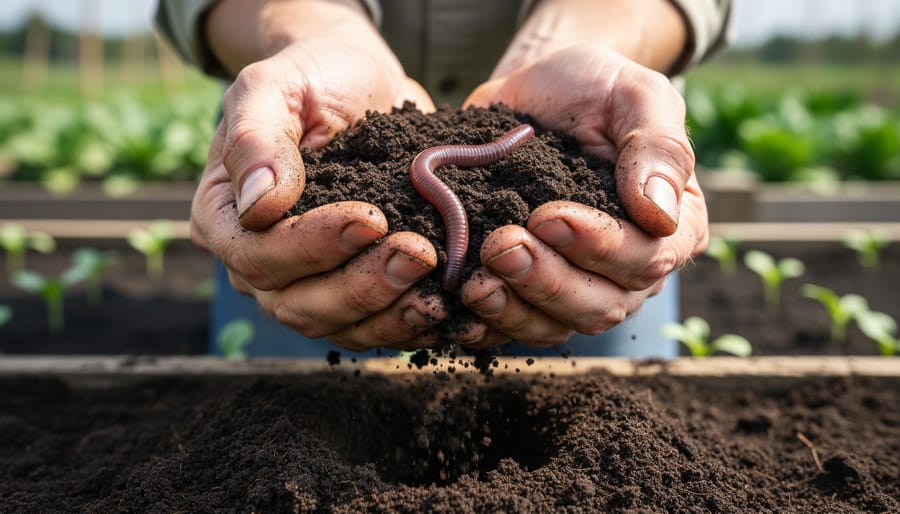
The difference between average gardening results and extraordinary harvests often comes down to what’s happening beneath the surface. Expert-level soil isn’t something you buy in a bag—it’s a living ecosystem you cultivate through specific practices that professional gardeners have refined over decades.
Think of soil as your garden’s foundation. Just as you wouldn’t build a house on unstable ground, you can’t expect thriving plants without addressing soil structure, nutrient balance, and microbial activity. The good news? Creating expert-quality soil is entirely achievable, whether you’re working with a small container garden or expansive beds.
Start by testing your soil’s pH and nutrient levels using an inexpensive kit or local extension service. This simple step reveals exactly what your soil needs rather than guessing with generic amendments. Mix in 2-3 inches of finished compost twice yearly to build organic matter that feeds beneficial microorganisms and improves drainage.
Layer organic mulch 3-4 inches deep around plants to regulate temperature, retain moisture, and continuously feed the soil as it breaks down. Avoid tilling when possible—disturbing soil destroys the intricate fungal networks that expert gardeners work years to establish.
These foundational practices transform ordinary dirt into the rich, friable soil that produces restaurant-quality vegetables and vibrant flower displays. Let’s explore how to implement each technique effectively.
What Makes Soil ‘Expert-Level’ (And Why It Matters More Than You Think)
Here’s something I learned from interviewing Master Gardener Patricia Chen last spring: the moment you start thinking of soil as dirt, you’ve already lost half the battle. “Expert-level soil isn’t something you buy in a bag,” she told me while we stood in her thriving vegetable garden. “It’s a living community you cultivate.”
That shift in perspective is everything. When most of us look at soil, we see brown stuff that holds plants upright. But expert gardeners see an entire underground city bustling with life. They understand that every handful contains billions of microorganisms, fungi networks, earthworms, and countless other creatures all working together to feed your plants.
This is what quality soil really means: a balanced ecosystem where biology, chemistry, and physics align perfectly to support plant health.
The difference shows up in your harvest. Ordinary soil might grow a tomato. Expert-level soil grows a tomato plant that resists disease naturally, produces abundantly, and delivers fruit that actually tastes like summer. The secret lies in soil structure. Expert gardeners create what we call “aggregates,” those crumbly clumps that form when organic matter binds soil particles together. These aggregates create tiny air pockets and pathways that allow roots to breathe, water to drain properly, and beneficial organisms to thrive.
Think of it this way: ordinary soil is like a cramped apartment with poor ventilation. Expert-level soil is a spacious home with good airflow, plenty of food in the pantry, and room for everyone to flourish.
Why does this matter so much? Because healthy soil does the heavy lifting for you. It regulates moisture, delivers nutrients at the right time, protects against pests and diseases, and even helps plants weather stress. When you build truly living soil, gardening becomes partnership rather than constant intervention.
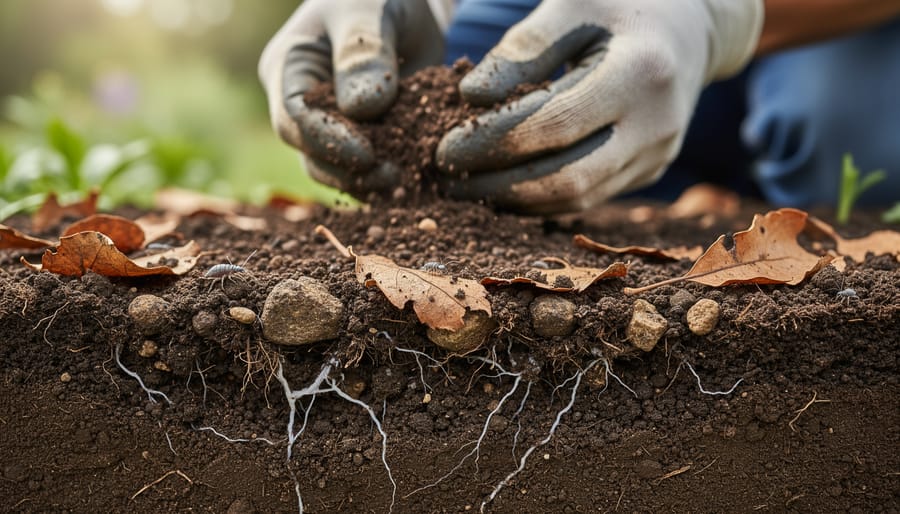
The Three Pillars of Expert Garden Soil
Texture and Structure: Creating the Perfect Foundation
Think of soil texture as the personality of your garden bed—it determines how water flows, how easily roots spread, and ultimately, how happy your plants will be! The magic lies in the balance between three key players: sand, silt, and clay.
Sand particles are the largest, creating spaces that allow excellent drainage and air circulation. Clay particles are tiny and pack tightly together, holding moisture and nutrients but sometimes too well. Silt falls right in the middle, offering a nice balance. The ideal garden soil—what we call loam—contains roughly 40% sand, 40% silt, and 20% clay. This combination gives you the best of all worlds: good drainage, nutrient retention, and easy root penetration.
Here’s a simple test you can do right now: grab a handful of moist soil and squeeze it into a ball. Sandy soil will crumble immediately when you open your hand. Clay soil holds its shape firmly and feels sticky. Loamy soil forms a ball but breaks apart with gentle pressure—that’s what you’re aiming for!
Want to get more specific? Try the jar test. Fill a clear jar one-third full with soil, add water to the top, shake vigorously, and let it settle for 24 hours. You’ll see distinct layers: sand settles first at the bottom, silt in the middle, and clay on top. This visual guide helps you understand exactly what you’re working with and what amendments might help create that perfect foundation your plants are dreaming of.
Nutrient Balance: Feeding Your Soil, Not Just Your Plants
You’ve probably seen those three mysterious numbers on fertilizer bags—like 10-10-10 or 5-3-2. These represent NPK: nitrogen, phosphorus, and potassium, the big three nutrients plants crave. Nitrogen fuels leafy growth, phosphorus supports strong roots and flowers, and potassium helps with overall plant health and disease resistance. Beyond these headliners, plants also need micronutrients like calcium, magnesium, and iron in smaller amounts.
Here’s where expert gardeners think differently: instead of reaching for synthetic fertilizers at the first sign of yellowing leaves, they build soil that naturally provides these nutrients over time. Think of it as the difference between giving your garden a quick energy drink versus preparing a nourishing, sustained diet.
When you feed your soil with compost, aged manure, and organic matter, you’re creating a living ecosystem where beneficial microbes break down materials and release nutrients exactly when plants need them. This slow-release approach prevents nutrient runoff, reduces the risk of burning plants, and improves soil structure simultaneously.
I recently spoke with master gardener Elena Rodriguez, who shared her philosophy: “I stopped buying fertilizer five years ago. My compost and cover crops provide everything my vegetables need, and my soil gets better every season instead of depleting.”
This patient approach requires shifting your mindset from quick fixes to long-term soil building. The reward? Healthier plants, reduced costs, and soil that becomes more productive with each passing year.
Biological Activity: The Secret Life Beneath Your Feet
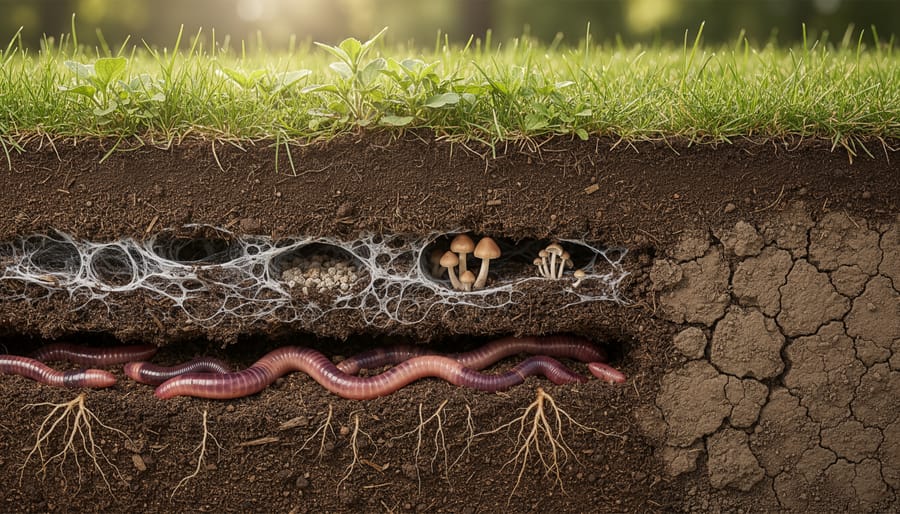
Think of your garden soil as a bustling underground city, teeming with life you can’t see but absolutely can’t do without. This hidden world is what separates ordinary dirt from truly expert-level soil.
The stars of this show are microorganisms—billions of bacteria and fungi living in just a teaspoon of healthy soil. These tiny workers break down organic matter, releasing nutrients that plant roots can actually absorb. Then there are the earthworms, nature’s tireless cultivators, creating tunnels that improve drainage and aeration while leaving behind nutrient-rich castings. Don’t forget mycorrhizal fungi, which form partnerships with plant roots, extending their reach and helping them access water and nutrients from further away.
Expert gardeners know that you can’t force this ecosystem to thrive—you have to invite it. The secret is feeding the soil community what it needs. Adding compost regularly provides food for microorganisms. Avoiding harsh chemical fertilizers protects beneficial bacteria. Minimizing tilling preserves the delicate fungal networks that take years to establish.
I spoke with Master Gardener Elena Rodriguez, who transformed her clay-heavy yard into a productive garden paradise. “Once I started thinking of myself as feeding soil life rather than feeding plants directly, everything changed,” she told me. “My tomatoes have never been healthier, and I use half the fertilizer I used to.”
This biological activity is the game-changer because it creates a self-sustaining system where plants naturally resist disease and thrive with less intervention from you.
How to Transform Your Soil Like a Pro
Assessing Your Starting Point
Before diving into improvements, let’s get acquainted with what you’re working with. Start with a simple squeeze test: grab a handful of moist soil and squeeze it firmly. When you open your hand, does it crumble apart? That suggests sandy soil. Does it hold together in a tight ball? You’ve likely got clay. The ideal texture falls somewhere in between, forming a ball that gently breaks apart when poked.
Next, observe your soil’s color. Rich, dark brown or almost black soil typically indicates good organic matter content, while pale or grayish tones suggest it needs some love. Notice how water behaves too. Does it pool on the surface or drain away instantly? Both extremes tell you something important about soil structure.
For a more detailed picture, consider an inexpensive home testing kit from your local garden center. These simple kits measure pH and basic nutrient levels, giving you valuable baseline information. While professional lab analysis provides the most comprehensive soil test results, home tests are perfectly adequate for most gardeners starting their soil improvement journey. Remember, understanding your starting point isn’t about achieving perfection immediately—it’s about knowing which direction to head.
Building Better Soil: The Expert’s Timeline
Improving your soil isn’t an overnight transformation, and that’s perfectly okay! Understanding the timeline helps you stay motivated and celebrate progress along the way.
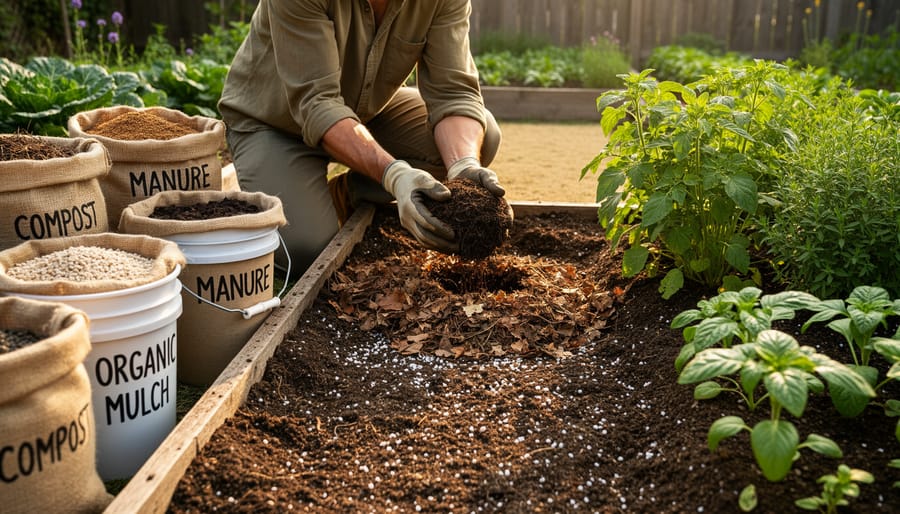
In the first season, focus on quick wins. Add a 2-3 inch layer of compost before planting and work it into the top few inches. You’ll notice better water retention and happier plants within weeks. Spring is ideal for incorporating aged manure, while fall lets you layer organic materials that break down over winter. These immediate steps create noticeable improvements in your first growing season.
The real magic happens over 1-3 years as you commit to healthy soil organics. Each season, continue adding compost and consider planting cover crops in unused beds during fall. Green manures like clover or winter rye protect soil and add nitrogen when turned under in spring. Your soil structure will gradually improve as earthworms multiply and beneficial microbes establish thriving communities.
Master gardener Patricia Chen, whom I interviewed last spring, shared her perspective: “I tell new gardeners to think in three-year cycles. Year one, you’re building the foundation. Year two, you see dramatic improvements. Year three, your soil practically works miracles on its own.”
For long-term success, maintain a regular amendment schedule. Test your soil every 2-3 years to track progress and adjust your approach. Remember, even expert gardeners continue feeding their soil throughout their gardening journey.
Common Soil Problems (And How Experts Fix Them)
Even the most dedicated gardeners encounter soil challenges, but the good news is that most problems have straightforward solutions. Let’s tackle the most common issues together.
Compacted soil is a frequent culprit behind struggling plants. If water pools on the surface or your shovel barely penetrates, you’re dealing with compaction. The fix? Work in compost or aged manure to improve structure, and avoid walking on garden beds when soil is wet. Creating designated pathways helps immensely.
Poor drainage often goes hand-in-hand with compaction. If your plants’ roots sit in waterlogged soil, they’ll struggle to breathe. Raised beds offer an immediate solution, while incorporating organic matter gradually improves drainage in existing beds.
Nutrient deficiencies show up as yellowing leaves, stunted growth, or poor flowering. Rather than reaching for synthetic fertilizers, build long-term soil fertility with compost and organic amendments. A simple soil test reveals exactly what your garden needs.
pH imbalances can lock up nutrients even when they’re present. Most vegetables prefer slightly acidic to neutral soil. Wood ash raises pH gradually, while sulfur or pine needles lower it. Understanding these five principles that fix it transforms problem soil into thriving garden beds without breaking the bank.
Expert Tips From Seasoned Gardeners
We reached out to gardeners across the country to share their hard-won soil wisdom, and their answers surprised us. Here’s what they had to say.
“The best advice I ever got was to stop buying bagged soil and start making my own,” says Maria Chen, who’s been gardening in Portland for 23 years. “I thought quality soil was expensive, but once I learned to combine my compost with local materials, everything changed. My tomatoes doubled in size that first season. Now I tell everyone: your soil is an investment that keeps giving back.”
Tom Blackwell from Arizona learned his most valuable lesson the hard way. “I spent years fighting my clay soil, trying to force it to be something it wasn’t. Then an old-timer at the community garden told me to work with it, not against it. I started adding gypsum and compost gradually, season after season. Patience transformed my garden more than any quick fix ever could.”
Perhaps the most unexpected tip came from Rebecca Santos in North Carolina. “Stop being so tidy,” she laughs. “I used to clear every fallen leaf and twig. Then I noticed the best plants in my garden grew where I’d been lazy about cleanup. Those leaves were feeding the soil naturally. Now I mulch with autumn leaves on purpose, and my soil practically takes care of itself.”
When we asked these gardeners what beginners should know, they agreed on one thing: touch your soil regularly. “Squeeze it, smell it, get to know how it feels when it’s too wet or too dry,” Maria explains. “Your hands will teach you more than any moisture meter. That connection makes you a better gardener.”
Their final piece of wisdom? Start small. “Don’t try to fix your entire yard at once,” Tom advises. “Pick one bed, experiment, learn what works. Success in one spot gives you confidence and knowledge to expand.”
Your Soil Success Plan: Getting Started This Week
Ready to transform your soil this week? Let’s break this down into simple, confidence-building steps that won’t overwhelm you.
Start with observation. Spend fifteen minutes this week really looking at your soil. Grab a handful when it’s slightly moist. Does it clump and then crumble? That’s good! Does it form a solid ball or fall apart like dust? You’ve just identified your starting point, and that’s valuable information.
Next, pick one improvement method from what you’ve learned. If you’re new to this, simply adding a two-inch layer of compost to your existing beds is perfect. Already comfortable with basics? Try the jar test to understand your soil texture, then adjust amendments accordingly. There’s no wrong starting place, only your starting place.
This weekend, commit to one soil-building action. Mix compost into a small section of your garden, or start a raised bed garden where you can control soil quality from the beginning. Small victories build momentum.
Finally, keep a simple soil journal. Jot down what you did and when. In three months, you’ll be amazed at the progress you’ve made and the knowledge you’ve gained.
Remember, expert gardeners didn’t master soil overnight. They started exactly where you are now, taking one thoughtful step at a time. Your garden will respond beautifully to even these initial improvements.
Here’s the wonderful truth: expert-level soil isn’t reserved for those with decades of experience or advanced degrees in horticulture. It’s entirely within your reach, starting right now, right where you are. Whether you’re working with a single container on your balcony or transforming an entire backyard, the journey to healthier soil begins with a single step.
Remember, you don’t need to tackle everything at once. Start by adding compost to one bed this season. Test your soil pH in spring. Try mulching a small area and observe the results. Each small improvement builds on the last, creating momentum that makes the process feel natural rather than overwhelming.
The beauty of soil improvement is that it’s forgiving and cumulative. Every handful of organic matter you add, every decision to protect rather than disturb the soil structure, every adjustment you make based on observation contributes to long-term success. Mistakes become learning opportunities, and what seems challenging today will feel intuitive next season.
Your soil will teach you what it needs if you pay attention. Trust the process, celebrate small victories, and know that even professional gardeners are continuously learning. You’re not trying to achieve perfection; you’re cultivating a living ecosystem that will reward your care with abundant, healthy growth for years to come.