
Create a defensible space by clearing dead vegetation, dry leaves, and fallen branches within 30 feet of your home—this single action dramatically reduces fire intensity and gives firefighters a fighting chance to protect your property. Replace wood mulch with gravel, rocks, or decomposed granite in the five-foot zone immediately surrounding your foundation, eliminating a common fuel source that can ignite your home’s exterior. Choose fire-resistant plants like lavender, rockrose, and ice plant for zones closest to structures, prioritizing low-growing succulents and broadleaf evergreens with high moisture content over resinous conifers and ornamental grasses that burn readily.
Your garden doesn’t have to look like a barren moonscape to be fire-safe. The most effective fire-resistant landscapes combine practical safety measures with stunning visual appeal, proving that protection and beauty aren’t mutually exclusive. Strategic plant placement, thoughtful species selection, and regular maintenance create living shields around your home while delivering vibrant colors, interesting textures, and year-round interest.
Understanding fire behavior is your foundation for smart landscaping decisions. Wildfires spread through three pathways: ground fires travel through low vegetation and debris, ladder fires climb from ground level into tree canopies, and ember storms deposit burning fragments up to a mile ahead of the main fire. Your landscape design must address all three threats, breaking up fuel continuity both horizontally across your property and vertically from soil to treetops. This knowledge transforms overwhelming worry into empowering action, giving you clear targets for your fire-prevention efforts.
Understanding Your Fire Risk: What Makes a Landscape Vulnerable
The Three Zones of Fire Defense
Understanding how fire approaches your home is the first step toward effective protection. Fire safety experts have developed a concept called the “home ignition zone,” which divides your property into three distinct areas, each requiring different strategies. Think of it as creating layers of defense, much like a castle’s protective walls.
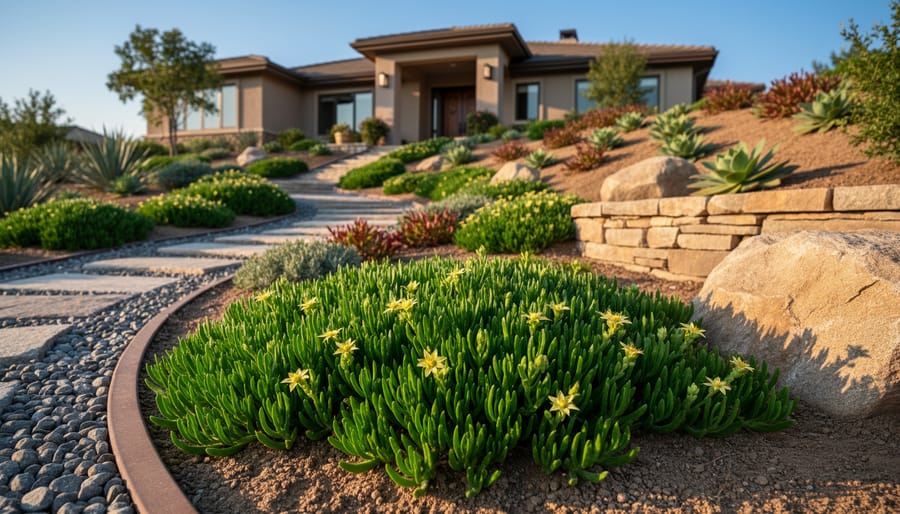
Zone 1, the immediate area extending 0-5 feet from your home, is your critical defense line. This space needs to be the most fire-resistant because embers landing here pose the greatest threat. I like to call this the “non-combustible zone.” Keep this area free of all flammable materials, including mulch, dead leaves, and wooden decorations. Use hardscaping elements like gravel, pavers, or concrete instead. If you choose to plant here, opt for high-moisture, low-growing succulents or other highly fire-resistant plants, and maintain them meticulously. Keep them well-watered and pruned away from walls and windows.
Zone 2 stretches from 5-30 feet from your home and acts as your buffer zone. Here, you can introduce more plant variety while still prioritizing fire resistance. Space plants strategically with gaps between them to prevent fire from jumping easily. Choose fire-resistant shrubs and small trees, keeping them properly pruned and free of dead branches. This is where your garden can really shine aesthetically while still providing protection.
Zone 3 extends from 30-100 feet outward and focuses on reducing fire intensity before it reaches your home. Thin out dense vegetation, create fuel breaks with pathways or lawn areas, and remove ladder fuels—low branches that allow ground fires to climb into tree canopies. Strategic tree spacing here can slow an approaching wildfire while maintaining your property’s natural beauty.
Common Landscape Features That Fuel Fires
Understanding which landscape elements pose fire risks is the first step toward creating a safer garden. The good news? Many of these features are easy to modify once you know what to look for.
Wood mulch and bark chips, while excellent for water retention and weed control, can actually act as kindling during a fire. They’re among the most common landscape mistakes in fire-prone areas. Consider switching to gravel, decomposed granite, or rock mulch in zones closest to your home.
Dead or dying vegetation creates natural fuel sources that fires love. Those brown leaves you’ve been meaning to clear? They’re basically fire starter. Regular pruning and cleanup removes this hazard while keeping your garden looking fresh and healthy.
Dense plantings might seem lush and beautiful, but when plants grow too close together, they create continuous fuel pathways that allow fires to spread quickly. Think of it like dominoes—proper spacing breaks that chain reaction.
Overhanging branches near your roof or windows deserve special attention. During a fire, these can literally deliver flames right to your home’s structure. Maintaining at least ten feet of clearance from structures significantly reduces this risk.
The encouraging part? Addressing these issues doesn’t mean sacrificing your garden’s beauty. It simply means making thoughtful choices about placement, materials, and maintenance. Small adjustments today can make a tremendous difference in protecting both your property and the landscape you’ve worked so hard to create.
Choosing Fire-Resistant Plants That Actually Thrive
What Makes a Plant Fire-Resistant
Not all plants respond to fire the same way, and understanding what makes certain plants naturally fire-resistant can help you make smarter choices for your garden. Think of fire-resistant plants as having built-in safety features that make them less likely to ignite or spread flames quickly.
The most important characteristic is high moisture content. Plants with thick, succulent leaves or fleshy stems are naturally harder to burn because water doesn’t catch fire easily. Picture an ice plant or sedum—their juicy leaves are like little water reservoirs. Even during dry spells, these plants retain more moisture than their thirsty neighbors.
Low resin and oil content is equally crucial. Plants that produce sticky resins or aromatic oils, like many conifers and eucalyptus, are essentially storing flammable fuel in their tissues. Fire-resistant plants, by contrast, have minimal volatile compounds. This is why rosemary, despite being lovely, isn’t your best bet in high-risk zones, while a jade plant makes a safer choice.
Open branching structure matters too. Dense, twiggy growth creates tiny air pockets that help flames spread rapidly, like kindling in a campfire. Fire-resistant plants typically have more space between branches, allowing heat to dissipate rather than build up. Think of the airy structure of a coral tree compared to the dense growth of juniper.
During a recent conversation with master gardener Elena Rodriguez, she explained it beautifully: “These plants are naturally designed to survive in tough conditions. We’re simply working with nature’s own fire prevention system.”
Top Fire-Resistant Plants by Region
Choosing the right plants for your region makes all the difference in creating a fire-resistant landscape that thrives with minimal fuss. Let me walk you through some reliable choices organized by climate zone, so you can confidently select plants that work beautifully where you live.
In Mediterranean and dry climates like California and the Southwest, native plants naturally handle heat and drought while resisting fire. For trees, consider Coast Live Oak and California Sycamore, both offering shade and deep root systems. Shrubs like Toyon and California Lilac provide year-round interest with minimal water needs. I’ve seen countless gardens where these natives flourish with almost no attention once established. For groundcovers, try Ceanothus or Yarrow, which stay low and green throughout fire season.
The Pacific Northwest benefits from its moisture, but fire resistance still matters during dry summer months. Douglas Fir and Bigleaf Maple make excellent tree choices, while Ocean Spray and Red-flowering Currant work beautifully as shrubs. Western Sword Fern creates lush groundcover that retains moisture naturally. These plants appreciate the region’s rain but won’t turn into tinder during brief dry spells.
For those in the Mountain and High Desert regions, where conditions can be harsh, focus on hardy natives. Gambel Oak and Aspen trees adapt well to elevation changes. Mountain Mahogany and Antelope Bitterbrush make tough, fire-resistant shrubs that wildlife adore. Creeping Mahonia serves as an excellent groundcover that handles temperature swings gracefully.
Southern and Southeastern gardeners should explore live oaks and Southern Magnolia for trees, with Yaupon Holly and Possumhaw providing shrub structure. Asiatic Jasmine and Mondo Grass create dense, fire-resistant groundcovers that thrive in humidity.
A quick growing tip: when selecting plants, prioritize those with high moisture content in their leaves and avoid anything particularly resinous or oily. Native plants almost always outperform imports because they’ve evolved alongside your local climate patterns. Start with just a few species you love, observe how they perform in your specific microclimate, then expand your palette. Remember, the best fire-resistant garden is one that’s well-maintained and suits your lifestyle perfectly.
Beautiful Plants to Avoid in Fire-Prone Areas
I know it’s tough to hear, but some of our garden favorites can actually increase fire risk around our homes. The good news? For every plant we need to reconsider, there’s an equally beautiful alternative waiting in the wings.
Let’s start with junipers and other dense conifers. While their evergreen foliage seems perfect for year-round structure, their resinous needles are incredibly flammable. I learned this firsthand from landscape architect Maria Chen, who’s been designing fire-safe gardens in California for twenty years. “Junipers are like little firecrackers waiting to go off,” she told me. Consider swapping them for more fire-resistant evergreens like toyon or wax myrtle instead.
Eucalyptus trees pose another challenge. Their peeling bark and oil-rich leaves make them notorious fire hazards, despite their architectural beauty. Native coast live oaks or western redbuds offer similar height and visual interest with much better fire resistance.
Ornamental grasses deserve special mention because they’re wildly popular right now. Fountain grass and pampas grass turn golden and dry in late summer, creating perfect tinder. If you love that graceful, swaying texture, try California fescue or deer grass instead. These native bunch grasses stay greener longer and don’t produce the tall, fluffy plumes that can carry embers.
Remember, making these substitutions doesn’t mean sacrificing beauty. It means choosing plants that protect your home while still creating the garden of your dreams.
Designing Your Fire-Resistant Garden Layout
Strategic Spacing and Placement
Think of your fire-resistant landscape like a well-organized bookshelf rather than a tightly packed pile of kindling. Strategic spacing can make all the difference between a garden that stops flames and one that accidentally creates a highway for fire to travel.
Start by giving your plants room to breathe. A good rule of thumb is to space shrubs at least twice their mature width apart. This prevents flames from jumping easily from one plant to the next. I learned this lesson from veteran gardener Maria Chen, who’s been designing fire-smart gardens in California for over twenty years. She told me, “When plants touch, they create continuous fuel. That spacing is your insurance policy.”
Vertical breaks matter just as much as horizontal ones. Avoid creating what firefighters call a “fuel ladder” where flames can climb from ground covers to shrubs to tree branches. Keep at least 10 feet of clear space between low-growing plants and tree canopies. Trim lower tree branches so there’s a clean gap, especially for trees within 30 feet of your home.
Here’s a smart arrangement strategy: group plants by their moisture content. Place your most succulent, water-rich plants closest to your house, then gradually transition to drier specimens as you move outward. Think of it as creating zones of resistance, with your juiciest plants forming the front line of defense.
Height placement also deserves careful thought. Position taller plants away from structures and mix heights throughout your garden rather than clustering all tall or short plants together. This varied height pattern naturally creates firebreaks and makes your landscape more visually interesting. Remember, fire-resistant doesn’t mean boring or sparse. It simply means thoughtful.
Incorporating Hardscape for Protection and Beauty
Hardscaping elements do double duty in fire-resistant landscapes, offering both practical protection and stunning visual appeal. Think of them as your garden’s built-in firebreaks that happen to look beautiful year-round.
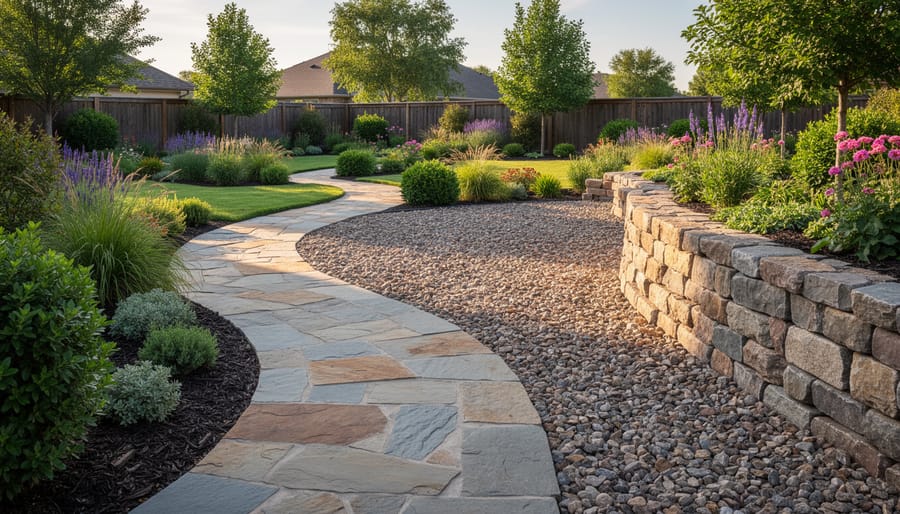
Gravel paths and patios create excellent barriers between vegetation and structures. I’ve found that decomposed granite pathways not only provide safe walking surfaces but also add a warm, natural texture that complements drought-tolerant plantings. These non-combustible surfaces won’t fuel flames, giving firefighters safer access during emergencies.
Stone walls serve as attractive fire breaks while adding dimension to your landscape. Stacked stone or mortared walls can separate garden beds from buildings, and they’re perfect for creating terraced gardens on slopes. Renowned landscape architect Maria Chen, whom I interviewed last spring, suggests incorporating these walls at least 3-5 feet from structures for maximum protection.
Water features might seem purely decorative, but they’re secretly fire-fighting allies. A pond, fountain, or birdbath provides emergency water sources and creates humidity around nearby plants. Plus, there’s nothing quite as soothing as water sounds in your garden sanctuary.
Consider using flagstone patios, crushed rock mulch around foundation plantings, or river rock beds as ground cover. These materials won’t ignite and help moderate soil temperature during hot summer months.
The beauty of hardscaping is that once installed, it requires minimal maintenance while providing year-round structure. Start with one project, perhaps a gravel path connecting your favorite garden spots, and build from there as your budget allows.
Creating Firebreaks Without Sacrificing Style
Firebreaks don’t have to look like barren strips of dirt circling your home. With thoughtful design, these essential safety zones can become attractive features that enhance your landscape rather than detract from it.
The key is thinking of your firebreak as a hardscape opportunity. A 5-foot gravel pathway edged with decorative stone creates a fuel-free zone while providing a pleasant walking route through your garden. I’ve seen homeowners transform their required clearance into charming patio spaces complete with fire-resistant pavers and strategically placed stone benches. One neighbor even installed a dry creek bed filled with river rocks that doubles as drainage and a beautiful focal point.
For wider fuel breaks between your home and outer plantings, consider terracing with stacked stone walls. These create visual interest at different heights while maintaining the necessary separation. Decomposed granite pathways offer another elegant solution, providing that warm, earthy look without combustible materials.
Renowned landscape designer Maria Chen, who specializes in fire-safe gardens in California, shared this advice: “I always tell my clients to embrace hardscaping as an art form. A well-placed boulder grouping or a meandering crushed stone path can be just as beautiful as any flower bed.”
You can also soften the edges of firebreaks with low-growing succulents in containers placed on non-combustible surfaces. This adds color and life without compromising safety. Remember, the goal isn’t to eliminate beauty but to redirect it into fire-smart choices that protect your home while creating spaces you’ll genuinely enjoy.
Maintaining Your Fire-Resistant Landscape Year-Round
Seasonal Maintenance Checklist
Maintaining your fire-resistant landscape throughout the year keeps your property safe and beautiful. I like to think of seasonal maintenance as a conversation with your garden—each season brings its own needs and opportunities. Let me walk you through what works best.
Spring is your preparation season. This is when I tackle the heavy lifting—pruning dead branches and removing any debris that accumulated over winter. Focus on creating clean space around trees and shrubs, removing at least 18 inches of dead plant material from around woody plants. Check your irrigation system now, too. After winter’s freeze-thaw cycles, you might find leaks or clogged emitters that need attention. I’ve learned the hard way that catching these early saves water and plants later.
Summer requires vigilance. Walk your property weekly, looking for dry vegetation that needs removal. This is especially important in late summer when grasses turn brown. Keep your lawn mowed to a height of about 4 inches—tall enough to stay healthy but short enough to resist ignition. Adjust irrigation schedules as temperatures climb, watering deeply but less frequently to encourage strong root systems. During my interviews with experienced gardeners in fire-prone areas, they consistently emphasized that regular debris removal during fire season makes the biggest difference.
Fall brings preparation for the year ahead. Clear gutters and roofs of leaves and pine needles—these are surprisingly dangerous fire fuels. Cut back ornamental grasses to about 6 inches and remove the clippings. This is also perfect timing for planting new fire-resistant species, as cooler weather helps them establish.
Winter offers a chance to assess and plan. Inspect trees for damaged limbs that could become hazards. Review your defensible space zones and note areas needing improvement. Though maintenance slows down, staying observant ensures you’re ready when spring returns.
Smart Irrigation for Fire Safety
Here’s a truth that might surprise you: well-hydrated plants are your garden’s first line of defense against fire. When plants maintain proper moisture content, they’re significantly less likely to ignite and more likely to slow a fire’s progression. Think of it as building an internal fire extinguisher right into your landscape.
The key is deep, infrequent watering rather than frequent shallow spritzing. Deep watering encourages roots to grow downward, creating more resilient plants that can access moisture even during dry spells. I recommend watering early in the morning, which allows plants to absorb moisture before the heat of the day while reducing water loss through evaporation.
For those of us in drought-prone regions, this presents a challenge. How do we keep plants hydrated without wasting precious water resources? The answer lies in water-wise strategies that maximize every drop. Drip irrigation systems deliver water directly to root zones, eliminating waste from overspray and runoff. Soaker hoses offer another budget-friendly option that works beautifully in fire-resistant beds.
Mulching around plants creates a moisture-retaining barrier that keeps soil cooler and reduces evaporation. Just remember to keep mulch a few inches away from plant stems to maintain that crucial defensible space.
Smart controllers and soil moisture sensors take the guesswork out of watering schedules, ensuring your plants receive exactly what they need. These efficient irrigation techniques mean you’re protecting your property while being a responsible steward of water resources.
Making the Transition: Converting Your Existing Landscape
Prioritizing Your Fire-Safety Improvements
When it comes to fire safety, not all improvements carry equal weight. The most effective approach starts right at your home’s foundation and works outward in zones.
Focus first on the area within five feet of your house—what fire experts call Zone Zero. This immediate space deserves your urgent attention. Remove all dead plant material, leaf litter, and any flammable debris. Replace wood mulch with gravel or stone, and ensure plants here are low-growing succulents or other highly fire-resistant varieties with high moisture content. This zone is your first line of defense.
Next, tackle the area extending 30 feet from your structure. Here’s where you’ll create defensible space by removing ladder fuels—those branches and shrubs that could carry fire from ground level up into trees. Thin out dense vegetation, prune tree branches at least six feet from the ground, and space plants so they’re not touching.
Consider transforming challenging spaces near your home into fire-smart gardens that serve double duty. That steep slope or rocky area? Perfect for drought-tolerant, fire-resistant plantings.
Don’t feel overwhelmed by tackling everything at once. I’ve seen homeowners make meaningful progress by dedicating one weekend monthly to improvements. Start with Zone Zero, then gradually work outward. Even small changes in these critical areas significantly reduce your fire risk while maintaining the garden you love.
Budget-Friendly Transformation Strategies
Creating a fire-resistant landscape doesn’t require a massive investment or complete garden overhaul. Let’s explore some practical ways to make this transition work for your budget and schedule.
Start with the most critical zones first. Focus your initial efforts on the area within five feet of your home, where fire risk is highest. Clear away any dead vegetation, move flammable materials, and replace a few key plants with fire-resistant alternatives. This targeted approach delivers maximum safety benefits without requiring you to tackle your entire property at once.
Divide and conquer through seasonal projects. Perhaps this spring you’ll focus on creating a succulent border along your deck. Next fall, you might replace that ornamental grass with lower-growing groundcovers. Breaking the work into manageable chunks makes it easier than you think and spreads costs across multiple seasons.
Propagate your own plants whenever possible. Many fire-resistant species like sedums, ice plants, and lavender root easily from cuttings. Join local garden clubs where members often share divisions of established plants. This builds community connections while reducing expenses.
Consider hardscaping alternatives that require zero maintenance. A simple gravel pathway or stone mulch around your foundation provides excellent fire protection at a fraction of the cost of extensive plantings. You can always add plants gradually as your budget allows.
Remember, even small changes improve your property’s fire resistance. Every fire-wise choice you make today contributes to a safer, more resilient landscape tomorrow.
Real Gardens, Real Results: Success Stories from Fire Country
When Maria Chen redesigned her hillside garden in Southern California after a close call with wildfires in 2018, she worried about losing the lush, colorful landscape she’d spent years cultivating. “I thought fire-resistant meant rocks and cacti,” she laughs. “But my garden now is actually more beautiful than before.” Maria replaced her juniper hedges with lavender borders and swapped out eucalyptus trees for native oak and redbud. “The lavender attracts so many butterflies, and the wildflower meadow I planted in the defensible zone is absolutely stunning in spring. My neighbors actually stop to take photos.”
Jake Morrison, a retired firefighter in Oregon, took a different approach. “I kept my favorite roses and perennials but completely rethought my layout,” he explains. Jake created distinct zones with gravel pathways acting as fire breaks between garden beds. He removed all the bark mulch and replaced it with decomposed granite and pebbles. “The maintenance is actually easier now. No more pine needles clogging my gutters, and the drip irrigation system I installed uses less water than my old sprinklers.”
In Northern Arizona, the Patel family transformed their property on a tight budget. “We did everything ourselves over two summers,” says Priya Patel. “We started closest to the house, removing dead shrubs and pine bark, then gradually worked outward.” They chose mostly native plants like penstemon, Apache plume, and yucca. “People don’t realize how gorgeous native plants can be. Our garden looks intentional and designed, not like we just gave up on gardening.”
Each of these gardeners proves that fire-resistant landscaping offers endless possibilities. Whether you prefer cottage-garden charm, modern minimalism, or native plant habitats, you can create a safer property that brings you genuine joy every time you step outside.
Creating a fire-resistant landscape doesn’t mean sacrificing the garden of your dreams. As you’ve discovered throughout this guide, you can absolutely have both beauty and safety growing side by side in your outdoor space. Whether you live in a high-risk wildfire zone or simply want to add an extra layer of protection to your property, the steps you take today can make a meaningful difference tomorrow.
Remember, you don’t need to transform your entire yard overnight. Start small. Perhaps replace just one highly flammable shrub this weekend, or create a five-foot buffer zone around your deck. Maybe you’ll spend Saturday clearing leaf litter from your gutters or pruning lower tree branches. Each of these actions adds up to create a safer environment for your home and family.
The key takeaways are straightforward: choose fire-resistant plants with high moisture content, create defensible space with thoughtful zoning, maintain your landscape regularly, and keep combustible materials away from structures. These aren’t complicated tasks, and they’re well within reach for gardeners at any skill level.
I’ve seen countless homeowners successfully blend stunning landscapes with smart fire prevention strategies, and you can too. Your fire-resistant garden will be uniquely yours, reflecting your personal style while providing peace of mind. So grab your gardening gloves and take that first step today. Your safer, beautiful landscape is waiting to bloom.


