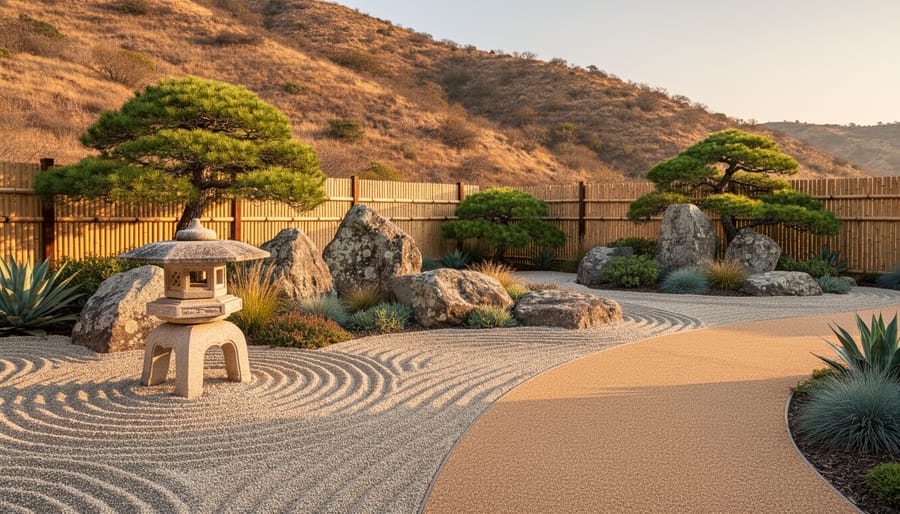
Transform your water-wise landscape into a serene Japanese retreat by embracing the natural drought tolerance built into traditional garden design. Japanese gardens have always celebrated restraint and harmony with nature, making them surprisingly perfect for dry climates. The iconic elements you love—raked gravel representing water, carefully placed stones, and sculptural evergreens—require minimal irrigation once established.
Replace thirsty moss lawns with decomposed granite pathways and karesansui (dry landscape) features that capture the essence of flowing water without using a drop. Select native and adapted plants that mirror Japanese aesthetics: ornamental grasses like Japanese forest grass alternatives, Mediterranean herbs resembling traditional groundcovers, and succulents that echo the form of pine-pruned specimens. Mugo pines, junipers, and native azaleas thrive with occasional deep watering rather than daily sprinkling.
The philosophy of “ma” (negative space) becomes your greatest ally—fewer plants mean less water while creating the contemplative openness that defines authentic Japanese design. Strategic hardscaping with stone lanterns, bamboo accents, and carefully positioned boulders delivers maximum visual impact with zero water consumption. You’ll discover that limiting resources actually strengthens your design, forcing intentional choices that result in a more powerful, sustainable garden that honors both Japanese tradition and environmental responsibility.
Why Japanese Gardens Work So Well in Dry Climates
Here’s something wonderful I’ve discovered over the years: Japanese gardens are naturally brilliant water savers, even though most people don’t realize it. The design principles that have guided these gardens for centuries align beautifully with drought-tolerant gardening. It’s almost as if the ancient garden masters were thinking ahead to our modern water challenges.
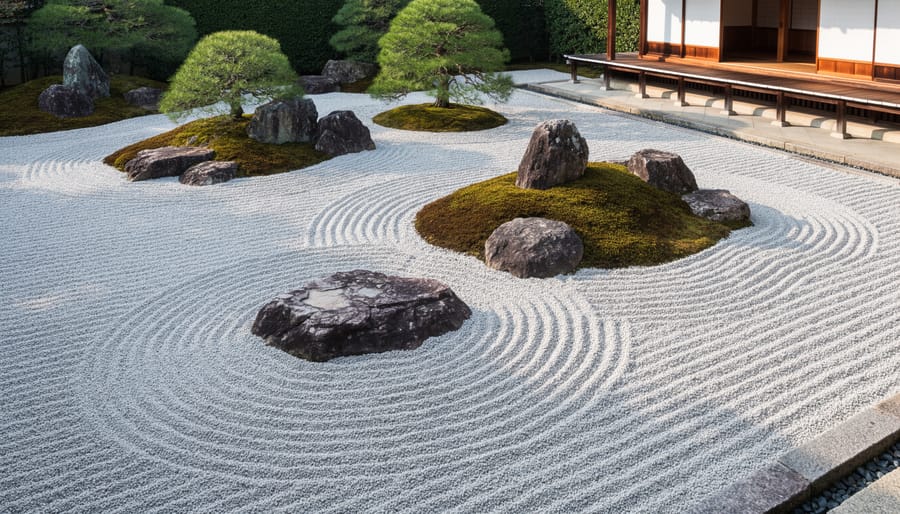
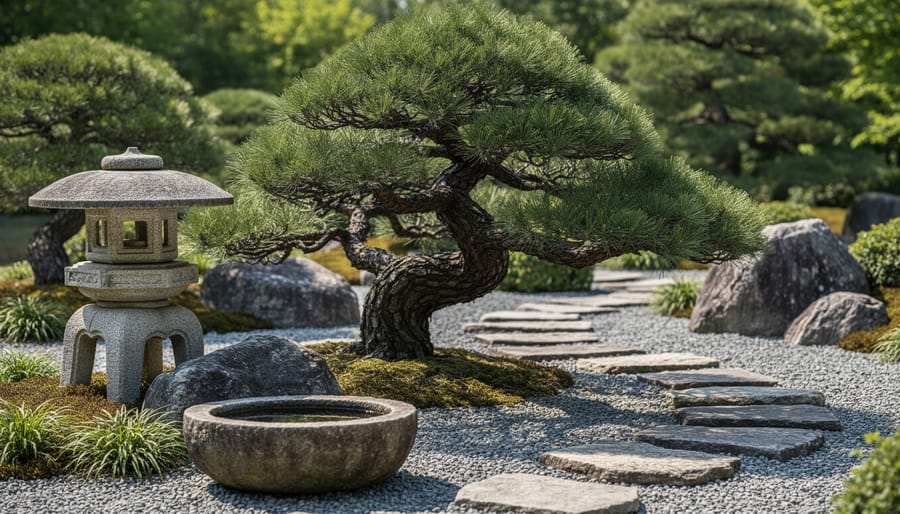
Traditional Japanese garden design places tremendous emphasis on hardscaping elements like stone, gravel, and sand. These materials form the backbone of the garden, creating structure and visual interest without requiring a single drop of water. The famous rock gardens, or karesansui, use carefully raked gravel to represent water, eliminating the need for actual streams or ponds. This approach gives you that serene, contemplative atmosphere while keeping water usage minimal.
What really fascinates me is how historical Japanese gardens, particularly in the Kyoto region, already incorporated many drought-defying secrets by necessity. These gardens survived in areas with seasonal water limitations, so gardeners developed techniques that maximized every precious resource. They practiced mindful plant selection, choosing species that could thrive with less water and strategically placing them where they’d receive natural moisture.
The Japanese philosophy of wabi-sabi, which finds beauty in simplicity and imperfection, encourages using fewer plants and more negative space. This means less competition for water resources and reduced maintenance needs. Rather than filling every corner with thirsty vegetation, you’re creating deliberate empty spaces that allow each element to shine while conserving water naturally. It’s a perfect marriage of artistic vision and environmental responsibility.
Essential Elements of a Drought-Tolerant Japanese Garden
Dry Stream Beds and Rock Arrangements
Karesansui, or dry landscape gardens, offer perhaps the most elegant water-conserving solution in Japanese garden design. These contemplative spaces use carefully arranged rocks and raked gravel to represent flowing water, islands, and even ocean waves—all without a single drop. I’ve always found it fascinating how a few well-placed stones can evoke the feeling of a mountain stream better than some actual water features!
The beauty of dry stream beds lies in their simplicity and symbolism. Start by selecting rocks of varying sizes—typically three to five larger anchor stones with smaller supporting pieces. Look for stones with interesting textures and colors at local stone yards, landscape suppliers, or even riverbeds if permitted. Avoid perfectly round or obviously artificial stones; weathered rocks with natural character work best.
When arranging your stones, think about how water naturally flows. Place larger rocks at angles, creating the impression of movement and obstacles in a stream’s path. Use pea gravel or small river rocks to fill the “streambed,” then rake it in flowing patterns around your stones. This raking becomes a meditative practice you can refresh regularly.
For added authenticity, consider placing moss or low-growing sedums between rocks—they need minimal water once established and soften the composition beautifully.
Gravel and Mulch as Water Savers
Here’s a wonderful secret about Japanese gardens: those beautiful expanses of gravel and mulch aren’t just there to look stunning, they’re actually working hard to keep your garden hydrated during dry spells. Think of them as a protective blanket for your soil.
When you layer gravel or mulch around your plants, you’re creating a barrier that slows water evaporation dramatically. I learned this firsthand during a particularly hot summer when my mulched areas stayed moist days longer than bare soil. The difference was remarkable!
For authentic Japanese aesthetics with maximum water retention, crushed granite and decomposed granite are your best friends. These materials come in soft grays and tans that complement traditional design while allowing some water penetration. Pea gravel works beautifully too, creating that classic raked pattern we associate with Zen gardens.
Apply a 2-3 inch layer around plants, keeping it slightly away from stems to prevent rot. For pathways and meditation spaces, you can go deeper, around 4 inches. Darker volcanic rock adds visual interest and absorbs heat, which can be beneficial in cooler climates but might stress plants in hot regions.
The beauty of this approach is that you’re embracing authentic Japanese garden principles while being incredibly water-wise. It’s a practical solution that enhances rather than compromises your garden’s serene atmosphere.
Strategic Hardscaping
Here’s where you can really shine in creating a low-maintenance, drought-conscious Japanese garden. Hardscaping elements are the backbone of traditional Japanese design, and they’re naturally water-free! Start with gravel or decomposed granite pathways that wind gently through your space, creating movement and mystery. These materials are permeable, allowing rainwater to soak through rather than run off.
Stone arrangements are absolutely essential. Choose larger, weathered boulders to create focal points and suggest mountain landscapes. I once visited a stunning Japanese garden in Santa Fe where massive sandstone rocks became the true stars, with plants playing supporting roles. Position three stones in asymmetrical triangular groupings for the most authentic feel.
Consider adding a tsukubai (stone water basin) that doesn’t actually need running water, a simple bamboo fence section, or stepping stones across a dry stream bed made from river rocks. These elements add tremendous visual interest while requiring zero irrigation.
Don’t overlook ornamental features like stone lanterns or a simple bamboo gate. Master gardener Kenji Nakamura shared with me that in drought-prone regions of Japan, hardscaping traditionally dominated gardens, with careful plant placement as accents rather than the main attraction. This approach reduces your watered areas by up to 60 percent while maintaining authentic beauty.
The Best Drought-Resistant Plants for Japanese Garden Style
Trees That Set the Scene
Trees anchor your Japanese garden’s design while creating that essential sense of tranquility we all crave. The good news? You don’t need water-guzzling plants to achieve authentic Japanese aesthetics.
Japanese black pine stands as your star performer here. This rugged beauty naturally develops that wind-swept, character-filled silhouette that defines traditional gardens. Once established, it thrives on minimal water and tolerates coastal conditions beautifully. Prune in late spring to maintain its sculptural form, removing candles (new growth tips) by about two-thirds.
Here’s a delightful surprise: crape myrtle works wonderfully in drought-tolerant Japanese gardens. While not traditionally Japanese, its elegant branching structure and smooth, exfoliating bark mirror the aesthetic perfectly. Choose varieties with subtle flower colors like white or pale pink to maintain authenticity. Water deeply but infrequently during establishment, then let nature take over.
California pepper tree offers graceful, weeping branches that create lovely dappled shade. Its fine-textured foliage moves beautifully in the breeze, adding that living, breathing quality essential to Japanese garden design. This tree practically thrives on neglect once established.
I recently spoke with landscape designer Maria Chen, who shared this wisdom: “Think about the tree’s silhouette in winter. Japanese garden design celebrates every season, so choose trees with interesting bark and branching patterns, not just foliage.”
For care success, water deeply during the first two years to encourage deep root systems. After that, your trees will largely fend for themselves, embodying the sustainable spirit of thoughtful garden design.
Shrubs and Mid-Layer Plants
The mid-layer of your Japanese garden creates essential depth and structure, and fortunately, many traditional choices adapt beautifully to drier conditions once established. The key is selecting wisely and giving new plantings extra attention during their first year.
For azaleas, which are classic in Japanese gardens, look for native species rather than thirsty hybrids. Southern Indica azaleas and Kurume varieties handle heat and moderate drought far better than their showier cousins. Plant them in partial shade where they’ll need less water, and they’ll reward you with gorgeous spring blooms while maintaining that authentic Japanese garden feel.
Nandina, or heavenly bamboo, is a superstar for drought-tolerant Japanese gardens. Despite its name, it’s not actually bamboo but offers that same elegant vertical presence. The foliage changes beautifully through seasons, from fresh green to burgundy-red, and once established, it thrives on neglect. I’ve seen nandinas flourish with minimal summer watering in zone 7 gardens.
Dwarf mugo pine brings evergreen structure without demanding constant moisture. These compact beauties can be pruned to maintain that sculptural quality so valued in Japanese design. Pair them with Japanese barberry for contrasting textures, though be sure to check if barberry is considered invasive in your region.
Other excellent choices include Oregon grape holly, which offers glossy foliage and yellow spring flowers, and Japanese skimmia for shaded areas. These shrubs create the layered, naturalistic look that makes Japanese gardens so captivating, all while conserving precious water.
Ground Covers and Accent Plants
Traditional Japanese gardens rely heavily on moss and ferns as ground covers, but these shade-lovers struggle in dry conditions. The good news? Several water-wise alternatives capture that same serene, textural quality while thriving on minimal moisture.
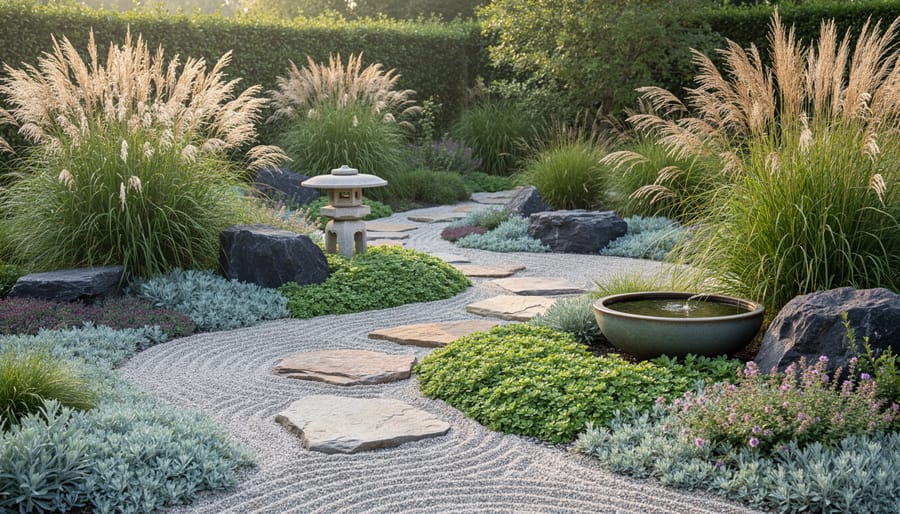
Sedums are absolute champions for drought-tolerant ground cover. Varieties like Sedum rupestre ‘Angelina’ create a golden carpet that echoes the sun-dappled aesthetic of Japanese gardens, while Sedum spurium forms dense, low mats reminiscent of moss. I’ve watched these tough little plants breeze through summer heat waves without a single extra watering.
Blue star creeper (Isotoma fluviatilis) offers delicate star-shaped blooms and spreads into soft, cushiony mats between stepping stones. Though it appreciates occasional water during establishment, it becomes remarkably resilient once settled. Dymondia margaretae provides another excellent option, with silvery-green foliage that creates a peaceful, contemplative feeling underfoot.
For textural interest that mirrors traditional ferns, consider drought-tolerant ornamental grasses like Japanese forest grass varieties bred for lower water needs, or opt for blue fescue and Mexican feather grass. These graceful plants sway beautifully in the breeze, adding movement and sound to your garden.
Don’t overlook other drought-tolerant perennials like creeping thyme between pavers or low-growing stonecrop varieties. These plants honor the Japanese principle of working with nature rather than against it, creating beauty through adaptation and resilience.
Water-Wise Design Techniques
Grouping Plants by Water Needs
Here’s a water-saving secret that’ll make your life so much easier: grouping plants by their thirst levels. This technique, called hydrozoning, is simply brilliant for creating an efficient Japanese garden that won’t send your water bill through the roof.
Think of your garden as having different neighborhoods. Your most drought-tolerant plants—those tough azaleas, ornamental grasses, and sculptural pines—live happily in the dry zones with minimal attention. Meanwhile, your few water-loving residents, perhaps a small Japanese maple or a moss feature, cluster together in their own cozy corner where you can target your watering efforts.
I learned this approach from master gardener Kenji Tanaka, who manages a stunning Japanese garden in drought-prone Southern California. He places his moisture-loving plants near the water basin (tsukubai) where natural splashing helps keep them hydrated. Genius, right?
Start by sketching your garden and identifying which areas naturally retain moisture—perhaps a shadier spot or gentle depression. Place your thirstier plants there, and let your drought champions occupy the sunny, well-drained areas. You’ll water less, waste nothing, and still maintain that serene Japanese aesthetic. Your irrigation system (even if it’s just you with a watering can) will thank you for the efficiency.
Soil Amendment for Water Retention
Creating a drought-tolerant Japanese garden starts with improving soil health through thoughtful amendments. The key is striking a balance between water retention and proper drainage, something Japanese gardens have mastered for centuries.
Start by working compost into your soil at a depth of about six inches. This organic matter acts like a sponge, holding moisture near plant roots while still allowing excess water to drain away. I’ve found that a three-inch layer worked into existing soil makes a remarkable difference within just one season.
For clay-heavy soils, add coarse sand or perlite to prevent waterlogging. Sandy soils benefit from additional organic matter like well-aged leaf mold. Consider incorporating biochar, a charcoal-like substance that retains moisture exceptionally well while improving soil structure for decades. This amendment is particularly valuable in drought-prone areas, mimicking the natural forest floor conditions that inspire traditional Japanese gardens.
Efficient Irrigation Options
Getting water to your plants efficiently makes all the difference in establishing a drought-tolerant Japanese garden. I’ve found that drip irrigation systems are absolute game-changers – they deliver water directly to plant roots with minimal waste, typically using 30-50% less water than traditional sprinklers. These systems can be hidden beneath mulch to maintain that clean Japanese aesthetic.
If you’re working with a smaller budget, soaker hoses offer a fantastic alternative. Simply snake them around your plants and let water seep slowly into the soil. They’re particularly effective for hedges and ground covers.
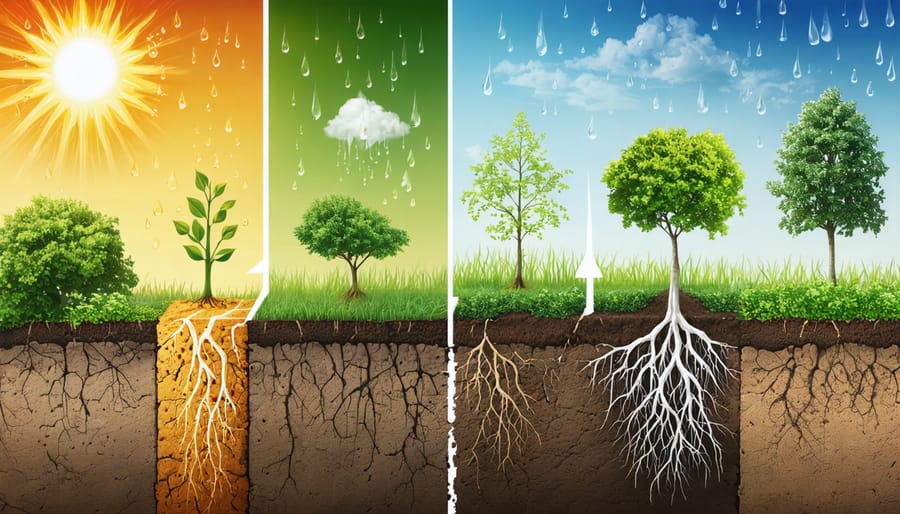
During the first growing season, water deeply but infrequently – think twice weekly rather than daily sprinkles. This encourages roots to grow deeper, creating more resilient plants. Once established (usually after 12-18 months), most drought-tolerant Japanese garden plants need watering only during extended dry spells. Early morning watering reduces evaporation and gives plants time to absorb moisture before afternoon heat arrives. Remember, less frequent deep watering beats frequent shallow watering every time.
Maintaining the Zen Without the Water Bill
The beauty of a drought-tolerant Japanese garden lies in its minimal maintenance needs once established. Think of it as setting up a low-maintenance friendship that just gets better with time.
Your seasonal routine should follow nature’s lead rather than fighting against it. In spring, do a light pruning to maintain your plants’ natural shapes, remembering that Japanese garden design celebrates asymmetry and organic forms. Fall brings another opportunity to shape deciduous plants after leaf drop, when you can clearly see their structure. But here’s the thing: resist the urge to over-prune. These gardens thrive on the principle of minimal intervention.
Mulch becomes your garden’s best friend in conserving precious water. Refresh your gravel or organic mulch layer annually, maintaining about 2-3 inches of depth around plants. This simple act keeps soil temperatures stable and locks in moisture during those hot summer months. I like to think of mulch as nature’s moisture-saving blanket.
During extreme drought, embrace the wabi-sabi philosophy. This Japanese concept celebrates imperfection, impermanence, and the natural cycle of things. Your ornamental grasses might brown at the tips, your Japanese maple leaves might curl slightly—and that’s perfectly okay. These temporary changes tell the story of your garden’s resilience and connection to the natural world.
Water deeply but infrequently when you do irrigate, encouraging those deep root systems. A monthly deep soak during severe drought keeps plants alive without spoiling their drought-hardened character. Watch your plants for signs of real stress, like dropping leaves or wilting stems, but don’t panic at every small change. Your garden is designed to weather these conditions naturally, adapting and persisting with grace.
Creating a drought-tolerant Japanese garden isn’t just possible—it’s actually a beautiful way to honor the core philosophy behind these timeless spaces. Remember, Japanese gardens have always celebrated simplicity, restraint, and working harmoniously with nature rather than against it. When you choose plants that thrive in your climate and use natural materials like gravel and stone, you’re staying true to these principles while being a responsible steward of precious water resources.
The journey doesn’t have to be overwhelming. Start small by transforming just one corner of your yard. Maybe it’s a simple arrangement of three carefully chosen rocks surrounded by drought-tolerant ground cover, or perhaps a small gravel area with a single sculptural Japanese maple. As master gardener Kenji Nakamura shared with us, “The most authentic Japanese gardens grow organically over time, each element added thoughtfully.”
You already have everything you need to begin: an appreciation for nature’s beauty and the willingness to observe what works in your specific environment. Take that first step today, and watch your water-wise Japanese garden evolve into a peaceful retreat that reflects both timeless tradition and modern sustainability.