Every kitchen scrap you toss in the trash releases methane as it decomposes in landfills, a greenhouse gas 25 times more potent than carbon dioxide. Yet that same banana peel, coffee ground, or wilted lettuce could instead become rich soil that feeds your garden and captures carbon right in your backyard.
Composting transforms your relationship with waste. Instead of sending organic matter to contribute to the 24% of landfill content that generates harmful emissions, you’re creating a closed loop where yesterday’s dinner scraps become tomorrow’s thriving tomato plants. This simple practice reduces landfill waste, cuts methane production, rebuilds depleted soil, conserves water, and eliminates the need for chemical fertilizers that pollute waterways.
The environmental impact extends far beyond your own garden fence. When you compost, you’re participating in soil regeneration that sequesters atmospheric carbon, helping combat climate change one banana peel at a time. You’re reducing the fossil fuels needed to transport waste and manufacture synthetic fertilizers. You’re supporting beneficial microorganisms that create healthier ecosystems for pollinators and wildlife.
Whether you have acres of land or a small apartment balcony, composting offers a tangible way to make a difference. The process isn’t complicated, doesn’t require special equipment to start, and delivers results you can see and touch. Let’s explore exactly how this age-old practice addresses some of our most pressing environmental challenges and how you can get started today.
The Hidden Crisis Happening in Your Backyard
Right now, in gardens across the neighborhood, something troubling is happening beneath our feet. Every week, we toss grass clippings into plastic bags, scrape food scraps into the trash, and watch as leaves disappear in garbage trucks. It might seem harmless, but this routine is quietly contributing to a crisis that affects our soil, our air, and our planet’s future.
Here’s what many of us don’t realize: when organic waste ends up in landfills instead of returning to the earth, it doesn’t simply decompose naturally. Buried under layers of trash without oxygen, these materials break down differently, releasing methane—a greenhouse gas that’s roughly 25 times more potent than carbon dioxide. In fact, landfills are the third-largest source of methane emissions in many countries, and a significant portion comes from yard and food waste that could have been composted instead.
Meanwhile, our gardens face their own quiet struggle. Years of conventional practices have taken a toll on soil health. Chemical fertilizers might deliver quick nutrients, but they don’t rebuild the living ecosystem that healthy soil needs. Over time, soil loses its structure, its ability to hold water diminishes, and beneficial microorganisms disappear. We see the results in gardens that require more and more inputs just to maintain decent growth.
I spoke with Master Gardener Elena Rodriguez, who’s spent 30 years working with community gardens. “The biggest mistake I see is treating soil like dirt,” she told me. “People don’t realize that improving soil health is about feeding an entire underground universe of life.”
The good news? There’s a simple solution growing right in your backyard, and it starts with composting.
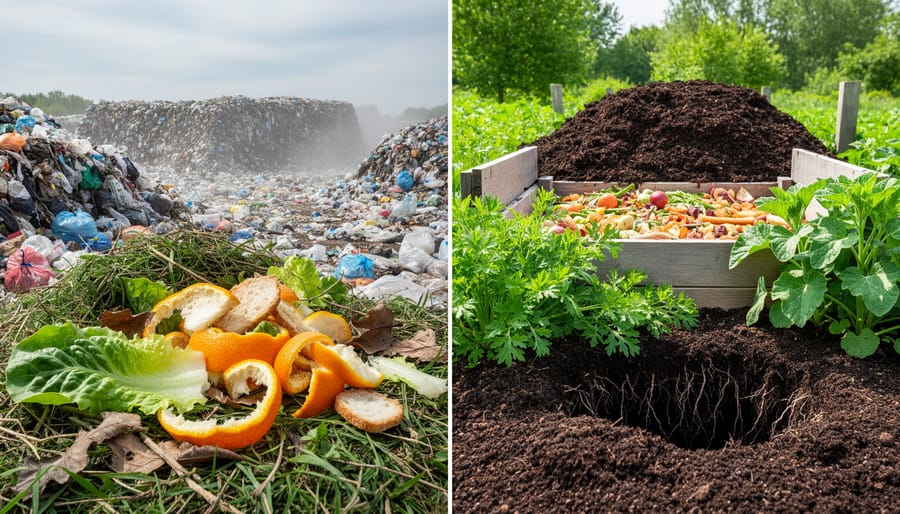
How Composting Transforms Waste Into Environmental Gold
Keeping Organic Matter Out of Landfills
Here’s something that might surprise you: organic materials like fruit peels, coffee grounds, and grass clippings make up about 30% of what Americans throw away. When these materials end up in landfills, they create a serious environmental problem that most of us never see.
In landfills, your banana peels and yard trimmings don’t simply decompose the way they would in nature. Instead, they get buried under layers of trash, cut off from oxygen. Without air, they break down anaerobically, producing methane—a greenhouse gas that’s 25 times more potent than carbon dioxide at trapping heat in our atmosphere. According to the EPA, landfills are the third-largest source of methane emissions in the United States.
Think about it this way: every apple core you toss in the trash becomes a tiny methane factory. Now multiply that by millions of households doing the same thing daily, and you can see why this matters.
When you compost at home, you’re completely changing this scenario. Your organic waste breaks down aerobically, with plenty of oxygen available. This natural process produces carbon dioxide instead of methane, significantly reducing the greenhouse gas impact. Plus, you’re keeping valuable nutrients out of the waste stream entirely.
I’ve been composting for five years now, and it’s remarkable how much less trash my family generates. Our weekly garbage has shrunk noticeably, and instead of contributing to the methane problem, we’re creating rich soil that feeds our garden. It’s a simple shift that makes a meaningful difference.
Building Soil That Actually Holds Water
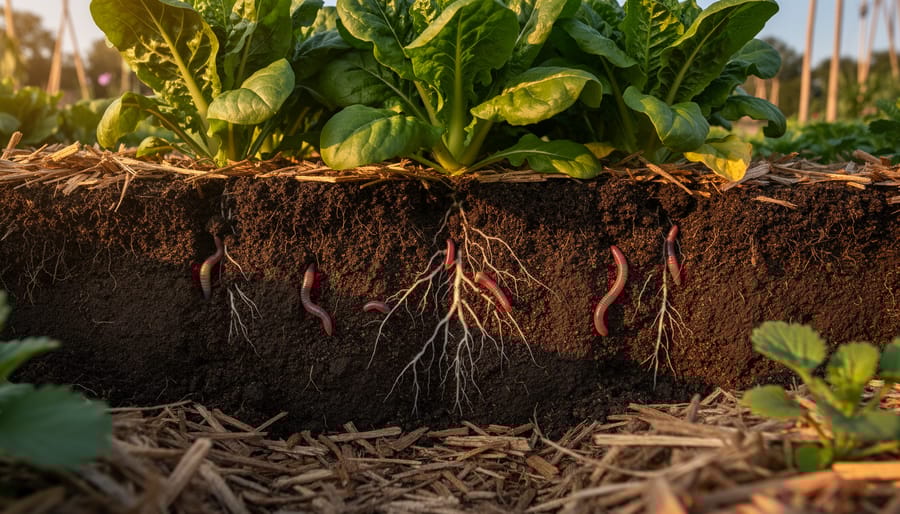
Think of soil as a sponge. Poor quality soil is like a worn-out sponge that’s lost its ability to absorb and hold water, letting precious moisture run right through. But when you add compost to your garden beds, something wonderful happens.
Compost works like magic to transform soil structure. It creates tiny pockets and passages throughout the soil, giving water somewhere to nestle in and stay put. Master gardener Linda Chen from Portland shared with me that after adding just three inches of compost to her vegetable beds, she noticed she could water half as often. “My tomatoes used to droop by mid-afternoon on hot days,” she explained. “Now they stay perky even during our driest summer weeks.”
The science behind this is actually pretty straightforward. Compost acts like tiny water reservoirs throughout your soil. Each particle can hold several times its weight in moisture, releasing it slowly to plant roots as needed. This means less water runs off during heavy rains and less evaporates during dry spells.
For those of us living in drought-prone areas, this benefit is genuinely life-changing. Your garden becomes more resilient, and you’ll save money on water bills while helping conserve this precious resource. Plus, plants growing in compost-rich soil develop deeper, healthier root systems, making them even better at accessing moisture during tough times.
Breaking the Chemical Fertilizer Cycle
Here’s a secret that transformed my garden, and it’ll probably surprise you: that black gold we call compost is nature’s perfect fertilizer factory, working quietly to break our dependence on chemical alternatives. When you add compost to your soil, you’re introducing a complete buffet of nutrients that plants can access gradually over time, exactly when they need them.
Chemical fertilizers, by contrast, deliver a quick nutrient blast that plants can’t fully absorb, and the excess washes into our rivers and lakes, causing harmful algae blooms that suffocate aquatic life. I learned this firsthand when visiting a local watershed restoration project, where the coordinator explained how fertilizer runoff was their biggest challenge. The production of these synthetic fertilizers also demands enormous amounts of fossil fuels, contributing significantly to greenhouse gas emissions.
Compost changes this equation entirely. By embracing organic gardening practices and feeding your soil with compost instead, you’re building a living ecosystem that retains nutrients rather than losing them to runoff. The organic matter acts like a sponge, holding onto both water and nutrients until your plants need them.
Master gardener Susan Chen, whom I interviewed last spring, puts it beautifully: “Compost doesn’t just feed your plants—it feeds the soil itself. That’s the difference between renting nutrients and truly investing in your garden’s future.” Each batch of compost you make is one less bag of chemical fertilizer entering the waste stream.
Creating a Carbon Sink Right in Your Garden
Think of your compost pile as a tiny carbon capture machine right in your backyard. When organic materials like kitchen scraps and yard waste break down in a landfill, they release methane, a greenhouse gas that’s about 25 times more potent than carbon dioxide. But when you compost these same materials at home, you’re creating something entirely different: a carbon-rich soil amendment that actually locks carbon away.
Here’s how it works in simple terms. Plants pull carbon dioxide from the air as they grow. When you toss those veggie peels and grass clippings into your compost bin, that carbon doesn’t disappear—it transforms. Through the composting process, beneficial microorganisms break down the organic matter and convert it into stable humus, a dark, crumbly substance that holds onto carbon for years, sometimes decades. This process of carbon sequestration in soil turns your garden into a genuine climate solution.
Master gardener Linda Chen from Vancouver shared with me that after five years of regular composting, her vegetable beds now contain significantly more organic matter. “I’m not just growing tomatoes,” she laughs, “I’m building a carbon bank that happens to produce amazing food.” Every bucket of finished compost you spread represents carbon that would otherwise be heating up our planet. Instead, it’s nourishing your soil and plants.
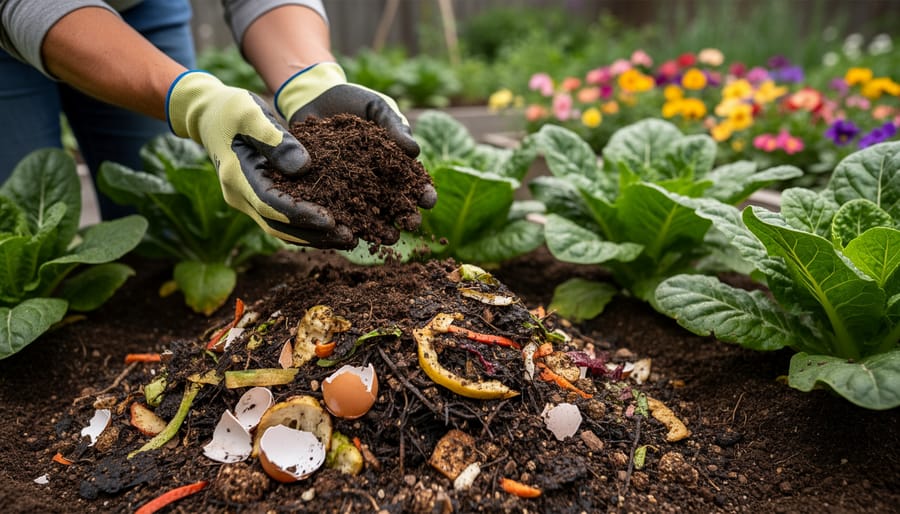
The Ripple Effect: From Your Compost Bin to Your Community
When you toss those carrot peels into your compost bin, you might think you’re just creating fertilizer for your garden. But here’s the wonderful truth: you’re actually setting off a chain reaction that extends far beyond your backyard fence. Your simple act of composting contributes to a growing wave of positive environmental change that touches everything from local water quality to global climate patterns.
Think about it this way. When your neighbor sees your thriving tomatoes and asks about your secret, you mention composting. Suddenly, they’re inspired to start their own bin. Their friend visits and goes home excited to try it too. Before long, your entire neighborhood is diverting organic waste from landfills. Multiply this across thousands of communities, and you’re looking at millions of tons of material being transformed into something valuable instead of releasing methane into our atmosphere.
I’ve witnessed this ripple effect firsthand. Local composting advocate Maria Chen told me about how starting a backyard compost bin in 2015 eventually led her to help establish a community composting program that now serves over 500 households. “I never imagined my small experiment would grow into something that diverts 30 tons of organic waste from landfills each year,” she shared. “But once people see the results, they want to be part of the solution too.”
Community composting programs create even broader impacts. They reduce municipal waste management costs, create local jobs in waste processing and education, and build connections between neighbors who share a common purpose. Some communities use finished compost to restore degraded public spaces, create community gardens, or support local food production initiatives.
Your contribution matters more than you might realize. Every banana peel, every coffee ground, every handful of leaves represents a choice to heal rather than harm. You’re not just composting. You’re modeling sustainable living, teaching the next generation, and proving that environmental stewardship starts at home. When we compost together, we’re not just changing our gardens. We’re changing the world, one bin at a time.
Getting Started: Simple Composting Methods for Real Environmental Impact
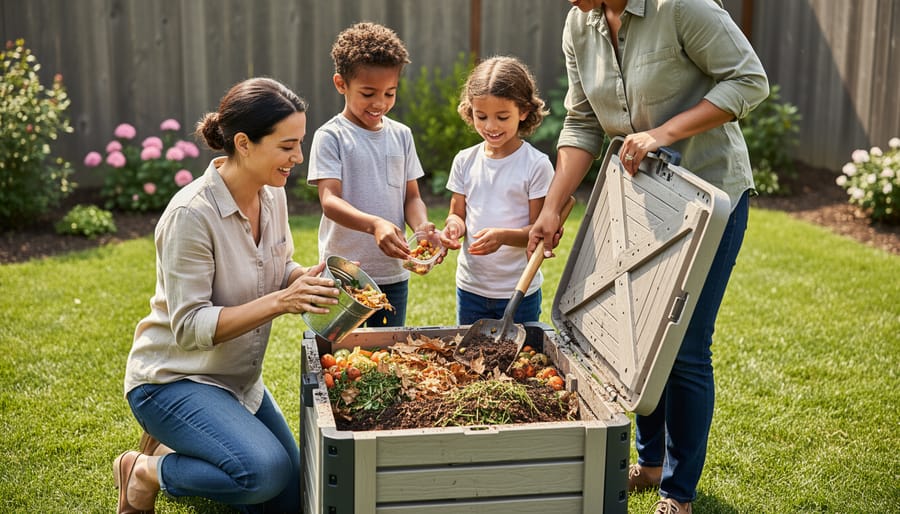
Backyard Composting Basics
Getting started with backyard composting is easier than you might think, and you don’t need acres of space to make a difference. Whether you have a sprawling garden or just a small patio, there’s a composting solution that’ll work for you.
Traditional compost bins are popular for good reason. They contain your materials neatly, keep pests out, and help maintain the right moisture and temperature levels. You can purchase ready-made bins or build your own from wire mesh, wooden pallets, or even repurposed containers. For smaller spaces, consider a compact tumbling composter that speeds up decomposition and fits nicely on a balcony.
If you prefer a more rustic approach, a simple compost pile works beautifully. Just designate a corner of your yard and start layering. The key to success? Think of it like making lasagna. Alternate between green materials like fruit scraps and grass clippings with brown materials such as dried leaves and shredded newspaper. Aim for roughly three parts brown to one part green.
Keep your pile moist like a wrung-out sponge, and turn it every few weeks to introduce oxygen. I’ve found that chatting with my compost pile during morning coffee makes turning it feel less like a chore and more like tending a garden bed. Within a few months, you’ll have rich, dark compost ready to nourish your soil.
Vermicomposting for Apartment Dwellers
Living in an apartment doesn’t mean you have to miss out on the environmental benefits of composting. Vermicomposting, or worm composting, is a game-changer for those of us without backyards. I started my first worm bin on my apartment balcony five years ago, and I’ve been hooked ever since.
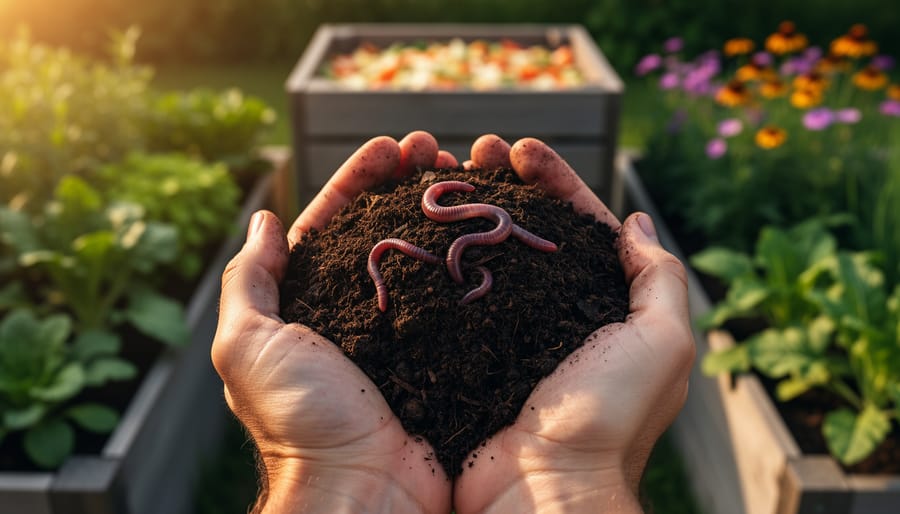
Here’s what makes it perfect for small spaces: a worm bin is typically compact, about the size of a storage container, and can fit under a kitchen sink or in a closet. Red wiggler worms work quietly to break down your food scraps, producing nutrient-rich castings without the odor you might worry about. When properly maintained, a worm bin is virtually smell-free.
The environmental impact is impressive. Your food waste gets diverted from landfills, reducing methane emissions just like traditional composting. Plus, you’re creating incredible fertilizer for houseplants or community gardens. Many apartment dwellers I’ve spoken with say their worm bins handle about three pounds of food scraps weekly.
Getting started with small-scale composting through vermicomposting is straightforward. You’ll need a container with ventilation, bedding material like shredded newspaper, and your worm colony. Feed them vegetable scraps, coffee grounds, and crushed eggshells, and they’ll reward you with black gold for your plants.
What to Compost (and What to Skip)
Getting started with composting is easier than you might think! The key is knowing what feeds your compost pile and what could cause problems down the road.
Your compost bin will thrive on “greens” and “browns.” Greens are nitrogen-rich materials like vegetable scraps, fruit peels, coffee grounds (filter and all!), tea bags, fresh grass clippings, and plant trimmings. Browns provide carbon and include dry leaves, shredded newspaper, cardboard, wood chips, and straw. Think of it like creating a balanced meal for the beneficial microorganisms doing all the hard work.
Kitchen scraps make up the bulk of most home compost piles. Eggshells, banana peels, apple cores, and wilted salad greens are perfect additions. I’ve found that keeping a small container on my kitchen counter makes collecting scraps almost effortless.
Now for what to skip: meat, fish, dairy products, and oils can attract pests and create unpleasant odors. Pet waste shouldn’t go in your pile, as it may contain harmful pathogens. Diseased plants, weeds that have gone to seed, and treated wood products are also best left out.
A common beginner mistake is adding too much of one type of material. If your pile gets too wet and smelly, you’ve likely added too many greens. Simply mix in more browns to restore balance. With these simple guidelines, you’ll be composting confidently in no time!
Starting your composting journey truly is one of the most rewarding decisions you can make for both your garden and our planet. We’ve explored how composting reduces methane emissions from landfills, enriches soil health, conserves precious water resources, and decreases our reliance on chemical fertilizers. These aren’t just abstract environmental concepts—they’re tangible improvements that happen right in your backyard.
What makes composting so powerful is its simplicity. You don’t need fancy equipment or extensive knowledge to begin. Every kitchen scrap you divert from the trash, every leaf you add to your compost bin, contributes to a healthier ecosystem. Your small, consistent actions ripple outward, creating meaningful change that extends far beyond your garden fence.
As master gardener Elena Rodriguez shared with us, “The beauty of composting is that it completes nature’s circle. You’re not just reducing waste—you’re actively participating in regeneration.” This sustainable gardening approach transforms you from a passive consumer into an active environmental steward.
Remember, every composting journey begins with a single step. Whether you start with a small countertop bin or dive into a full outdoor system, you’re making a difference. Your future garden will thank you with vibrant blooms and bountiful harvests, and our planet will benefit from your commitment to sustainability. Why not start today? Your compost pile awaits, ready to transform yesterday’s scraps into tomorrow’s thriving garden.