
Your garden is already feeling climate change—whether it’s unexpected frosts killing spring seedlings, summer droughts stressing your tomatoes, or violent storms washing away topsoil you’ve spent years building. The U.S. Climate Resilience Toolkit exists precisely for moments like these, offering science-backed strategies that translate complex climate data into practical actions you can take this weekend.
This free government resource goes beyond generic advice. It provides region-specific climate projections, helps you identify which extreme weather events will likely impact your area in coming decades, and offers tested adaptation strategies from farmers and gardeners already navigating these challenges. Think of it as your gardening insurance policy—except instead of paying premiums, you’re investing time in understanding how to protect the soil, plants, and systems you’ve worked so hard to cultivate.
The toolkit bridges the gap between intimidating climate reports and the dirt under your fingernails. You’ll discover which soil management practices actually build resilience against your specific threats, whether that’s improving water retention for drought conditions, preventing erosion during heavy rains, or adjusting planting schedules as growing seasons shift. It connects national climate science to your backyard reality, giving you the knowledge to make informed decisions about everything from mulching techniques to crop selection.
Most importantly, it empowers you to garden proactively rather than reactively, transforming climate anxiety into purposeful action that protects your garden’s future.
What Exactly Is the U.S. Climate Resilience Toolkit?
I’ll never forget the afternoon I stumbled across the U.S. Climate Resilience Toolkit while frantically searching for answers about why my tomatoes were suddenly splitting after a string of unusually intense thunderstorms. I expected dry government reports and charts I couldn’t decipher. What I found instead was surprisingly helpful and, dare I say, user-friendly.
The U.S. Climate Resilience Toolkit is essentially a free online resource created by NOAA (the National Oceanic and Atmospheric Administration) in partnership with multiple federal agencies and climate experts. Think of it as your practical guide to understanding how our changing climate affects your specific corner of the world, and more importantly, what you can actually do about it in your garden.
Here’s why this matters to us gardeners: instead of vague warnings about climate change, the toolkit offers localized data and real-world solutions. It’s not trying to scare you or overwhelm you with scientific jargon. Rather, it translates complex climate information into actionable steps that make sense for everyday situations, like protecting your soil during heavier downpours or adjusting your planting schedule as frost dates shift.
The toolkit includes climate maps you can actually understand, case studies from communities adapting to change, and planning tools that help you make informed decisions about everything from water management to choosing resilient plant varieties. It was designed for everyone from city planners to farmers to home gardeners like us who simply want our gardens to thrive despite increasingly unpredictable weather patterns.
What impressed me most was discovering that this resource isn’t just theoretical. It’s grounded in practical wisdom that recognizes we’re all learning to garden in a new climate reality.
Why Your Garden Soil Needs Climate Resilience Now

The Warning Signs Your Soil Is Struggling
Your soil often sends clear signals when climate stresses are taking their toll, and learning to read these signs helps you respond before problems become severe. One of the most common warning signs is soil compaction, where the ground feels hard and concrete-like, making it difficult for roots to penetrate and water to soak in. You might notice puddles forming on the surface instead of water absorbing quickly.
Erosion is another red flag, especially after heavy rains. If you see exposed roots, gullies forming, or soil washing away from garden beds, your soil structure needs attention. Poor water retention shows up as soil that either becomes waterlogged or dries out extremely fast, both indicating damaged soil structure.
Watch your plants too. Stunted growth, yellowing leaves despite proper fertilizing, or plants that wilt quickly between waterings often point to underlying soil health issues. When multiple plants struggle simultaneously, climate-stressed soil is frequently the culprit. The good news? Recognizing these symptoms early gives you time to implement protective strategies that help your garden bounce back.
What the Toolkit Reveals About Your Region
Think of the Climate Explorer as your personal weather detective for gardening decisions. I’ll walk you through using it—it’s surprisingly simple! First, visit the toolkit’s homepage and click on the Climate Explorer tool. Type in your zip code or city, and watch as colorful maps appear showing your area’s specific climate challenges. You’ll see projections for temperature changes, precipitation patterns, and extreme weather events right where you garden.
Here’s what I love: you can toggle between different timeframes, like comparing the next decade to mid-century projections. Click on “temperature” to see how many days above 95°F your tomatoes might face, or select “precipitation” to understand whether you’ll be dealing with drought or flooding. The tool even breaks down seasonal changes, so you’ll know if your spring planting window is shifting earlier or if fall frosts are becoming less predictable.
Take a few minutes to explore the various data layers. Screenshot anything relevant to your garden—these visual guides make planning so much easier than guessing what’s coming.
Five Climate-Smart Soil Practices You Can Start This Weekend
Building Organic Matter Like Your Soil’s Life Depends on It
Think of organic matter as your soil’s savings account—the more you deposit, the better it weathers tough times. The Climate Resilience Toolkit emphasizes three practical approaches that work beautifully together.
Composting transforms kitchen scraps and yard waste into black gold. Even apartment dwellers can try vermicomposting with a small bin tucked under the sink. I chatted with Maria Lopez, a community garden coordinator in Phoenix, who shared her lazy composter’s secret: “I keep a five-gallon bucket with a lid by my back door. When it’s full, I dump it on my pile and forget about it for months. No turning required, and it still works.”
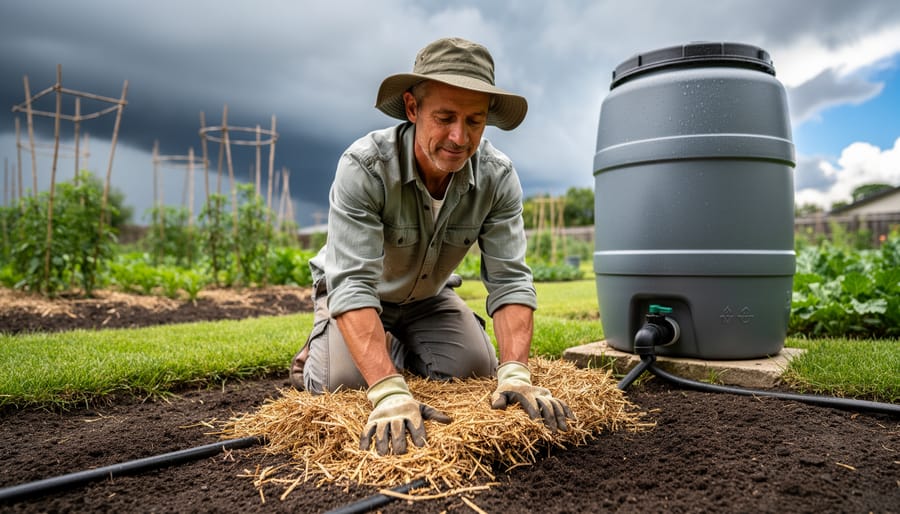
Mulching is perhaps the easiest climate adaptation you’ll make. Spread 2-3 inches of wood chips, shredded leaves, or straw around your plants. This protective blanket keeps soil cooler during heat waves, reduces water evaporation by up to 70 percent, and slowly feeds the soil as it breaks down.
Cover crops aren’t just for farmers. Scatter clover, annual ryegrass, or crimson clover seeds over bare garden beds in fall. These hardworking plants protect soil from erosion, add nitrogen, and can be chopped down in spring to create instant mulch. Just ten minutes of scattering seeds provides months of soil-building benefits.
Managing Water the Smart Way
Smart water management isn’t about fighting nature—it’s about working with it! The toolkit recommends simple landscape features that capture rain where it falls, letting it soak into soil rather than rushing away.
Rain gardens are surprisingly easy to create. These shallow, planted depressions collect runoff from roofs and driveways, giving water time to infiltrate slowly. Start small—even a 3×6 foot depression near a downspout makes a difference. Fill it with native plants that tolerate both wet and dry conditions.
Swales work similarly but follow natural contours across slopes, slowing water movement and improving water retention throughout your yard. Think of them as gentle ditches lined with thirsty plants.
The beauty of these techniques? They address both extremes. During heavy rains, they prevent flooding and erosion. During dry spells, they’ve recharged your soil’s moisture reserves. I talked with landscape designer Maria Gonzales, who explained, “You’re essentially creating little reservoirs throughout your property. The water stays put when you need it most.”
Even adding organic matter to planting beds improves infiltration, turning every garden area into a mini water management system.
Keeping Your Soil Covered Year-Round
Think of your soil as sensitive skin exposed to harsh weather—it needs protection year-round! The U.S. Climate Resilience Toolkit emphasizes that bare soil loses moisture rapidly during heat waves and becomes vulnerable to erosion during heavy rains, both increasingly common climate challenges.
Mulching is your first line of defense. In spring and summer, apply 2-3 inches of organic mulch like wood chips or shredded leaves around your plants. This keeps soil cooler during extreme heat and reduces water evaporation by up to 70%. In fall, refresh mulch layers to insulate roots against winter temperature swings.
Living mulches offer dynamic protection. Try planting low-growing cover crops like clover between garden rows during the growing season. Master gardener Elena Rodriguez shared with us: “I use crimson clover as a living mulch in my vegetable beds. It fixes nitrogen, suppresses weeds, and keeps my soil temperature stable during those unpredictable spring cold snaps.”
For winter protection, leave plant residues in place or sow cold-hardy cover crops like winter rye. These soil conservation practices shield your garden’s foundation from climate extremes while building resilience for the seasons ahead.

Minimizing Soil Disturbance
Every time you dig or till your soil, you’re essentially opening a treasure chest and letting the valuables escape—specifically, the carbon that’s been stored there. Traditional tilling breaks up soil structure and releases carbon dioxide into the atmosphere, which contributes to climate change. The good news? You can keep that treasure locked away while still growing amazing plants.
No-till gardening means exactly what it sounds like: you leave your soil undisturbed. Instead of turning it over each season, you work on top of it. Spread compost, mulch, or other organic matter directly on the surface, and let earthworms and soil microbes do the mixing for you. This protects the intricate network of fungi and beneficial organisms that help with carbon storage and nutrient cycling.
For reduced-till gardening, you minimize disturbance—perhaps loosening just the planting hole rather than working entire beds. Start small: designate one bed as your no-till experiment. Top it with three to four inches of compost in spring and fall, plant directly into it, and watch what happens. You’ll likely notice improved water retention, fewer weeds, and healthier plants over time.
Diversifying Your Plantings
Think of your garden as a neighborhood—the more diverse the residents, the stronger the community. When you plant a variety of species together, their different root structures work at various soil depths, preventing erosion and improving water infiltration. Deep taproots break up compacted layers while fibrous roots hold topsoil in place, creating a natural soil-building team.
Here’s where it gets exciting: diverse plantings also nurture diverse soil microbes. Each plant species supports different beneficial bacteria and fungi, which in turn help plants access nutrients and resist disease. It’s a beautiful underground partnership that makes your soil more resilient to climate stresses like drought or heavy rain.
Ready to try companion planting? Start simple. Pair tomatoes with basil (the basil’s shallow roots complement tomato’s deeper ones), or plant beans alongside corn—the beans fix nitrogen that corn loves. Even tucking flowers like marigolds among vegetables adds root diversity while attracting pollinators. These small steps create big impacts, transforming your soil into a climate-ready foundation that supports abundant growth season after season.

How to Use the Toolkit’s Resources Without Getting Overwhelmed
I completely understand if you’re looking at the U.S. Climate Resilience Toolkit for the first time and feeling a bit intimidated by all the information it contains. The good news? You absolutely don’t need to dive into every corner of this resource to get value from it as a gardener.
Start with the Steps to Resilience framework, which breaks everything down into five manageable phases. Think of it as a gentle guide that walks you through exploring hazards, assessing vulnerabilities, and investigating solutions without throwing everything at you at once. For gardeners, the “Explore Hazards” section is pure gold. Here you’ll find straightforward information about which climate challenges are most likely to affect your specific region, whether that’s increased drought, heavier rainfall, or shifting growing seasons.
Next, I’d recommend browsing the Case Studies section. These real-world examples show how communities and individuals have tackled climate challenges, and you’ll often find stories that mirror what you’re experiencing in your own garden. They’re written in plain language and often include practical takeaways you can implement right away.
The toolkit’s data visualization tools might sound technical, but they’re surprisingly user-friendly. The Climate Explorer tool, for instance, lets you see projected temperature and precipitation changes for your area without needing a science degree to interpret the results. Just plug in your zip code and explore.
My advice? Spend 20 minutes browsing rather than trying to absorb everything. Bookmark pages that speak to your specific concerns, whether that’s water management or pest pressure. The toolkit isn’t meant to be read cover to cover. It’s designed as a resource you return to as questions arise in your gardening journey, making it a trusted companion rather than homework.
Real Gardeners, Real Results
We reached out to gardeners across the country who’ve put climate-resilient soil practices into action, and their stories might sound surprisingly familiar.
Maria from Texas faced relentless summer droughts that left her vegetable beds cracked and unproductive. “I started adding three inches of wood chip mulch each spring after learning about moisture retention,” she shares. “My watering needs dropped by half, and my tomatoes actually survived July for the first time in years.”
In Minnesota, James struggled with increasingly unpredictable spring freezes damaging his early plantings. His solution? Building soil organic matter through fall composting and cover crops. “The improved soil structure helped with drainage during those weird warm-then-freeze cycles we get now,” he explains. “My soil bounces back faster, and I’ve lost way fewer plants to frost heave.”
The challenges these gardeners faced aren’t unique. What made the difference was connecting with their local extension offices and trying one or two practices consistently rather than attempting everything at once.
Sarah from Oregon puts it perfectly: “I thought climate-resilient gardening meant completely overhauling everything. But really, it started with just keeping my soil covered year-round. That one change led to better water retention, fewer weeds, and healthier plants overall.”
The common thread? Starting small, staying consistent, and watching how your specific soil responds. These gardeners didn’t have advanced degrees or unlimited budgets. They simply paid attention, adapted their practices, and saw real improvements within a single growing season.
Whether you’re managing a tiny balcony container garden or acres of raised beds, you have the power to create more resilient soil starting today. The beauty of climate-smart soil practices is that they don’t require dramatic overhauls or expensive investments. Even small steps like adding compost, choosing a diverse plant mix, or simply mulching more consistently create positive ripple effects that build over time.
Remember, these practices aren’t just about preparing for uncertain tomorrows. They’re making your garden healthier, more productive, and easier to maintain right now. Better soil means stronger plants, fewer pest problems, and less time spent watering and troubleshooting.
We’d love to hear your story. What climate challenges are you facing in your garden? Which soil-building practices have surprised you with their results? Share your experiences in the comments below and let’s learn from each other as we grow more resilient gardens together.


