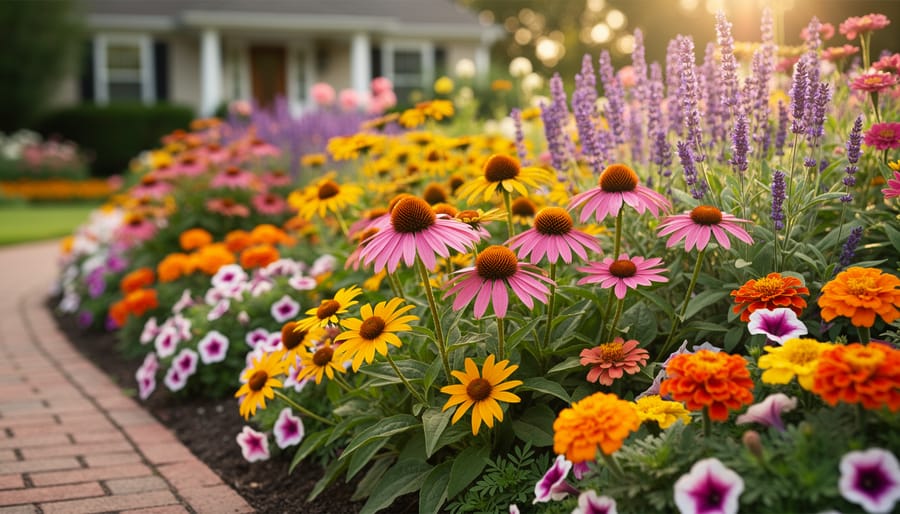
Choose native plants that naturally thrive in your region’s rainfall patterns and temperature swings—they’ll need less water, resist local pests without chemicals, and provide food for pollinators already adapted to your area. Visit a nearby nature preserve to observe which species flourish without human intervention, then replicate those communities in your garden beds.
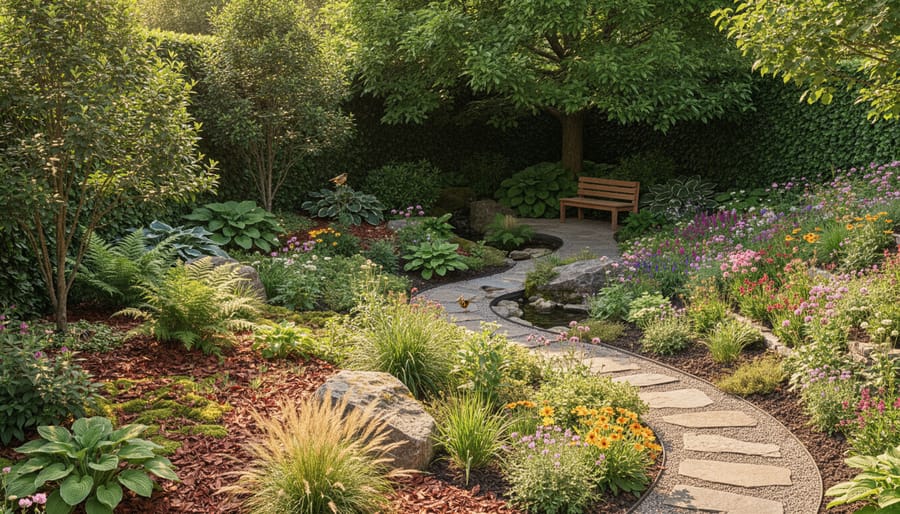
Layer your landscape like a forest ecosystem by combining trees, shrubs, perennials, and groundcovers that occupy different vertical spaces and bloom at staggered times. This approach maximizes photosynthesis, creates diverse wildlife habitat, and eliminates bare soil where weeds would otherwise establish.
Build soil health by keeping roots in the ground year-round and adding organic matter through mulching and composting rather than tilling. Living roots feed beneficial microorganisms that improve water retention, release nutrients slowly, and create the sponge-like structure that helps gardens weather both droughts and downpours.
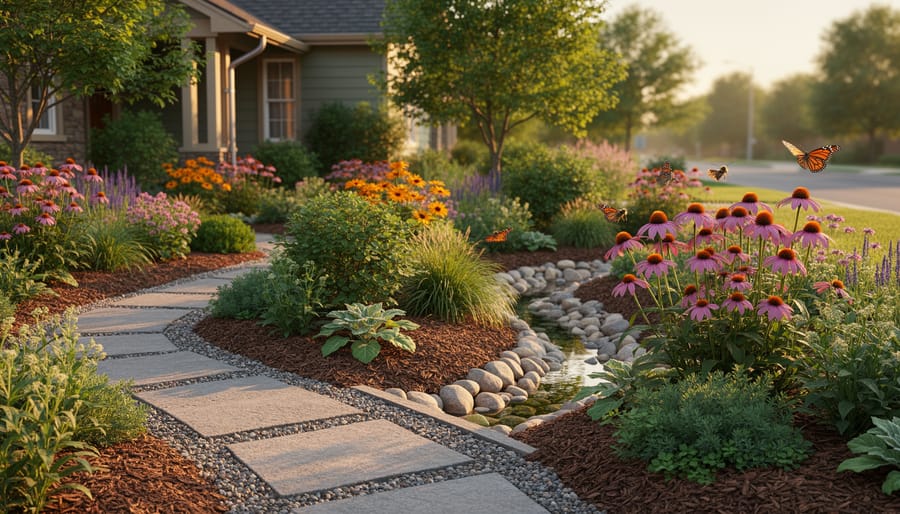
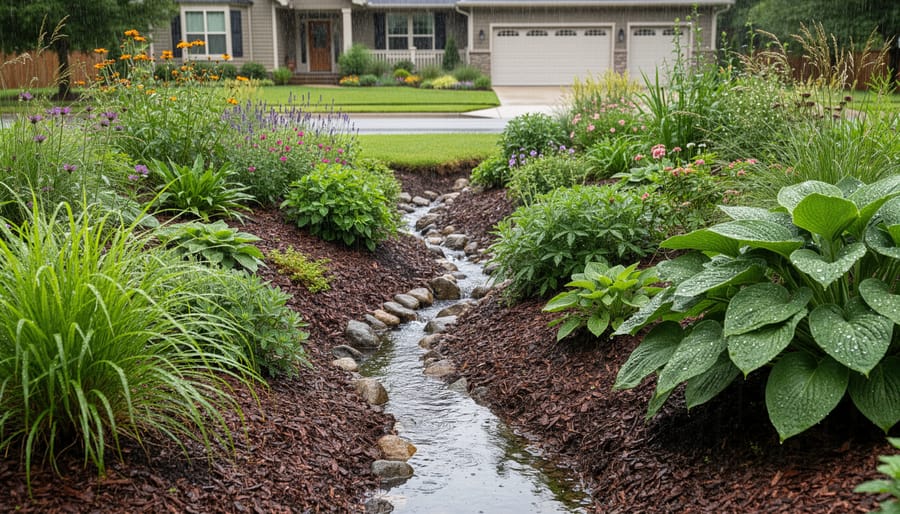
Redirect rainwater from hard surfaces into planted areas using swales, rain gardens, and permeable pathways that allow moisture to soak in where plants need it most. This single strategy reduces irrigation demands, prevents erosion, and recharges groundwater instead of sending valuable water down storm drains.
The beauty of ecological garden design lies in working alongside nature’s patterns rather than fighting them. When you align your choices with local climate realities, maintenance decreases dramatically while biodiversity, resilience, and seasonal interest all increase. Your garden becomes a living system that adapts and improves over time, supporting everything from soil microbes to migrating birds while giving you more time to simply enjoy the space you’ve created.
What Makes a Garden Truly Ecological?
Think of an ecological garden as nature’s apprentice rather than nature’s boss. Instead of fighting against what wants to grow naturally in your space, you’re working alongside those forces, creating a garden that essentially takes care of itself while supporting the web of life around it.
So what makes a garden truly ecological? At its heart, it’s about observation and partnership. I like to tell people to spend time in nearby wild spaces, whether that’s a woodland, meadow, or even an untended corner of a park. Notice how plants arrange themselves in layers, how water moves across the land, how the soil smells rich and alive without anyone adding fertilizer. These natural patterns become your blueprint.
The key difference from conventional gardening is this: rather than starting with a vision of what you want and bending the land to fit it, you begin by asking what your space already offers. What’s the soil like? Where does water naturally collect or drain away? Which direction gets the most sun? What’s already growing, even if it’s just “weeds”? These aren’t obstacles to overcome but clues to work with.
Biodiversity becomes your greatest ally. Where conventional gardens might feature rows of single species, ecological gardens create communities. You’re mixing native plants that evolved together, layering groundcovers beneath shrubs beneath trees, just like nature does. This variety attracts beneficial insects, birds, and pollinators who handle pest control and pollination without chemicals.
Soil health takes center stage too. Instead of viewing dirt as an inert growing medium that needs constant amendments, you recognize it as a living ecosystem. You feed the soil organisms with compost and mulch, and they, in turn, feed your plants.
The beautiful paradox? Once established, an ecological garden requires less work, not more. You’re swimming with the current instead of against it.
Reading Your Climate Like a Gardener’s Roadmap
The Microclimates Already Hiding in Your Yard
Before you plant a single seed, take time to play detective in your own backyard. Your garden already contains distinct microclimates—pockets where temperature, moisture, and light differ from the surrounding area. These hidden zones are your secret weapon for climate-responsive design.
Start with a simple observation walk at different times of day. Where does morning sun linger longest? You’ve found your warmth-loving tomato spot. Notice that corner where snow melts last? That’s a frost pocket—perfect for hardy plants but risky for tender ones. Pay attention to where wind whips around your house or where it mysteriously calms down.
I recommend sketching a rough map of your yard and marking these discoveries. Note areas that stay consistently damp versus those that dry out quickly. South-facing walls radiate heat and create Mediterranean-like conditions, while north-facing spots remain cool and shaded. Large trees don’t just provide shade—they create entire ecosystems beneath them with cooler temperatures and unique moisture patterns.
Track these patterns through at least one season if possible. Where does water pool after rain? Which areas stay green during dry spells? These clues reveal your garden’s natural rhythms.
Once mapped, you can strategically match plants to microsites where they’ll naturally thrive. A struggling shade plant might flourish when relocated to that dim corner, while your struggling sun-lover could transform in that southern exposure. Working with these existing conditions, rather than fighting them, is the foundation of truly ecological design.
When to Trust the Weather Data (And When to Trust Your Observations)
USDA hardiness zones and climate data offer an excellent starting point when planning your ecological garden, but they’re just that—a starting point. Think of official climate information as your garden’s big-picture framework, while your personal observations fill in the crucial details that make or break your design.
Understanding climate zones helps you avoid major mistakes, like planting tropical species in a zone 4 garden. However, climate data represents averages across large areas and can’t account for your specific microclimate. That south-facing brick wall might create a pocket one zone warmer than your official designation, while the low spot near your fence could be a frost trap that stays colder longer.
This is where keeping a garden journal becomes invaluable. Track your first and last frost dates, note which areas stay soggy after rain, and observe where snow melts first in spring. Over just two or three seasons, you’ll develop intimate knowledge of your site that no database can provide.
I like to follow this approach: use official climate data to choose your core plant palette, then refine your selections based on what you observe in your own yard. Pay attention to what thrives in neighboring gardens too. If everyone’s struggling with a plant that should theoretically work in your zone, trust those real-world results over the hardiness rating.
Plant Selection That Actually Survives Your Conditions
Why Native Plants Are Your Secret Weapon
Here’s a secret that experienced gardeners have known for ages: the plants that naturally grow in your region are already perfectly adapted to thrive there. When you choose native plants for your ecological garden, you’re essentially working with nature instead of fighting against it.
Think about it this way. Native plants have spent thousands of years adapting to your local rainfall patterns, temperature swings, and soil conditions. This means they’ve already solved the problems you’d otherwise struggle with. A native prairie plant in Kansas, for instance, has developed deep root systems to survive droughts, while a native fern in the Pacific Northwest naturally thrives in shade and moisture.
The practical benefits are remarkable. Native plants typically need far less water once established because they’re designed for your climate’s natural rainfall. You’ll also find yourself spending less on fertilizers and pesticides since these plants have natural defenses against local pests and diseases. I spoke with landscape designer Maria Chen, who shared that her clients using predominantly native plants reduce their water bills by up to 40 percent in the first year alone.
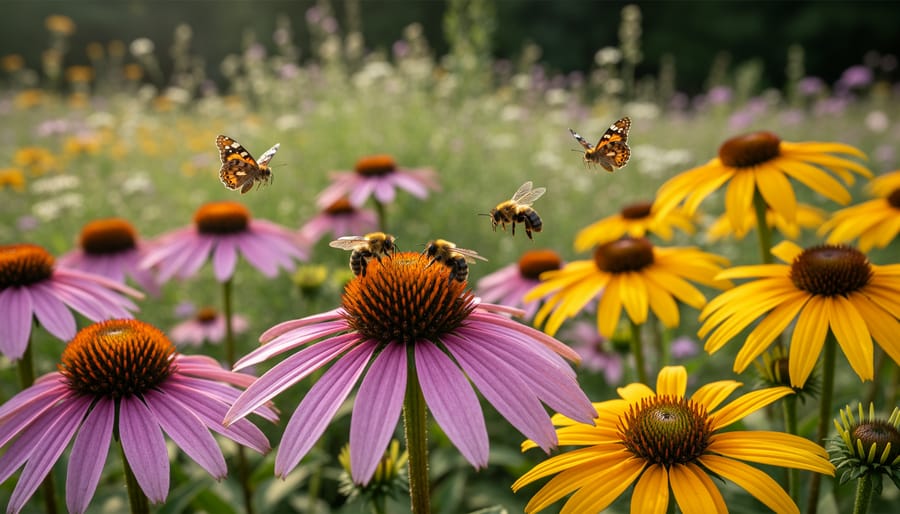
But the ecological benefits truly shine when it comes to wildlife. Native plants provide exactly what local pollinators, birds, and beneficial insects need to survive. For example, monarch butterflies need milkweed species native to their migration routes. In the Southwest, planting desert marigolds and brittlebush attracts native bees that non-native ornamentals simply can’t support.
Consider starting with just a few regional favorites. In the Northeast, try black-eyed Susans and Eastern red columbine. Midwest gardeners might choose purple coneflower and wild bergamot. For the Southeast, beautyberry and coral honeysuckle work wonderfully. Your local native plant society can provide specific recommendations for your exact location.
Climate-Adapted Plants That Aren’t Native (And When They Make Sense)
Not every plant that thrives in your climate needs to be native to be ecologically valuable. The key is choosing non-native species that share similar growing conditions to your region and won’t become invasive troublemakers.
Think of it this way: a Mediterranean herb like lavender might not be native to California, but it’s perfectly adapted to hot, dry summers and mild winters. It requires minimal water once established and provides nectar for pollinators without spreading aggressively. Similarly, certain ornamental grasses from South African grasslands can thrive in similar climates elsewhere while offering habitat and erosion control.
The responsible approach means researching each plant’s behavior in your area. Check your local invasive species lists first, and choose climate-resilient plants that match your rainfall patterns and temperature extremes. Plants adapted to similar ecosystems elsewhere often need less supplemental watering and fertilizing than forced fits.
I spoke with landscape designer Maria Chen, who specializes in climate-adapted gardens. She shared this wisdom: “I always ask whether a non-native plant fills a gap that natives can’t. Maybe you need deep shade groundcover or a specific bloom time. If it supports local wildlife, stays where you plant it, and reduces resource inputs, it can absolutely have a place in an ecological garden.”
The bottom line? Ecological gardening isn’t about plant passports. It’s about creating resilient, functional ecosystems that work with your climate while supporting biodiversity and conservation goals.
Designing Water Flow Like Nature Does
Capturing Rain Where It Falls
One of the most rewarding aspects of ecological gardening is learning to work with rainwater right where it lands. Instead of rushing it away through gutters and drains, you can capture and slow it down, giving your plants a natural water source while reducing runoff.
Rain gardens are surprisingly simple to create. Choose a low spot in your yard or create a shallow depression, then fill it with native plants that tolerate both wet and dry conditions. When it rains, water collects there temporarily, soaking into the ground rather than flowing into storm drains. I spoke with landscape designer Maria Chen, who reminded me that rain gardens don’t need to be complicated. “Start small,” she said. “Even a three-foot-wide basin near a downspout makes a difference.”
Permeable surfaces offer another practical approach. Replace sections of concrete or compacted soil with gravel pathways, pavers set with gaps between them, or groundcovers that allow water to filter through. These surfaces let rain penetrate the soil while still giving you functional walking areas.
For direct water collection, consider a simple rain barrel at the end of your downspout. A 55-gallon barrel can capture substantial water from a single rainstorm, giving you chlorine-free water for containers and vegetable beds during dry spells. Add a spigot near the bottom and a screen over the top to keep out debris and mosquitoes. It’s one of those satisfying projects that pays dividends every time you turn that tap instead of your hose.
Drought-Proofing Without Constant Watering
Creating a drought-resistant garden doesn’t mean resigning yourself to a dusty landscape. The secret lies in working smarter, not harder, by building resilience into your garden from the ground up.
Start with your soil. Think of it as your garden’s water savings account. Rich, organic matter acts like a sponge, holding moisture far longer than depleted soil ever could. Work in generous amounts of compost each season, aiming for at least two to three inches mixed into your top layer. I’ve seen gardens transform from water-guzzlers to self-sufficient havens simply through consistent soil building.
Mulch is your next powerful ally. A three to four-inch layer of organic mulch around your plants dramatically reduces evaporation, keeps soil temperatures stable, and suppresses thirsty weeds that compete for precious moisture. Wood chips, shredded leaves, or straw all work beautifully. Just keep mulch a few inches away from plant stems to prevent rot.
Strategic plant placement makes a huge difference too. Group plants with similar water needs together, creating efficiency zones in your garden. Place thirstier specimens in naturally moister spots like low areas or shadier locations, while drought-tolerant plants thrive in full sun and well-drained areas.
Consider these drought-proofing strategies as investments in your garden’s future independence. Once established, you’ll spend less time hauling hoses and more time enjoying your resilient, beautiful space.
Building Soil That Works With Your Climate
Your soil is the foundation of everything that happens in your garden, and here’s something many gardeners don’t realize: the same techniques that build wonderful soil in one climate might actually work against you in another. Understanding how your local climate interacts with your soil makes all the difference between a garden that thrives and one that constantly struggles.
In rainy climates, organic matter breaks down quickly, sometimes too quickly. The abundant moisture and moderate temperatures create ideal conditions for decomposition, which means nutrients can wash away before plants use them. If you garden in these areas, you’ll want to add compost and organic matter regularly, perhaps two or three times per year. Cover crops during wet seasons help prevent erosion and nutrient leaching while keeping that precious topsoil in place.
Contrast that with hot, dry climates where organic matter seems to disappear almost overnight through rapid oxidation. Here, building healthy soil means protecting it from the intense sun. Deep mulch layers, sometimes four to six inches thick, shield soil organisms and keep moisture from evaporating. Adding compost in fall or early spring, when temperatures are cooler, gives it the best chance to integrate before summer heat arrives.
Cold climate gardeners face different challenges. Short growing seasons mean less time for organic matter to decompose, so finished compost works better than raw materials. The freeze-thaw cycles can actually help break down soil particles, improving structure over time, but spring often brings waterlogged conditions that benefit from raised beds or berms.
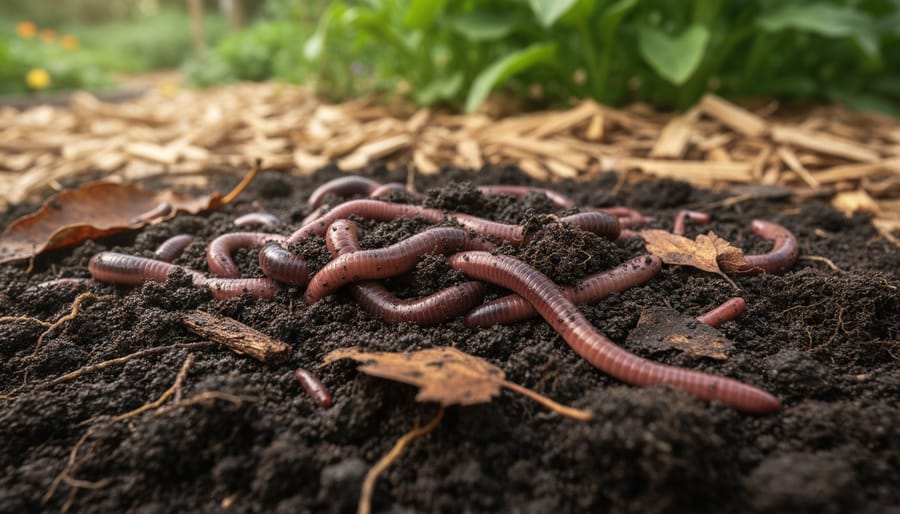
No matter where you garden, feeding the soil life is essential. Earthworms, beneficial bacteria, and fungi do the heavy lifting of converting organic matter into plant-available nutrients. These tiny workers need food (organic matter), air (avoid compaction), and appropriate moisture levels for your climate.
One encouraging truth: healthy soil becomes increasingly resilient over time. As you add organic matter year after year, your soil develops better structure, holds moisture more efficiently, and supports a thriving ecosystem of beneficial organisms. This means less work for you and better growing conditions for your plants, naturally adapting to whatever weather your climate brings.
Creating Habitat Layers That Support Wildlife Year-Round
Think of your garden as a multi-story apartment building where different creatures occupy various floors and spaces. In nature, healthy ecosystems feature distinct layers from the forest floor to the treetop canopy, each supporting unique wildlife. You can replicate this structure in your own yard, regardless of its size.
Start by incorporating these key layers: ground covers and leaf litter at the base, herbaceous perennials in the middle, shrubs above those, and small trees forming the upper canopy. This vertical diversity creates numerous niches for wildlife. Ground beetles and salamanders hunt slugs in the leaf litter below while bees visit flowers at eye level and birds nest in shrubs overhead.
The magic happens when these layers work together. I remember visiting master gardener Sarah Chen’s backyard in Ontario, where she explained how her layered approach transformed pest problems into natural balance. “Once I planted native shrubs beneath my crabapple trees and left the leaf litter underneath,” she told me, “I noticed wrens and chickadees moving in. They devoured the caterpillars that used to strip my vegetables.”
Horizontal diversity matters too. Creating mini ecosystems throughout your garden means planting in drifts and clusters rather than single specimens. Group three or five plants together to provide concentrated food sources that pollinators can easily locate.
For year-round support, include plants that offer resources in different seasons. Spring bulbs feed early pollinators, summer perennials sustain peak breeding season, fall seedheads provide bird food, and evergreen shrubs offer winter shelter. Native hollow-stemmed plants left standing through winter become nurseries for beneficial insects like mason bees.
Dense shrub plantings create protected corridors where birds can move safely between feeding areas. Leave some areas slightly wild with brambles and brush piles, which become hotels for toads, lizards, and beneficial ground beetles that patrol your garden nightly, consuming pest insects while you sleep.
Real Gardens Doing This Right Now
Let me show you some inspiring gardens that are walking the walk when it comes to climate-responsive design. These aren’t theoretical concepts—they’re real spaces where gardeners have embraced their local conditions with beautiful results.
In Portland’s temperate Pacific Northwest climate, landscape designer Emma Chen transformed a traditional lawn into a thriving rain garden ecosystem. She paired native sword ferns with Oregon grape and red-twig dogwood around shallow bioswales that capture winter rains. The key? She stopped fighting the region’s wet winters and dry summers. “Once I accepted our climate pattern instead of constantly watering in August, everything clicked,” Emma shared during our interview. Her garden now requires about 75% less summer irrigation than her neighbors’ yards.
Meanwhile, in Phoenix’s arid zone, the Rodriguez family created a stunning desert garden that celebrates heat rather than battles it. Their front yard features clusters of golden barrel cactus underplanted with drought-tolerant desert marigold and brittlebush. They incorporated decomposed granite pathways and strategically placed boulders that provide afternoon shade for smaller plants. The real genius? A dry streambed lined with smooth river rocks directs the occasional monsoon rains straight to a grove of native mesquite trees.
Over in humid Charleston, South Carolina, Master Gardener James Patterson works with moisture instead of against it. His backyard showcases sweetgrass, cardinal flower, and swamp sunflower in areas that stay damp year-round. He’s added a small bog garden where water-loving Joe Pye weed towers over turtlehead flowers. “I used to curse those soggy spots,” James laughs. “Now they’re my favorite garden rooms.”
Each of these gardeners started by observing their site’s unique conditions—sun patterns, water flow, existing soil—then chose plants already adapted to thrive there. That’s the secret: work with what you’ve got, not what garden magazines say you should have.
Your First Steps Toward a Climate-Smart Ecological Garden
Ready to dip your toes into climate-smart gardening? The beauty of this approach is that you don’t need to overhaul your entire garden overnight. In fact, the best way to start is by observing what’s already happening in your space.
Spend a week noticing where water naturally collects after rain, which spots stay shaded, and where the sun lingers longest. Jot down notes in a simple journal or snap photos throughout different times of day. I learned this lesson the hard way when I planted a sun-loving lavender in what I thought was a bright spot, only to discover it was shaded by 2 PM every afternoon. Those observations became my roadmap.
Once you’ve mapped your garden’s personality, try one of these starter projects. Replace a thirsty lawn patch with native ground covers that thrive on rainfall alone. Even a small 3-by-3-foot area makes a difference and gives you a success story to build on. Add a rain barrel to capture roof runoff. It’s surprisingly satisfying to water your containers with free rainwater while your neighbors’ hoses are running.
For immediate impact, try the dinner plate mulch test. Spread a 2-3 inch layer of organic mulch around existing plants, leaving space near stems. You’ll notice the soil stays cooler and moister within days, meaning less watering for you and happier plant roots.
Swap one non-native shrub for a native alternative this season. Chat with your local native plant nursery about what grows effortlessly in your area. These plants have spent millennia adapting to your exact climate, so they’re essentially pre-programmed for success. Start small, observe what works, and let your garden teach you its lessons.
Creating an ecological garden isn’t about perfection—it’s about partnership. When you work with your climate and local ecology rather than against them, something remarkable happens. Your garden becomes easier to maintain, more resilient during challenging weather, and increasingly beautiful as it matures into a thriving ecosystem.
Think of your garden as part of a much larger conversation happening between soil, water, plants, and wildlife. You’re not just decorating outdoor space; you’re becoming a steward of a living community. Each season will teach you something new about your specific site—which corners stay damp longest, where butterflies prefer to rest, how winter light shifts across your beds.
Yes, there’s a learning curve, and your garden will evolve over time. But that’s precisely what makes this approach so rewarding. You’ll watch native plants flourish without fuss, see birds returning year after year, and discover that your weekends involve less watering and weeding and more simply enjoying the space you’ve created.
Start small, observe carefully, and celebrate each success. Your garden—and the wider world it connects to—will thank you for it.