Replace water-hungry grass with native groundcovers like creeping thyme or dwarf coyote brush that need watering only once monthly after establishment. These tough plants create living carpets that suppress weeds naturally while adding texture and color to your front yard.
Group plants by water needs into distinct zones, placing succulents and cacti in the hottest, driest areas near walkways while positioning slightly thirstier Mediterranean plants like lavender and rosemary in morning-shade spots. This hydrozoning strategy cuts water use by up to 50% compared to scattering plants randomly throughout your landscape.
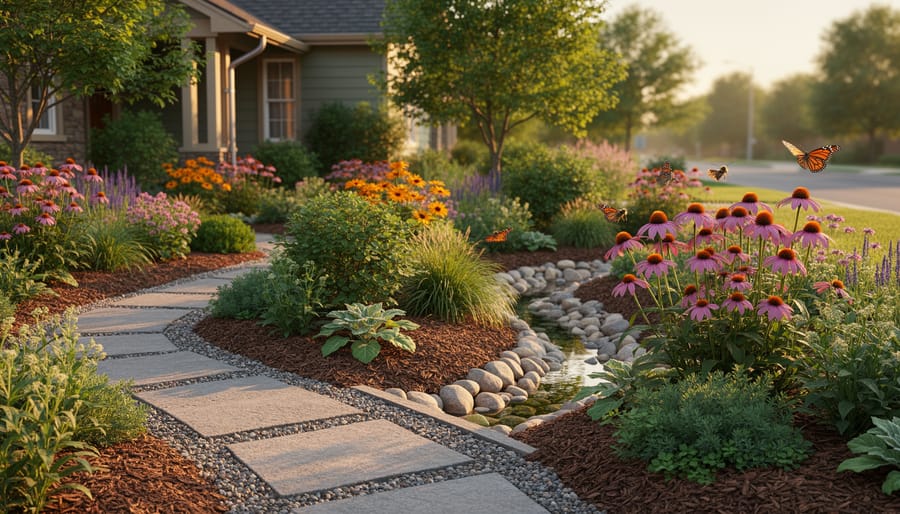
Layer 3-4 inches of shredded bark or decomposed granite mulch around all plantings to lock moisture into soil, keeping roots cooler in summer while dramatically reducing evaporation. Skip the decorative rock initially, it absorbs heat and actually increases water needs for nearby plants.
Start your transformation in fall when cooler temperatures give new plantings the best survival odds without constant watering. You don’t need to rip everything out at once. Begin by converting your parkway strip or a prominent corner bed, then expand gradually as budget and energy allow. Even replacing 25% of traditional landscaping makes a noticeable difference in your water bills and curb appeal.
The truth is, drought-resistant doesn’t mean boring brown sticks. Modern xeriscaping showcases stunning silver-leafed artemisia, cheerful yellow flowering brittlebush, and architectural agaves that create more visual interest than generic lawn ever could. Your neighbors will wonder how your yard stays gorgeous while their sprinklers run constantly, and you’ll spend weekends enjoying your garden instead of maintaining it.
Why Your Front Yard Deserves a Drought-Resistant Makeover
Picture this: It’s another scorching summer afternoon, and you’re standing at your window watching water cascade across your lawn while your neighbor’s sprinkler system runs for the third time this week. You cringe as you think about your water bill, the hours spent mowing and edging, and the fact that half your plants look stressed despite all that effort. Sound familiar?
You’re not alone, and here’s the good news: there’s a better way.
Making the switch to drought-resistant landscaping isn’t just about surviving the next dry spell. It’s about creating a front yard that works with nature instead of against it. The benefits ripple out in ways you might not expect.
Let’s start with the obvious: water savings. Homeowners who transition to drought-resistant landscapes typically reduce their outdoor water use by 30-60 percent. That’s not just better for the environment – it translates to real money staying in your pocket, especially during those peak summer months when rates climb.
But here’s what really surprises people: the time you’ll get back. Remember those weekend mornings spent pushing a mower in the heat? With drought-resistant landscaping, you’re looking at far less maintenance overall. Native plants and adapted species evolved to thrive in your climate without constant fussing. They don’t need weekly mowing, frequent fertilizing, or anxious monitoring.
Your property value gets a boost too. Studies show that well-designed, water-wise landscapes can increase home values by 15-20 percent. Buyers today appreciate sustainability and low-maintenance living, making your drought-resistant yard a genuine selling point.
And let’s talk about the bigger picture. Every gallon of water you conserve helps your community during drought restrictions. Your yard becomes a haven for local pollinators and wildlife, supporting the ecosystem right outside your door. You’re not just changing your landscape – you’re becoming part of the solution.
Ready to transform your front yard into a water-wise wonder? The journey starts with understanding what’s possible.
Planning Your Drought-Resistant Front Yard Design
Assess Your Space and Sunlight
Before you start planning your drought-resistant front yard, spend a few days observing what’s really happening in your space. I like to think of this as getting to know your yard’s personality!
Start with sunlight patterns. Walk outside at three different times: morning, midday, and late afternoon. Notice which areas get full sun (six or more hours), partial sun (three to six hours), or mostly shade. A simple trick? Place sheets of paper in different spots and check them hourly to see when shadows appear.
Next, let’s talk soil. Grab a handful of moist soil and squeeze it. Does it clump like a snowball and stay together? That’s clay soil, which drains slowly. Does it fall apart immediately? You’ve got sandy soil with fast drainage. The ideal scenario is something in between.
For drainage testing, dig a hole about 12 inches deep, fill it with water, and time how long it takes to empty. If water sits for more than four hours, you’ll need to improve drainage before planting.
Finally, notice your microclimates. That spot against your south-facing wall? It’s probably a heat magnet. The area near your driveway gets reflected heat too. These observations will guide your plant choices perfectly.
Choose a Design Style That Fits Your Home
The beauty of drought-resistant landscaping is that it comes in many styles, each with its own personality. Choosing the right design approach depends on your home’s architecture and your personal taste, but rest assured there’s a water-wise style for everyone.
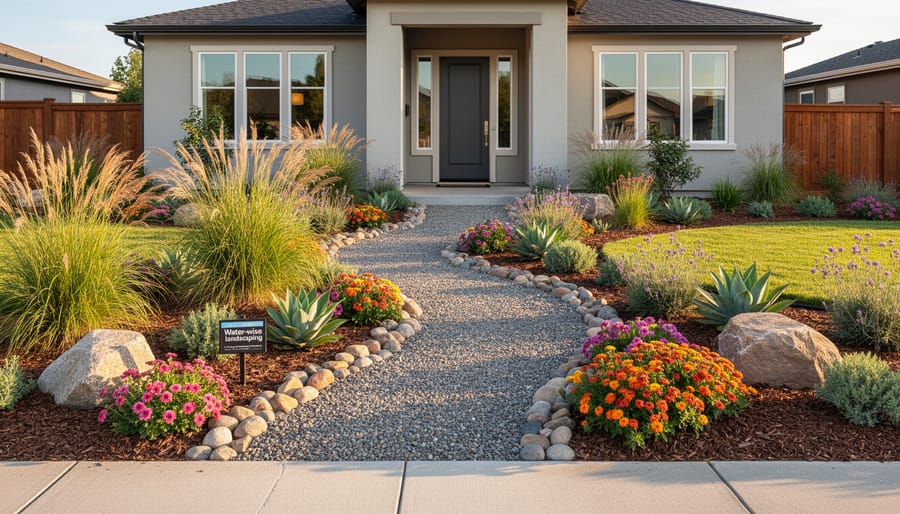
Desert contemporary features clean lines, architectural plants like agaves and yuccas, and striking gravel mulches in warm tones. This style pairs beautifully with modern or mid-century homes, creating bold focal points with minimal maintenance. Think sculptural succulents against smooth stucco walls.
Mediterranean style brings warmth through lavender, rosemary, and olive trees, often incorporating terracotta pots and natural stone pathways. If you have a Spanish, Italian, or traditional home, this approach feels effortlessly cohesive. The silvery foliage and purple blooms create that classic Mediterranean charm.
Native prairie style celebrates regional grasses and wildflowers in flowing, naturalistic drifts. This works wonderfully with craftsman, farmhouse, or cottage-style homes, creating movement and seasonal interest while supporting local wildlife. There are stunning drought-resistant garden designs using this approach.
California casual blends informal plantings with hardscaping, mixing ornamental grasses, flowering perennials, and native shrubs. It’s incredibly versatile and works with most architectural styles.
Take a walk around your neighborhood to see what resonates with you. Your front yard should feel like a natural extension of your home, welcoming guests while reflecting your unique style and values.
Create Zones for Different Water Needs
Hydrozoning is one of those smart gardening strategies that sounds fancy but is actually quite simple—and it’ll save you time, water, and frustration! The concept is straightforward: group plants with similar water needs together so you’re not overwatering some while underwatering others.
Start by dividing your front yard into three main zones. Your high-water zone might include a small area near the entryway where you want lush, welcoming plants—perhaps closest to your irrigation source. The moderate-water zone works well for transitional spaces, using plants that need occasional deep watering once established. Finally, dedicate the largest areas to your low-water zone, featuring truly drought-tolerant natives and succulents that thrive on minimal moisture.
Here’s a practical tip I learned from landscape designer Maria Santos: sketch your front yard on paper and mark existing water sources, shaded spots, and naturally dry areas. Place your thirstiest plants where water naturally collects or irrigation is easiest to manage, then work outward toward drier zones.
Remember, hydrozoning isn’t about strict boundaries—it’s about working smarter. You’ll find watering becomes almost effortless once everything’s in the right place, and your plants will reward you with healthier growth because they’re getting exactly what they need.
Best Drought-Resistant Plants for Front Yard Impact
Show-Stopping Ornamental Grasses
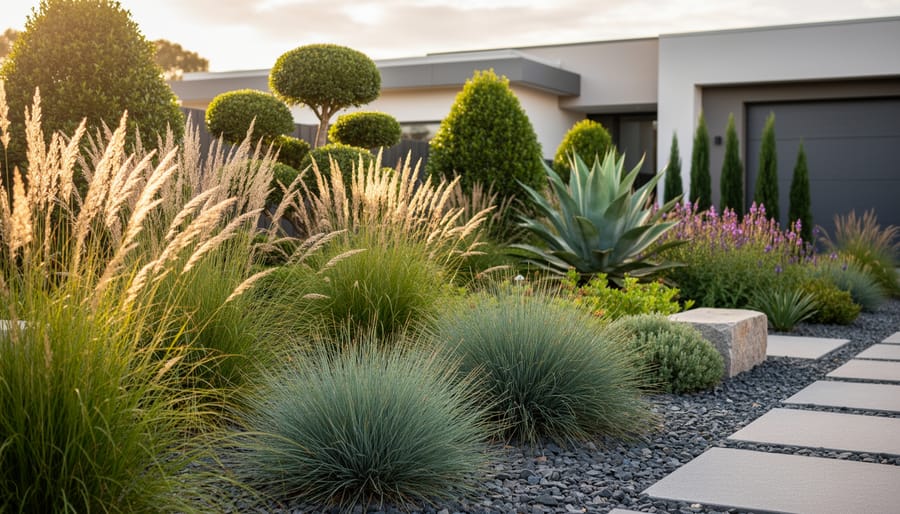
Ornamental grasses are absolute champions when it comes to drought-resistant landscaping, and they’re surprisingly easy to work with once you understand their needs. These beauties add graceful movement and year-round interest while requiring far less water than traditional lawn grass.
Blue fescue is a wonderful starting point, forming tidy mounds of silvery-blue foliage that stay attractive even through winter. It typically grows 8-12 inches tall and thrives in hot, dry conditions. I’ve seen entire front yards transformed using blue fescue as edging along pathways, creating a soft, cohesive look.
For dramatic impact, try purple fountain grass with its burgundy foliage and feathery plumes that dance in the slightest breeze. It grows 3-4 feet tall and becomes a real conversation starter in late summer when those gorgeous seed heads emerge.
Mexican feather grass deserves special mention for its fine, hair-like texture that creates an almost ethereal quality in the landscape. It’s incredibly drought-tolerant once established and self-seeds gently without becoming invasive in most climates.
Don’t overlook native grasses like little bluestem, which turns stunning shades of copper and red in fall. When growing ornamental grasses, remember they actually prefer lean soil and will reward your minimal effort with maximum beauty throughout the seasons.
Colorful Perennials That Thrive on Neglect
Let me tell you, drought-resistant perennials can absolutely transform your front yard into a colorful showstopper without demanding constant attention.
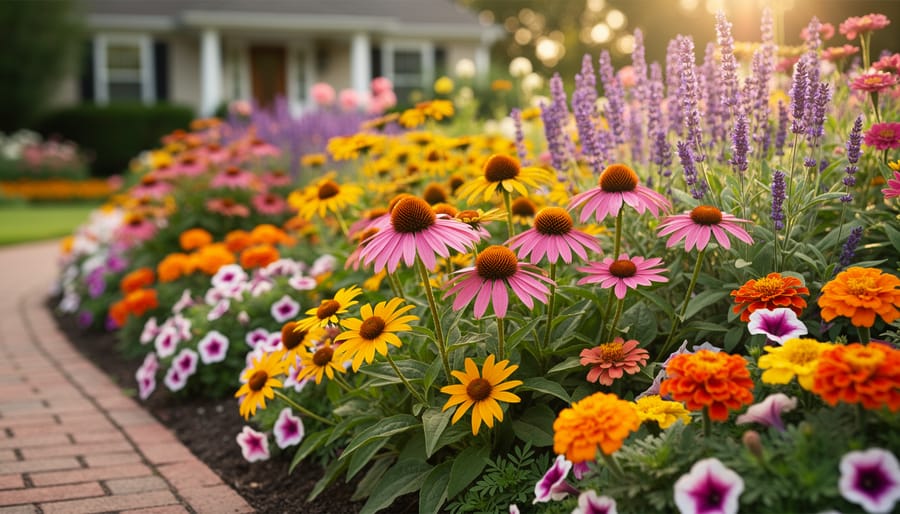
For early spring color, blanket flowers (Gaillardia) burst onto the scene with fiery red and yellow blooms that last for months. Purple coneflowers (Echinacea) follow in summer, standing tall and proud with almost zero fussing required. I’ve watched these beauties survive weeks without water while still delivering gorgeous blooms.
Blue and purple lovers will adore salvia and Russian sage, which create stunning waves of cool color throughout summer. Hummingbird mints (Agastache) add another dimension with their aromatic foliage and tubular flowers that pollinators absolutely adore.
For late-season interest, black-eyed Susans keep the party going well into fall with their cheerful golden petals. Sedum ‘Autumn Joy’ transitions from pink to rust-red, providing texture and color when many plants are calling it quits.
Mix these colors together for continuous blooms from spring through fall, and you’ll have neighbors asking for your secret to such a vibrant, effortless garden.
Structural Shrubs and Small Trees
Think of structural plants as the backbone of your drought-resistant landscape—they’re the showstoppers that give your yard personality and definition year-round. These beauties provide vertical interest and serve as natural focal points that draw the eye.
For warm, arid climates, I’m absolutely smitten with desert willow, which rewards you with gorgeous trumpet-shaped flowers despite minimal water. Texas sage is another reliable performer, producing masses of purple blooms after rain. Palo verde trees offer stunning yellow spring flowers and shade without hogging precious water.
In Mediterranean climates, consider the silvery elegance of olive trees or the architectural drama of Italian cypress. Both thrive on neglect once established. For coastal gardens, bottlebrush trees attract hummingbirds while handling salty air beautifully.
Cold-climate gardeners aren’t left out! Sumac varieties provide brilliant fall color, and juniper cultivars come in countless forms—from tall sentinels to spreading groundcovers. Russian sage offers months of lavender-blue flowers on drought-tolerant stems.
The secret to success? Plant these structural elements first, spacing them to allow mature growth. Give them deep, infrequent watering during establishment, then step back and let them shine. Most reach their stride within two to three years, requiring virtually no supplemental irrigation.
Ground Covers That Replace Thirsty Grass
Trading in your water-hungry lawn for ground covers might be the best decision you make this year. These low-growing alternatives create lush carpets of texture and color while using a fraction of the water traditional grass demands.
Creeping thyme is a superstar choice that releases a delightful fragrance when stepped on. It tolerates light foot traffic beautifully and produces tiny purple or pink flowers that pollinators absolutely adore. For shadier spots, consider ajuga or sweet woodruff, which form dense mats that naturally crowd out weeds.
Sedums are incredibly forgiving plants perfect for beginners. Varieties like ‘Angelina’ sedum offer golden foliage that brightens up any space, while Dragon’s Blood sedum adds burgundy tones. Both handle drought conditions like champions once established.
If you need a truly walkable surface, dymondia margaretae creates a silvery-green carpet that withstands regular foot traffic. For a softer look, try Irish moss or Scotch moss between stepping stones.
The transition doesn’t have to happen overnight. Start by replacing small sections of lawn where grass struggles anyway—those dry patches under trees or slopes where mowing feels treacherous. You’ll quickly discover how these hardworking plants reduce maintenance time while adding character your neighbors will admire.
Hardscaping Elements That Reduce Water Needs
Permeable Pathways and Patios
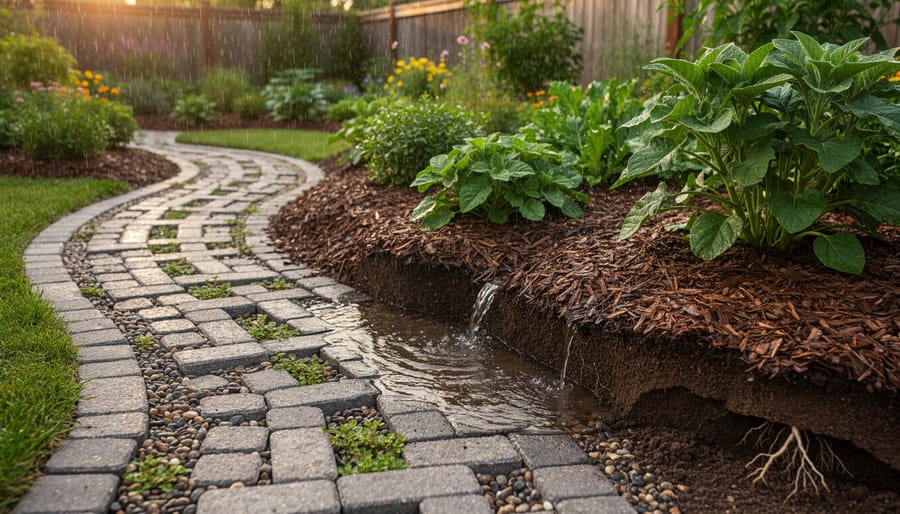
Hardscaping doesn’t have to mean water runs straight into the street. Permeable paving materials let rainwater soak through the surface, replenishing groundwater while giving you the functional pathways and patios your front yard needs.
Consider permeable pavers with gaps that allow grass or ground covers to grow between them, creating an attractive checkerboard effect. Decomposed granite compacts nicely for a stable walking surface while remaining porous enough for water infiltration. I’ve seen gravel pathways edged with drought-tolerant plants that look absolutely stunning and handle heavy foot traffic beautifully.
For a more polished look, porous concrete and permeable pavers come in various colors and patterns. They look like traditional pavement but feature tiny spaces that channel water into the soil below.
Installation tip: Dig down about six inches, add a gravel base for drainage, then add your chosen permeable material. This simple layering ensures water moves efficiently while creating stable surfaces that withstand years of use without puddling or erosion.
Decorative Rock and Gravel Features
Decorative rocks and gravel are fantastic allies in drought-resistant landscaping, serving double duty as water savers and eye-catching design elements. When you replace thirsty turf with gravel pathways or rock beds, you’re essentially eliminating the need for irrigation in those areas while creating texture and dimension.
Start by selecting stones that complement your home’s exterior. River rocks offer smooth, rounded appeal, while crushed granite provides a more refined, compact surface perfect for pathways. I love using decomposed granite around established plants because it allows water to permeate while staying firmly in place.
Strategic boulder placement creates focal points that draw the eye naturally through your landscape. Position larger statement rocks near drought-tolerant plantings to anchor garden beds and add immediate visual weight to your design.
For pathways, lay landscape fabric beneath your gravel to suppress weeds and reduce maintenance. A three-inch depth of gravel generally provides good coverage and comfort underfoot. Mix different stone sizes and colors to create borders between planting areas and hardscaped sections, adding professional polish to your water-wise front yard transformation.
Mulching Strategies for Water Retention
Mulch is your secret weapon for keeping soil moist and happy during dry spells! For maximum water retention, organic mulches like shredded bark, wood chips, or compost work beautifully because they break down slowly, enriching your soil while preventing evaporation.
Apply a 3-4 inch layer around your plants, keeping it a few inches away from stems to prevent rot. Think of it as tucking your garden into a cozy blanket! I learned from master gardener Elena Rodriguez that too-thin mulch won’t do much, while piles over 4 inches can actually repel water instead of retaining it.
Refresh your mulch yearly as it decomposes, and consider using lighter-colored options in hot climates to reflect heat. The beauty of mulching is that it suppresses weeds too, meaning less competition for that precious water your drought-resistant plants need to thrive.
Smart Irrigation for Your Drought-Resistant Landscape
Drip Irrigation Basics for Beginners
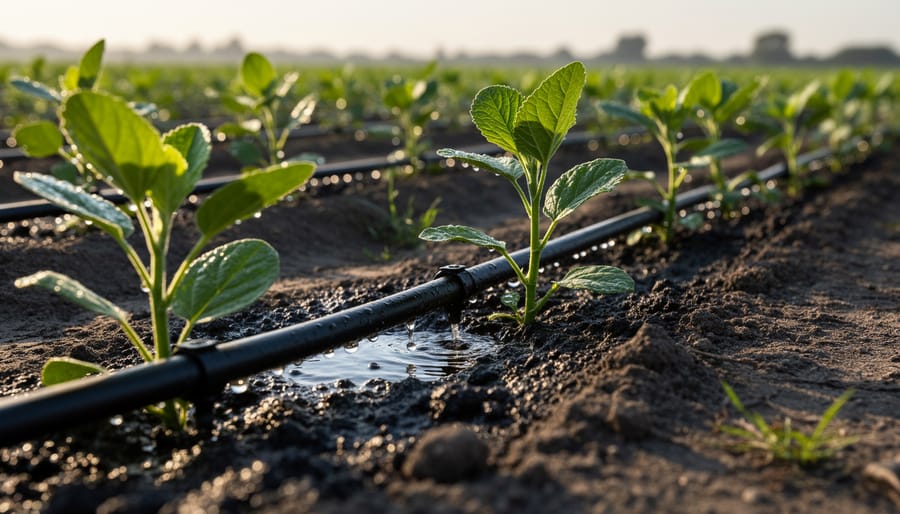
Drip irrigation is one of the smartest investments you can make for your drought-resistant front yard. Think of it as a slow-sipping system that delivers water directly to your plants’ roots, exactly where they need it. Unlike traditional sprinklers that spray water everywhere (including your sidewalk and driveway), drip systems waste almost nothing.
The benefits are impressive. You’ll use 30-50% less water than conventional methods, and your plants will actually thrive better because they receive consistent, deep watering. Plus, you’ll spend less time dragging hoses around your yard.
Setting up a basic system is easier than you might think. Start with a battery-operated timer that connects to your outdoor faucet. Attach the main drip line, which looks like a flat hose, running it along your planted areas. From there, use smaller tubes with emitters to reach individual plants. Most systems come with hole punches and connectors that simply snap together.
I recommend starting with one flower bed to build your confidence. Home improvement stores offer starter kits with everything included, and many have helpful staff who can walk you through the basics. Within an afternoon, you’ll have a professional-grade watering system working for you.
Watering Schedules for Establishment and Beyond
Getting your drought-resistant plants established requires patience, but the payoff is worth it! During the first growing season, your new plants need consistent moisture to develop deep root systems. Water deeply 2-3 times per week, making sure water penetrates 6-8 inches into the soil. I always tell gardeners to check soil moisture with their finger before watering to avoid overwatering.
By the second year, you can gradually reduce frequency to once weekly, encouraging roots to search deeper for water. This is when the magic happens! Your plants are learning to be self-sufficient. Monitor them during hot spells and provide extra water if leaves look droopy or stressed.
Around year three, most drought-tolerant plants hit their stride. Now you can transition to minimal supplemental watering, perhaps once or twice monthly during extended dry periods. Many established native plants may need no irrigation at all except during extreme drought.
Remember, deep and infrequent watering beats shallow, frequent sessions every time. You’re training plants to thrive, not just survive. Keep notes on what works for your specific conditions, and celebrate each milestone as your front yard transforms into a truly water-wise landscape!
Making the Transition: A Step-by-Step Project Guide
Phase 1: Remove or Reduce Your Lawn
The first step in creating your drought-resistant landscape is removing or reducing your existing lawn. Don’t worry—you have several methods to choose from, each with its own advantages.
Sheet mulching, often called lasagna mulching, is my favorite beginner-friendly approach. Simply mow your grass short, lay down cardboard or several layers of newspaper over the entire area, then cover with 4-6 inches of mulch. This smothers the grass over several months while improving your soil. It’s perfect if you’re planning ahead and can wait a season before planting.
For faster results, consider renting a sod cutter. This tool slices beneath the grass roots, allowing you to roll up strips of lawn like carpet. It’s more physical work, but you’ll have a blank canvas within a day or two. The removed sod can even become compost for your new garden beds.
Not ready for a complete transformation? Try gradual reduction instead. Start by converting one section at a time—perhaps a corner or a strip along your walkway. This approach lets you experiment with drought-resistant plants while spreading out the work and expense. Many homeowners find this method less overwhelming and more manageable for their schedules and budgets.
Phase 2: Improve Your Soil
Before planting your drought-resistant beauties, you’ll want to give them the best foundation possible. Think of improving your soil as setting the table for a feast—you want everything in place for success.
Start by mixing in 2-3 inches of compost into your existing soil. This magical ingredient helps sandy soil hold moisture longer while improving drainage in clay soils. It’s a win-win! I remember the first time I amended my compacted front yard soil—the transformation was remarkable.
If your soil feels hard as concrete (a common issue in front yards that see foot traffic), break up that compaction by working the soil to a depth of 8-12 inches. Your plants’ roots will thank you by growing deeper and accessing moisture more efficiently.
Consider adding a soil wetting agent for particularly hydrophobic soils. This helps water penetrate rather than run off, ensuring every precious drop reaches those roots where it’s needed most.
Phase 3: Plant and Establish Your New Landscape
Timing makes all the difference when establishing your drought-resistant landscape. Fall planting gives your new plants the entire cool season to develop strong root systems before summer heat arrives. Spring works too, but you’ll need to water more frequently during that crucial first summer.
When planting day arrives, dig holes twice as wide as your root balls but no deeper. This encourages roots to spread outward into native soil rather than staying confined. Gently loosen any circling roots before placing plants at the same depth they grew in their containers. Backfill with your existing soil and create a small basin around each plant to catch water.
Here’s what to expect during year one: despite being labeled drought-resistant, new plants need regular watering while establishing. Water deeply but infrequently, encouraging roots to grow downward. By the second growing season, you can dramatically reduce watering as roots tap into deeper moisture reserves. Don’t worry if growth seems slow at first. Underground, your plants are busy building the foundation for years of low-maintenance beauty ahead.
Common Mistakes to Avoid (And How to Fix Them)
Even seasoned gardeners stumble when transitioning to drought-resistant landscaping. Let me share the most common pitfalls I’ve seen and how to avoid them.
The biggest mistake? Thinking drought-resistant means zero water. Here’s the truth: all plants, even succulents, need regular watering during their first year while establishing roots. I learned this the hard way when my beautiful lavender plants turned crispy brown after just two weeks. The fix is simple: water deeply twice weekly for the first growing season, then gradually reduce as plants mature.
Another common issue is planting too densely. We all want instant results, but overcrowding prevents air circulation and creates competition for water. Give each plant room to grow to its mature size. If your yard looks sparse initially, fill gaps with mulch or attractive rocks rather than squeezing in extra plants.
Many gardeners also forget about microclimates in their front yards. That spot against your south-facing wall gets considerably more heat than the shaded area under the eaves. I once planted shade-loving coral bells in full sun, and they struggled miserably. Walk your yard at different times of day, observe sun patterns, and match plants accordingly.
Neglecting soil preparation is another frequent error. Clay soil needs amendment with compost to improve drainage, while sandy soil benefits from organic matter for water retention. Test your soil before planting and adjust as needed.
Finally, don’t skip the mulch layer. A three-inch blanket of organic mulch reduces evaporation, regulates soil temperature, and suppresses weeds. Refresh it annually, and your drought-resistant landscape will thrive with minimal intervention.
You’ve taken the first steps toward transforming your front yard into a water-wise haven, and I can promise you this: the rewards are worth every bit of effort. Imagine opening next summer’s water bill and seeing those numbers drop by 40, 50, even 70 percent. Picture weekends spent enjoying your garden rather than slaving over a thirsty lawn that demands constant attention. These aren’t just possibilities—they’re the reality for countless homeowners who’ve made the switch.
The environmental impact matters too. Every gallon of water you save, every native plant you introduce, contributes to a healthier local ecosystem. You’ll notice more butterflies visiting, more birds stopping by, and the quiet satisfaction of knowing your landscape choices are making a genuine difference.
If a complete yard overhaul feels overwhelming, start small. Choose one section—maybe that struggling patch near the driveway or the corner that never quite looked right. Transform that space with a few drought-resistant plants and see how it performs through the seasons. Success breeds confidence, and before you know it, you’ll be ready to tackle the next area.
This isn’t just landscaping; it’s an investment that delivers returns for years to come. Your front yard will look more vibrant, require less of your precious time, and cost less to maintain. You’re creating something beautiful, sustainable, and uniquely yours—and that’s something to feel genuinely proud of. So grab those gloves and get started. Your future self will thank you.