Your thirsty lawn doesn’t have to drain your wallet or your community’s water supply. Drought-resistant landscaping transforms your front yard into a vibrant, low-maintenance oasis that thrives even when rainfall disappears.
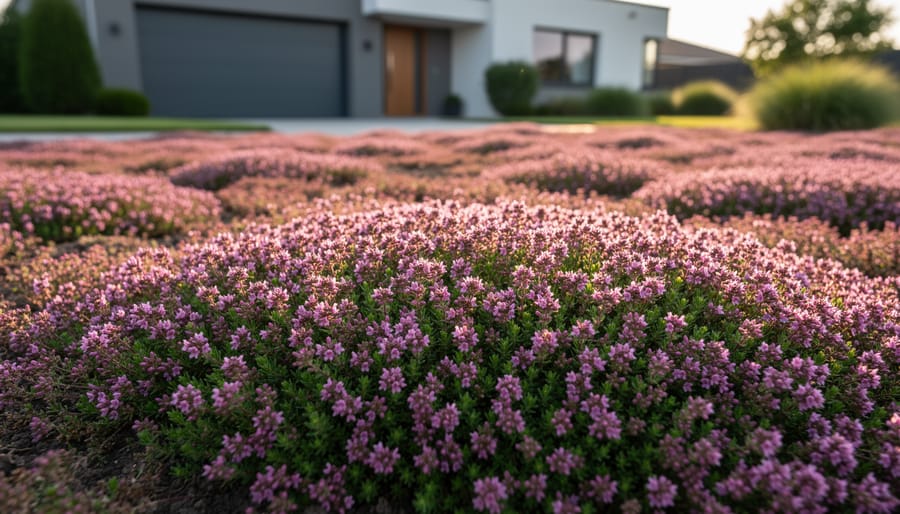
Replace water-hungry grass with native ground covers like creeping thyme or Buffalo grass that need 75% less water while creating lush green carpets. These hardy alternatives spread naturally, crowd out weeds, and stay green through dry spells without constant irrigation.
Layer plants by water needs, grouping thirsty specimens together in small zones while filling the majority of your yard with drought-tolerant perennials like lavender, Russian sage, and ornamental grasses. This hydrozoning approach lets you water efficiently, directing precious resources only where absolutely needed.
Install a 2-3 inch layer of organic mulch around all plantings to lock moisture into the soil, reduce evaporation by up to 70%, and suppress competing weeds. Wood chips, shredded bark, or decomposed granite work beautifully depending on your aesthetic preferences.
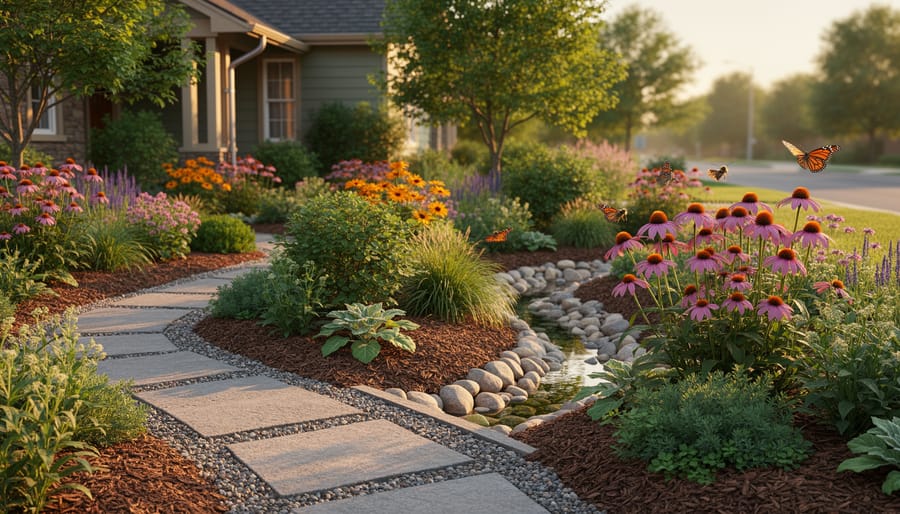
Design hardscaping features like gravel pathways, dry creek beds, or decorative boulder groupings to add visual interest while reducing the plantable area that requires water. These elements create structure and curb appeal year-round, regardless of drought conditions.
The transformation might seem daunting, but thousands of homeowners have successfully made the switch, cutting water bills by half while creating front yards that neighbors admire. Your drought-resistant landscape will reward you with beauty, sustainability, and freedom from constant watering schedules.
Why Your Front Yard Deserves a Drought-Resistant Makeover
Let me share something that might surprise you: drought-resistant landscaping isn’t about settling for less. It’s actually about gaining more—more beauty, more time, and yes, more money in your pocket.
I know what you’re thinking. When people hear “drought-resistant,” they often picture a sad collection of cacti and brown gravel. But here’s the truth: a well-designed drought-tolerant front yard can be absolutely stunning. Think silvery lavender swaying in the breeze, ornamental grasses catching the golden afternoon light, and vibrant succulents creating living sculptures. The variety of colors, textures, and forms available will genuinely amaze you.
Let’s talk about the practical benefits that make this transformation so worthwhile. First, your water bill will thank you. Homeowners typically report savings of 30-50% on outdoor water use after switching to drought-resistant landscaping. Over a year, that’s hundreds of dollars back in your budget. And in drought-prone regions where water restrictions hit hard, you won’t be watching your landscape investments wither away.
The maintenance factor is equally compelling. Once established, drought-tolerant plants need far less fussing than traditional lawns. No more weekend slavery to the mower. No constant feeding and weeding. Many native and adapted plants thrive on neglect, meaning you can spend your Saturdays actually enjoying your garden instead of laboring in it.
Then there’s the year-round appeal. Unlike thirsty lawns that go dormant and brown, many drought-resistant plants offer multi-season interest. Evergreen succulents, ornamental grasses with winter structure, and plants with striking seed heads keep your front yard looking intentional and beautiful even in the off-season.
Finally, curb appeal matters. Real estate professionals consistently note that well-executed drought-resistant landscapes increase property values, especially in water-conscious markets. You’re not just saving resources—you’re investing in your home’s future while creating something that brings you daily joy.
Planning Your Drought-Resistant Front Yard
Understanding Your Microclimate
Before choosing plants or designing your drought-resistant landscape, take time to really get to know your front yard’s unique conditions. Think of yourself as a detective gathering clues about how sun, wind, and heat move through your space throughout the day.
Start by observing sun patterns over several days. Walk outside in early morning, midday, and late afternoon to note which areas receive full sun (six or more hours), partial sun (three to six hours), or remain mostly shaded. I like to sketch a simple map and mark these zones with different colors. You’ll be surprised how dramatically conditions can vary just a few feet apart!
Pay attention to wind exposure too. Stand in different spots on a breezy day and notice where gusts hit hardest. Areas near corners of your house or between buildings often create wind tunnels that dry out soil faster. Conversely, spots protected by walls or fences might retain moisture better.
Don’t forget to identify hot spots where heat accumulates. South and west-facing walls reflect intense heat, while paved driveways and walkways radiate warmth long after sunset. These microclimates can be several degrees hotter than other parts of your yard.
I recommend doing this observation process across different seasons if possible, but even a week of careful watching will reveal valuable patterns. Renowned landscape designer Lauren Springer Ogden once told me in an interview that understanding your microclimate is like learning your yard’s personality. Once you know it intimately, plant selection becomes infinitely easier and more successful.
Soil Preparation That Sets You Up for Success
Before you plant anything, let’s talk about what’s happening beneath the surface. Think of your soil as the foundation of your drought-resistant garden—get this right, and everything else becomes so much easier.
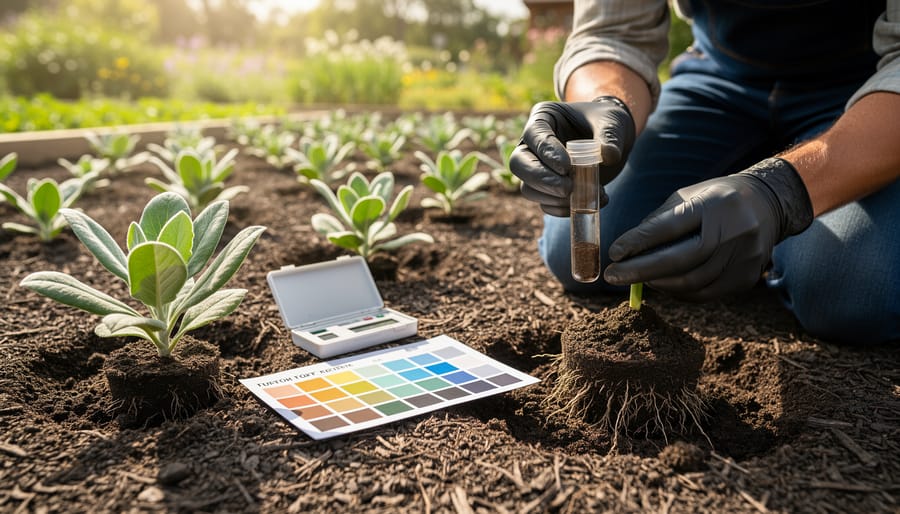
Start with a simple soil test. You can grab an inexpensive kit from your local garden center or send a sample to your county extension office for detailed results. You’re looking for two key things: pH levels and drainage. Most drought-tolerant plants prefer slightly acidic to neutral soil (around 6.0-7.0 pH), but the real game-changer is understanding how water moves through your soil.
Here’s what I learned from interviewing landscape designer Maria Chen, who specializes in water-wise gardens: “Sandy soil drains too quickly, while clay holds water but creates poor root conditions. Your goal is creating healthy garden soil that drains well yet retains enough moisture for plant roots.”
For sandy soil, work in 2-3 inches of compost to improve water retention. If you’re dealing with heavy clay, add both compost and coarse sand to enhance drainage. Mix amendments into the top 6-8 inches where most roots will establish.
One surprising tip Maria shared: slightly sloping your planting beds away from hardscaping directs precious rainwater toward your plants rather than into storm drains. This simple adjustment can reduce your watering needs by up to 30 percent right from the start.
Creating Zones by Water Needs
Think of hydrozoning like organizing your kitchen—you keep similar items together for efficiency. The same principle works beautifully in your front yard. By grouping plants with similar water needs, you’ll save water, time, and money while keeping your garden thriving.
Start by creating three basic zones. Your high-water zone, closest to the house, might include a few lush container plants or a small accent bed that greets visitors. The moderate-water zone can feature drought-tolerant perennials that need occasional deep watering once established. Finally, your low-water zone works perfectly for areas furthest from your hose or irrigation system—think native grasses and succulents that practically take care of themselves.
I learned this technique from a landscape designer who transformed her own yard, and it’s honestly a game-changer. You’ll avoid the common mistake of overwatering drought-resistant plants while underwatering thirstier ones. Plus, your irrigation system becomes incredibly simple to manage when plants in each zone share similar schedules. Start small with one well-planned zone, and you’ll quickly see how this smart organization makes maintenance surprisingly effortless.
Choosing the Right Drought-Resistant Plants for Front Yard Impact
Ground Covers That Replace Thirsty Grass
Ready to ditch that water-guzzling lawn? You’re in for a treat! Ground covers offer a gorgeous, low-maintenance alternative that’ll have your neighbors doing double-takes.
Creeping thyme is my personal favorite – it releases a delightful fragrance when stepped on and produces tiny purple flowers that pollinators absolutely love. It’s incredibly drought-tolerant once established and handles light foot traffic beautifully. Perfect for pathways or smaller lawn areas!
For a lush, carpet-like appearance, try dymondia (also called silver carpet). This South African native stays wonderfully green with minimal water and forms a dense mat that crowds out weeds. I’ve seen it transform entire front yards into silvery-green masterpieces.
Sedums are another fantastic choice, especially for sunny spots. Varieties like ‘Angelina’ sedum create stunning golden textures, while others offer deep greens and reds. They’re practically indestructible and need watering only during extreme heat.
The best part? These ground covers typically need about 70% less water than traditional grass. Start small with a test patch to see what thrives in your specific conditions. You’ll quickly discover which varieties love your yard as much as you’ll love your reduced water bill!
Showstopping Perennials and Ornamental Grasses
Let me share some of my favorite showstoppers that’ll transform your front yard into a stunning, water-wise landscape. These beauties deliver serious visual impact while laughing in the face of dry conditions.
Lavender tops my list every time. This Mediterranean native thrives on neglect once established, filling your yard with silvery foliage and fragrant purple blooms that butterflies adore. Plant it along pathways where brushing against it releases that incredible scent. English lavender works beautifully in cooler zones, while Spanish varieties handle intense heat better.
Russian sage creates ethereal clouds of lavender-blue flowers that seem to float above airy, gray-green foliage. It blooms from midsummer through fall, just when other plants are calling it quits. I’ve seen established plants survive entirely on rainfall, even during scorching summers.
Ornamental grasses bring movement and texture that changes with every breeze. Fountain grass forms graceful arching clumps topped with bottlebrush plumes, while blue fescue adds striking steel-blue tufts perfect for edging. These grasses look fantastic year-round, even their winter seed heads provide interest.
Agapanthus produces gorgeous spherical blooms on tall stalks, creating dramatic vertical accents. The strappy evergreen foliage stays attractive between flowering periods. Don’t overlook hummingbird mints either—these fragrant perennials offer colorful spikes that pollinators find irresistible.
Mix these plants in drifts rather than single specimens for maximum impact. Your neighbors will wonder how you created such a lush-looking landscape without constant watering!
Native Plants: Your Secret Weapon
Here’s your secret weapon for a thriving, water-wise front yard: native plants are already equipped to handle your local climate, including those dry spells that leave other plants wilting. Think of them as the hometown heroes of your landscape—they’ve spent thousands of years adapting to your region’s rainfall patterns, soil types, and temperature swings.
Native plants develop deep root systems that tap into moisture reserves other plants can’t reach, meaning less watering for you and healthier plants overall. They’re also naturally resistant to local pests and diseases, so you’ll spend less time fussing with treatments and more time enjoying your yard.
Finding the right species for your area is easier than you might think. Start by contacting your local native plant society or cooperative extension office—they’re goldmines of free information. Many botanical gardens offer native plant sales with staff who can guide your selections. When choosing drought-resistant perennials, look for plants labeled with your specific growing zone and water requirements.
I always tell gardeners to observe what’s thriving in undeveloped areas nearby—those plants are proven performers in your exact conditions.
Strategic Trees and Shrubs for Structure
Trees and shrubs create the backbone of your drought-resistant front yard, offering structure that smaller plants simply can’t match. I’ve found that choosing the right specimens transforms a flat landscape into something truly dimensional.
Crape myrtle steals the show with gorgeous summer blooms in shades from white to deep burgundy, plus stunning fall color and attractive peeling bark in winter. These adaptable beauties thrive once established and need minimal water. Texas sage is another personal favorite, producing vibrant purple or pink flowers after summer rains while maintaining its silvery foliage year-round.
For a touch of native elegance, manzanita offers sculptural branching and evergreen leaves that look polished and refined. Its reddish bark adds winter interest when other plants rest.
When planting, position taller specimens toward the back or sides of your yard to frame your home without blocking views. Space them properly, remembering they’ll grow into their mature size. A landscape designer I recently interviewed emphasized starting with quality specimens rather than cramming in too many plants, advice that’s saved countless homeowners from future headaches and transplanting struggles.
Design Principles That Make Drought-Resistant Yards Stunning
Working with Color, Texture, and Seasonal Interest
Creating a visually stunning drought-resistant front yard is all about layering colors, textures, and shapes that shine throughout the year. Think of your landscape as a living tapestry where each plant plays a role.
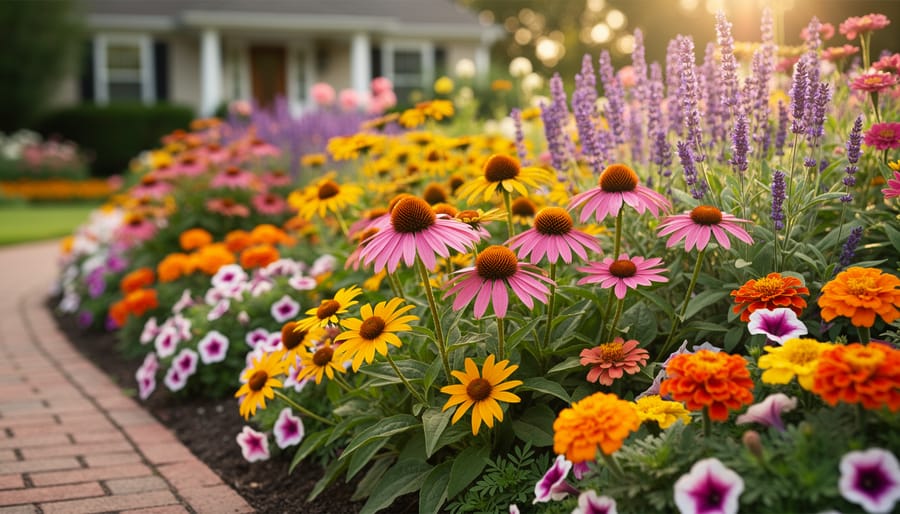
Start with silvery-blue agaves or blue oat grass as focal points, their sculptural forms creating drama year-round. Layer in warm-season bloomers like golden rudbeckia and purple salvia for summer pops of color, then add autumn joy sedum for late-season interest. Don’t forget foliage plants like purple-leaved smoke bush or chartreuse-colored euphorbia, which provide constant color even when nothing’s blooming.
Texture matters tremendously in water-wise gardens. Combine fine-textured ornamental grasses with bold, architectural succulents and soft, feathery Russian sage. This variety keeps your eye moving and creates depth. For inspiration on combining these elements effectively, explore different drought-resistant garden designs that showcase successful plant pairings.
Add structural interest with decorative rocks, driftwood, or striking containers. These hardscape elements provide winter appeal when deciduous plants rest. The key is creating overlapping seasons of interest so your front yard always looks intentional and beautiful.
Hardscaping Elements That Reduce Water Needs
Hardscaping creates visual appeal while dramatically reducing your water consumption. Think of these elements as the backbone of your drought-resistant front yard, giving you structure and beauty without the constant need for irrigation.
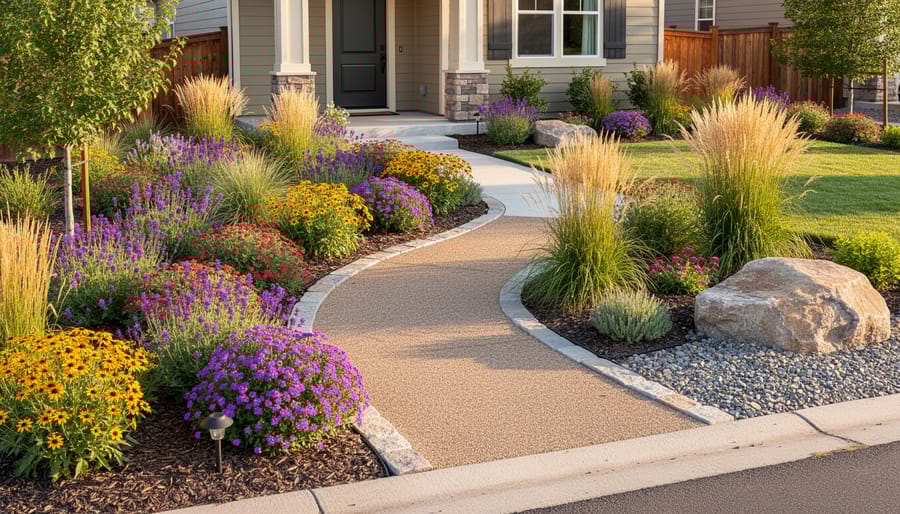
Start with pathways made from flagstone, pavers, or decomposed granite. These not only guide visitors through your landscape but also replace thirsty grass with attractive, zero-maintenance surfaces. I’ve found that winding paths create more interest than straight lines and make even small yards feel more expansive.
Decorative rocks and gravel are game-changers for water conservation. Use river rocks to create dry streambeds that add texture and can even channel rainwater when it does arrive. Pea gravel works beautifully as ground cover between stepping stones or around plant clusters, preventing weed growth while keeping soil cool.
Don’t forget mulch, which deserves special mention. A 3-4 inch layer of organic mulch around your drought-tolerant plants reduces evaporation by up to 70 percent and keeps roots protected from temperature extremes. Wood chips, shredded bark, or even local materials like pine needles all work wonderfully.
The key is balancing these hardscape elements with your planted areas. Aim for roughly 60-70 percent hardscaping in your front yard design, leaving strategic pockets for your drought-resistant beauties to shine.
Creating Focal Points Without Water Features
Who says you need water features to create drama in your front yard? Some of the most striking drought-resistant landscapes I’ve seen rely on bold, water-free focal points that demand attention year-round.
Large boulders make excellent anchors for your design. Position them strategically near your entrance or along pathways, and they’ll add instant structure and visual weight. I recently chatted with landscape designer Maria Chen, who recommends grouping rocks in odd numbers for a more natural look.
Sculptural elements offer another fantastic option. A weathered steel garden sculpture or ceramic art piece can reflect your personality while requiring zero maintenance. Choose pieces that complement your home’s architecture rather than competing with it.
Drought-tolerant container gardens packed with succulents or ornamental grasses create moveable focal points you can rearrange seasonally. This flexibility is perfect for beginners still finding their design style.
Don’t overlook architectural plants themselves as living sculptures. A mature agave, stately yucca, or sculptural prickly pear can become the star of your landscape. These statement plants naturally draw the eye and provide that wow factor without demanding constant watering.
Smart Watering Strategies for Establishment and Beyond
The First Year: Helping Plants Get Established
The first year is absolutely crucial for your drought-resistant landscape’s success, and I can’t stress this enough: even drought-tolerant plants need consistent water while establishing roots. Think of it as an investment that pays dividends for years to come.
During those initial months, focus on deep, infrequent watering rather than shallow, daily sprinkles. Water deeply once or twice weekly, allowing the soil to dry slightly between sessions. This encourages roots to grow downward, seeking moisture deeper in the soil rather than staying near the surface. I recommend watering until the top 6-8 inches of soil are thoroughly moistened.
A simple trick I learned from master gardener Susan Martinez: create a small basin around each plant by building up a ring of soil. This helps direct water straight to the root zone instead of running off. Apply 2-3 inches of mulch around plants to retain moisture and regulate soil temperature.
Monitor your plants closely during hot spells. If leaves look droopy in early morning, increase watering frequency. By the end of year one, gradually reduce watering to transition plants toward their natural drought tolerance. Your patience now means minimal watering later.
Drip Irrigation and Efficient Watering Systems
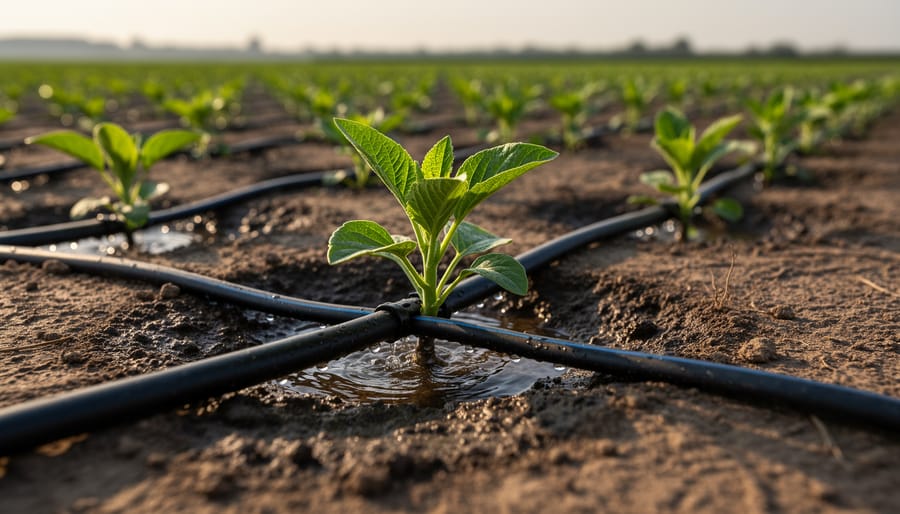
One of the smartest investments you can make for a drought-resistant front yard is a drip irrigation system. Unlike traditional sprinklers that spray water into the air where much of it evaporates before reaching your plants, drip irrigation delivers water slowly and directly to the root zone where it’s needed most.
I made the switch three years ago, and honestly, it’s transformed how I garden. My water bills dropped noticeably, and my plants actually look healthier because they’re getting consistent moisture right at their roots. The system consists of tubes with small emitters that release water drop by drop, ensuring minimal waste.
For beginners, setting up a basic drip system is easier than you might think. Start with a simple timer attached to your outdoor faucet, then lay drip tubing along your plant beds. You can customize where water goes by adding emitters exactly where you need them. Many garden centers offer starter kits with everything included.
If drip irrigation feels too complex initially, consider soaker hoses as a simpler alternative. These porous hoses “weep” water along their entire length and work beautifully in flower beds and around shrubs. Whatever system you choose, watering deeply but less frequently encourages plants to develop stronger, deeper root systems that naturally handle drought better.
Real Front Yard Transformations: What Actually Works
Let me share some inspiring transformations that prove drought-resistant landscaping can be absolutely stunning!
The Martinez family in Southern California replaced their struggling lawn with a Mediterranean-inspired design featuring lavender, rosemary, and salvias bordered by decomposed granite pathways. Within six months, their water bill dropped by 60 percent, and neighbors started stopping by to ask questions. Their biggest lesson? Start small. They tackled one section at a time over two summers, which made the project manageable both financially and physically.
In Texas, the Johnsons transformed their patchy, brown front yard into a vibrant native plant showcase. They grouped drought-tolerant perennials like black-eyed Susans, gaura, and Mexican feathergrass in color-coordinated clusters. The key to their success was improving the soil first with compost, which helped their plants establish strong root systems. Now, two years later, they water only once every two weeks during summer.
Perhaps most impressive was retired teacher Linda Chen’s Phoenix makeover. She combined colorful succulents, agaves, and cacti with river rock mulch and a single focal point tree, a beautiful Palo Verde. Her advice? Embrace the natural beauty of your region rather than fighting it. She admits initially worrying about curb appeal, but her home now stands out as the most eye-catching on the block.
The common thread in these successes? Patience during establishment, proper plant selection for their specific climate zones, and adequate mulching. Each homeowner also emphasized that their yards now require a fraction of the maintenance compared to traditional lawns, freeing up weekends for actually enjoying their outdoor spaces.
Common Mistakes to Avoid (So You Don’t Waste Time or Money)
I’ve watched countless homeowners dive into drought-resistant landscaping with the best intentions, only to hit some totally avoidable bumps along the way. Let me share the most common mistakes so you can sidestep them entirely.
First up: ignoring your hardiness zone. I get it—you fall in love with a gorgeous succulent at the nursery, but if you’re in Zone 5 and it’s only hardy to Zone 8, you’re setting yourself up for heartbreak come winter. Always check plant tags and match them to your specific zone. Those beautiful California natives might not survive a Michigan winter, no matter how drought-resistant they are.
Another biggie is planting too close together. When you’re starting with small plants, it’s tempting to pack them in for that instant lush look. But give those plants room to grow! Overcrowding leads to competition for water and nutrients, which defeats the whole purpose. Follow spacing guidelines on plant labels, even if your yard looks sparse at first.
Skimping on mulch is a mistake I see constantly. A generous layer of mulch—about three to four inches—is absolutely essential for retaining soil moisture and suppressing weeds. Without it, you’ll be watering far more than necessary and battling unwanted plants that steal precious water.
Finally, expecting overnight transformation will leave you disappointed. Drought-resistant plants often need a full season or two to establish deep root systems. During this time, they actually need regular watering. Think of it as an investment period. Once established, they’ll reward you with years of low-maintenance beauty.
Remember, these mistakes are totally fixable, and recognizing them early means you’re already ahead of the game.
Transforming your front yard into a drought-resistant landscape doesn’t have to happen overnight. Start small—maybe with one sunny corner or by replacing a high-maintenance flower bed with a cluster of native plants. Every step you take toward water-wise gardening is a victory worth celebrating.
Remember, drought-resistant doesn’t mean zero-maintenance. You’ll still need to water during establishment, pull the occasional weed, and refresh your mulch annually. The difference is that once your plants settle in, the workload drops significantly. Instead of dragging hoses around daily or watching your water bill climb each summer, you’ll spend more time enjoying your garden and less time frantically trying to keep it alive.
The rewards extend far beyond convenience. You’re creating a resilient ecosystem that supports pollinators, reduces your environmental footprint, and actually thrives during tough conditions when traditional lawns turn brown. Your neighbors might even approach you for advice when they notice your vibrant front yard flourishing through dry spells.
Think of this as an investment in your home’s future. The plants you choose today will become more beautiful and self-sufficient with each passing year, requiring less from you while giving more to your landscape.
So grab your garden gloves and take that first step. Whether you’re sketching out a design, visiting your local native plant nursery, or simply removing a section of thirsty turf, you’re on your way to creating a front yard that’s both stunning and sustainable. Your resilient, beautiful landscape awaits.