
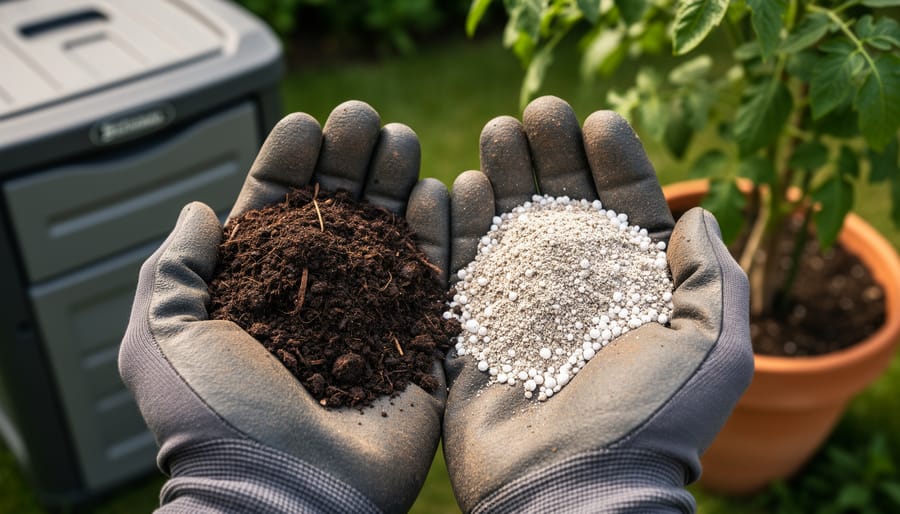
Standing in the garden center, staring at bags of compost and potting soil, you might wonder if they’re interchangeable. They’re not, and understanding the difference could save your plants from struggling or worse.
Compost is decomposed organic matter that acts as a nutrient-rich soil amendment and fertilizer. It’s dark, crumbly, and teeming with beneficial microorganisms that improve soil structure and feed your plants over time. Think of it as a vitamin-packed supplement for your garden beds.
Potting soil, on the other hand, is a specially formulated growing medium designed to support container plants. It’s lighter and fluffier than garden soil, providing the drainage and aeration that potted plants desperately need. Most quality potting mixes contain a blend of peat moss or coconut coir, perlite, vermiculite, and sometimes a bit of compost.
Here’s where pathogen safety enters the picture. Compost that hasn’t been properly processed can harbor harmful bacteria, fungi, and parasites. Home compost piles that don’t reach temperatures of 131-170°F may not kill these pathogens completely. Commercial potting soil, however, is typically sterilized during manufacturing, making it safer right out of the bag.
The good news? You don’t have to choose between them. Each serves a distinct purpose in your gardening journey, and knowing when to use which one ensures both thriving plants and peace of mind about what you’re touching and growing.
What Makes Compost and Potting Soil Fundamentally Different

Compost: Nature’s Recycling System
Think of compost as nature’s ultimate recycling program, where yesterday’s kitchen scraps and garden trimmings transform into tomorrow’s garden gold! When you make compost, you’re harnessing the power of beneficial microorganisms that break down organic materials like vegetable peels, leaves, grass clippings, and coffee grounds into rich, dark, crumbly matter.
The process is surprisingly simple. As these materials decompose over weeks or months, they create a nutrient-dense amendment that breathes life back into tired soil. I’ve watched gardeners beam with pride when they turn their compost pile and see banana peels they tossed in last month now transformed into something unrecognizable but incredibly valuable.
Compost isn’t meant to replace your garden soil. Instead, it works as a powerful fertilizer and soil conditioner that you mix into existing beds. It feeds your plants, improves soil structure, helps retain moisture, and encourages beneficial soil organisms. One experienced gardener I interviewed called it “multivitamins for the earth,” which perfectly captures how compost nourishes the entire garden ecosystem.
Potting Soil: The Controlled Growing Medium
Potting soil is a carefully crafted growing medium designed specifically for container plants. Unlike garden soil or compost alone, it’s a complete package that gives your potted friends everything they need to thrive in the confined space of a pot.
Think of potting soil as a custom-blended recipe. Most commercial mixes combine ingredients like peat moss or coconut coir, perlite or vermiculite for drainage, and often some compost for nutrients. The beauty of potting soil is its consistency and reliability. Manufacturers balance the mix to ensure proper drainage, aeration, and moisture retention—qualities that are absolutely essential when roots can’t spread out naturally.
Here’s something many beginners don’t realize: quality potting soil is typically sterilized during production. This controlled process eliminates weed seeds, disease organisms, and potential pathogens, giving your plants a clean, safe start. It’s particularly important for seedlings and indoor plants where you want predictable, disease-free conditions.
While potting soil costs more than making your own compost, you’re paying for that reliability and safety—a worthwhile investment for container gardening success.
The Pathogen Problem: Why This Matters for Your Garden
Common Culprits in Your Compost and Soil
Let’s take a friendly look at what might be lurking in your garden materials. Don’t worry—most of these microorganisms are harmless or even helpful, but it’s good to know what you’re working with!
Bacteria are everywhere in compost and soil, and they’re actually your composting superstars, breaking down organic matter beautifully. However, some troublemakers like E. coli and Salmonella can hitchhike into your compost through pet waste or contaminated food scraps. These are the ones we want to keep out of edible gardens.
Fungi are generally your garden’s best friends, helping decompose tough materials and forming partnerships with plant roots. Occasionally, plant-disease-causing fungi can survive in inadequately composted material, but proper hot composting takes care of them nicely.
Viruses typically don’t survive long outside their host plants, but diseased plant material in your compost could potentially spread problems like tomato mosaic virus. When in doubt, leave obviously diseased plants out of your pile.
Parasites are less common but worth mentioning. Toxoplasma from cat feces and certain worm eggs can persist in cool compost. This is why we always say no to pet waste in garden compost—it’s simply not worth the risk!
When Pathogens Actually Become a Problem
Here’s the good news: most gardening situations are forgiving when it comes to pathogens. Your established perennials and mature vegetables have robust immune systems and beneficial microbes protecting them. It’s really the vulnerable plants that need extra care.
Pay closest attention to pathogen safety with seedlings and young transplants, whose tender tissues haven’t developed strong defenses yet. These little ones benefit most from sterile potting soil rather than unfinished compost. Similarly, edible crops where you’re eating leaves, roots, or anything touching the soil deserve your caution—think lettuce, carrots, and herbs. For indoor plants, using pathogen-free potting mix prevents bringing unwanted organisms into your home environment, protecting your family from potential issues.
For established outdoor ornamentals and mature fruiting plants like tomatoes (where fruit doesn’t contact soil), the risks diminish considerably. Your garden’s ecosystem naturally manages most pathogens through competition and predation. Master gardener Helena Rodriguez told me, “I’ve used homemade compost on my roses for twenty years without issue, but I always start my tomato seedlings in fresh potting mix.” That’s the practical balance most gardeners strike.
How Compost Handles Pathogens (Or Doesn’t)
The Heat Treatment Advantage
Good news! There’s a simple, natural way to eliminate most pathogens from your compost: heat. Hot composting, when done properly, creates temperatures that destroy harmful microorganisms without any chemical intervention.
When your compost pile reaches temperatures above 131°F (55°C), it becomes a pathogen-killing powerhouse. Most disease-causing bacteria, viruses, and parasites can’t survive these conditions. Many experienced composters aim for temperatures between 135-160°F, which is the sweet spot for eliminating unwanted guests while preserving beneficial microbes.
Here’s how to achieve these temperatures in your home system. First, build a pile that’s at least 3 feet in all dimensions—smaller piles struggle to generate enough heat. Balance your “greens” (nitrogen-rich materials like food scraps) with “browns” (carbon-rich materials like dried leaves) in roughly equal volumes. Keep the pile as moist as a wrung-out sponge, and turn it every few days to introduce oxygen, which feeds the heat-generating microbes.
A compost thermometer is your best friend here. Insert it into the center of your pile to monitor progress. When temperatures drop below 100°F, it’s time to turn the pile again. Maintain these hot temperatures for at least three days to ensure thorough pathogen elimination. With practice, you’ll develop an intuition for creating perfectly safe, nutrient-rich compost every time.

Where Home Composting Falls Short
Here’s the honest truth from my own experience: most backyard compost bins never get hot enough to kill harmful pathogens. I learned this the hard way when my compost pile stayed embarrassingly cool despite my best intentions.
The magic temperature for eliminating disease-causing organisms is around 140°F, sustained for several days. But unless you’re actively managing a hot compost system with careful ratios of materials, regular turning, and proper moisture levels, your pile probably hovers around ambient temperature. My casual pile rarely topped 90°F, even in summer.
Cold composting, which is what most of us actually do, takes months or even years and never reaches those pathogen-killing temperatures. I chatted with Master Gardener Susan Chen, who admitted she once added diseased plant material to her slow compost pile, only to spread those same problems throughout her garden the following season.
This doesn’t mean home composting is bad. It just means we need realistic expectations. Your compost might look dark and crumbly, but if it never heated up significantly, treat it cautiously. Use it around ornamental plants rather than vegetables, or simply acknowledge that it’s wonderful for soil structure even if it’s not sterile.
The Curing Period Secret
Here’s a reassuring truth: time is your ally when it comes to compost safety. Even if your compost pile never reaches those ideal high temperatures, allowing it to cure for several months works wonders for pathogen reduction. Think of curing as nature’s slow-but-steady cleanup crew. During this resting period, beneficial microorganisms continue working, competition for resources intensifies, and pathogens gradually die off from environmental stress and lack of suitable hosts. I’ve found that letting my finished compost sit for at least three to six months before using it around edibles gives me peace of mind, especially with cooler backyard piles. This patience pays off with safer, more stable compost that’s truly garden-ready.
Potting Soil’s Safety Advantage
Commercial Sterilization Processes
When you buy commercial potting soil, you’re getting a product that’s been through rigorous sterilization processes to ensure it’s completely safe for your plants. Most manufacturers use heat sterilization, a method that exposes the growing medium to temperatures between 160-180°F (71-82°C) for 30 minutes or more. This effectively eliminates harmful pathogens, weed seeds, and pest eggs without damaging the beneficial properties of the soil.
Some companies use steam sterilization, which is particularly effective and environmentally friendly. The high-temperature steam penetrates deeply into the soil mixture, reaching every particle to destroy unwanted organisms. Others employ chemical treatments, though these are becoming less common as gardeners prefer natural methods.
I spoke with Maria Chen, a professional horticulturist with 20 years of experience, who explained that quality control doesn’t stop at sterilization. Reputable manufacturers regularly test their products for consistency and safety, giving you peace of mind when you open that bag.
This commercial treatment is one reason potting soil is stored differently than other garden materials. Speaking of proper storage, maintaining garden storage safety helps preserve that sterility until you’re ready to use it.
The Soilless Mix Difference
Here’s something fascinating that catches many gardeners by surprise: most commercial potting soils don’t actually contain any soil at all! Instead, they’re made from what we call soilless mixes, typically combining ingredients like peat moss, coconut coir, perlite, and vermiculite.
This might seem odd at first, but there’s brilliant reasoning behind it. These soilless ingredients are naturally sterile when processed, meaning they start out free from harmful pathogens, weed seeds, and pest eggs that often lurk in garden soil. It’s like beginning with a clean slate every time you pot up a plant.
Peat moss and coco coir provide excellent water retention and aeration, while perlite (those white, puffy bits you see) keeps the mix light and prevents compaction. Together, they create an environment where your plants can thrive without the worry of soil-borne diseases that might harm tender roots.
This pathogen-free advantage is especially important for starting seeds or growing container vegetables and herbs. Your seedlings get a safe, protected start in life, and you can focus on proper watering and feeding rather than battling unexpected diseases. It’s one reason why experienced gardeners often prefer quality potting mixes for containers, even when they have access to beautiful garden soil.
Making Your Compost Safer: Practical Steps
Achieving Hot Compost Temperatures at Home
Creating a hot compost pile that reaches pathogen-killing temperatures is easier than you might think! The magic number is 131°F, maintained for at least three days.
Start with volume—your pile needs to be at least three feet in all dimensions to generate enough heat. Think of it like a campfire: too small and it fizzles out quickly.
Balance your materials with roughly equal parts nitrogen-rich greens (fresh grass clippings, kitchen scraps) and carbon-rich browns (dried leaves, shredded paper). This combination fuels the microbial activity that creates heat.
Moisture matters tremendously. Your pile should feel like a wrung-out sponge—damp but not dripping. Too dry, and the microbes can’t work. Too wet, and you’ll create anaerobic conditions that smell terrible!
Turn your pile every 3-5 days to redistribute heat and oxygen. I know it’s work, but those turns ensure all materials spend time in the hot center where pathogens are destroyed.
Use a compost thermometer to monitor progress—it’s incredibly satisfying watching those temperatures climb!
Testing Your Compost Temperature
Testing your compost temperature is easier than you might think! Simply insert a compost thermometer into the center of your pile, about 12-18 inches deep. A healthy, active compost pile should reach 130-150°F during its hot phase, which typically lasts several days to weeks. This heat is your friend – it’s what kills off harmful pathogens and weed seeds. You’ll know your compost is working when the thermometer climbs into this range within a few days of building your pile. As decomposition progresses, temperatures will naturally drop, signaling that your compost is maturing and becoming safe, finished material ready for your garden beds.
The Long Cure Approach for Cold Composters
Don’t worry if you can’t achieve those high temperatures in your compost pile! The long cure approach is your friend. This method relies on time rather than heat to break down materials and reduce pathogens. Simply let your compost sit for 12 to 18 months before using it in your garden. During this extended period, beneficial microorganisms gradually outcompete harmful ones, and many pathogens naturally die off.
Here’s the key: even with long curing, apply cold compost as a top dressing or side dressing rather than mixing it directly into the soil where edible roots or low-growing vegetables touch it. This extra precaution keeps you safe while still giving you the benefits of homemade compost. Think of it as letting nature do the work on her own timeline. Master gardener Susan Harris told me she’s used this method for years with excellent results, saying patience truly pays off in the garden.
What Never to Compost
Avoid composting pet waste, which harbors parasites and harmful bacteria that survive even hot composting. Never add diseased plants to your pile—they’ll spread pathogens throughout your finished compost. Meat, dairy, and oils attract pests and create anaerobic conditions in cold piles, encouraging harmful bacteria growth. Treated wood, coal ash, and synthetic chemicals also don’t belong in compost bins. Just as you’d practice safe chemical storage in your garden shed, keep these risky materials separate from your compost to protect your plants and family.
When to Use Compost vs. Potting Soil for Maximum Safety
Best Uses for Homemade Compost
Homemade compost truly shines when used in established garden beds where it can enrich the soil around mature vegetables, perennials, and shrubs. These robust plants handle compost beautifully, benefiting from its slow-release nutrients and improved soil structure. I love spreading a generous layer around my tomato plants mid-season for an extra boost. Compost also works wonderfully as a top dressing or mulch around ornamental plants, trees, and flowering beds, where it suppresses weeds while feeding the soil. For flower gardens and landscape plantings, compost is your best friend. Just remember to keep it away from seedlings and delicate starts until they’re well-established, and avoid using it in containers meant for starting seeds where pathogen-free conditions matter most.

When Potting Soil Is Worth the Investment
Potting soil really shines when you need that sterile, controlled environment. If you’re starting seeds indoors, potting soil is your best friend—it’s free from weed seeds and harmful pathogens that could harm delicate seedlings before they even get going. Container vegetables also thrive in potting soil because it provides consistent drainage and aeration that prevents root rot in confined spaces.
Indoor plants absolutely deserve potting soil too. Since houseplants can’t benefit from outdoor ecosystems that naturally balance pests and diseases, that sterile foundation gives them a clean slate. And when you’re transplanting tender seedlings to larger pots, potting soil offers a gentle transition without shocking their developing roots.
Think of it this way: whenever you’re working with vulnerable plants or growing in containers without drainage into the ground, the investment in potting soil pays off in healthier, more vigorous growth.
The Hybrid Approach That Works
Here’s the good news: you don’t have to choose between compost and potting soil. The smartest gardeners use both, and once you understand their strengths, you’ll wonder why you didn’t try this sooner.
Think of potting soil as your go-to for starting seeds and container plants. Its sterile nature and perfect drainage make it ideal when you need a clean, controlled environment. Use it for seedlings, houseplants, and any containers where drainage is critical.
Compost shines as a soil amendment for your established garden beds and mature plants. Mix it into your outdoor soil to boost nutrients and improve structure, or use it as a top dressing around plants that have already developed strong root systems.
A simple rule I follow: potting soil for pots, compost for plots. You can also blend finished, pathogen-free compost with potting soil at a ratio of one part compost to three parts potting soil for containers, giving you the best of both worlds without compromising safety.
Now that you understand the key differences between compost and potting soil, you can confidently make informed choices for your garden. Remember, both materials have their place in a thriving garden ecosystem, and neither should intimidate you. The most important takeaway is this: compost is a fantastic soil amendment packed with nutrients, while potting soil provides the structure and drainage plants need to grow in containers.
When it comes to pathogen safety, a little knowledge goes a long way. Hot composting properly can eliminate most harmful organisms, while commercially prepared potting soil undergoes processes to ensure it’s safe from the start. If you’re concerned about using homemade compost, simply incorporate it into your garden beds rather than using it directly in containers with edibles, or give your pile time to cure fully.
I’ve spoken with countless gardeners who were initially worried about composting safety, and once they learned the basics of maintaining proper temperatures and moisture levels, their confidence soared. You can absolutely continue your composting journey while being smart about application.
The beauty of gardening lies in understanding these nuances and working with nature rather than against it. By knowing when to reach for compost versus potting soil, you’re already practicing sustainable gardening at its finest. You’re reducing waste, enriching your soil naturally, and creating a healthier environment for your plants to flourish. Keep composting, keep learning, and watch your garden thrive.


