Every time you snip a cutting from your favorite basil plant or divide a sprawling mint patch, you’re tapping into one of nature’s most efficient reproduction strategies: clonal colonies. These genetically identical plant groups form when a single parent produces offspring through vegetative means rather than seeds, creating a connected network of stems, roots, and shoots that share the same DNA. For gardeners, understanding this process transforms how you approach propagation, turning that single prized tomato or remarkable rosemary into an endless supply of identical performers.
The beauty of clonal colonies lies in their predictability. Unlike seed-grown plants that exhibit varied traits thanks to genetic mixing, clones reliably replicate their parent’s best qualities—that exceptional flavor, disease resistance, or abundant flowering you’ve worked hard to find. This consistency makes maintaining productive mother stock essential for serious gardeners who want to preserve superior varieties year after year.
Whether you’re already taking cuttings without realizing you’re building a clonal colony, or you’re curious about mastering techniques like division, layering, and grafting, the science behind vegetative reproduction empowers smarter gardening decisions. By learning how plants naturally clone themselves and applying those principles intentionally, you’ll develop sustainable propagation systems that reduce costs, preserve heirloom varieties, and ensure your garden’s future success. The techniques are simpler than you might think, and the rewards multiply with each generation you nurture from your original champion plants.
What Makes a Clonal Colony Different From Seed-Grown Plants
Nature’s Longest-Living Organisms Are Clonal Colonies
Nature shows us just how successful clonal reproduction can be when we look at some of Earth’s oldest living organisms. Meet Pando, a massive quaking aspen grove in Utah that’s actually a single organism connected by one root system. This incredible colony weighs about 6,000 tons and scientists estimate it’s been growing for 80,000 years! Each tree is genetically identical, sprouting from the shared roots below.
Closer to your garden experience, wild strawberry patches demonstrate this strategy beautifully. What looks like many separate plants is often one individual that’s been spreading through runners for decades or even centuries. Some ancient strawberry colonies in Europe are believed to be several hundred years old, quietly expanding through the same vegetative process you witness in your own strawberry bed each season.
These examples remind us that the simple propagation techniques we use in our gardens mirror one of nature’s most enduring survival strategies. When you divide hostas or let your mint spread, you’re tapping into the same powerful reproductive method that’s allowed organisms to thrive for millennia, proving that sometimes the oldest tricks really are the best ones.

Why Gardeners Choose Cloning Over Seeds
When you’ve found that perfect tomato with incredible flavor or a strawberry plant that shrugs off disease, why leave its future to chance? Many experienced gardeners turn to cloning because it locks in those winning traits for seasons to come.
Think of it this way: seeds are like a genetic shuffle, mixing traits from parent plants in unpredictable ways. Cloning, on the other hand, creates exact copies of your star performers. That disease-resistant basil that survived last year’s humid spell? Its clones will have that same resilience. The raspberry with those perfectly balanced sweet-tart notes? Every cloned plant delivers identical flavor.
Beyond genetic preservation, cloning simply saves time. While seed-grown plants need weeks or months to mature, cuttings from established plants already have developed root systems and jump straight into productive growth. You’ll harvest sooner and with confidence, knowing exactly what you’re getting.
For gardeners managing limited space or specific growing conditions, this predictability becomes invaluable. You’re not gambling on seedling variations or wasting precious garden real estate on plants that might not meet your needs. Instead, you’re cultivating a reliable collection of proven champions, each one a genetic twin of your favorites.
The Mother Stock Philosophy: Your Garden’s Genetic Vault
Selecting Your Best Performers as Mother Stock
Choosing the right mother plants is like casting the lead role in your garden’s success story—you want the absolute stars of the show! The key is patience. Rather than grabbing the first healthy-looking plant you see, observe your candidates throughout an entire growing season. This gives you the complete picture of how they perform under different conditions.
Start by watching for vigor. Your ideal mother plant should demonstrate strong, consistent growth from spring through fall, bouncing back quickly from pruning or environmental stress. Testing plant vigor helps ensure you’re selecting genuinely robust specimens.
Disease resistance is equally crucial. That tomato plant that never succumbed to blight while its neighbors struggled? That’s mother stock material. Take notes throughout the season about which plants stay healthiest despite pest pressure or weather challenges.
Productivity matters too, but don’t just count fruits or flowers. Look at consistency—does the plant produce steadily, or does it have one spectacular flush then fade? The reliable performers make better mothers than the flashy one-hit wonders.
Flavor and quality shouldn’t be overlooked. Sample fruits, taste herbs, and evaluate the actual output. A highly productive plant that produces mediocre produce isn’t worth propagating.
Finally, consider growth habit. Plants with well-branched structures and manageable size make easier mothers to work with and often pass these desirable traits to their clones, setting you up for long-term success.
How Many Mother Plants Do You Actually Need?
The beauty of clonal colonies is that you can start small and expand as needed. For most home gardeners, a single healthy strawberry mother plant can produce 10-20 runners in one season, quickly multiplying your harvest. If you’re growing herbs like mint or thyme, one vigorous mother plant per variety usually suffices for a typical family garden.
Think about your goals first. Planning to fill a 4×8 raised bed with strawberries? Start with 2-3 quality mother plants. Want fresh basil all summer for your favorite recipes? A single robust mother plant will provide plenty of cuttings for succession planting.
For variety seekers, remember that each cultivar needs its own mother plant. If you love experimenting with different tomato or pepper varieties, dedicate one healthy specimen per type you want to perpetuate. This lets you preserve those standout flavors year after year.
I’ve found that most gardeners naturally settle into maintaining 3-5 mother plants across their favorite crops. This number feels manageable without overwhelming your space, yet provides enough genetic diversity to keep things interesting. Start with one or two, observe how productive they are, then expand your collection as you gain confidence.
Common Clonal Propagation Methods Every Gardener Should Know

Division: The Simplest Way to Multiply Perennials
Division is honestly the most rewarding way to multiply your perennials, and it’s surprisingly straightforward once you understand the basics. Think of it as giving your plants a fresh start while creating new ones for yourself or friends.
The best time to divide most perennials is either early spring, just as new growth emerges, or early fall when temperatures cool. Spring division works wonderfully for hostas and ornamental grasses, while daylilies tolerate division almost anytime, though they prefer spring or fall too. I’ve had great success dividing my hostas in April, just when those shoots are poking through the soil.
You’ll need just a few simple tools: a sharp spade or garden fork, a knife for stubborn roots, and your trusty garden gloves. For larger clumps, I sometimes keep a hose nearby to wash away soil and better see what I’m working with.
Here’s the process: First, dig around the entire plant, going wider than you think necessary to preserve roots. Lift the clump carefully. For hostas and daylilies, you’ll often see natural divisions where the plant wants to separate. Gently pull these apart, or use your knife to cut through thicker root systems, ensuring each division has healthy roots and several growing points.
Replant divisions immediately at the same depth they were growing before, water thoroughly, and keep them consistently moist for the first few weeks. Don’t be alarmed if they look a bit droopy initially—that’s completely normal as they establish themselves in their new homes.
Runners and Stolons: Let Plants Do the Work
Nature has perfected a wonderfully efficient cloning system through runners and stolons—horizontal stems that produce baby plants as they spread. If you’ve ever grown strawberries, spider plants, or mint, you’ve witnessed this remarkable process firsthand. These plants essentially do the propagation work for you, creating perfect genetic copies without any need for seeds.
Strawberries send out long runners that touch down and root at intervals, each node developing into a new plant. Spider plants dangle their babies on elegant arching stems, while mint uses underground stolons to pop up new shoots seemingly everywhere. It’s nature’s version of copy-and-paste.
The beauty of runner propagation lies in its simplicity. For controlled expansion, you can guide runners into small pots of soil placed nearby, snipping the connection once the baby plant establishes roots. This gives you portable new plants ready to share or relocate.
However, the same vigor that makes these plants excellent cloners can turn them invasive if left unchecked. Mint especially has earned a reputation for taking over garden beds. My advice? Grow aggressive spreaders in containers, or create physical barriers underground. Regular monitoring and ruthless pruning of unwanted runners keeps these enthusiastic colonizers exactly where you want them—productive but properly contained.
Cuttings: Creating New Plants From Stems and Leaves
Taking cuttings is one of the most satisfying ways to create clonal colonies in your garden. I still remember the first time I successfully rooted a tomato cutting – it felt like pure magic! The beauty of this method is that you’re creating genetically identical plants from a parent you already know and love.
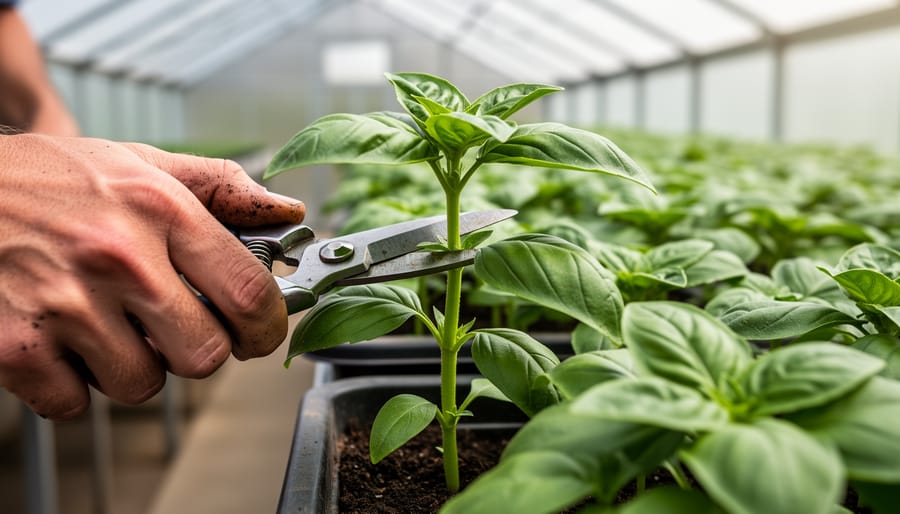
Let’s start with softwood cuttings, which come from fresh, new growth that’s still flexible. These are perfect for plants like tomatoes, basil, and many flowering perennials. Simply snip a 4-6 inch section just below a leaf node, remove the lower leaves, and pop it in moist potting mix. Tomato cuttings are famously easy – they’ll often root in just a glass of water on your windowsill!
Hardwood cuttings work differently. These come from mature, dormant stems and are ideal for roses, grapes, and many shrubs. Take them in late fall or winter when the plant is resting. Cut pencil-thick sections about 6-8 inches long, dip the bottom end in rooting hormone (this helpful powder encourages root development), and plant them in a sheltered spot outdoors or in containers.
Leaf cuttings are the specialty of succulents and plants like African violets. With succulents, you can literally place a healthy leaf on soil, and it’ll grow roots and a baby plant. It’s almost unbelievable until you see it happen!
For best results, keep your cuttings in bright, indirect light and maintain consistent moisture without waterlogging. A clear plastic bag over the pot creates a mini greenhouse effect. Within weeks, you’ll have new roots forming – your own little clonal colony taking shape!

Layering: Root Before You Cut
If you’re new to plant propagation, layering is your new best friend. This technique lets roots develop while the stem is still attached to the parent plant, giving your new clone a safety net as it establishes itself. Think of it as training wheels for plant propagation.
Air layering works beautifully for woody shrubs and fruit trees. Simply wound a section of stem about twelve inches from the tip, wrap it with moist sphagnum moss, and cover with plastic. In six to eight weeks, you’ll see roots growing right through the moss. Once they’re well-developed, cut below the root zone and pot up your new plant.
Ground layering is even simpler and perfect for blackberries, raspberries, and flexible shrubs. Bend a low branch to the ground, wound the underside lightly where it touches soil, cover with a few inches of earth, and secure with a rock or stake. The branch continues receiving nutrients from the mother plant while developing its own root system.
Why does layering boast such high success rates? Your cutting never experiences transplant shock because it stays connected until roots are fully formed. It’s nearly foolproof, making it ideal for beginners building their first clonal colony.
Stewarding Your Mother Stock for Long-Term Success
Preventing Disease Transmission in Your Clonal Line
Here’s the reality about clonal propagation: when you take cuttings from a diseased plant, you’re not just copying the good traits—you’re copying everything, including viruses, fungi, and bacterial infections. Unlike seed-grown plants that get a fresh start, clones carry forward whatever health issues the mother plant harbors. This makes disease prevention absolutely essential for maintaining a productive clonal line.
The good news? Most problems are avoidable with observation and care. Watch your mother plants closely for warning signs like stunted growth, discolored or mottled leaves, unexplained wilting, or reduced vigor compared to previous seasons. These symptoms often indicate systemic infections that will pass to every cutting you take.
Prevention starts with healthy source material. Before establishing mother stock, inspect plants thoroughly during their most vigorous growth period. Choose only specimens showing excellent health and vitality.
Once your clonal line is established, maintain strict hygiene. Sterilize pruning shears and knives between plants using rubbing alcohol or a bleach solution—it takes just seconds but prevents cross-contamination. Clean your propagation area regularly and remove any declining plant material promptly.
Even with perfect care, mother plants don’t last forever. Most productive clonal lines benefit from retirement and replacement every three to five years. Think of it as planned succession rather than failure. Start fresh stock from the healthiest cuttings before the original mother shows decline, ensuring your line stays vigorous for years to come.
Rejuvenation Pruning and Nutrient Management
Think of your mother plants as the hardworking guardians of your garden’s future. Without proper care, they can become exhausted and lose their vigor, producing weaker cuttings over time. The secret to maintaining productive clonal colonies lies in strategic pruning and thoughtful nutrient management.
Start by establishing a pruning routine that encourages fresh, healthy growth. After taking cuttings, prune your mother plants by removing about one-third of the older growth, focusing on branches that look tired or woody. This rejuvenation pruning redirects the plant’s energy into producing tender new shoots, which make the best cuttings. I like to think of it as giving your plant a refreshing haircut that leaves it feeling energized.
Timing matters too. Allow your mother plants adequate recovery periods between harvesting sessions. A good rule of thumb is waiting four to six weeks before taking more cuttings, though this varies by plant species. Watch for signs of stress like yellowing leaves or slowed growth, and give your plants extra time if needed.
Nutrient management plays an equally vital role. Mother plants work overtime producing new growth, so they need consistent feeding. Use a balanced, water-soluble fertilizer every two weeks during the growing season, and consider supplementing with compost or organic matter to build soil health. Remember, a well-fed mother plant rewards you with abundant, vigorous cuttings season after season, ensuring your clonal colony thrives for years to come.

Record-Keeping: Track Your Best Genetics
When you’re managing several clonal colonies, keeping track of your star performers becomes essential. I learned this lesson the hard way after mixing up my tomato cuttings one spring—I ended up with a whole row of plants that produced beautifully shaped but disappointingly bland fruit!
A simple labeling system saves endless frustration. Use waterproof markers on plastic tags or aluminum strips that won’t fade in the sun. For each mother plant, note the variety name, the date you established it, and any standout characteristics. Does your chocolate mint mother plant have exceptionally strong flavor? Does one rosemary cutting root faster than others? Write it down.
Consider creating a garden journal where you record which mother plants consistently produce vigorous offspring, resist disease, or deliver superior flavor and fragrance. Include photos to help identify plants at different growth stages. This information becomes invaluable when deciding which colonies deserve prime garden space and which might be retired.
Digital options work too—smartphone apps let you photograph plants with GPS tags and notes. Whatever method you choose, consistency matters more than complexity. Just like proper stewardship practices preserve seed viability, good record-keeping preserves your genetic investments and helps you continuously improve your garden’s performance year after year.
Building Your Edible Clonal Garden: Plants Worth Propagating
Ready to build your own clonal garden? Let’s explore some proven performers that practically beg to be propagated. These plants will reward your efforts with abundant harvests and the satisfaction of multiplying your garden investment.
Starting with herbs, mint stands as the champion of clonal propagation. Simply snip a 4-inch stem, remove the lower leaves, and pop it in water. Within two weeks, you’ll have roots ready for planting. The same technique works beautifully for basil, oregano, and rosemary, though rosemary prefers a bit more patience. I learned this from my neighbor Sarah, who started with one rosemary plant five years ago and now has twenty thriving throughout her garden.
Strawberries offer perhaps the most delightful introduction to clonal gardening. They produce runners naturally, doing most of the work for you. When you spot a baby plant forming at the end of a runner, simply pin it to the soil with a small rock or wire. Once rooted, snip the connection to the mother plant. Within a season, that baby becomes a productive plant capable of producing its own runners.
For vegetables, potatoes demonstrate the power of clonal reproduction spectacularly. Each potato eye contains the genetic blueprint for an entire plant. Cut your seed potatoes into chunks with at least two eyes each, let them cure overnight, and plant them in well-draining soil. One pound of seed potatoes can yield ten pounds of harvest.
Sweet potatoes follow a different path. Place a sweet potato in water, secured with toothpicks, and watch as it produces slips, which are rooted shoots. Once these slips reach 6 inches, twist them off gently and plant them directly in your garden.
Don’t overlook garlic and its cousin, walking onions. Both multiply underground through bulb division, creating new plants that maintain the exact characteristics you loved in the original. Simply separate the cloves or bulblets during their dormant period and replant.
The beauty of these plants lies not just in their ease of propagation, but in how they allow you to preserve specific flavors and characteristics you’ve come to love, creating a truly personalized garden.
Common Mistakes That Weaken Your Clonal Colonies
We’ve all been there—enthusiastically snipping away at our favorite mother plant, only to watch our clonal colony struggle or decline. The good news? Most mistakes are completely reversible, and each setback teaches us something valuable about plant care.
One of the most common pitfalls is taking too many cuttings at once. I learned this the hard way when I got overly excited about sharing my prized tomato variety with friends. After removing fifteen cuttings in one session, my mother plant looked exhausted and took months to recover. A healthier approach is to limit yourself to removing no more than one-third of the plant’s growth at any time. This gives your stock plant enough energy reserves to bounce back quickly and continue thriving.
Another frequent mistake is propagating from plants that aren’t in peak health. It’s tempting to think you can “save” a struggling plant by taking cuttings, but you’re actually just multiplying problems. Disease, pest damage, and nutrient deficiencies all transfer to your new clones. Always select the healthiest, most vigorous growth for propagation—those strong shoots with vibrant color and robust structure.
Environmental stress often goes unnoticed until it’s too late. Mother plants need consistent care: adequate water, proper nutrition, and suitable lighting. When these basics slip, your entire clonal colony suffers reduced vigor and disease resistance.
Finally, don’t forget that even the best mother plants need refreshing. After several seasons of continuous propagation, consider starting fresh from a particularly strong offspring. This practice, called cycling your stock, maintains genetic expression at its peak and prevents the gradual decline that comes with aging plant tissue. Think of it as passing the torch to the next generation of excellence.
When you propagate plants through clonal methods, you’re participating in a gardening tradition that spans thousands of years. Ancient orchardists preserved their finest fruit trees through grafting, while monastery gardeners carefully maintained herb collections through division and cuttings. Today, you’re continuing this remarkable legacy of plant stewardship, but with the added benefits of saving money and keeping your favorite varieties alive for years to come.
The beauty of clonal propagation is that you don’t need to master everything at once. Start with just one or two mother plants that you truly love. Maybe it’s that fragrant lavender you bought at the farmers market or the stunning coleus that brightens your patio. Choose something that naturally grows vigorously and responds well to pruning. As you take cuttings or divide these plants, you’ll develop an intuitive understanding of timing, technique, and plant behavior.
Building confidence comes from small successes. Each rooted cutting and thriving division teaches you something new about plant growth and resilience. Before long, you’ll find yourself sharing plants with friends, filling entire borders from a single parent, and preserving irreplaceable varieties that might otherwise be lost to time.