Every time you plant a heritage tomato or save seeds from your grandmother’s favorite beans, you’re becoming a living library. Heritage plants—also called heirloom varieties—are cultivars passed down through generations, often for 50 years or more, preserved through careful seed saving rather than commercial production. These aren’t just pretty relics gathering dust in seed catalogs. They’re genetically diverse treasures that carry flavors modern hybrids can’t touch, stories that connect us to our ancestors, and resilience our food system desperately needs.
Unlike the uniform varieties bred for grocery store shelves, heritage plants offer astonishing diversity. Think tomatoes that taste like summer itself, beans in colors you’ve never imagined, and flowers your great-grandmother tended in her garden. But here’s what makes them truly special: they’re open-pollinated, meaning you can save their seeds and grow the exact same plant next year. That simple act makes you part of a preservation chain stretching back centuries.
The urgency is real. We’ve lost roughly 75% of agricultural plant diversity in the past century as industrial farming favored a handful of commercial varieties. When we lose these plants, we lose genetic traits that could help future gardens weather droughts, resist new diseases, or simply bring joy through extraordinary beauty and taste.
Growing heritage plants isn’t complicated or reserved for expert gardeners. It’s actually one of the most rewarding ways to garden with purpose, and you can start this season.
What Makes a Plant ‘Heritage’?

The Story Behind the Seeds
Every heritage plant holds a story, and that’s what makes them truly special beyond their beauty or flavor. These aren’t just seeds you pick up at any garden center—they’re living links to the past, carefully preserved and passed down through families and communities. Each variety carries memories of the hands that planted them, the gardens where they thrived, and the meals they graced.
Take the Cherokee Purple tomato, for example. This stunning, dusky-rose heirloom has been grown by Cherokee families for well over a century, surviving forced relocations and countless challenges. When you plant these seeds today, you’re not just growing a delicious tomato with complex, sweet flavor—you’re helping preserve a piece of Native American agricultural heritage and continuing a tradition that might otherwise be lost to time.
These stories matter because they remind us that gardening connects us to something larger than ourselves. When a grandmother shares her mother’s bean seeds with you, she’s entrusting you with family history. You become part of that story, and when you save those seeds to share with others, you’re ensuring it continues for future generations.
Why Heritage Plants Are Disappearing (And Why It Matters to You)
What We Lose When Heritage Plants Vanish
When a heritage variety disappears, we lose far more than just another plant. Imagine never tasting the intense sweetness of Brandywine tomatoes or the complex, nutty flavor of Scarlet Runner beans. These aren’t experiences you can recreate with modern hybrids bred primarily for shipping durability and shelf life.
Beyond flavor, we’re losing plants that our grandparents relied on because they thrived in specific climates and conditions. That drought-tolerant corn variety or frost-resistant lettuce? They carry genetic traits that took generations to develop through careful selection. As our climate changes, these adaptable characteristics become increasingly valuable for future food security.
I spoke with Master Gardener Ellen Rodriguez, who’s been saving heritage plants for twenty years. She reminded me that genetic diversity is our insurance policy. When we lose varieties, we narrow the gene pool, making our food supply more vulnerable to diseases and pests. Modern breeding programs actually need these old varieties to develop resilient new crops.
There’s also something deeply personal at stake. Many heritage plants carry family stories and cultural traditions. That bean variety your grandmother grew connects you to her garden, her table, and her world. When these plants vanish, those tangible links to our past disappear too. As home gardeners, we have the power to protect both the practical benefits and the precious memories these plants represent.
The Beautiful Benefits of Growing Heritage Plants
Flavor That Modern Hybrids Can’t Match
If you’ve ever bitten into a supermarket tomato and felt disappointed, you’re not alone. Many modern hybrids have been bred for shipping durability and uniform appearance rather than taste. Heritage plants tell a different story entirely.
I recently spoke with Maria Chen, a Master Gardener who grows fifty heritage varieties in her backyard. “When I served Brandywine tomatoes at a dinner party, my guests couldn’t stop talking about them,” she shared. “One friend said it tasted like what tomatoes were supposed to taste like, before she’d forgotten.”
The difference comes down to breeding priorities. While commercial varieties focus on shelf life, edible heritage varieties were selected by generations of gardeners purely for flavor. Cherokee Purple tomatoes offer rich, complex sweetness. Moon and Stars watermelon delivers intense, old-fashioned melon flavor that modern types can’t replicate.
This isn’t just nostalgia talking. Heritage varieties often contain higher levels of flavor compounds that have been inadvertently bred out of modern plants. When you grow these treasures yourself, you’re not just preserving history—you’re treating your taste buds to something genuinely special.

Plants Already Adapted to Your Growing Conditions
Here’s the wonderful thing about heritage plants: they’ve already passed the ultimate test in your region. While modern hybrids are often bred in controlled greenhouse conditions and may struggle when facing your particular climate challenges, heritage varieties have been thriving in specific areas for generations. They’ve weathered countless seasons of drought, humidity, frost, or heat waves, naturally selecting for resilience.
Think of it this way – that heirloom tomato your great-grandmother grew successfully in Georgia summers already knows how to handle the heat and humidity. You’re not experimenting with an untested variety; you’re working with a plant that has a proven track record in your exact growing conditions.
This regional adaptation can make your gardening experience significantly easier, especially if you’re just starting out. Heritage plants adapted to your area often require less coddling, fewer amendments, and less troubleshooting than varieties bred elsewhere. They know when to germinate, how much water they need, and how to handle local pests. You’re essentially starting with plants that already speak your garden’s language, giving you a head start toward a successful harvest.
How to Start Your Own Heritage Plant Collection
Best Heritage Plants for Beginners
Ready to dip your toes into heritage gardening? I’ve got some wonderfully forgiving varieties that’ll set you up for success, even if you’ve never saved a seed in your life.
For vegetables, start with Scarlet Runner beans. These vigorous climbers practically grow themselves, producing beautiful red flowers followed by tasty beans. They’re incredibly hardy and will keep producing all summer long. Another fantastic choice is Grandpa Admire’s lettuce, a loose-leaf variety that’s heat-tolerant and doesn’t mind if you forget to water occasionally. Simply snip what you need for salads, and it keeps growing back.
In the flower department, you can’t go wrong with Grandpa Ott’s morning glory. This stunning deep purple bloomer was brought from Bavaria in the 1880s and thrives on benign neglect. Just give it something to climb, and you’ll have a gorgeous display by midsummer. The seeds are easy to collect and share with friends too.
For herbs, German chamomile is wonderfully low-maintenance and self-sows readily, meaning it’ll come back year after year without any effort on your part. Plus, there’s nothing quite like harvesting your own flowers for evening tea.
Each of these varieties has survived for generations because they’re reliable performers. They’re forgiving of beginner mistakes, adapt to various conditions, and reward you with abundant harvests. Best of all, saving their seeds is straightforward, making them perfect for your first steps into preservation work.
Saving Seeds: Your Role in Plant Preservation
The Simple Seeds to Start With
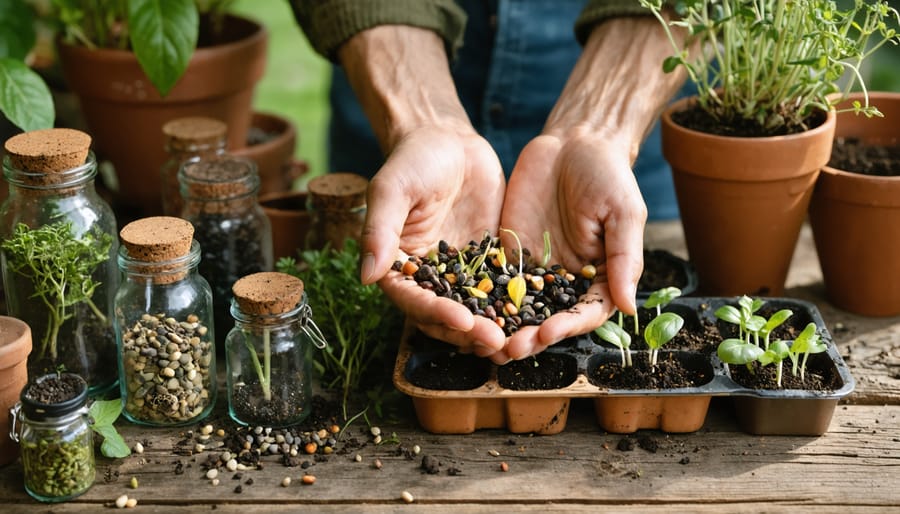
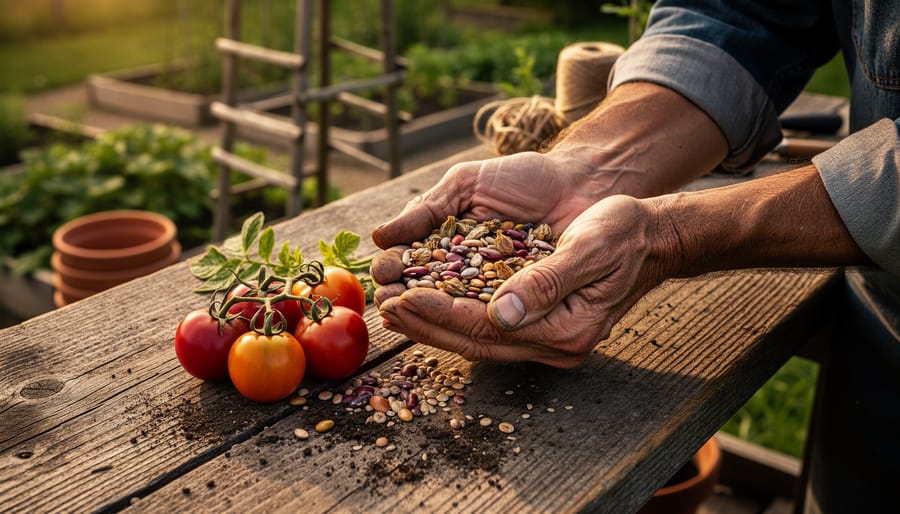
If you’re new to seed saving, starting with self-pollinating plants will set you up for success. Tomatoes are the perfect beginner choice because they pollinate themselves before the flowers even open, making it nearly impossible to get crossed varieties. Simply scoop seeds from a ripe tomato, ferment them in water for a few days, rinse, and dry. Beans and peas are equally forgiving since their flowers naturally self-pollinate. Let a few pods mature completely on the plant until they’re dry and papery, then shell them out and store in a cool, dry place.
Lettuce might surprise you as an easy option. While it does eventually bolt and flower, the seeds are straightforward to collect once the fluffy seed heads form. Just shake them into a paper bag when they’re fully dry. These four plants share something wonderful: they’re nearly foolproof for beginners and incredibly rewarding. Within one growing season, you’ll have seeds ready to plant next year, connecting you to generations of gardeners who’ve saved these same varieties. Start with just one or two types, get comfortable with the process, and you’ll soon be branching out to more adventurous seed-saving projects.

Connecting With the Heritage Plant Community
You don’t have to preserve heritage plants alone. One of the most rewarding aspects of growing these treasures is connecting with a vibrant, passionate community of gardeners who share your commitment to keeping these varieties alive.
Seed exchanges offer a wonderful entry point into this world. Organizations like Seed Savers Exchange maintain extensive networks where members trade seeds, share growing tips, and celebrate successful harvests. By joining, you’ll gain access to thousands of rare varieties while contributing your own saved seeds to help others. Many regional groups focus on plants particularly suited to local climates, making them invaluable resources for finding varieties that thrive in your area.
Online communities have made heritage plant preservation more accessible than ever. Facebook groups, Reddit forums, and specialized websites connect growers across the globe. You’ll find generous gardeners eager to answer questions, share success stories, and sometimes even mail you seeds to try. These digital spaces buzz with excitement during planting season and offer support when challenges arise.
Don’t overlook your local garden clubs either. Many have dedicated seed libraries where members can borrow seeds, grow them out, and return fresh seeds for others. It’s like a lending library, but for genetic diversity.
Sarah Martinez, a longtime seed saver from Vermont, puts it beautifully: “When someone plants seeds I’ve saved, it feels like we’re both part of something bigger than our individual gardens. We’re keeping these plants alive for future generations together.”
Contributing to seed banks represents another meaningful way to participate. Community seed banks and preservation organizations always welcome well-documented, true-to-type seeds. Your carefully saved tomato or bean seeds might become someone’s new favorite variety.
Starting small works perfectly. Join one organization, attend a seed swap, or simply connect with fellow heritage plant enthusiasts online. You’ll quickly discover that preserving these plants creates friendships as enduring as the varieties themselves.

Remember that grandmother’s garden we talked about at the beginning? The one bursting with tomatoes that tasted like summer itself and beans that had been passed down through generations? That garden didn’t require a degree in horticulture or acres of land. It simply needed someone who cared enough to plant a seed and save a few for next year.
That someone can be you.
Heritage plant preservation might sound like work reserved for botanical gardens and seed banks, but the truth is, every single gardener who grows an heirloom variety becomes part of this living legacy. You don’t need to save dozens of varieties or master complex preservation techniques right away. Start with just one heritage plant that excites you. Maybe it’s a Cherokee Purple tomato because you love the story behind its name, or perhaps it’s a variety your neighbor grew up eating in another country.
Growing that one plant connects you to gardeners who came before and ensures it will be there for those who follow. You become a link in an unbroken chain stretching back through time and forward into the future. And here’s the beautiful part: the more you grow these plants, the more stories you’ll discover, the more seeds you’ll want to save, and the more connected you’ll feel to this remarkable community of preservation.
Your garden can be part of history. Why not start today?