Check your property deed or contact your local utility company to locate the exact boundaries of your easement—this single step prevents costly mistakes and ensures every planting decision you make is informed and compliant.
That strip of land running through your yard isn’t just frustrating dead space. Utility right of ways exist to give companies legal access to underground pipes, cables, and overhead lines, but here’s the good news: you can absolutely transform these areas into beautiful, functional garden spaces when you choose the right plants and follow simple guidelines.
The key is understanding what utility companies actually need. Most require vegetation to remain under three feet tall near underground utilities and well clear of overhead lines. They also need unobstructed access, meaning your plantings might be temporarily disturbed during maintenance. This doesn’t mean you’re stuck with bare dirt or patchy grass forever.
Think shallow-rooted perennials, low-growing groundcovers, and ornamental grasses that won’t interfere with buried infrastructure. Picture a thriving meadow of native wildflowers that actually improves with occasional mowing, or a carpet of creeping thyme releasing fragrance with every step. These aren’t compromises; they’re opportunities to create resilient, low-maintenance gardens that comply with regulations while adding genuine beauty to your property.
Whether you’re dealing with a narrow strip along your driveway or a wide swath cutting through your backyard, you’ll discover specific plant recommendations, design strategies, and maintenance approaches that work with utility requirements rather than against them. Your easement can become one of your garden’s most dynamic features.
Understanding Utility Easements and Rights-of-Way
If you’ve ever wondered why there’s a strip of land on your property where you can’t build a fence or plant trees, you’re likely dealing with a utility easement or right-of-way. Don’t worry—you’re not alone, and understanding these designations doesn’t require a law degree!
Think of a utility easement as a special permission slip that grants utility companies legal access to a specific portion of your property. You still own the land, which is the important part, but the utility company has the right to use that space for installing, maintaining, and repairing their infrastructure like power lines, gas pipes, water mains, or telecommunication cables. It’s essentially a shared arrangement that ensures our communities stay connected and functional.
Rights-of-way are quite similar, though the term is often used for larger areas, particularly those involving public access like sidewalks or streets. In practical gardening terms, the difference between an easement and a right-of-way isn’t something you’ll need to lose sleep over. What matters most is understanding what you can and cannot do in these designated spaces.
Utility companies typically have the right to clear vegetation that interferes with their equipment, and they can access these areas with vehicles and crews whenever maintenance is needed. This might happen with little notice, which understandably frustrates many gardeners who’ve invested time and love into beautifying these spaces.
The good news? These easements aren’t gardening dead zones. Once you know where they are—usually marked on your property deed or plat map—you can make informed choices about what to plant. The key is selecting plants that won’t interfere with utilities and can bounce back if crews need to access the area. Many creative gardeners have transformed these challenging spaces into beautiful, low-maintenance gardens that comply with regulations while adding curb appeal to their properties.

Why Landscaping Rules Exist (And Why They Matter)
I used to wonder why my neighbor’s beautiful flowering shrubs were removed overnight by utility workers – it seemed so unfair! But after talking with Jim Henderson, a utility maintenance supervisor with 20 years of experience, I learned there’s real logic behind these rules that keeps all of us safe.
The most critical reason? Access. When a water main bursts at 2 AM or underground power cables fail during a storm, utility crews need immediate, unobstructed access to repair lines. Every minute counts when water is flooding basements or neighborhoods are without power. Those beautiful hedges and deep-rooted trees you might plant could delay emergency repairs by hours, affecting dozens or even hundreds of households.
Underground utility safety is another crucial factor. Most of us don’t realize just how much infrastructure lies beneath our feet – electrical cables, gas lines, water pipes, telecommunications cables, and more. Tree and shrub roots can wrap around these lines, causing damage over time. Even worse, when roots penetrate protective casings, they create safety hazards like gas leaks or electrical shorts. I remember Jim telling me about a maple tree whose roots had completely encased a gas line, creating a dangerous situation that took days to repair safely.
Overhead clearance matters too, especially near power lines. Trees growing too tall can interfere with electrical transmission, causing outages or even fire hazards. In fact, vegetation contact with power lines is a leading cause of local power failures.
Understanding these practical reasons transformed my perspective entirely. These aren’t arbitrary rules designed to frustrate gardeners – they’re sensible guidelines that protect our communities, ensure reliable utility service, and keep maintenance workers safe while they’re helping us.
Know Before You Grow: Finding Your Local Ordinances
Before you break ground in that utility easement area, taking time to understand your specific local regulations can save you from heartache down the road. Trust me, it’s much easier to check now than to watch your carefully tended garden bed get torn up during unexpected maintenance work.
Start with your local utility companies. Call each one that services your property, including electric, gas, water, and telecommunications providers. When you reach them, ask three key questions: Where exactly are the easement boundaries on my property? What are your specific restrictions for plantings in these areas? How often do you typically access these easements for maintenance? Most utility companies have dedicated departments for these inquiries and can often email you maps showing precise easement locations.
Next, contact your city or county planning department. They maintain official records of all easements and can provide documentation showing setback requirements and any local ordinances that apply. Request copies of your property’s plat map and any recorded easement agreements. These documents spell out legal restrictions you’ll need to follow.
Don’t forget your homeowners association if you have one. Many HOAs have additional landscaping guidelines that layer on top of utility company and municipal requirements.
Here’s a practical tip from my own experience: when gathering this information, create a simple folder (digital or physical) with all your documentation. Include contact names and phone numbers for each utility representative you spoke with. This becomes invaluable if questions arise later or if you need to prove you followed proper procedures.
Finally, consider scheduling a property walk-through with utility representatives. Many companies offer this free service and can physically show you where underground lines run and what clearance heights they need for overhead lines. Seeing these boundaries in person makes planning your garden layout so much clearer than trying to interpret maps alone.
What You Can Safely Plant on Utility Easements
Ground Covers and Low-Growing Plants
Ground covers and low-growing plants are your best friends when landscaping utility right of ways. These resilient options stay under the critical height limits while creating a lush, finished look that transforms eyesores into attractive garden features.
For sunny spots, creeping thyme is a winner. This aromatic herb spreads quickly, stays under 4 inches tall, and actually releases a pleasant fragrance when stepped on by utility workers. It’s also surprisingly drought-tolerant once established. Another excellent choice is sedums like ‘Angelina’ or ‘Dragon’s Blood,’ which offer year-round color and thrive in less-than-ideal conditions.
If your right of way gets more shade, consider ajuga or sweet woodruff. Ajuga produces lovely purple flower spikes in spring while forming a dense mat that crowds out weeds. I’ve seen it handle occasional foot traffic beautifully in my own garden.
For areas that need to handle regular walking, creeping phlox and hardy ice plant are exceptional. They’re both tougher than they look and recover quickly from disturbance. Native options like Pennsylvania sedge or blue-eyed grass work wonderfully too, providing that natural meadow aesthetic while supporting local pollinators.
The real advantage of ground covers is their quick recovery time. Even if utility crews need to dig, these plants typically bounce back within a season or two. Many also spread generously, so you can start small and let them fill in naturally, keeping your initial investment modest.

Shallow-Rooted Flowers and Ornamental Grasses
When landscaping utility right of ways, shallow-rooted flowers and ornamental grasses offer the perfect combination of beauty and practicality. These plants won’t interfere with underground lines, and they’re easy to move if utility work becomes necessary.
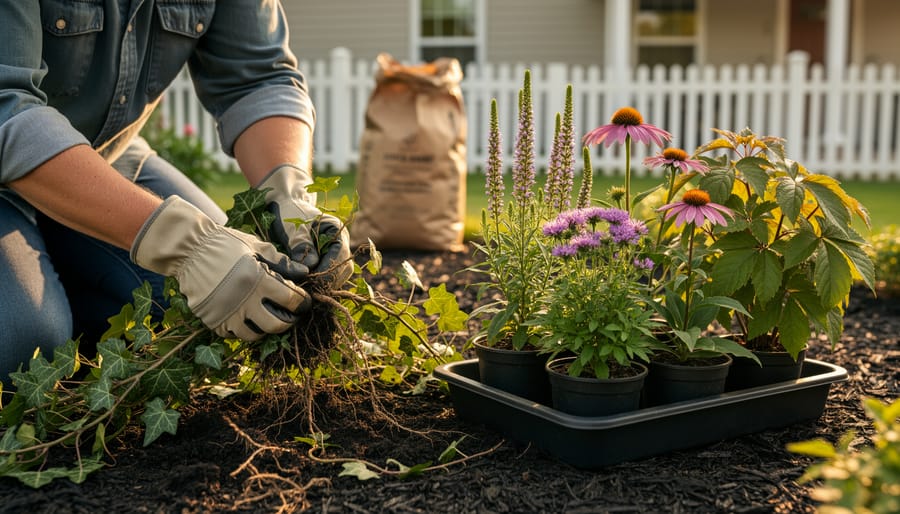
For sunny easements, consider black-eyed Susans (Rudbeckia hirta), which grow 18-24 inches tall with cheerful yellow blooms from summer through fall. Their fibrous roots stay in the top 6-8 inches of soil, making them ideal for areas above utilities. Coneflowers (Echinacea purpurea) work equally well, attracting pollinators while maintaining a shallow root profile. The cultivar ‘PowWow Wild Berry’ is particularly compact and resilient.
Ornamental grasses add movement and texture without deep roots. Blue fescue (Festuca glauca) forms tidy clumps only 6-12 inches tall with roots that rarely extend beyond 8 inches deep. For taller interest, try feather reed grass (Calamagrostis x acutiflora ‘Karl Foerster’), which reaches 4-5 feet but maintains shallow, non-spreading roots perfect for easement areas.
Shade-tolerant options include coral bells (Heuchera), which offer colorful foliage year-round and roots that stay near the surface. The cultivar ‘Palace Purple’ is particularly hardy and adds dramatic burgundy tones to shaded easements.
A helpful tip: plant these shallow-rooted beauties in groupings rather than rows. This creates natural-looking drifts that are easier to work around during maintenance, and if one section needs temporary removal, your garden won’t look like it’s missing teeth. Plus, these plants typically transplant easily, giving you flexibility for future adjustments.
Container Gardens and Moveable Features
One of the smartest solutions for utility right of ways is embracing portability. Container gardens offer incredible flexibility, allowing you to create beautiful displays that can be moved aside in minutes when utility crews need access.
Think beyond traditional terra cotta pots. Large decorative containers on casters make relocating heavy plantings effortless. I once interviewed a gardener in Illinois who planted stunning ornamental grasses and perennials in wheeled half-barrel planters along her easement. When crews needed to dig, she simply rolled everything to her patio, then moved them back when work finished.
Raised beds on legs are another brilliant option. These waist-high planters sit above ground without penetrating the soil, keeping roots away from underground utilities while creating accessible growing spaces. They’re perfect for herbs, salad greens, and shallow-rooted flowers. Many models fold flat for easy storage during maintenance periods.
Consider creating a modular garden system using lightweight containers you can arrange and rearrange as needed. Group several matching pots of varying heights for visual interest, or use long rectangular planters to define pathways. Fill them with colorful annuals, compact shrubs, or even small vegetable gardens.
Portable trellises and obelisks add vertical interest without permanent installation. These freestanding structures support climbing plants and can be lifted and moved in sections. Even birdbaths and garden art on stable bases rather than permanent footings keep your easement attractive while respecting access requirements.
The beauty of moveable features is they’re temporary by design, giving you peace of mind that your investment won’t be destroyed during routine maintenance.

Plants and Features to Avoid
Understanding what to avoid planting in utility right of ways is just as important as knowing what you can plant. Think of it this way: you’re being a good neighbor to both your utility company and your future self by steering clear of these problem plants and features.
Trees are the main concern in these areas. Any tree species that grows taller than 15 feet at maturity should be planted well away from utility easements. This includes beloved shade trees like maples, oaks, and sycamores. Even smaller ornamental trees can become problematic if their mature height reaches power lines or their root systems interfere with underground utilities. I’ve spoken with several utility arborists over the years, and they consistently emphasize that the most common violation they encounter is homeowners planting young saplings without considering their eventual size.
Deep-rooted shrubs also make the avoid list. Plants with aggressive root systems like lilacs, butterfly bushes, and some viburnums can damage underground cables and pipes. The same goes for bamboo, which can spread rapidly and create a maintenance nightmare for utility workers who need clear access.
Permanent structures and hardscaping deserve careful consideration too. Retaining walls, large boulders, concrete patios, storage sheds, and decorative fences might seem harmless, but they can prevent utility crews from accessing lines during emergencies. One gardener shared with me how her beautiful stone path had to be removed during a gas line repair, resulting in unexpected costs and heartbreak.
If utility workers do need to remove non-compliant plantings or structures, you typically won’t receive compensation. They have legal right of access, and maintaining compliance protects your investment. The good news? There are plenty of beautiful alternatives that work within these guidelines.
Real Gardener Success Story: Transforming an Eyesore Easement
When Sarah Chen bought her suburban home three years ago, she inherited what she calls “the ugliest strip of property you can imagine”—a 20-foot-wide utility easement running along her front yard. The power company had cleared it years before, leaving patchy grass, exposed soil, and a tangled mess of invasive vines.
“I knew I couldn’t plant trees or build anything permanent, but I also couldn’t stand looking at that eyesore every day,” Sarah told me during our recent conversation. “I started researching what I could actually do within the rules, and honestly, it felt overwhelming at first.”
Sarah’s breakthrough came after calling her utility company and learning the specific clearance requirements. “They needed 15 feet of vertical clearance and access for their trucks, but they were actually really helpful about explaining what would work,” she says. Armed with this information, she developed a game plan focusing on low-growing perennials and native grasses.
Her plant choices included black-eyed Susans, coreopsis, and prairie dropseed grass—all staying under 3 feet tall. “I went with natives because they’re tough, look beautiful together, and don’t need much fussing,” Sarah explains. She also added creeping phlox along the edges for early spring color.
The biggest challenge? Patience. “I wanted instant results, but these plants needed time to establish. By year two, though, it really came together.”
Sarah’s advice for others tackling similar situations is refreshingly practical: “Start by making that phone call to your utility company. Get everything in writing about what’s allowed. Then choose plants that naturally stay within those limits rather than fighting constant pruning battles.”
Her easement now stops neighbors in their tracks. “People ask me for plant recommendations all the time,” she laughs. “What was once my property’s worst feature became a cottage garden I’m genuinely proud of—and if the utility company needs access, nothing’s damaged permanently. It’s truly a win-win situation.”
What Happens If Utility Work Is Needed
Let’s be honest—having utility workers arrive at your property can feel unsettling, especially when you’ve invested time creating a beautiful garden. But with proper preparation, you can minimize disruption and help your landscape bounce back quickly.
First, document everything. Before any work begins, take detailed photographs of your entire utility easement area from multiple angles. Include close-ups of individual plants, hardscape features, and the overall layout. Note the location and estimated value of mature plants or any special varieties. This documentation proves invaluable if you need to discuss compensation with your utility company.
When you receive notice of upcoming work, contact the utility company immediately. Ask specific questions: What’s the scope of work? Which areas will be affected? How long will crews be on-site? Some companies offer to work around certain plantings if you communicate early. I’ve spoken with gardeners who successfully saved favorite perennials simply by marking them clearly and having a conversation with the crew supervisor.
Consider transplanting valuable or sentimental plants temporarily. Move them to pots or another garden area until work concludes. This works particularly well for smaller perennials, bulbs, and young shrubs that haven’t developed extensive root systems.
After utility work finishes, assess the damage promptly. Remove any debris, test your soil—it’s often compacted after heavy equipment passes through—and amend it with compost before replanting. Many utility companies have policies regarding landscape restoration, though coverage varies significantly. Document all damage with photos and contact the company about their compensation process.
Remember, easement areas will always carry this risk, which is why choosing resilient, easily replaceable plants makes practical sense for these spaces.
Creating Beauty Within Boundaries
Here’s the truth: easement landscaping isn’t a limitation—it’s an invitation to get creative. Some of the most charming gardens I’ve seen have been thoughtfully designed utility right of ways, where low-maintenance perennials dance in the breeze and native grasses create year-round interest without causing headaches for utility crews.
Think of your easement as a blank canvas that happens to come with a few practical guidelines. With shallow-rooted beauties like sedum groundcovers, cheerful black-eyed Susans, or graceful switchgrass, these areas can actually become the stars of your landscape rather than problem zones you’re trying to hide.
The key is shifting your perspective from “what I can’t plant” to “what thrives here naturally.” Many gardeners discover that their easement gardens require less work than traditional beds since they’re designed around resilient, low-maintenance plants that utility companies won’t object to.
I’d love to hear about your own easement gardening wins! What plants have worked beautifully in your utility right of way? Have you discovered any creative solutions that keep both you and your utility company happy? Share your experiences—your insights might inspire fellow gardeners facing similar challenges.