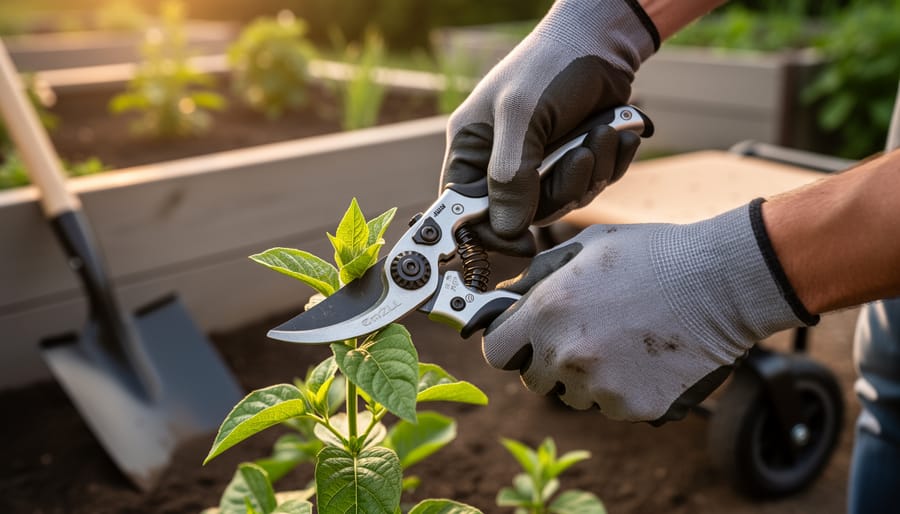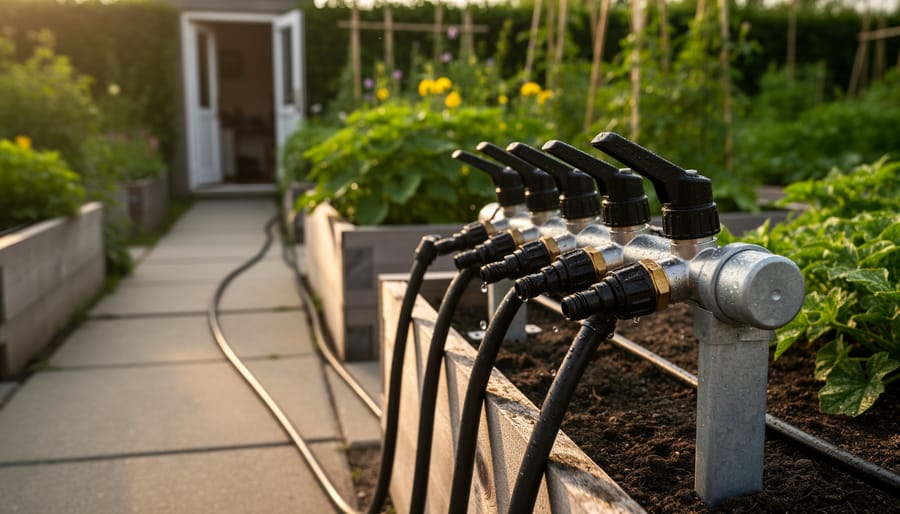
Install drip irrigation systems with timer controls to eliminate daily watering tasks—these automated setups deliver water directly to plant roots while you manage everything from a comfortable seated position or even from indoors. Position control valves at waist height near garden entrances so you never need to bend, stretch, or navigate through planted areas to adjust water flow.
Choose soaker hoses over traditional sprinklers for raised beds and container gardens, as they require minimal physical effort to set up and can remain in place throughout the growing season. Thread them through your planting areas once, connect to an outdoor timer, and you’re done—no more lifting heavy watering cans or wrestling with spray nozzles.
Create irrigation zones that match your mobility patterns by clustering high-maintenance plants closest to water sources and pathways. This strategic accessible garden design reduces the physical demands of maintaining your irrigation system while ensuring every plant gets adequate moisture.
Convert standard hose connections to quick-release couplers with ergonomic lever handles instead of twist-on fittings. These adaptive connectors require significantly less hand strength and dexterity, making seasonal system adjustments manageable for gardeners with arthritis, limited grip strength, or reduced fine motor control.
Whether you’re gardening with physical limitations yourself or designing spaces for others, modern irrigation technology removes traditional barriers between you and a thriving garden. The right combination of automation, thoughtful placement, and adaptive equipment transforms watering from a daily physical challenge into a simple, sustainable routine.
Why Traditional Watering Methods Fall Short
If you’ve ever struggled with a kinked garden hose or wrestled with a stubborn spigot, you’re not alone. Traditional watering methods, while familiar, create unexpected obstacles that can turn garden care from a joy into a physical challenge—or worse, make it feel impossible.
Consider the standard garden hose. Even when empty, most hoses weigh several pounds, and once filled with water, they become heavy, unwieldy snakes that require considerable upper body strength to drag across your garden beds. The constant pulling, lifting, and repositioning puts strain on shoulders, backs, and wrists. For gardeners managing arthritis, limited mobility, or recovering from injury, these movements can be painful or simply beyond reach.
Then there’s the bending. Conventional watering demands that you crouch, kneel, or bend repeatedly to reach plants at different heights. Ground-level beds mean getting down low—and more importantly, getting back up again. This repetitive motion becomes exhausting quickly and can discourage you from watering as thoroughly or as often as your plants need.
Valve controls present another frustration. Those traditional twist knobs and faucet handles often require significant grip strength and fine motor control to operate. Stiff, corroded valves can be nearly impossible to turn, especially when hands are affected by conditions like carpal tunnel syndrome or reduced dexterity. Even reaching outdoor faucets positioned too high or too low adds an unnecessary layer of difficulty.
I spoke with Patricia, a longtime gardener who developed rheumatoid arthritis in her fifties. “I’d avoid watering until my tomatoes were visibly wilting,” she admitted. “It wasn’t laziness—I just dreaded the physical battle with that hose.” Her experience echoes what many gardeners face but rarely discuss openly.
The good news? These barriers aren’t inevitable. Just as adaptive garden tools have revolutionized other gardening tasks, accessible irrigation solutions can transform watering from a dreaded chore into an effortless routine.
Raised Bed Irrigation: Bringing Water to a Comfortable Height

Drip Systems for Raised Beds
Raised bed gardens pair beautifully with drip irrigation systems, creating a watering setup that’s both efficient and incredibly easy to manage. I’ve found that drip systems designed for raised beds are among the most user-friendly options available, perfect for gardeners who want to simplify their watering routine.
Most raised bed drip kits come with everything you need in one package: tubing, emitters, connectors, and stakes. The best part? Installation typically takes less than an hour, even for beginners. Simply lay the mainline tubing around your bed’s perimeter, then connect smaller drip lines that run across your plants. The emitters deliver water directly to root zones, reducing waste and keeping foliage dry, which helps prevent disease.
Adding a battery-operated timer transforms your system into a hands-free solution. These timers require no electrical outlet and can be programmed to water at optimal times, like early morning. I spoke with garden designer Maria Chen, who works extensively with adaptive gardens, and she emphasized how timers eliminate the physical strain of daily watering while ensuring plants receive consistent moisture.
Maintenance is straightforward: flush your lines monthly by removing the end cap and running water through, and check emitters occasionally to ensure they’re not clogged. Before winter, drain the system completely to prevent freeze damage. This simple setup gives you more time to enjoy your garden rather than laboring over watering tasks.
Soaker Hose Alternatives
Soaker hoses deserve a special mention when it comes to accessible irrigation in raised beds. I’ve found these humble tools to be game-changers for gardeners who find traditional watering challenging.
The beauty of soaker hoses lies in their simplicity. Unlike complex drip systems, you simply lay them along your plant rows, connect to a standard outdoor faucet, and turn on the water. The porous material allows water to seep out slowly and steadily, delivering moisture directly to plant roots where it’s needed most. No bending, reaching, or heavy lifting required.
For adaptive gardens, soaker hoses offer particular advantages. They operate effectively on low water pressure, meaning even gardeners with limited hand strength can manage the controls. The initial setup takes minimal physical effort—you can often position hoses while seated at bed height. Once installed, they stay in place throughout the season, buried under mulch if desired.
I spoke with Maria Chen, an occupational therapist who designs therapeutic gardens, and she emphasizes this point: “Soaker hoses eliminate the repetitive arm movements that cause fatigue and pain for many gardeners. Set a timer, and the system practically runs itself.”
The affordability factor shouldn’t be overlooked either. Soaker hoses cost considerably less than automated drip systems, making accessible irrigation achievable on modest budgets.
Automated Irrigation Systems: Set It and Forget It
Simple Timer Systems for Beginners
If you’re new to irrigation automation, battery-operated hose timers are your perfect starting point. These wonderfully simple devices screw directly onto any standard outdoor faucet, requiring no special tools or plumbing knowledge whatsoever. I remember installing my first one in about five minutes, and it transformed my morning routine instantly.
The basic models feature a straightforward dial or digital display where you set watering duration and frequency. Want your tomatoes watered for 15 minutes every evening at 6 PM? Simply program it once, and you’re done. Most run on standard AA batteries that last an entire season, making them ideal for gardeners who find bending, lifting heavy watering cans, or standing with a hose uncomfortable or challenging.
What makes these timers particularly appealing for accessible gardening is their independence from electrical outlets. You can place them anywhere your garden hose reaches, whether that’s a raised bed station near your patio or a container garden on your deck. Popular brands like Orbit and Raindrip offer models ranging from $20 to $50, with features like rain delay buttons and multiple daily watering cycles.
For gardeners with arthritis or limited hand strength, look for models with larger dials and easy-grip knobs rather than tiny buttons. The manual controls are generally more reliable and easier to adjust than complex digital interfaces when you’re just getting started with automated watering.

Smart Controllers for Maximum Independence
Technology has truly transformed accessible gardening, and nowhere is this more evident than with smart irrigation controllers. These remarkable devices put complete watering control right at your fingertips, operating through simple smartphone or tablet apps that anyone can manage from the comfort of their favorite chair.
I recently spoke with Janet Martinez, a master gardener who uses a wheelchair, and she shared how these systems changed everything for her. “I used to rely on family members to adjust my watering schedule,” she explained. “Now I do it all myself, even checking soil moisture levels while I’m having my morning coffee.”
Most smart controllers connect to your home WiFi and integrate seamlessly with existing irrigation lines. The apps are designed with user-friendly interfaces featuring large buttons and clear visuals, making them accessible for people with various vision or dexterity challenges. You can create custom watering zones, set schedules, and make instant adjustments without ever stepping outside.
What makes these systems especially valuable is their ability to respond to weather conditions automatically. Many connect to local weather stations, skipping watering sessions when rain is forecast and adjusting duration based on temperature and humidity. This not only saves water but eliminates the worry of forgetting to turn systems on or off.
Installation typically doesn’t require replumbing your entire garden. Most units replace your existing timer at the spigot or valve box. While some people hire professionals, many find the setup straightforward enough to manage independently or with minimal assistance. The investment ranges from moderately priced basic models to feature-rich systems, making independence achievable at various budget levels.
Accessible Hose Management Solutions
Lightweight Hose Options
Traditional garden hoses can be surprisingly heavy and awkward to manage, especially when you’re dealing with mobility challenges or limited strength. I discovered this firsthand after a shoulder injury left me struggling with my old rubber hose. That’s when I explored lighter alternatives that have truly transformed my watering routine.
Expandable hoses are game-changers for accessible gardening. These clever designs start compact and lightweight, then expand to full length when water flows through them. When you’re done, they shrink back down for easy storage. Most weigh less than three pounds and eliminate the wrestling match of coiling traditional hoses. Look for models with protective outer sleeves to prevent leaks and extend their lifespan.
Polyurethane and hybrid polymer hoses offer another excellent option. They’re significantly lighter than rubber while remaining durable enough for daily use. Many feature kink-resistant designs, which means less frustration and fewer trips back and forth to untangle stubborn loops.
For those with limited grip strength, consider hoses with soft-touch coverings or textured surfaces. These provide better control without requiring a tight grasp. Pairing any lightweight hose with ergonomic quick-connect fittings makes attachment and removal effortless, keeping you focused on enjoying your garden rather than fighting your equipment.
Adaptive Hose Reels and Storage
Managing hoses can be surprisingly challenging when mobility or strength is limited, but modern storage solutions make watering far more comfortable. Motorized hose reels are game-changers for accessible gardens—simply press a button, and the hose winds itself up neatly. No more wrestling with heavy, tangled equipment or straining your back.
If motorized options stretch your budget, consider easy-crank reels with smooth gear mechanisms. These require minimal effort compared to traditional reels and are perfect for gardeners with arthritis or limited upper body strength. Look for models with large, ergonomic handles that are gentle on your hands and joints.
Wall-mounted reels positioned at comfortable heights eliminate bending and stooping entirely. Install yours between waist and chest level—whatever feels most natural for your body. Many gardeners with wheelchairs or walkers find mounting reels near pathways particularly convenient, allowing easy access without navigating around obstacles.
A quick tip from experienced adaptive gardeners: choose lightweight hoses made from newer materials. They’re easier to maneuver and put less strain on your reel system. Remember, the right storage solution transforms watering from a dreaded chore into an enjoyable part of your garden routine.
Adaptive Watering Tools and Attachments
Ergonomic Wands and Nozzles
Watering your garden shouldn’t leave you with sore wrists or an aching back. That’s where ergonomic watering wands come in, transforming a daily chore into something far more manageable and enjoyable.
Look for wands with extended reach, typically 16 to 36 inches long, which let you water hanging baskets, ground-level plants, and everything in between without bending or stretching uncomfortably. The real game-changer is the soft-grip handle, designed to cushion your hand and reduce the strain on joints during those longer watering sessions.
Trigger locks are another essential feature worth seeking out. Once engaged, they keep the water flowing without requiring you to maintain constant pressure on the trigger. This simple addition prevents hand fatigue and makes watering accessible for gardeners with arthritis or reduced grip strength.
Many of these wands pair beautifully with other ergonomic tools in your gardening toolkit. Adjustable spray patterns offer additional versatility, letting you switch from a gentle mist for delicate seedlings to a focused stream for established plants.
Master gardener Patricia Holmes notes, “A quality ergonomic wand changed my entire relationship with watering. What used to exhaust me now feels effortless.”

Easy-Turn Valve Controls
If you’ve ever struggled with stiff outdoor faucets or found yourself unable to grip those small, round knobs after a long day in the garden, you’re not alone. Traditional outdoor spigots can be genuinely challenging, especially for gardeners with arthritis, limited hand strength, or grip issues.
The good news? Lever-style faucet adapters are absolute game-changers. These simple devices slip right over your existing outdoor faucet, transforming that difficult-to-turn knob into an easy-to-operate lever that requires minimal effort. You simply push down or pull up—no twisting or gripping needed. Many models require no tools for installation and cost under twenty dollars, making them one of the most affordable accessibility modifications available.
Beyond levers, consider quarter-turn ball valves that operate with a simple 90-degree movement, or elongated handles that provide better leverage. Some gardeners I’ve spoken with swear by T-handle adapters, which allow you to use your whole arm rather than just your wrist for turning.
These modifications aren’t just helpful—they’re empowering. When you can confidently control your water source without assistance, you maintain independence and enjoy your garden on your own terms. That sense of self-sufficiency is priceless.
Self-Watering Containers: Perfect for Patios and Small Spaces
If you’re working with limited mobility or simply want to spend less time lugging watering cans around, self-watering containers might just become your new best friend. These clever planters feature a built-in reservoir that holds water beneath the soil, allowing plants to drink as needed through a process called capillary action. Think of it as giving your plants their own personal water cooler.
The beauty of self-watering containers lies in their simplicity. Most designs include a water reservoir at the bottom, a growing container with drainage holes or a wicking system above it, and a fill tube for easy refilling. You add water through the tube, and the reservoir keeps your plants hydrated for days or even weeks, depending on the size and weather conditions. This means fewer trips carrying heavy watering cans and less worry about missing a day or two of watering.
For balcony gardeners and anyone working with limited space, these containers are game-changers. I recently spoke with Maria Rodriguez, a master gardener who transitioned to container gardening after developing arthritis. She shared, “Self-watering planters gave me back my tomato garden. I can check the water level once a week instead of daily, and my plants actually thrive better with consistent moisture.”
You’ll find self-watering options ranging from small herb planters to large containers suitable for vegetables. Many include water level indicators, so you can see at a glance when refilling is needed. They’re particularly excellent for moisture-loving plants like tomatoes, peppers, and leafy greens. Just remember to add water-soluble fertilizer periodically, since frequent watering in traditional pots helps deliver nutrients that self-watering systems retain differently.

Real Gardener Wisdom: Interview Insights on Accessible Irrigation
I spoke with several experienced adaptive gardeners and horticultural therapists to learn what really works when it comes to accessible irrigation. Their insights were eye-opening and wonderfully practical.
Maria Chen, a certified horticultural therapist who has worked with adaptive gardens for over fifteen years, emphasized starting simple. “Many people think they need an elaborate system right away,” she told me. “But honestly, a basic soaker hose on a timer can transform someone’s gardening experience. I’ve seen clients who were ready to give up their gardens suddenly regain their independence with just that one change.”
Tom Richardson, who has been gardening from his wheelchair for eight years, shared his favorite discovery. “Drip irrigation changed everything for me. I set it up myself over a weekend, and now I don’t have to wrestle with heavy hoses or worry about reaching across beds. The plants are healthier too, because the water goes exactly where it needs to go.” Tom recommends starting with one raised bed to learn the system before expanding.
Horticultural therapist Janet Williams works with seniors and stressed the emotional impact of maintaining independence. “When someone can manage their own watering again, you see their whole attitude shift. One of my clients uses a lightweight coiled hose with a trigger nozzle that has an easy-grip handle. She waters her containers herself now, and she absolutely beams with pride.”
The common thread in these conversations? Don’t let perfect be the enemy of good. Start with one manageable improvement, whether that’s adding a timer to your existing system or switching to a lighter hose. These small changes build confidence and make gardening feel possible again, not like an overwhelming challenge.
Creating a garden that works for you doesn’t have to be complicated or expensive. The accessible irrigation solutions we’ve explored throughout this article prove that everyone can enjoy the therapeutic benefits of gardening, regardless of physical abilities or limitations. Whether you’re considering automated drip systems, soaker hoses, or simple timer attachments for your existing setup, even small changes can make a tremendous difference in your daily gardening routine.
Remember, you don’t need to overhaul your entire garden at once. Start with one area that causes the most difficulty—perhaps a raised bed that’s hard to reach or a container garden that requires frequent watering. Implementing just one or two improvements can reduce physical strain and free up more time to enjoy the parts of gardening you love most.
The beauty of adaptive gardening solutions is that they’re designed to grow with your needs. As you become more comfortable with automated watering systems or ergonomic tools, you can gradually expand to other areas of your garden. Many of the gardeners we interviewed started with simple modifications and were amazed at how much more enjoyable their gardening experience became.
Your garden should bring joy, not frustration. With the right irrigation setup, you can spend less time struggling with heavy hoses and more time nurturing the plants you love, creating the accessible garden you’ve always dreamed of having.