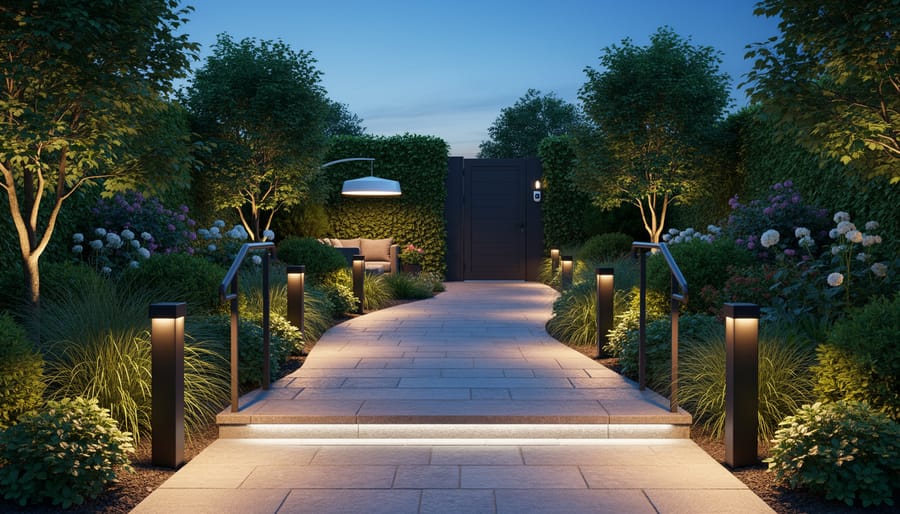
Position path lights 18-24 inches apart along walkways to eliminate trip hazards and guide those with limited vision safely through your garden after dark. Choose fixtures with warm LED bulbs between 2700-3000K that provide adequate visibility without creating harsh shadows or disorienting glare for visitors with aging eyes or cognitive challenges.
Install motion-sensor lighting at garden entry points, seating areas, and transitions between different surfaces like steps or slopes. This hands-free approach helps anyone carrying tools or using mobility aids navigate confidently while conserving energy. Look for sensors with adjustable sensitivity and delay settings to prevent constant triggering from wildlife or wind-blown plants.
Layer your lighting at multiple heights to create depth perception and spatial awareness. Ground-level uplights highlight plant textures and borders, mid-level fixtures illuminate handrails and garden features, while overhead options provide general ambient light for maintenance tasks. This three-dimensional approach helps people with depth perception issues or balance concerns understand their environment more fully.
Select fixtures with high-contrast finishes like matte black or brushed bronze against light-colored hardscaping so they remain visible during daylight hours. This simple design choice prevents collisions for those with mobility devices and helps everyone locate light switches or solar panel positions for maintenance. Accessible lighting transforms your garden into a welcoming space that genuinely serves every person who enters it, regardless of their physical abilities or age-related changes.
Why Accessible Lighting Matters More Than You Think
Garden lighting isn’t just about creating a pretty glow among the flowerbeds—it’s about opening up your outdoor space to everyone who wants to enjoy it. When we think carefully about accessible lighting, we’re actually addressing fundamental needs: safety, independence, and the simple joy of spending time in nature after sunset.
Consider Mary, a retired teacher who loves her cottage garden but stopped venturing outside after dinner once her night vision began declining. Or James, who uses a wheelchair and found himself avoiding the garden path in the evening because shadows made it impossible to see changes in surface levels. These aren’t uncommon stories. Many people gradually retreat from their gardens as daylight fades, not because they’ve lost interest, but because the space no longer feels safe or welcoming.
Proper lighting transforms this experience entirely. Well-placed fixtures illuminate potential hazards like steps, uneven paving, or protruding roots that become invisible traps in dim conditions. This is closely connected to low-vision navigation strategies that help people move confidently through outdoor spaces.
Beyond safety, accessible lighting extends the usable hours of your garden, effectively doubling the time you and your loved ones can spend outdoors during shorter days. It enables social gatherings that continue past dusk, allowing friends and family members with various abilities to participate fully. A grandparent with limited mobility can join evening barbecues. Someone with low vision can still admire the garden they’ve nurtured.
When we design lighting with accessibility in mind, we’re creating spaces where everyone belongs—where physical limitations don’t dictate who gets to experience the peace and pleasure of a garden after dark.
The Core Principles of Accessible Garden Lighting
Consistent Illumination Without Dark Spots
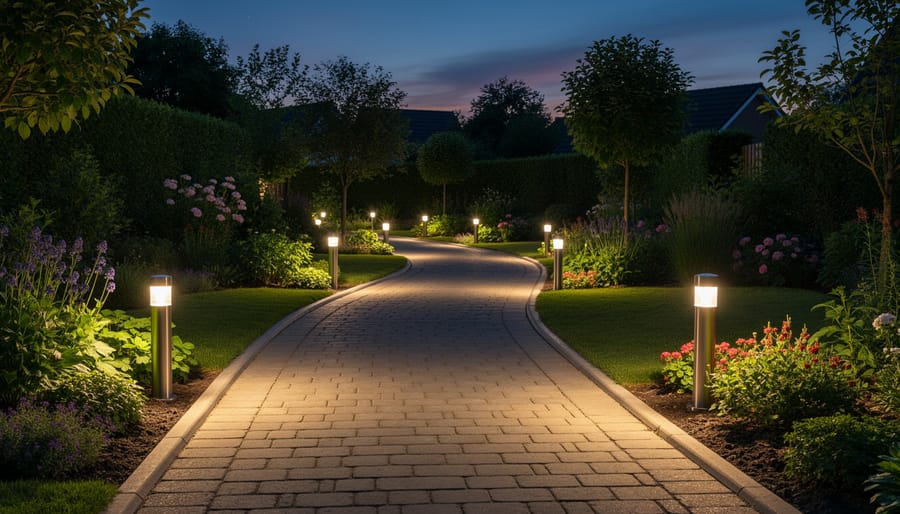
Picture this: you’re heading back inside after an evening stroll through your garden, and suddenly everything goes dim for a few steps. That brief patch of darkness creates uncertainty—exactly what we want to avoid in an adaptive garden space. Even lighting is essential for maintaining balance, confidence, and safety.
Dark spots between fixtures can disorient anyone, but they’re particularly challenging for visitors with vision impairments or those using mobility aids. When light levels fluctuate dramatically, eyes need time to adjust, making it difficult to spot changes in terrain or obstacles on the path.
Here’s a practical guideline I learned from landscape designer Maria Chen: space your pathway lights no more than 8-10 feet apart for consistent coverage. This creates overlapping pools of light that eliminate shadowy gaps. For curved paths, position fixtures on both sides at alternating intervals rather than lining them up directly across from each other—this prevents dark zones in the middle.
Consider the mounting height too. Fixtures around 18-24 inches high provide excellent ground illumination without creating harsh shadows or glare. Test your spacing by walking the path at dusk before permanently installing anything. If you squint or hesitate at any point, add another fixture there. Your future self—and your garden visitors—will thank you for the extra attention to detail.
Color Temperature and Visibility
Choosing the right color temperature for your garden lighting can make a remarkable difference for visitors with visual impairments or aging eyes. Think of light temperature as the warmth or coolness of your bulbs, measured in Kelvin (K).
Warm light (2700K-3000K) creates a cozy, amber glow similar to traditional incandescent bulbs. While inviting, it can reduce contrast and make it harder to distinguish edges, steps, or pathway borders—especially for those with reduced depth perception.
Cool white light (4000K-5000K) offers crisper visibility and better color rendering, helping people distinguish between surfaces and objects more easily. This range mimics natural daylight without being harsh, making it ideal for pathways, stairs, and work areas where clarity matters most.
For the best approach, consider layering both temperatures. Use cooler light where safety and visibility are priorities—near steps, gates, and seating transitions—and warmer tones in relaxation zones where ambiance takes center stage. This thoughtful combination ensures everyone can navigate your garden confidently while still enjoying those magical evening hours outdoors.
Glare-Free Design
Harsh glare can transform a welcoming garden into an uncomfortable space, especially for visitors with light sensitivity, cataracts, or low vision. I learned this firsthand when my neighbor, who has macular degeneration, mentioned she avoided my beautifully lit patio because the bare bulbs created painful visual “halos” that made navigation difficult.
The solution lies in thoughtful positioning and proper shielding. Choose fixtures with frosted glass covers or built-in diffusers that soften the light output. Position lights so they illuminate paths and seating areas from the side or above, never pointing directly at eye level where someone might look. Downward-facing wall sconces and shielded path lights work beautifully for this purpose.
Consider the placement angle too. Lights should cast their glow onto surfaces rather than into the visual field. This creates ambient illumination without that uncomfortable squinting sensation. For reading areas or task lighting near potting benches, adjustable fixtures let you direct light exactly where it’s needed while keeping it out of eyes. These simple adjustments ensure everyone can comfortably enjoy your garden after sunset.
Intuitive Controls and Automation
For those with limited dexterity or mobility challenges, fumbling with switches in the dark isn’t just inconvenient—it can be a safety concern. That’s where intuitive controls truly shine in the garden.
Motion-activated lights are game-changers, illuminating pathways automatically as you approach. No switches to locate, no struggling with small toggles. I’ve installed these along my stepping stones, and they’ve made evening walks completely stress-free.
Timer systems take another layer of thinking off your plate. Set them once, and your garden lights turn on at dusk without any daily intervention. Smart controls accessible through voice commands or large-button remotes offer even more flexibility, letting you adjust lighting from wherever you’re comfortable.
Photocell sensors that respond to natural light levels provide true set-it-and-forget-it convenience. These systems adapt seasonally, turning on earlier as days shorten, ensuring your garden remains safely lit year-round without constant adjustments.
Types of Accessible Lighting Fixtures for Different Garden Zones
Pathway and Walkway Lighting
Defining pathways clearly transforms an ordinary garden into a navigable sanctuary for everyone. Low-level path lights are absolute champions here, casting gentle pools of illumination along walkways without creating harsh glare that can disorient or temporarily blind visitors. Position these fixtures every six to eight feet along path edges to create a visual rhythm that guides movement naturally.
Bollard lights offer another excellent solution, standing like friendly sentinels at knee to waist height. I particularly love these for marking intersections or changes in path direction, where decision-making moments matter most. Choose models with downward-facing shields to prevent light from shining directly into eyes while still providing ample ground coverage.
In-ground markers deserve special mention for their subtle effectiveness. These flush-mounted fixtures outline path edges beautifully without creating trip hazards, making them perfect for visitors using mobility aids. Solar-powered versions work wonderfully for garden paths where running electrical lines feels daunting or impractical.
One gardener I spoke with, Margaret, installed blue-tinted ground markers along her stepping stone path. The distinct color helps her aging mother distinguish between walking surfaces and surrounding garden beds, especially during twilight hours. Remember that consistent placement creates predictability, which builds confidence for everyone navigating your garden spaces. Consider combining multiple lighting types to address different navigation needs throughout your landscape.
Step and Level-Change Markers
Here’s where safety truly matters most in your garden lighting design. Stairs, ramps, and any spot where the ground level changes deserve dedicated attention because these transition zones pose the greatest risk for trips and falls, especially during evening garden visits.
I learned this lesson when my neighbor took a tumble on her garden steps one twilight evening. The surrounding landscape lights looked beautiful, but they cast shadows right where she needed to see each step clearly. That experience changed how I approach elevation changes entirely.
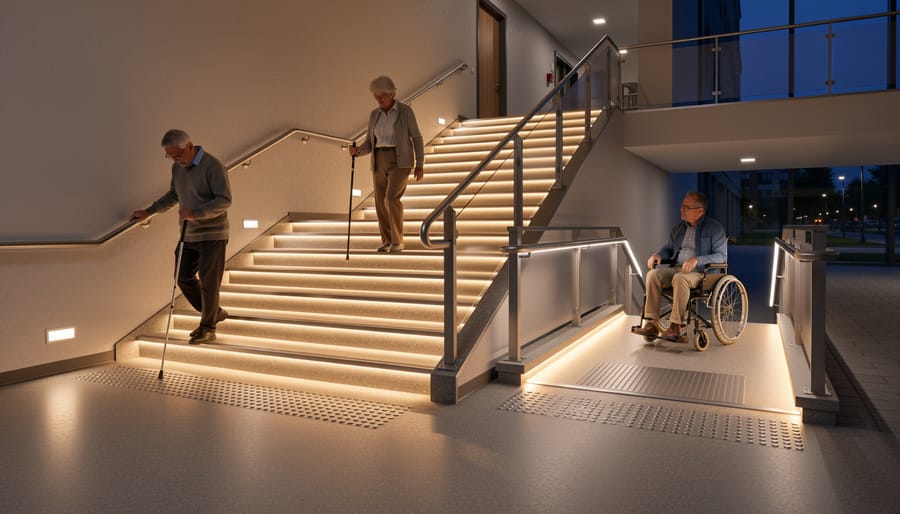
The goal is to illuminate each individual step or grade change so anyone can clearly see where to place their feet. Install low-level lights along the side of stairs at each tread, or use recessed step lights built directly into risers. For ramps, place fixtures every few feet along both edges to define the path clearly without creating glare.
Consider contrasting colors or textures on step edges too—lighting amplifies these visual cues. Motion-activated options work wonderfully here, automatically brightening when someone approaches.
During my conversation with landscape designer Maria Chen, she emphasized thinking beyond just brightness. “The angle of light matters tremendously,” she explained. “You want to reveal the depth and texture of each step, not flatten it with harsh overhead light.”
Position fixtures to graze across surfaces rather than shine directly down, creating helpful shadows that define each level change.
Seating and Activity Areas
Creating comfortable seating and activity areas means thinking beyond task lighting to include ambient options that make evening hours just as enjoyable as daytime gardening. I learned this firsthand when I added simple overhead string lights to my patio—suddenly, my raised beds became evening destinations rather than daytime-only workspaces.
For seating areas and patios, consider diffused overhead lighting that casts a gentle glow without creating harsh shadows. Solar-powered string lights or low-voltage LED strips work beautifully along pergola beams or fence lines, creating atmosphere while providing enough light for conversation and light gardening tasks.
Around raised beds and workspaces, position lights at multiple heights to eliminate dark pockets. Landscape designer Maria Chen suggests placing uplights behind benches to illuminate pathwork while keeping glare out of eyes. For wheelchair users or those with limited mobility, she recommends lights with motion sensors that activate automatically when someone approaches—no fumbling for switches required.
Don’t forget about adjustability. Installing dimmer switches or choosing lights with variable brightness settings lets everyone customize the illumination to their comfort level, whether they’re deadheading flowers or simply enjoying the evening air.
Accent Lighting That Aids Orientation
Strategic accent lighting transforms your garden into an easier-to-navigate space after sunset, especially for those with visual or mobility challenges. Think of uplighting as visual breadcrumbs that guide visitors through your outdoor sanctuary. By spotlighting key landmarks like distinctive trees, garden sculptures, or ornamental grasses, you create memorable reference points that enhance wayfinding and spatial awareness.
I’ve found that positioning uplights at entryways works wonderfully to signal transitions between different garden rooms or pathways. A well-lit Japanese maple or dramatic fountain becomes more than decorative—it serves as a beacon that helps orient visitors and prevents confusion in unfamiliar spaces.
Renowned landscape designer Maria Chen shares this tip: “Choose three to five landmarks maximum to avoid overwhelming the space. The goal is clarity, not a light show.” This approach particularly benefits guests with cognitive challenges or memory concerns, as consistent visual markers help them feel confident exploring your garden independently, day or night.
Step-by-Step: Installing an Accessible Pathway Lighting System
Planning Your Layout
Start by walking your garden paths at dusk with a notepad, observing where shadows fall and which areas feel uncomfortable or unsafe. Mark spots where steps change elevation, pathways branch, or obstacles like raised beds create potential trip hazards. These are your priority zones for lighting placement.
Aim for gentle, overlapping pools of light rather than bright spotlights that create harsh shadows and glare. Think of it like creating a breadcrumb trail where each fixture guides you naturally to the next. A good rule of thumb is placing path lights every 8 to 10 feet along walkways, though you might need closer spacing on curved paths or near seating areas.
Don’t forget vertical spaces. Downlighting from overhead structures or uplighting near walls can help define boundaries and add depth perception, especially helpful for those with low vision. I always recommend testing your layout temporarily with battery-powered lights before committing to permanent installation. This lets you adjust placement until the coverage feels just right and eliminates any dark pockets where someone might stumble.
Choosing Your Power Source
Your lighting system choice depends largely on your garden’s layout and your comfort with maintenance. Solar lights offer wonderful flexibility—simply stake them into the ground wherever sunlight reaches during the day, and they’ll automatically illuminate at dusk. They’re perfect for renters or anyone hesitant about electrical work. I’ve found them especially handy along pathways that aren’t near existing power sources. The trade-off? You’ll need spots with decent sun exposure, and batteries typically need replacing every few years.
Low-voltage wired systems, running on safe 12-volt transformers, provide consistent brightness regardless of weather and work beautifully in shaded gardens. They require initial installation effort, running cables from your transformer to each fixture, but once in place, they’re incredibly reliable. Master gardener Ellen Rodriguez shared with me that she prefers wired systems for critical safety areas like steps and ramps, where dependable illumination matters most. Consider your garden’s conditions and your willingness to occasionally replace solar batteries versus running cables during initial setup.
Installation Basics
Installing accessible lighting is simpler than you might think, and you don’t need to be an electrician to get started. Begin by positioning your fixtures at the desired height and location, securing them with the mounting hardware provided. For ground-level path lights, push stakes firmly into softened soil, ensuring they’re stable and won’t wobble.
When running cables between fixtures, bury them at least 6 inches deep to protect them from foot traffic and garden tools. I learned this lesson the hard way after accidentally nicking a wire while planting tulips! Use conduit pipes for extra protection in high-traffic areas. Always create gentle curves rather than sharp angles when laying cables, which prevents strain on connections.
Before covering everything with soil, test your entire system. Walk the path at night, checking that all lights illuminate properly and there are no dark spots. Adjust fixture angles as needed to eliminate shadows that might cause confusion or concern. This final step ensures your garden is truly welcoming for everyone who visits.
Adding Smart Controls
For truly effortless accessible lighting, consider adding smart controls that eliminate the need to manually operate switches. Motion sensors are particularly helpful—they automatically illuminate pathways when someone approaches, perfect for folks with limited mobility or those carrying garden tools with full hands. Install them near gates, steps, and seating areas where you need instant visibility.
Timers offer another layer of convenience by turning lights on at dusk and off at dawn, ensuring your garden paths are always safely lit without anyone remembering to flip a switch. Many modern systems can be controlled via smartphone apps, allowing adjustments from indoors—ideal during rainy weather or for those with mobility challenges. Start with one or two motion-activated fixtures along your main pathway to test what works best for your space.
Real Gardeners, Real Solutions: A Conversation About Inclusive Lighting
We sat down with Maria Chen, a landscape designer who’s spent fifteen years creating inclusive gardens across the Pacific Northwest. Her specialty? Making outdoor spaces work beautifully for everyone, regardless of ability.
“Lighting was honestly my biggest learning curve,” Maria admits with a warm laugh. “Early on, I focused on ramps and raised beds, but I quickly realized that even perfect accessible garden features become unusable after sunset without proper illumination.”
Maria recalls a turning point project. “I worked with a retired teacher who used a walker and loved her evening garden strolls. She’d stopped going out at night because she couldn’t see changes in elevation. We installed solar path lights every four feet along her main walkway and added motion-sensor lights near steps. The transformation was incredible—she got her independence back.”
When asked about her go-to products, Maria doesn’t hesitate. “I love bollard lights for pathways—they’re sturdy, highly visible, and won’t tip over if someone needs to steady themselves. For clients with visual impairments, I often recommend lights with high color contrast against the surrounding surfaces. A warm-toned fixture against dark pavement creates clear visual definition.”
Her biggest challenge? Balancing brightness with comfort. “You want enough light for safety, but too much creates glare that’s actually dangerous for people with certain vision conditions. I typically aim for gentle, overlapping pools of light rather than harsh spotlights.”
Maria’s advice for fellow gardeners is refreshingly practical. “Start with one well-lit path from door to garden. Test it yourself at night, then ask someone with different abilities to try it. Their feedback is gold.” She emphasizes that accessibility isn’t about expensive overhauls. “Sometimes it’s just repositioning existing lights or adding reflective tape to step edges. Small changes make huge differences in someone’s confidence and enjoyment outdoors.”

Common Mistakes and How to Avoid Them
Even with the best intentions, garden lighting projects can go astray. Let me share some pitfalls I’ve encountered over the years and how you can sidestep them entirely.
The most common mistake is over-lighting. I once visited a garden where the homeowner had installed so many bright fixtures that it felt like a football stadium at night. Too much light creates glare, which is especially problematic for people with vision impairments or light sensitivity. The solution? Layer your lighting instead. Use multiple lower-wattage fixtures rather than a few powerful ones, and always position lights to shine downward or away from eye level. Think about creating pools of light rather than flooding the entire space.
Creating unintentional shadows is another frequent issue. I learned this the hard way when a friend using a walker nearly tripped because a decorative planter cast a deep shadow across the path. The fixture placement seemed perfect during the day, but nighttime told a different story. Walk your garden after dark during the planning stage, and consider how objects will block light. Position fixtures to eliminate dark spots on pathways and near seating areas.
Inconsistent coverage leaves gaps in illumination that can be dangerous. I recommend spacing pathway lights no more than eight feet apart, adjusting based on the fixture brightness and path width. Mark your planned positions with stakes during daylight, then test them after sunset before permanent installation.
Finally, don’t forget maintenance access. Install fixtures where you can easily reach them for bulb changes and cleaning. One gardener I interviewed, Margaret, wisely positioned all her lights at waist height or lower, making upkeep manageable as she ages. Include mulch-free zones around each fixture to prevent moisture damage and ensure long-term reliability.
Budget-Friendly Options and Where to Invest
Creating an accessible lighting setup doesn’t have to empty your wallet, and knowing where to prioritize your spending makes all the difference. Start with safety-critical areas first: pathways, steps, and entrance points deserve your immediate attention and investment. These zones prevent falls and help everyone navigate confidently after dark.
For budget-conscious gardeners, solar-powered stake lights offer an excellent starting point. While initial quality varies dramatically, mid-range options from reputable hardware stores provide reliable performance without requiring electrical work. I’ve found that spending just a bit more per fixture—around fifteen to twenty dollars instead of five—yields lights that actually last through multiple seasons.
DIY projects work beautifully for decorative accent lighting. String lights along fences, wrap them around pergola posts, or illuminate raised beds yourself. However, call in a licensed electrician for anything involving permanent fixtures, wiring near water features, or connections to your home’s electrical system. Safety always trumps savings.
Motion-sensor lights represent one of the smartest investments you’ll make. They provide illumination exactly when needed while conserving energy, and quality models now cost surprisingly little. Place these strategically near gates, seating areas, and garden sheds.
Shop clearance sales at garden centers during fall and winter when outdoor lighting gets marked down significantly. Many retailers also offer “multipacks” that reduce per-unit costs. Remember, you can always expand your lighting gradually—start with essential pathways this season, then add ambient features as your budget allows. Your garden’s accessibility will improve with each thoughtful addition.
Transforming your garden with thoughtful lighting doesn’t have to happen overnight. The beauty of creating an accessible outdoor space is that you can start small and build gradually. Choose one pathway or sitting area that matters most to your daily routine, install appropriate lighting there, and experience the difference firsthand. You’ll likely be amazed at how a few well-placed solar path lights or a motion-sensor fixture can change not just visibility, but your entire relationship with your garden after dark.
I’ve spoken with gardeners who began with a simple string of LED lights along their main walkway and eventually created fully illuminated spaces where grandchildren play safely at dusk and friends with limited mobility feel confident navigating evening gatherings. The key is taking that first step without feeling overwhelmed by the bigger picture.
Remember, accessible lighting isn’t just about accommodation—it’s about invitation. When we design gardens that welcome everyone, regardless of ability or time of day, we create spaces that bring people together and celebrate the joy of being outdoors. Your garden has the potential to be a place where nobody feels left out, where safety and beauty work hand in hand, and where the magic of nature extends well beyond sunset.