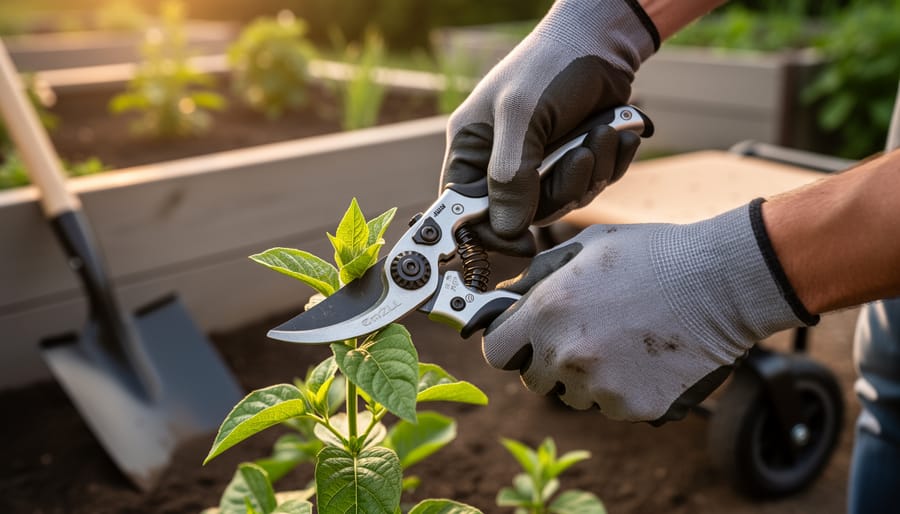
Reach for the secateurs with cushioned, rotating handles that reduce wrist strain by 30%, swap standard spades for ergonomic models with angled grips that keep your back straight, and choose lightweight tools with extended handles that eliminate the need to bend or kneel. These aren’t specialized equipment for a select few—they’re thoughtfully designed solutions that help anyone garden longer and more comfortably, whether you’re managing arthritis, recovering from injury, or simply noticing that your favorite hobby has become physically demanding.
Adaptive garden tools transform what feels impossible back into joyful possibility. The stiffness that makes opening traditional pruners painful disappears with ratcheting mechanisms that multiply your strength with each gentle squeeze. The knee pain that once ended your gardening sessions early vanishes when you’re working from a rolling seat positioned at the perfect height. The frustration of dropped tools becomes history with textured, oversized grips designed for hands affected by limited mobility or reduced sensation.
You don’t need to abandon the garden beds you’ve nurtured for years or give up the therapeutic rhythm of tending plants. The right adaptive tools meet your body exactly where it is today, whether that means compensating for reduced grip strength, accommodating limited range of motion, or supporting balance challenges. Real gardeners who’ve made the switch report not just reduced pain, but rediscovered enthusiasm—spending more time outdoors, tackling projects they’d reluctantly set aside, and reclaiming the independence that makes gardening so deeply satisfying.
This guide walks you through essential adaptive tool categories, key features that genuinely solve accessibility challenges, and practical steps for building your personalized toolkit.
Who Benefits from Adaptive Garden Tools?
If you’ve ever finished a gardening session with aching hands, a sore back, or stiff knees, adaptive garden tools aren’t just for someone else—they’re for you. While these thoughtfully designed tools certainly help gardeners with diagnosed disabilities, the truth is that they make gardening easier and more enjoyable for a much broader audience than many people realize.
Anyone experiencing arthritis, whether mild or severe, can benefit from tools with cushioned grips and extended handles that reduce strain on fingers and wrists. If you’re dealing with back pain, long-handled tools that eliminate bending might transform your gardening experience from painful to pleasurable. Recovering from surgery or an injury? Adaptive tools can help you return to the garden sooner and more safely.
Let’s not forget the reality of aging. Our bodies change, and that’s completely normal. The grip strength you had at thirty might not be the same at sixty, and there’s no reason your love of gardening should suffer because of it. Adaptive tools level the playing field, allowing you to continue the hobby you cherish without unnecessary discomfort.
These tools also benefit gardeners with visual impairments, those managing conditions like fibromyalgia or multiple sclerosis, and even healthy gardeners who simply want to prevent future injuries. Parents returning to gardening after pregnancy, weekend warriors tackling ambitious projects, and anyone who gardens for extended periods can all appreciate the difference that ergonomic design makes.
The bottom line? If traditional tools cause you discomfort or limit your time in the garden, adaptive tools are worth exploring. There’s absolutely no stigma in choosing equipment that works better for your body—it’s simply smart gardening.

The Essential Adaptive Tools Every Gardener Should Know About
Ergonomic Hand Tools for Digging and Planting
Your hands do most of the heavy lifting in the garden, so choosing tools that support rather than strain them makes all the difference. Ergonomic hand tools have become game-changers for gardeners dealing with arthritis, carpal tunnel, or simply the wear and tear that comes from years of digging and planting.
Trowels with cushioned, oversized grips distribute pressure across your entire palm instead of concentrating it in one spot. This simple design shift reduces hand fatigue dramatically, especially during extended planting sessions. Look for models with soft, non-slip materials that stay comfortable even when wet.
Angled handle designs are another breakthrough in accessible gardening solutions. These tools keep your wrist in a neutral position rather than forcing awkward bends that lead to strain. The angle essentially does the work your wrist would normally do, making scooping soil and transplanting seedlings much gentler on your joints.
Cultivators and transplanters with extended reach eliminate excessive bending, bringing the work closer to you rather than forcing you down to ground level. Many feature telescoping handles that adjust to your height and the task at hand.
During a recent conversation with master gardener Elena Rodriguez, she shared how switching to ergonomic hand tools added years to her gardening life. “I thought I’d have to give up my flower beds,” she told me, “but these tools meant I could keep doing what I love without the next-day pain.”

Long-Handled Tools That Save Your Back
If you’ve ever spent an hour weeding only to find yourself shuffling around like a penguin afterward, you know exactly why long-handled tools are absolute game-changers. These extended-reach wonders let you tend your garden while standing upright, keeping your back happy and your gardening sessions much longer and more enjoyable.
Modern long-handled weeders have come a long way from those heavy, clunky tools your grandparents used. Today’s versions feature telescoping shafts that adjust to your height—typically ranging from 36 to 60 inches—so you’re working at the perfect angle for your body. No more stooping, no more aching lower back, just comfortable gardening that lets you focus on the task at hand rather than counting down the minutes until you can straighten up again.
The real magic happens in the materials. Manufacturers now craft these tools from lightweight aluminum or fiberglass composites that weigh about half as much as traditional steel handles, yet they’re incredibly durable. I recently spoke with Margaret, a 67-year-old gardener from Vermont, who told me her lightweight hoe feels like an extension of her arm rather than something she’s lugging around.
When choosing long-handled cultivators and hoes, look for ergonomic grips that reduce hand strain and tools with angled heads that maximize soil contact without requiring you to push down hard. Some models even feature rotating heads that let you work around plants without repositioning your entire body. These thoughtful design touches transform routine maintenance from a chore into something genuinely pleasant.
Adaptive Pruning and Cutting Tools
Pruning can be one of the most physically demanding garden tasks, especially if you’re dealing with arthritis, reduced grip strength, or hand fatigue. The good news? Today’s adaptive pruning tools transform this challenging activity into something manageable and even enjoyable.
Ratcheting pruners are absolute game-changers for anyone with limited hand strength. Instead of requiring one forceful squeeze, these clever tools work in stages—you pump the handle three or four times, and the ratchet mechanism does the heavy lifting for you. Each squeeze advances the blade a bit further through the branch, multiplying your cutting power without straining your joints. I’ve spoken with gardeners who thought their pruning days were over until they discovered ratcheting models.
Lightweight loppers with extended handles give you incredible leverage, meaning you can tackle thicker branches without wrestling with heavy tools. Look for models with telescoping handles—they’ll help you reach higher spots without climbing ladders or overextending your arms.
Easy-squeeze designs feature ergonomic handles that distribute pressure across your palm rather than concentrating it in your fingertips. Some have rotating handles that follow the natural motion of your hand, significantly reducing wrist strain during repetitive cutting.
For those who need maximum assistance, battery-powered electric pruners eliminate hand effort entirely. Simply position the blade and press a trigger—the tool does all the cutting work. While they’re pricier, many gardeners tell me they’re worth every penny for the independence they provide.
Kneelers, Seats, and Mobility Aids
Garden kneelers and seating solutions can transform your gardening experience, especially when bending and standing becomes challenging. These tools bring you closer to your plants without the strain, letting you focus on the joy of gardening rather than the discomfort.
Garden kneelers with sturdy handles offer dual functionality. They provide cushioned support when you’re working at ground level, then flip over to become a low bench. The built-in handles give you leverage to push yourself up safely, reducing stress on knees and back. Many models fold flat for storage, and some include pouches for keeping tools within reach.
Rolling garden seats are game-changers for anyone who spends extended time in the garden. These wheeled stools let you scoot along rows without constantly getting up and down. Look for models with adjustable height settings and tool trays underneath. The pneumatic wheels work smoothly on grass and gravel, and a 360-degree swivel lets you reach in all directions without twisting your body awkwardly.
Wheeled garden carts with raised work surfaces bring the soil to you, perfect for container gardening or seedling preparation at a comfortable standing height. These mobile workstations often feature storage compartments, tool hooks, and drainage holes. They integrate beautifully with inclusive garden design principles, creating accessible growing spaces wherever you need them.
Master gardener Patricia Chen, who gardens with arthritis, shares: “My rolling seat changed everything. I can weed for an hour without pain, and my knees thank me every day.”

Features That Make Tools Truly Adaptive
Grip Design and Handle Materials
The handle on your garden tool makes all the difference when you’re spending hours tending your beds. I’ve learned this the hard way after developing hand fatigue from using tools with hard plastic grips, and I’m not alone—many gardeners discover that the right grip can transform their gardening experience.
Cushioned grips made from foam, rubber, or gel materials absorb shock and reduce the stress on your joints with every dig, prune, or rake. These softer materials also dampen vibration, which is particularly helpful if you’re dealing with arthritis or conditions affecting your hands and wrists. Look for grips at least 1.5 inches in diameter; thicker handles distribute pressure more evenly across your palm, requiring less grip strength to maintain control.
Textured surfaces are your friends in the garden. Whether it’s a rubberized coating with subtle ridges or a contoured grip with finger indentations, these features prevent tools from slipping when your hands are sweaty or muddy. Some adaptive tools feature ergonomic shapes that naturally align with your hand position, reducing the need to squeeze tightly.
During an interview with master gardener Susan Chen, she emphasized choosing materials that suit your climate. Foam grips work beautifully but can degrade faster in wet conditions, while rubber and thermoplastic elastomer handles offer excellent durability and weather resistance. Test different options to find what feels most comfortable for your unique needs.
Weight, Balance, and Leverage
The science behind adaptive garden tools often comes down to simple physics—and that’s great news for your joints and muscles! When a tool is properly weighted and balanced, the work happens where it should, not in your wrists or shoulders.
Think of it this way: a well-designed spade with weight distributed closer to the blade means you’re lifting soil, not battling an awkward tool. Many adaptive tools feature counterbalanced designs that feel surprisingly light in action, even when moving heavy materials.
Ratcheting mechanisms are absolute game-changers for anyone dealing with hand pain or reduced grip strength. Instead of one exhausting squeeze, a ratcheting pruner lets you cut through branches with several gentle pumps. Each small movement clicks you closer to a clean cut without requiring a vise-like grip. I’ve watched gardeners with arthritis prune entire rose bushes without discomfort using these clever tools.
Curved handles deserve special mention too. That gentle bend isn’t just aesthetic—it keeps your wrist in a neutral, comfortable position while reducing the angle of effort needed. Whether you’re digging, weeding, or cultivating, curved handles work with your body’s natural mechanics rather than against them. Combined with ergonomic grips, they transform strenuous tasks into manageable ones, letting you garden longer and more comfortably.
Building Your Personal Ergonomic Toolkit
Starting your adaptive tool collection doesn’t mean replacing everything in your shed overnight. The best approach is to begin with one or two tools that address your most pressing challenges. Take a moment to think about which gardening tasks cause you the most discomfort or which activities you’ve been avoiding because of pain or fatigue. That’s your starting point.
If you spend most of your time weeding, invest in a quality ergonomic weeder first. Love growing vegetables but struggle with traditional digging? A long-handled cultivator or raised bed might be your priority. By focusing on the tasks you do most frequently or find most difficult, you’ll immediately notice the difference these tools make in your gardening experience.
Budget considerations are real, and adaptive tools don’t have to break the bank. Many gardeners I’ve spoken with started with simple modifications like foam pipe insulation wrapped around existing tool handles for better grip. Others invested in one premium tool each season, gradually building their collection. Consider borrowing or testing tools at community gardens or tool libraries before making larger purchases.
As you explore different adaptive gardening approaches, pay attention to how your body responds. Keep a simple garden journal noting which tools reduce strain and which tasks become easier. This feedback helps guide future additions to your toolkit.
Remember, there’s no universal solution. Your perfect toolkit might include a telescoping pruner, kneeling pad, and lightweight hose, while another gardener prioritizes different items entirely. The goal is creating a personalized collection that keeps you gardening comfortably for years to come. Start small, listen to your body, and add tools as needs arise.
Real Gardeners Share Their Adaptive Tool Experiences
There’s nothing quite like hearing from gardeners who’ve discovered how adaptive tools have transformed their time in the garden. I reached out to several gardeners who’ve incorporated these tools into their routines, and their experiences are truly inspiring.
Margaret, who manages arthritis in both hands, shared that ergonomic pruners changed everything for her. “I’d almost given up on pruning my roses,” she told me. “Then I tried a ratcheting pruner, and suddenly I could work for hours without pain. My advice? Don’t wait until you’re hurting to try adaptive tools—I wish I’d switched years earlier.”
Carlos, a retired teacher who gardens from his wheelchair, emphasized the importance of raised beds and long-handled tools. “My telescoping cultivator means I can reach the back of my beds without straining. The game-changer was realizing I didn’t need to adapt myself to traditional gardening—I could adapt my tools to fit me.”
Linda, who experiences chronic fatigue, discovered that lightweight tools made all the difference. “I replaced my heavy metal rake with a carbon fiber one, and I can actually finish tasks now without exhaustion. Start with the tools you use most frequently—that’s where you’ll notice the biggest improvement.”
These gardeners all emphasized one common thread: adaptive tools aren’t about limitations; they’re about extending your gardening years and making every moment outdoors more enjoyable.
Where to Find Quality Adaptive Garden Tools
Finding quality adaptive garden tools has become much easier as more companies recognize the needs of all gardeners. Start your search with specialized retailers like Gardener’s Supply Company, Lee Valley Tools, and Adaptations by Adrian’s Hope, which carry dedicated adaptive gardening collections. Many occupational therapy supply companies also stock excellent ergonomic tools originally designed for therapeutic settings.
When shopping, prioritize reputable brands known for durability like Fiskars, Radius Garden, and OXO Good Grips. These manufacturers often incorporate ergonomic principles into their designs, making their tools naturally more accessible.
Online shopping offers convenience and variety, but reading reviews from users with similar physical challenges is essential. Look for detailed feedback about comfort, weight, and how tools perform during extended use rather than just star ratings. Many gardening forums and accessibility-focused websites feature honest discussions about what actually works.
If possible, visit garden centers or adaptive equipment showrooms to hold tools before purchasing. The right grip diameter, weight distribution, and handle length vary greatly between individuals. Some retailers offer generous return policies, allowing you to test tools in your actual garden setting. Don’t hesitate to reach out to customer service with specific questions about your needs—quality companies genuinely want to help you find the perfect match.
Gardening is a gift that should be available to everyone, regardless of physical ability or challenge. The right adaptive tools don’t just make gardening possible—they make it genuinely enjoyable again. If you’ve been avoiding the garden because of pain, limited mobility, or fatigue, remember that experimenting with different tools and techniques is simply part of your gardening journey. There’s no one-size-fits-all solution, and what works beautifully for one person might not suit another.
Don’t hesitate to try various options, modify tools to fit your needs, or even create your own solutions. The gardening community is wonderfully accessible and inclusive, filled with people eager to share their experiences and discoveries. Many gardeners find that adaptive tools actually enhance their connection to their plants by reducing distraction from discomfort.
Start small, perhaps with one or two tools that address your biggest challenges, and build from there. Your garden is waiting, and with the right tools in hand, you’ll rediscover the joy of nurturing growth, feeling soil between your fingers, and harvesting the fruits of your labor. Happy gardening!