
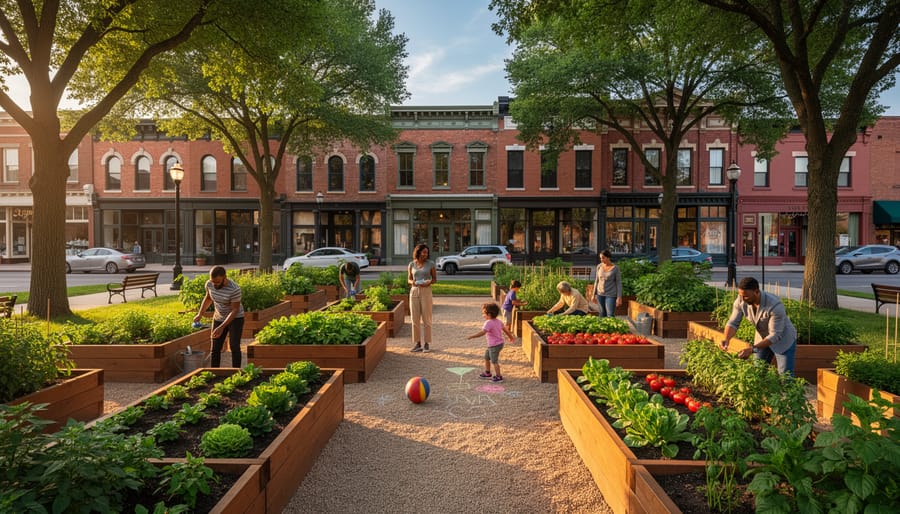
Walk through any downtown heritage district and you’ll discover something remarkable: these aren’t just preserved relics of the past, but living proof that gardens and public spaces have always been powerful agents of social change. The parks, civic gardens, and green squares you see today were deliberately designed by reformers who understood that accessible greenery could transform crowded urban neighborhoods into healthier, more equitable communities.
Between the 1890s and 1930s, progressive thinkers revolutionized American cities by creating public parks in working-class districts, establishing community gardens where tenement dwellers could grow fresh food, and designing civic landscapes that brought people together across social divides. These weren’t merely aesthetic improvements. They were strategic responses to overcrowding, poverty, and public health crises that plagued rapidly industrializing cities.
Today’s heritage districts preserve these intentional landscapes, offering us tangible connections to the visionaries who believed gardens could solve social problems. When you stand in a restored civic garden or walk through a historic downtown park, you’re experiencing spaces that once served as open-air classrooms teaching immigrant families about nutrition, provided safe play areas for children living in cramped apartments, and offered respite from dangerous factory conditions.
Understanding this heritage enriches your own gardening practice. The principles these reformers applied, designing inclusive spaces that serve entire communities while promoting health and social connection, remain deeply relevant. Whether you’re tending a backyard plot or volunteering in a community garden, you’re participating in this ongoing tradition of using plants and green spaces to create positive change.
This exploration reveals how historical urban planning shaped modern gardening values and why preserving these heritage districts matters for gardeners everywhere.
When Public Parks Were Revolutionary Ideas
The Problem Reformers Saw
Picture the American city of the 1880s and 1890s, and you’ll understand why reformers felt such urgency. Tenement buildings packed families into airless rooms, often with a dozen people sharing spaces meant for two or three. Children played in dirty alleyways because there simply wasn’t anywhere else to go. The rapid shift from rural to urban life meant that thousands of newly arrived immigrants and workers found themselves surrounded by brick, concrete, and soot instead of grass and trees.
Public health officials noticed alarming patterns. Tuberculosis and other diseases spread quickly in cramped quarters. Children who never experienced open spaces showed signs of physical weakness and developmental delays. There was no escape from the relentless noise and grime of factory life. Even basic fresh air felt like a luxury.
Progressive reformers connected these dots and saw a solution rooted in nature. They believed that access to green spaces wasn’t just pleasant but essential for human wellbeing. If people couldn’t afford to leave the city, then the city needed to bring nature to them. This thinking sparked a movement that would transform downtowns across America, creating the civic gardens and heritage districts we treasure today.
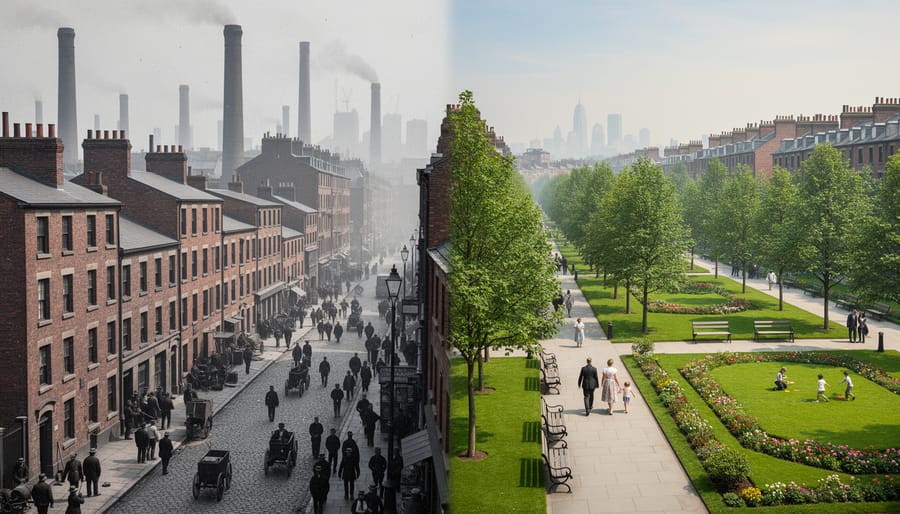
Gardens as Social Medicine
During the late 19th and early 20th centuries, social reformers held a powerful belief that beautiful green spaces could actually heal society’s wounds. Imagine city planners and philanthropists looking at crowded, polluted urban neighborhoods and thinking, “What these communities need is access to gardens and parks.” It wasn’t just about aesthetics. They genuinely believed that contact with nature could improve moral character, reduce crime, and bring people together across social divides.
This movement viewed gardens as symbols of social reform, and downtown heritage districts became laboratories for these ideas. Reformers established public gardens, community plots, and landscaped parks specifically in working-class neighborhoods. The thinking was straightforward: if families had beautiful places to gather, children had safe green spaces to play, and workers had peaceful spots to rest, communities would naturally become healthier and more harmonious.
These civic gardens served multiple purposes. They provided fresh air in smoke-filled industrial cities. They offered educational opportunities where immigrants could learn about local plants and agricultural practices. They created neutral ground where different social classes might mingle, breaking down some of the rigid barriers of the era.
Today, we still see echoes of this philosophy in community garden programs and urban greening initiatives. While we might phrase it differently now, using terms like “mental health benefits” and “community wellness,” the core idea remains remarkably similar. Access to nature and the act of gardening itself can genuinely improve individual lives and strengthen neighborhood bonds, just as those Victorian-era reformers believed.
What Made These Spaces ‘Civic Gardens’
Design Elements That Told a Story
Downtown heritage districts transformed public spaces through intentional garden design that spoke volumes about civic values and social aspirations. Every element, from the placement of monuments to the selection of flowering shrubs, conveyed meaningful messages to visitors.
Formal garden layouts followed classical European models, featuring symmetrical beds arranged around central focal points. These geometric patterns represented order and progress, qualities that reformers believed would positively influence urban residents. Pathways typically radiated outward in spoke-like patterns or formed perfect rectangles, guiding visitors through carefully orchestrated experiences while subtly encouraging orderly behavior.
Monument placement served as visual anchors and educational opportunities. Statues of civic leaders, veterans, and cultural figures occupied prominent positions at garden intersections, creating natural gathering spots for community reflection. These weren’t random choices—reformers deliberately positioned monuments where afternoon light would highlight them, drawing visitors toward spaces designed for contemplation and social interaction.
Plant selections carried symbolic weight too. Roses represented refinement and culture, while native species demonstrated regional pride and practical wisdom. Evergreens symbolized permanence and civic endurance, often flanking entrances or framing important views. Flowering perennials provided seasonal interest, teaching visitors about nature’s cycles while creating ever-changing displays that rewarded repeat visits.
Wide, accessible pathways welcomed people from all social classes, a revolutionary concept when many public spaces remained exclusive. Benches placed at regular intervals encouraged rest and conversation, fostering the democratic mingling that reformers championed. These thoughtful design choices transformed simple green spaces into powerful tools for social change, creating outdoor classrooms where communities learned shared values through beauty and accessibility.
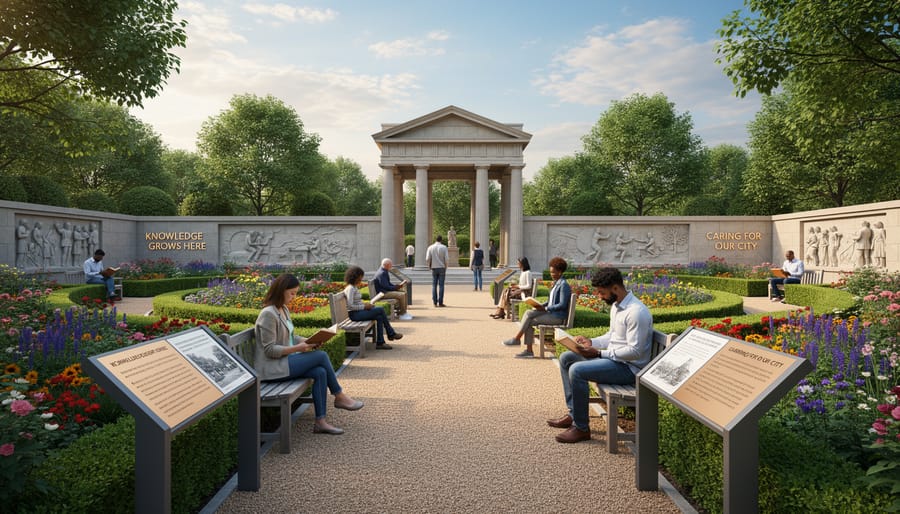
Who These Gardens Served (And Who They Didn’t)
The early civic gardens movement embraced genuinely progressive ideals for their time, but like many reform efforts, their reach had real boundaries worth understanding today.
These downtown heritage gardens were designed with democratic intentions. Reformers genuinely believed that fresh air, flowers, and green space could improve lives across social classes. Many parks offered free admission, hosted community programs, and welcomed factory workers seeking respite after long shifts. Local garden clubs often included women from various backgrounds, creating unusual spaces for cross-class interaction during an era of rigid social divisions.
However, we need to acknowledge the uncomfortable truths alongside these good intentions. In many cities, particularly in the American South, these public gardens enforced racial segregation well into the 1960s. African American communities either faced complete exclusion or were relegated to separate, often poorly maintained facilities. Indigenous peoples, Chinese immigrants, and other groups faced similar barriers depending on regional prejudices.
Even where gardens theoretically welcomed everyone, practical barriers existed. Working families struggling with poverty couldn’t always spare time for leisurely park visits. Language barriers excluded recent immigrants from educational programs. Women faced restrictions on unaccompanied park access in some communities. Design choices sometimes reflected only middle-class aesthetic preferences, overlooking cultural gardening traditions from other communities.
Understanding these limitations doesn’t diminish the positive impact these gardens created. Instead, it helps us appreciate how far we’ve come and reminds us to build truly inclusive garden spaces today. Modern community gardens now actively work to welcome diverse populations, offering multilingual signage, culturally relevant plantings, and programs designed with input from neighborhood residents themselves. That’s the heritage worth cultivating forward.
Walking Through History: Notable Heritage District Gardens
Boston Common and the Public Garden
Boston Common, established in 1634, holds the distinction of being America’s oldest public park—a remarkable 50-acre green space that began as shared grazing land before evolving into a place where all citizens could gather. When you walk these historic grounds today, you’re following in the footsteps of centuries of Bostonians who recognized that communal green spaces matter deeply to city life.
Adjacent to the Common lies the Public Garden, created in 1837 as one of the first public botanical gardens in the nation. This Victorian-era masterpiece showcases formal landscape design with meandering pathways, ornamental plantings, and the iconic Swan Boats gliding across the lagoon. Together, these spaces represent pioneering experiments in democratic landscape design—the radical idea that beautiful, thoughtfully maintained gardens should belong to everyone, not just the wealthy.
The Public Garden’s plant collections particularly inspire modern gardeners. Its carefully curated beds demonstrate seasonal succession planting, with spring tulips giving way to summer annuals and fall chrysanthemums. Notice how Victorian designers balanced formal structure with naturalistic elements, a principle we can apply in our own yards. These historic American gardens proved that public investment in green infrastructure benefits entire communities—improving air quality, providing respite from urban stress, and creating gathering places that strengthen social bonds across economic divides.
The Mall in Central Park
Frederick Law Olmsted didn’t just design beautiful landscapes—he created democratic spaces where all citizens, regardless of social class, could gather and breathe. His work on Central Park’s Mall established a blueprint that influenced downtown civic spaces across America, and understanding his vision can deepen your appreciation for heritage gardens today.
The Mall, a quarter-mile promenade lined with American elms, was revolutionary for its time. Olmsted envisioned it as an outdoor room where people from different backgrounds would naturally intermingle, sharing the same shaded pathways and benches. This wasn’t accidental—it was social reform through landscape design. Before public parks, only the wealthy had access to manicured gardens and green retreats. Olmsted believed that contact with nature was essential for mental and physical health, especially for working-class families living in cramped urban conditions.
What made the Mall particularly brilliant was its simplicity. Unlike elaborate Victorian gardens with fussy parterres, Olmsted chose a straightforward design: straight paths, symmetrical tree plantings, and open lawns. This approach was both economical and welcoming. Anyone could feel comfortable here without needing knowledge of formal garden etiquette.
His influence spread to downtown districts nationwide, where civic leaders replicated his democratic gathering spaces. Today, when you visit heritage downtown areas, notice the tree-lined boulevards and public squares—they’re often echoes of Olmsted’s original vision, reminding us that gardens have always been powerful tools for bringing communities together.
A Hidden Gem in Your Region
You might be surprised to discover that your own downtown area holds hidden treasures waiting to be explored. Many cities have heritage districts with quietly tucked-away gardens that tell remarkable stories about civic improvement and community spirit from decades past.
Start your search by visiting your local historical society or city planning office. They often have maps and records of original park designs and civic beautification projects. I recently did this in my own town and uncovered a 1920s rose garden established by a women’s club that’s still maintained today, though few people know its origins.
Look for plaques, cornerstones, or dedication markers when you stroll through downtown parks. These subtle clues reveal when gardens were planted and by whom. Heritage gardens often feature older plant varieties, formal layouts with symmetrical beds, or memorial trees that have grown magnificent over the years.
Local garden clubs and preservation societies are fantastic resources too. Members love sharing stories about these spaces and can point you toward lesser-known spots. Consider joining a walking tour or organizing your own exploration day with fellow gardening friends.
These discoveries aren’t just about history. They offer inspiration for your own garden projects and connect you more deeply to your community’s green legacy.
What Today’s Gardeners Can Learn From Civic Gardens
Plant Choices That Stand the Test of Time
Walk through any historic downtown district today, and you’ll notice something remarkable—the same plants our great-grandparents admired in civic gardens are still thriving in modern landscapes. These time-tested varieties weren’t chosen randomly; civic planners selected them for their resilience, beauty, and ability to withstand urban conditions.
Boxwood hedges, which framed formal garden beds in 1920s courthouse squares, still define elegant spaces in today’s gardens. These evergreen stalwarts require minimal care and provide year-round structure. Similarly, the cast-iron plant earned its name in Victorian public gardens where coal smoke and neglect couldn’t kill it—making it perfect for today’s busy gardeners.
Heritage roses, particularly the rugosa varieties planted in early 20th-century parks, continue to outperform many modern cultivars. They’re disease-resistant, fragrant, and bloom reliably without the fussing that hybrid teas demand. I’ve interviewed gardeners who’ve inherited century-old rugosa roses that still bloom vigorously with minimal attention.
Classic perennials like peonies, iris, and daylilies formed the backbone of civic garden displays because they returned faithfully each spring. These heritage plant selections remain workhorses in today’s gardens, offering the same dependability our ancestors valued.
The design principle behind these choices remains relevant: choose plants that thrive, not just survive. Historic civic gardens taught us that sustainable beauty comes from working with nature, not against it. When you plant these proven varieties, you’re not just creating a garden—you’re connecting with a living tradition of thoughtful urban greening that has served communities for generations.
Creating Community Through Shared Green Spaces
The civic garden movement that transformed downtown heritage districts offers powerful lessons for today’s neighborhood projects. When we look at how reformers used green spaces to unite diverse communities, we discover practical approaches we can apply right in our own backyards and neighborhoods.
Community gardens embody these historic ideals beautifully. Start by identifying an underused lot or partnering with local institutions that have available land. The key is creating meaningful community spaces where people from different backgrounds can work side by side. Begin with a planning meeting where neighbors can share their gardening dreams and practical needs. Some may want fresh vegetables, others native pollinator gardens, and many simply crave connection with nature and neighbors.
Street beautification projects offer another accessible entry point. Organize planting days where residents adopt tree pits or boulevard strips. These small acts mirror the civic garden philosophy that beautiful, green neighborhoods improve everyone’s quality of life. I’ve seen entire blocks transformed when just three or four households start tending neglected corners together.
Consider establishing pocket parks on vacant lots. Work with your city council to secure temporary or permanent use permits. These spaces don’t need elaborate designs. Simple elements like benches, native plantings, and walking paths create gathering spots that reduce isolation and build neighborhood pride.
The most successful projects include all ages and abilities. Schedule work days at various times, offer tasks requiring different physical capabilities, and celebrate small victories together. Remember, the relationships formed while planting are just as valuable as the gardens themselves.
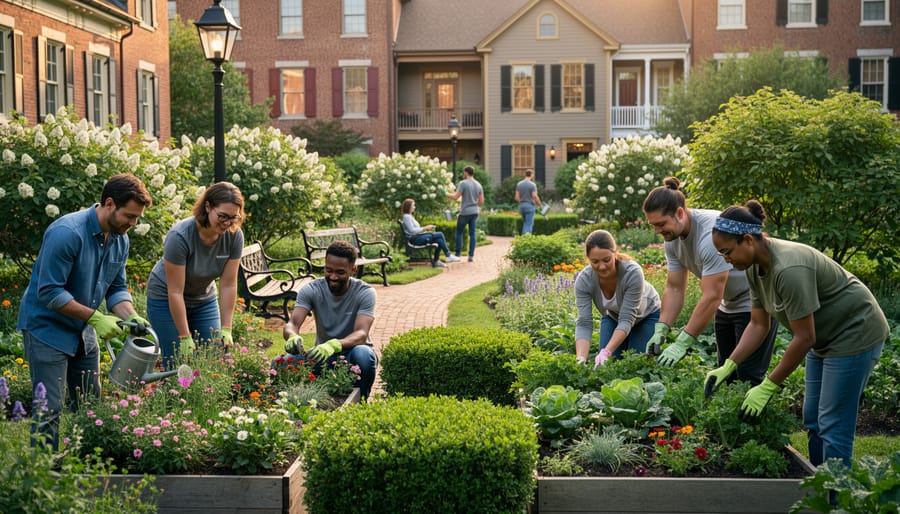
Preserving and Reviving Heritage District Gardens
The good news is that heritage district gardens aren’t just relics gathering dust in history books. Across the country, passionate communities are rolling up their sleeves to preserve these green treasures, and there’s a place for you in this movement, regardless of your experience level.
Many cities have established heritage garden trusts or friends groups dedicated to maintaining historic landscapes. These organizations work tirelessly to restore period-appropriate plantings, repair original hardscaping features, and keep these spaces accessible to the public. I recently spoke with Margaret Chen, head gardener at the Riverside Heritage Garden in Portland, who shared that volunteers are the backbone of their preservation efforts. “We couldn’t do this without people who care,” she told me. “Whether someone can offer two hours a month or two days a week, every contribution helps us maintain authenticity while keeping gardens vibrant.”
Getting involved is easier than you might think. Start by researching heritage gardens in your area through local historical societies or parks departments. Many offer volunteer days where you’ll learn hands-on restoration techniques while working alongside experienced gardeners. It’s a fantastic way to expand your gardening knowledge while connecting with like-minded enthusiasts.
If physical volunteering isn’t possible, consider joining advocacy efforts. Heritage gardens often face funding challenges or development threats. Writing letters to city councils, attending public hearings, or sharing information on social media can make a real difference. Some groups also need help with archival research, identifying historic plant varieties, or photographing seasonal changes for documentation.
Financial support matters too. Even modest donations help purchase heritage seeds, fund educational programs, or maintain irrigation systems. Many organizations offer membership programs with perks like exclusive garden tours or workshops on period gardening techniques. You’re not just preserving history – you’re investing in green spaces that continue enriching communities for generations to come.
Walking through your local heritage district today, you’re not just strolling past pretty flower beds and peaceful benches. You’re stepping into a living story that connects generations of people who believed green spaces could change society for the better. Those Victorian-era parks weren’t just about aesthetics; they were bold statements about equality, health, and community.
When you visit downtown heritage gardens now, take a moment to imagine what these spaces meant to workers emerging from cramped tenements, to children who had nowhere else to play, to reformers fighting for a more just society. The very existence of public parks represents a triumph of civic-minded individuals who understood that everyone deserves access to nature’s benefits.
Here’s the wonderful part: this story isn’t finished. Every time we volunteer at a community garden, advocate for green space preservation, or simply teach a neighbor about sustainable gardening practices, we’re adding our own chapter to this heritage. The principles that created these historic districts remain remarkably relevant today. We still need spaces that bring diverse communities together, promote wellness, and demonstrate environmental stewardship.
I encourage you to explore your local heritage district with fresh appreciation. Notice the thoughtful plant selections, the democratic design that welcomes everyone, the way green corridors connect neighborhoods. Then consider how you might contribute to your community’s green legacy. Perhaps you’ll join a park beautification project, share heirloom seeds with neighbors, or advocate for new public gardens in underserved areas. Your hands can help write the next century of this ongoing story.


