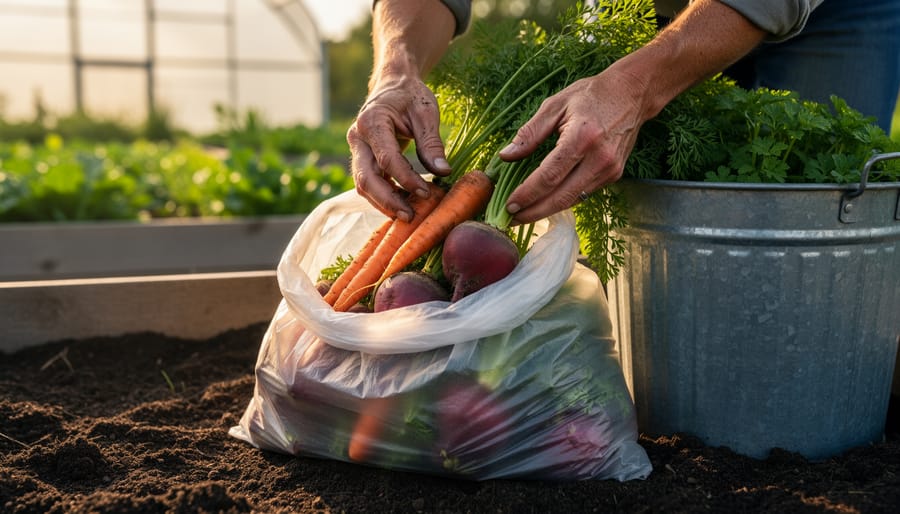
Picture this: you’re standing in your garden, harvesting fresh vegetables, and the very bag you used to protect your carrots months ago has disappeared into the soil, enriching it instead of polluting it. That’s the quiet revolution happening in gardens everywhere with biodegradable vegetable bags.
These earth-friendly alternatives to plastic are transforming how we grow and store our produce. Made from materials like cornstarch, plant fibers, and other organic compounds, biodegradable vegetable bags break down naturally within weeks or months, leaving no toxic residue behind. They’re not just packaging, they’re a practical tool that aligns your gardening habits with the health of your soil and the planet.
What makes these bags so appealing to gardeners is their versatility. Use them to store root vegetables in your refrigerator, where they maintain proper humidity while preventing mold. Toss them directly into your compost bin after use, where they’ll decompose alongside your kitchen scraps. Some gardeners even bury used bags in their garden beds, where they break down and contribute organic matter back to the soil.
The shift to biodegradable options doesn’t require sacrifice. Modern versions are surprisingly durable, handling wet vegetables and heavy loads without tearing. They come in various sizes perfect for everything from delicate herbs to hefty squash. Whether you’re concerned about reducing plastic waste, improving your composting system, or simply want products that match your sustainable gardening values, biodegradable vegetable bags offer a simple solution that works from harvest to storage.
What Exactly Are Biodegradable Vegetable Bags?
If you’ve ever wondered about those promising-looking bags labeled “biodegradable” at your local garden center, you’re not alone! Let me explain what makes these bags different from the traditional plastic ones we’ve relied on for years.
Biodegradable vegetable bags are specially designed bags that naturally break down into harmless components when exposed to the right environmental conditions. Unlike conventional plastic bags made from petroleum-based products that can persist in landfills for hundreds of years, these eco-friendly alternatives decompose much faster, typically within several months to a few years.
The magic lies in what they’re made from. Most biodegradable vegetable bags use plant-based materials like cornstarch, potato starch, or other vegetable starches as their primary ingredient. You’ll also find bags crafted from plant fibers such as hemp, jute, or even bamboo. Some manufacturers combine these natural materials with other compostable polymers to create bags that are both sturdy and earth-friendly.
Here’s the science part made simple: when these bags end up in compost piles or soil, microorganisms like bacteria and fungi recognize the plant-based materials as food. They literally eat away at the bag, breaking down its structure into carbon dioxide, water, and organic matter. This process, called biodegradation, happens naturally without leaving behind toxic residues that harm your garden soil.
The key difference from regular plastic? Traditional bags are made from long-lasting synthetic polymers that microorganisms simply can’t digest. Think of it this way: biodegradable bags are like an apple core that breaks down naturally, while regular plastic is like a rock that just sits there indefinitely.
Understanding this basic science helps you make informed choices for your sustainable gardening practices while genuinely helping the environment.
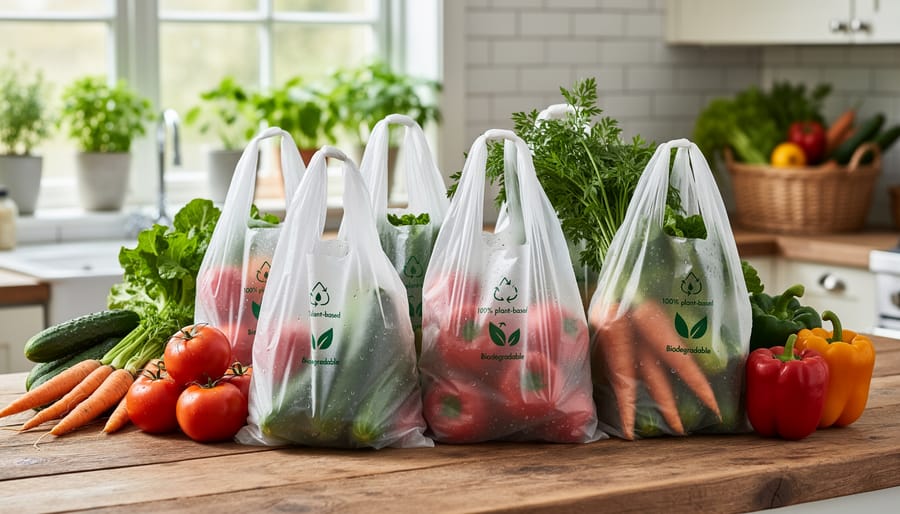
The Environmental Impact You’re Making Every Time You Garden
Here’s something that might surprise you: those regular plastic bags you’ve been using around your garden? They can take up to 1,000 years to decompose. That means every plastic bag that’s ever touched your tomatoes or held your harvested zucchini is likely still sitting somewhere on our planet.
When traditional plastic bags break down in your garden soil, they don’t disappear. Instead, they fragment into tiny microplastics that interfere with water drainage, prevent earthworms from moving freely, and can even be absorbed by the very vegetables you’re growing. I learned this the hard way when I found plastic shards mixed into my compost pile years after I thought they’d vanished.
The impact extends beyond your backyard fence too. Studies show that approximately 8 million tons of plastic waste enter our oceans annually, with single-use bags being major contributors. Birds mistake them for food, and soil organisms struggle to thrive when plastic particles accumulate.
This is where biodegradable vegetable bags become game-changers for those embracing earth-friendly farming methods. Made from materials like cornstarch or plant fibers, these bags typically decompose within three to six months under proper conditions. They break down into natural components that actually nourish your soil rather than contaminating it. You’re not just storing your harvest differently; you’re actively choosing to leave your garden healthier than you found it.
Clever Ways to Use Biodegradable Bags in Your Garden
Storing and Transporting Your Harvest
Biodegradable vegetable bags make harvesting a breeze while keeping your produce fresh and your practices earth-friendly. When collecting vegetables from your garden, these bags are perfect companions. Their breathable material allows air circulation, preventing moisture buildup that can lead to premature spoiling. I like to keep several bags hanging near my garden gate for easy grab-and-go harvesting.
For transporting produce from garden to kitchen, biodegradable bags protect delicate items like tomatoes and leafy greens without adding harmful plastics to your routine. The bags are surprisingly sturdy, handling everything from root vegetables to summer squash. One experienced gardener I spoke with mentioned she uses different colored bags to sort vegetables by storage needs, which is brilliant for staying organized.
When it comes to storage, these bags work wonderfully in your refrigerator’s crisper drawer. The breathable fabric maintains optimal humidity levels for many vegetables while preventing the condensation issues common with plastic bags. For items like potatoes and onions that prefer cool, dark spaces, biodegradable bags provide excellent ventilation in your pantry or cellar. Just remember to shake off excess soil before storing, and your harvest will stay fresh for days while you reduce your environmental footprint.
Composting Made Easier
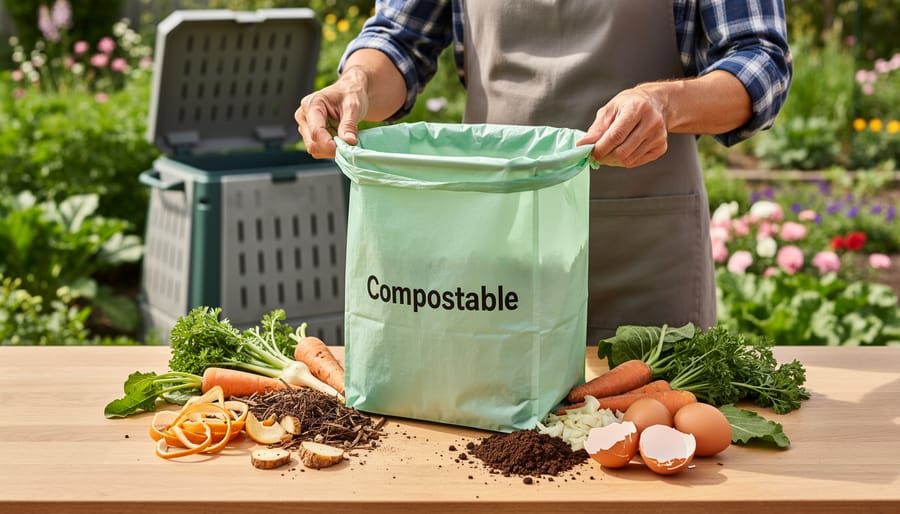
Using biodegradable vegetable bags in your composting routine makes the whole process surprisingly simple. I’ve found they’re perfect as compost bin liners, especially for those countertop containers we keep for kitchen scraps. Instead of emptying and washing your bin daily, just toss the entire bag into your outdoor compost pile when it’s full. No mess, no fuss.
These bags typically break down within 3 to 6 months in an active compost environment, though timing varies based on temperature and moisture levels. For best results, tear the bag open slightly before adding it to your pile. This exposes more surface area to beneficial microorganisms and speeds decomposition. Keep in mind that compost piles need to maintain temperatures between 135-160°F for optimal breakdown, so turn your pile regularly and ensure it stays moist but not soggy.
Here’s a tip from my gardening friend Martha: she uses biodegradable bags to collect weeds and dead plant material directly in the garden. When the bag fills up, everything goes straight into the compost together. It’s a time-saver that reduces handling and keeps your hands cleaner. Just remember to verify your bags are truly compostable and certified for home composting systems rather than only industrial facilities.
Starting Seedlings and Protecting Young Plants
Here’s a gardening secret that might surprise you: those humble biodegradable vegetable bags sitting in your kitchen can become invaluable helpers for your tender seedlings and young plants.
I discovered this trick quite by accident during an unexpected late spring frost. In a panic, I grabbed whatever I could find to protect my newly planted tomatoes, and those biodegradable bags saved the day. Simply slip a bag over vulnerable plants in the evening, securing it loosely at the base with soil or a stone. The bag creates a protective barrier against frost while still allowing some air circulation. Come morning, remove the bags and let your plants enjoy the sunshine.
But the usefulness doesn’t stop there. These bags make excellent seed-starting containers, functioning similarly to biodegradable grow bags. Fill them with seed-starting mix, plant your seeds, and when seedlings are ready for transplanting, simply plant the entire bag directly into your garden bed. The bag will decompose naturally, eliminating transplant shock and reducing root disturbance.
For windy conditions, cut bags into strips and use them as temporary plant collars around delicate seedlings. They’ll shield young stems from harsh winds and provide a bit of extra warmth during cool nights. It’s remarkable how something so simple can multitask so effectively in the garden while staying completely earth-friendly.
What to Look for When Choosing Your Bags
Shopping for biodegradable bags can feel overwhelming with so many products claiming to be eco-friendly. Let me share what I’ve learned about spotting the real deal from the pretenders.
First, look for legitimate certifications. The BPI (Biodegradable Products Institute) certification is your gold standard in North America. It means independent testing confirmed the bag will break down properly. Another trustworthy marker is ASTM D6400, a specification that tests whether materials fully decompose into natural elements within a specific timeframe. In Europe, watch for EN 13432 certification. These aren’t just fancy labels – they’re your assurance that what you’re buying actually works as promised.
Don’t confuse “biodegradable” with “compostable.” Here’s the difference: biodegradable means it eventually breaks down, but that could take decades and leave microplastics behind. Compostable means it degrades into nutrient-rich matter within months under proper conditions. For vegetable storage and composting, you want compostable.
Thickness matters for practical use. Bags between 15-20 microns handle most vegetables beautifully without tearing, while thinner options work fine for leafy greens. Check the product description for weight capacity too.
Be wary of greenwashing red flags. Vague terms like “eco-friendly” or “degradable” without certification backing them up are warning signs. If a company can’t clearly explain what their bags are made from or how they break down, keep shopping. Similarly, avoid bags that only degrade with industrial composting if you’re planning backyard composting.
When comparing biodegradable garden products, read reviews from actual gardeners. They’ll tell you whether bags hold up during harvest and truly disappear in the compost pile as promised. Your investment in quality bags pays off through performance and genuine environmental benefit.
Real Gardeners Share Their Experience
We reached out to gardeners across the country who’ve made the switch to biodegradable bags, and their experiences offer valuable insights for anyone considering this sustainable option.
Maria Chen, who’s been gardening in Oregon for fifteen years, swears by BioBag compostable bags for her kitchen scraps. “I keep one hanging on my pantry door, and when it’s full, the whole thing goes straight into my compost bin,” she explains. “After about six weeks, you can’t even tell there was a bag there. It just becomes part of the compost.”
Tom Rodriguez from Texas learned an important lesson about storage. “I made the mistake of storing my biodegradable bags in the garage during summer,” he shares with a laugh. “The heat and humidity started breaking them down before I could use them. Now I keep them in a cool, dry spot inside, and they last for months.”
Jennifer Walsh, a community garden coordinator in Vermont, uses biodegradable bags for her seed-starting program. “We fill them with potting mix and seeds, distribute them to families, and they plant the whole thing. It’s been wonderful for getting kids involved in gardening,” she notes. Her favorite brands are Eco-Bags and Plant-It, which she finds hold up well through the growing process.
The common thread? These gardeners appreciate the convenience of not having to separate bags from organic materials, and they’ve noticed their compost quality improving since making the switch.
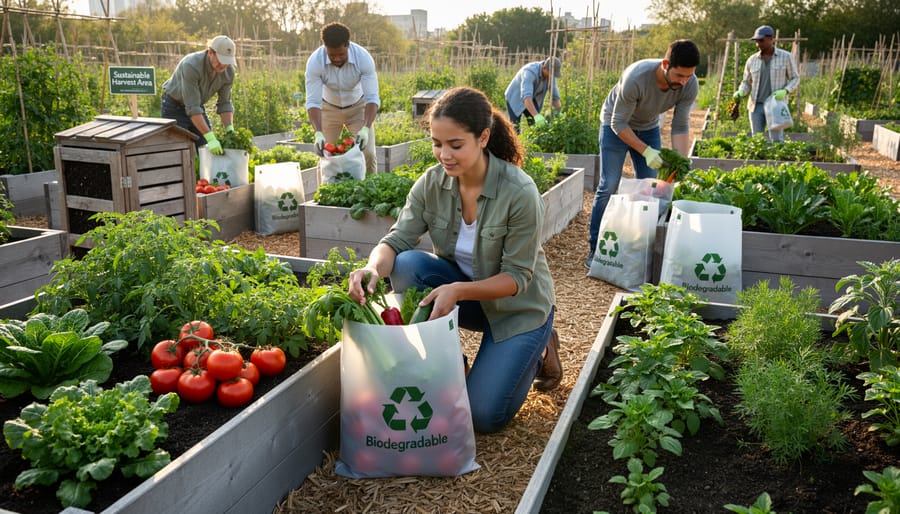
Making the Switch: Your Action Plan
Ready to make the switch? Let’s break it down into manageable steps that’ll have you using biodegradable bags in no time.
Start by purchasing a small quantity to test the waters. Check your local garden centers first, as many now stock biodegradable options alongside traditional supplies. Online retailers like Amazon and specialty eco-friendly stores offer variety packs that let you try different thicknesses and sizes. Expect to pay around $15-25 for a roll of 100 bags, which is about twice the cost of plastic, but remember you’re investing in soil health.
Storage is straightforward but important. Keep your biodegradable bags in a cool, dry place away from direct sunlight. A kitchen drawer or pantry shelf works perfectly. Unlike plastic, these bags have a shelf life of about 12-18 months, so buy only what you’ll use within that timeframe.
Getting your household on board becomes easier when you make it convenient. Place a roll near your vegetable drawer and explain how these alternatives to plastic will eventually nourish the garden everyone enjoys. Kids often love being part of eco-friendly initiatives, so assign them the job of bag monitor.
Create a simple system: designate one container for vegetable scraps destined for composting and another for items headed to the fridge. Label them clearly during the first few weeks until the routine becomes second nature. Within a month, reaching for biodegradable bags will feel as natural as any other kitchen habit.
Making the switch to biodegradable vegetable bags might seem like a small step, but it’s these thoughtful choices that collectively create meaningful change in our gardens and beyond. Every time you choose a biodegradable option over conventional plastic, you’re voting for healthier soil, cleaner waterways, and a more sustainable future. You don’t need to transform your entire gardening routine overnight – starting with one bag, one season, is already making a difference.
Remember, gardening has always been about nurturing growth, and that philosophy extends beyond our plants to the practices we embrace. Whether you’re a weekend gardener tending a few pots on your balcony or managing a sprawling vegetable plot, your decisions matter. The beauty of sustainable gardening is that it’s accessible to everyone, regardless of experience level or garden size.
We’d love to hear from you! Have you experimented with biodegradable bags or discovered other creative eco-friendly solutions in your garden? Perhaps you’ve found an unexpected use for them or have tips to share with fellow gardeners. Your experiences could inspire someone else to take that first sustainable step. Share your stories, questions, and biodegradable gardening wins in the comments below. Together, we’re building a community of gardeners who care not just about what we grow, but how we grow it. Let’s keep learning from each other and celebrating every positive choice we make for our gardens and our planet.