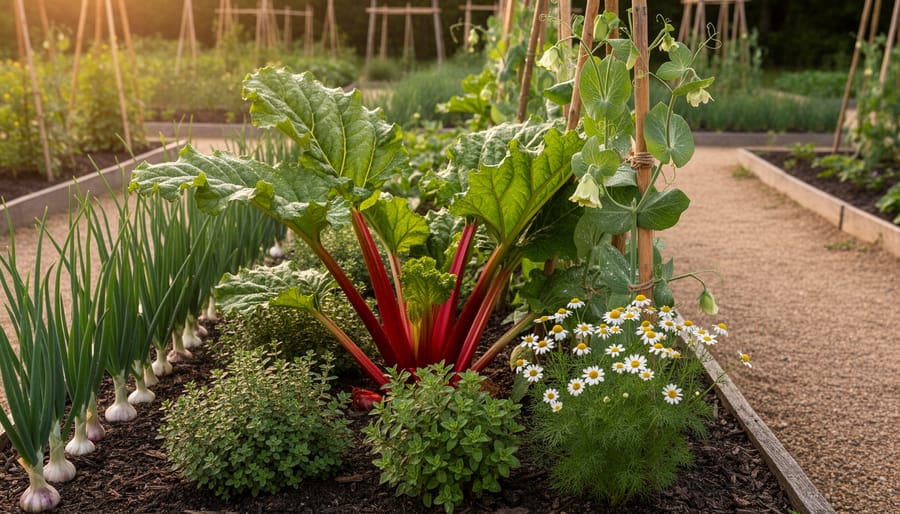
Plant your four sisters in a circular mound approximately 4 feet wide, positioning one corn seed in the center and four more seeds spaced 6 inches apart in a circle around it. Wait until corn reaches 6 inches tall before tucking two bean seeds near each stalk, allowing them to use the corn as natural trellises. Around the perimeter of your mound, plant 4-6 squash seeds, spacing them evenly to create a living mulch that shades out weeds and retains soil moisture. The fourth sister—traditionally a nitrogen-fixing plant like bee balm, amaranth, or sunflowers—goes in the gaps between squash plants, adding pollinator attraction and additional nutrients your trio can’t provide alone.
This ancient agricultural technique transforms your garden into a self-sustaining ecosystem where each plant actively supports the others. Corn provides vertical structure, beans pull nitrogen from the air and deposit it into soil where shallow-rooted companions can access it, squash leaves create a protective canopy that moderates soil temperature, and your fourth sister attracts beneficial insects while adding diversity to your harvest. The magic happens underground too, where different root depths mean these plants never compete for the same nutrients.
Whether you’re a first-time gardener or someone looking to maximize your growing space, this companion planting method delivers multiple crops from a single footprint while building soil health season after season. The diagram might look complex at first glance, but breaking it into these simple steps makes implementation straightforward and incredibly rewarding.
What Makes the Four Sisters Different from Three Sisters

The Traditional Three Sisters Foundation
The traditional Three Sisters garden represents one of nature’s most elegant partnerships, perfected by Indigenous peoples across North America for centuries. This companion planting method brings together corn, beans, and squash in a beautifully balanced relationship where each plant supports the others.
Corn serves as the strong, upright partner, growing tall and providing a natural trellis for climbing beans. As a heavy feeder, corn draws nitrogen from the soil to fuel its impressive growth. Beans work their magic underground, housing special bacteria in their root nodules that capture nitrogen from the air and convert it into a form plants can use. This nitrogen-fixing ability replenishes what the corn takes, creating a sustainable nutrient cycle right in your garden bed.
Squash completes the trio by spreading its broad leaves across the ground, acting as a living mulch that shades the soil, retains moisture, and discourages weeds. The squash’s prickly stems even help deter raccoons and other critters from raiding your corn harvest. Together, these three plants create a self-supporting ecosystem that reduces your need for fertilizers and intensive maintenance.
Choosing Your Fourth Sister Plant
Now for the fun part—choosing your fourth sister! While the traditional trio of corn, beans, and squash forms the foundation, adding a fourth plant can really amp up your garden’s productivity and biodiversity.
Sunflowers are perhaps the most popular choice, and for good reason. These cheerful giants act as living trellises for beans (just like corn does) while their deep taproots mine nutrients from lower soil levels that other plants can’t reach. As a bonus, their seeds attract beneficial birds to your garden.
Bee balm brings a different kind of magic to the party. This fragrant herb is a pollinator powerhouse, drawing in bees and butterflies that’ll help all your sisters produce better. It also has shallow roots that won’t compete with your other plants, making it an excellent perimeter addition.
Amaranth is the nutrient dynamo of fourth sisters. Its extensive root system pulls up minerals from deep soil layers, and when you chop and drop its leaves, they become protein-rich mulch for the whole garden family. Plus, both the leaves and seeds are edible!
Cleome, or spider flower, rounds out our options as another pollinator magnet. Its tall, airy structure provides light shade for squash leaves during the hottest part of summer while attracting beneficial insects that keep pests in check.
How Nutrients Flow Between Your Four Sisters

The Nitrogen Cycle in Action
Here’s the secret behind why beans are such generous garden neighbors: they’re actually partnering with tiny bacteria living in nodules on their roots. These beneficial bacteria have an amazing talent – they can grab nitrogen from the air pockets in your soil and transform it into a form that plants can actually use. Think of beans as having their own personal nitrogen factory underground!
Now, here’s where it gets really exciting for your four sisters garden. Corn is what we call a heavy feeder, meaning it’s hungry for nitrogen to fuel those tall stalks and delicious ears. As your bean plants grow throughout the season, some of that converted nitrogen naturally seeps into the surrounding soil. Your corn plants can tap into this shared resource, getting the nitrogen boost they need without you having to add extra fertilizer.
This underground exchange is happening continuously during the growing season, but the real gift comes at season’s end. When you turn those spent bean plants back into the soil, all those nitrogen-rich root nodules break down, enriching your garden bed for next year’s crops. It’s nature’s own fertilization system, and you get to enjoy the benefits simply by planting these companions together!
Deep Roots and Nutrient Mining
One of the most fascinating aspects of the Four Sisters garden is what’s happening beneath the surface. Each plant develops roots at different depths, creating a natural layering system that taps into nutrients throughout the entire soil profile.
Corn sends its roots deep into the soil, often reaching 3-4 feet down to access water and nutrients that shallow-rooted plants can’t reach. Beans develop medium-depth roots, typically extending 2-3 feet, while their nitrogen-fixing nodules enrich the soil at this middle layer. Squash creates a shallow but extensive root network that spreads wide rather than deep, mining nutrients from the top 12-18 inches of soil. The fourth sister you choose, whether it’s a sunflower or amaranth, adds another dimension to this underground community.
This vertical root diversity means your plants aren’t competing for the same resources. Instead, they’re working together like neighbors sharing different floors of an apartment building. The result? Each plant gets what it needs without depleting any single soil layer, creating a remarkably efficient and self-sustaining system.
Building Soil Through Diversity
The Four Sisters method creates a living soil factory right in your garden bed. Unlike monoculture rows where soil gradually depletes, this diverse planting system builds fertility naturally. Each plant contributes differently: sunflower and corn stalks decompose into carbon-rich material, beans add nitrogen through their root nodules, squash leaves create thick mulch, and bee-attracting flowers draw pollinators that support the whole ecosystem. Together, they feed countless beneficial microorganisms underground. The varied root depths prevent compaction while opening channels for air and water. This is the science of companion planting in action—multiple species working together create healthier, more resilient soil than any single crop could achieve alone.
Your Step-by-Step Four Sisters Planting Diagram
Preparing Your Planting Mound
Creating the perfect growing environment starts with building a proper mound, just like Indigenous gardeners have done for centuries. The traditional approach calls for mounds about 12 inches high and 18 inches wide at the base, spaced roughly 4 feet apart. This elevation provides excellent drainage while warming the soil faster in spring.
Start by loosening the soil in your chosen spot, then pile it into your mound shape. Here’s where you can get creative with amendments: work in 2-3 inches of compost or well-aged manure to give your plants a nutrient boost. I like to add a handful of fish meal at the base for slow-release nitrogen that beans and corn especially love.
If traditional mounds feel challenging, don’t worry! Raised beds work beautifully too. Aim for beds at least 4 feet square and 10-12 inches deep. The key is ensuring good drainage, so avoid compacted soil. A gardener I interviewed swears by creating slight indentations around each mound’s base to catch water during dry spells while still allowing excess to drain away. Whatever method you choose, make sure your mounds face south for maximum sun exposure and give them a good watering before planting day arrives.

The Planting Sequence That Works
Success with the Four Sisters starts with understanding that timing truly matters. Think of it as a carefully choreographed garden dance where each plant takes the stage at just the right moment.
Begin your planting sequence when soil temperatures reach about 60°F, typically two weeks after your last frost date. Start with corn, your tallest sister and the structural foundation. Plant corn seeds 1 inch deep in clusters, spacing them 10-12 inches apart. You’ll want to create small mounds about 4 feet apart in all directions, with 4-5 corn seeds per mound.
Here’s the crucial part: resist the temptation to plant everything at once. Wait until your corn reaches 6-8 inches tall, usually about two weeks later. This gives the corn enough height to withstand the climbing beans without getting smothered.
Once your corn is ready, plant beans around the base of each stalk, about 6 inches from the corn stem. Place 3-4 bean seeds per mound, pushing them about 1 inch deep into the soil.
During this same planting session, add your squash. Position 2-3 squash seeds between the corn mounds, roughly 2 feet from the mound centers. These will sprawl outward, creating that protective ground cover.
The fourth sister, sunflowers, goes in last at the northern edge of your plot to avoid shading the other plants. Space them 18-24 inches apart. Some gardeners plant sunflowers simultaneously with corn if they’re creating a larger patch that needs extra support structures and pollinator attraction throughout the growing season.
Spacing and Placement for Maximum Benefit
Create mounds 18-24 inches wide and 4-6 inches tall, spacing them 4 feet apart in all directions. This gives each plant family room to thrive without competing. Start by planting 4-6 corn seeds in the center of each mound, arranged in a small circle about 6 inches across. Once corn reaches 4-6 inches tall, plant 4-6 bean seeds around the corn circle, about 6 inches from the stalks. Simultaneously, place 4-6 squash seeds around the outer edge of the mound. Finally, add your fourth sister by tucking 3-4 sunflower seeds on the north side of the mound, preventing shade from blocking the corn. This arrangement mirrors traditional Three Sisters garden spacing while incorporating the beneficial sunflower. The circular pattern encourages nutrient sharing through root networks and maximizes each plant’s access to sunlight and soil resources.
Maintaining Your Four Sisters Garden
Watering and Feeding (Or Not Feeding)
Here’s the wonderful news: the Four Sisters are designed to be relatively self-sufficient! Your beans are working overtime fixing nitrogen in the soil, which feeds your corn and squash. Meanwhile, that lovely bee balm attracts pollinators that help everything produce better. This natural partnership means you’ll need far less fertilizer than traditional gardens.
That said, a little boost at planting time never hurts. I like to work aged compost into the mounds before planting. If your soil is particularly poor or you notice pale leaves mid-season, a gentle application of balanced organic fertilizer can help. Just go easy—too much nitrogen makes beans lazy about fixing their own!
For watering, think consistency rather than intensity. The mounds should stay evenly moist but never waterlogged. I water deeply once or twice weekly rather than daily sprinkles, which encourages those corn and bean roots to grow strong and deep. The squash leaves act like living mulch, shading the soil and reducing water evaporation—another reason this system is so clever! Morning watering helps prevent fungal issues on those big squash leaves. During hot spells or when corn is tasseling, bump up your watering schedule slightly.
Managing the Canopy
As your Four Sisters garden grows, keeping the canopy manageable becomes essential for success. Think of yourself as a gentle conductor, guiding each plant to shine without overshadowing its neighbors.
Start by training your pole beans clockwise around the corn stalks when they reach about 6 inches tall. This natural spiral helps them climb efficiently without strangling the corn. I learned this tip from master gardener Elena Rodriguez, who’s been growing the Four Sisters for over twenty years. “The beans know what to do,” she told me, “we just give them a little direction at the start.”
Your squash and sunflower leaves will compete for ground-level light, so position them thoughtfully. Tuck squash vines outward from the center, creating a living mulch that radiates from your mound. If sunflowers begin casting too much shade, simply remove a few lower leaves to let dappled light through. Remember, sunflowers are the generous tall sister, providing support without demanding much space.
Check your garden every few days during peak growing season. Gently redirect any bean vines that wander toward neighboring mounds, and prune squash leaves that yellow or show disease. This regular attention prevents the tangle that can harbor pests and disease while ensuring everyone gets their share of sunshine.
Common Mistakes and How to Avoid Them
Timing Troubles
I’ve been there—planting all four sisters on the same day, only to watch them compete rather than cooperate! When everything goes in simultaneously, fast-growing beans can quickly overwhelm tender corn seedlings, while squash leaves may shade out companions before they establish.
The fix is simpler than you might think. Start by giving your corn a two-week head start. Once it reaches about 6 inches tall, add your beans. Wait another week before introducing squash and your fourth sister (whether that’s sunflowers, amaranth, or another pollinator). This staggered approach lets each plant claim its space without crowding.
If your garden’s already showing signs of poor timing—leggy corn, tangled beans, or struggling squash—don’t worry. Gently thin overcrowded areas, add support stakes for any toppling plants, and consider transplanting excess seedlings to a new mound. Your garden will thank you for the breathing room, and you’ll still enjoy the benefits of companion planting.
Overcrowding and Competition
Even the best of sisters sometimes need a little space! Your Four Sisters garden might be struggling if you notice stunted growth, yellowing leaves, or vines that seem to strangle rather than support. These are telltale signs that your plants are competing for nutrients, water, and sunlight instead of working together harmoniously.
The traditional spacing works beautifully in many climates, but you might need adjustments based on your specific varieties. If you’re growing particularly vigorous squash or large sunflower varieties, consider increasing your mound spacing to 4-5 feet apart instead of the standard 3 feet. In hot, dry climates, plants actually benefit from closer spacing as they create shade and retain moisture together, while cooler regions with heavy rainfall may need extra room for airflow to prevent fungal issues.
Pay attention to your corn’s height too. Shorter varieties might struggle to support enthusiastic pole beans, so choose beans that match your corn’s vigor. I learned this the hard way when my ambitious Kentucky Wonder beans toppled my sweet corn before it even tasseled!
Monitor your garden closely during the first few weeks. If plants seem cramped, don’t hesitate to thin seedlings or relocate a mound. Remember, happy sisters share resources generously rather than fighting over them.
You’ve now got everything you need to create your own thriving Four Sisters garden! This time-tested planting method isn’t just about growing food—it’s about creating a miniature ecosystem right in your backyard. Whether you’re planting your very first garden bed or you’re a seasoned gardener looking to boost soil health naturally, the Four Sisters diagram offers a beautiful blueprint for success.
What I love most about this approach is how forgiving it is. Your corn might grow a little taller or shorter than expected, your beans might climb more enthusiastically than planned, and that’s perfectly fine. The plants work together regardless, each contributing to the group’s success. You’ll be amazed watching how these four companions support each other—literally and nutritionally.
Start small if you’re feeling uncertain. Even one Four Sisters mound will reward you with fresh vegetables and noticeably richer soil by season’s end. As you gain confidence, expand your planting area and experiment with different varieties. The abundant harvests and improved soil structure will speak for themselves, and you’ll find yourself returning to this sustainable method year after year. Give it a try this growing season—your garden will thank you!