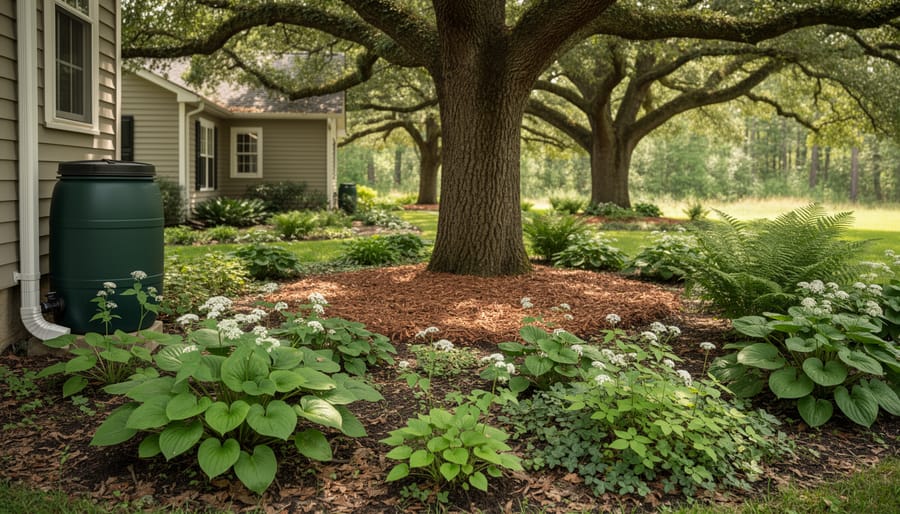
Layer organic mulch 2-3 inches deep around shade trees and shrubs to retain moisture, suppress weeds naturally, and feed the soil as it breaks down. Choose native woodland plants adapted to your region’s shade conditions—they’ll thrive without fertilizers or excessive watering once established. Collect rainwater in barrels positioned under downspouts to irrigate your garden during dry spells, reducing your water bill and municipal strain. Replace invasive ground covers like English ivy with native alternatives such as wild ginger or foamflower that support local pollinators and wildlife.
Shade gardens offer unique opportunities for environmental stewardship that sun-loving landscapes simply can’t match. The naturally cooler temperatures beneath tree canopies mean less water evaporation, while the layered structure of trees, understory shrubs, and ground covers creates vital habitat corridors for birds, beneficial insects, and small mammals. When you embrace sustainable practices in your shaded spaces, you’re not just reducing maintenance time and costs—you’re actively participating in ecosystem restoration right in your own backyard.
The foundation of landscape sustainability lies in working with nature rather than against it. This means understanding your soil’s existing conditions before adding amendments, selecting plants that naturally flourish in low-light environments, and creating systems that cycle nutrients and water efficiently. You don’t need expensive products or complicated techniques to make a meaningful difference. Small, thoughtful changes—like leaving fallen leaves as natural mulch or creating a simple compost area for garden trimmings—compound over time into significant environmental benefits while making your garden healthier and more resilient.
What Landscape Sustainability Really Means (And Why Your Shade Garden Matters)
Landscape sustainability sounds like something requiring a PhD in environmental science, doesn’t it? But here’s the wonderful truth: it simply means creating outdoor spaces that work with nature instead of against it. Your shade garden, tucked beneath those towering oaks or maples, is actually a perfect starting point for making a real difference.
Think of your garden as part of a much larger neighborhood – not just your street, but an interconnected web of ecosystems extending far beyond your fence line. When you make sustainable choices in your shady corner, you’re contributing to cleaner air, healthier waterways, and thriving wildlife populations throughout your region.
Let me break down what this actually means in your garden. Water conservation happens naturally when you choose plants adapted to shade conditions and your local climate. Instead of battling nature with constant irrigation, you’re letting your garden essentially take care of itself. I’ve watched my own shade garden go from needing daily watering to thriving on rainfall alone within two growing seasons.
Soil health is another piece of the puzzle. Healthy soil acts like a sponge, absorbing and filtering water while storing carbon that would otherwise contribute to climate change. Under your shade trees, fallen leaves and organic matter naturally build this living ecosystem if you simply let them do their work rather than clearing everything away.
Biodiversity support might be the most rewarding aspect. Your shade garden can become a haven for pollinators, beneficial insects, and birds seeking shelter and food. Even small spaces create vital stepping stones that help wildlife move through increasingly fragmented habitats.
The beauty of focusing on shade gardens is that they’re often easier to maintain sustainably than sunny beds. Native woodland plants have evolved to thrive in these conditions, requiring less intervention and fewer resources while providing maximum ecological benefit. You’re not sacrificing beauty for sustainability – you’re discovering they’re actually the same goal.
The Hidden Problems Lurking in Traditional Shade Gardens
If you’ve been tending a shade garden for years, you’re probably doing many things right. But here’s the thing: some practices that seem perfectly normal might be working against your sustainability goals without you even realizing it.
Let’s start with watering. Many shade gardeners assume their shady spots need constant moisture, leading to daily watering routines that consume far more water than necessary. I’ve chatted with dozens of gardeners who were surprised to learn their shade gardens could thrive with half the water once plants were properly established.
Then there’s the chemical question. It’s easy to reach for fertilizers and pesticides when plants look stressed, but shade gardens often struggle because they’re fighting the wrong battles. That spotty lawn under your oak tree? It might be getting chemical treatments that never address the real issue: grass simply isn’t meant to grow in deep shade.
Speaking of plants in the wrong places, invasive species present another hidden problem. English ivy, periwinkle, and certain varieties of pachysandra were once recommended as excellent groundcovers for shade. Today we know they can escape into natural areas, crowding out native plants that local wildlife depends on.
Finally, there’s soil degradation. Many gardeners never add organic matter to their shade beds, assuming that fallen leaves create enough. Without attention, compacted soil develops, especially under established trees, preventing water and air from reaching plant roots.
The good news? Once you recognize these patterns, they’re surprisingly simple to change. Small shifts in your approach can transform your shade garden into a truly sustainable landscape that works with nature rather than against it.
Choosing the Right Trees for Long-Term Sustainability
Native Trees That Thrive in Shade
Choosing native trees for your shaded landscape is one of the most rewarding decisions you can make for both your garden and the environment. These trees have evolved alongside local wildlife, providing essential food and shelter while requiring far less maintenance than non-native alternatives.
In the eastern United States, the understory American hornbeam thrives beneath larger canopies, offering beautiful fall color and supporting native moths and butterflies. The flowering dogwood is another excellent choice, providing berries for migrating birds while tolerating dappled shade beautifully. For those in the Pacific Northwest, the vine maple creates stunning layered landscapes and supports local ecosystems without demanding constant care.
When selecting your native shade tree, consider your specific microclimate. I recently spoke with landscape designer Maria Chen, who reminded me that “even within the same yard, moisture levels and light conditions vary dramatically.” She recommends observing your space throughout the seasons before making selections.
Start by contacting your local native plant society or cooperative extension office. They’ll provide detailed lists of trees suited to your exact region and can help you understand soil conditions. Many offer free consultations that prove invaluable for beginners.
Remember that young native trees establish more successfully than larger specimens. Plant them in fall when possible, and resist the urge to over-fertilize. These adaptable trees have thrived in your region for thousands of years and generally prefer a hands-off approach once established. Your patience will be rewarded with a resilient, wildlife-supporting landscape that practically cares for itself.
The Right Tree in the Right Place
I learned this lesson the hard way when I planted a beautiful silver maple just eight feet from my patio. Five years later, those aggressive roots buckled the concrete, and removal cost me more than I’d spent on an entire season of gardening! Choosing the right location from the start saves you heartache and money down the road.
Before planting, research your tree’s mature height and canopy spread. That adorable sapling will grow bigger than you imagine. A general rule: plant large trees at least 15-20 feet from structures, medium trees 10-15 feet away, and small ornamentals about 8 feet from foundations. This prevents root damage to utilities, foundations, and walkways while avoiding tree health problems caused by restricted growth.
Consider what’s overhead too. Power lines and mature tree branches don’t mix well. Look underground before digging—call your utility locator service to avoid buried lines.
Water needs matter as well. Thirsty trees near your vegetable garden create unnecessary competition. Establishing new trees in appropriate locations means they’ll thrive naturally without constant intervention, making your landscape truly sustainable.
Multi-Functional Trees That Work Harder for Your Garden
Think of trees as the multitasking champions of your garden! The right species work around the clock, providing shade while simultaneously supporting wildlife, preventing soil erosion, and even enriching your soil.
Black locust trees are fantastic nitrogen-fixers, drawing this essential nutrient from the air and depositing it in the soil through their roots—like having a natural fertilizer factory in your yard. Their flowers also attract beneficial pollinators in spring. For wildlife enthusiasts, native oaks create entire ecosystems, sheltering birds while their acorns feed squirrels, deer, and turkey.
If erosion is your concern, willows and river birch establish extensive root systems that stabilize slopes while thriving in moist conditions. These adaptable trees also create dappled shade perfect for woodland gardens underneath.
I recently spoke with a landscape designer who swears by serviceberry trees for smaller spaces. They offer spring flowers, summer berries for birds, beautiful fall color, and just enough shade for hostas beneath—truly earning their keep! When choosing your next tree, consider what multiple jobs it can perform in your landscape.
Building Healthy Soil Without Chemical Shortcuts
The Magic of Leaf Mulch and Natural Composting
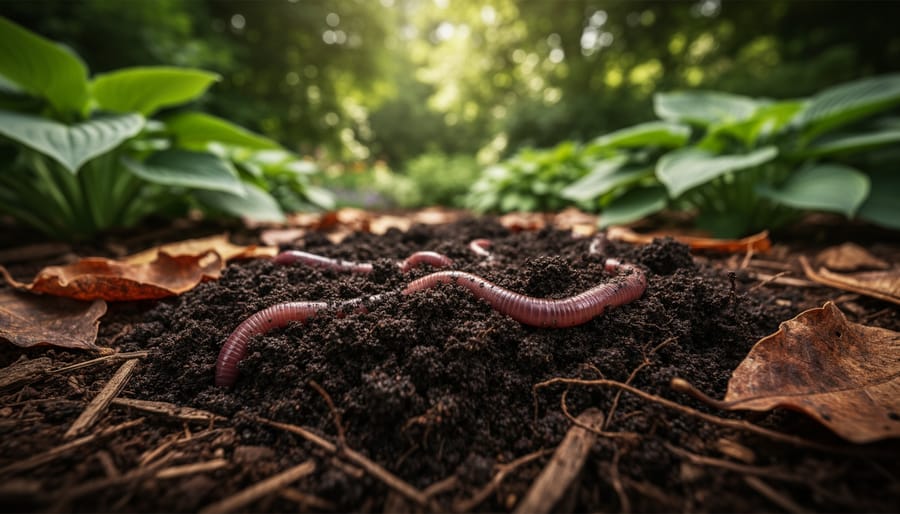
Nature has already perfected the art of composting, and you can see it at work every time you walk through a forest. That thick, spongy layer of decomposing leaves on the forest floor? That’s your blueprint for creating incredibly healthy soil right in your own garden.
When you spread fallen leaves and organic matter around your plants, you’re essentially recreating this natural ecosystem. As the leaves break down, they release nutrients slowly, feed beneficial microorganisms, and improve soil structure without you lifting a finger beyond the initial application. I like to think of it as setting up a self-service buffet for your soil.
Start by collecting those autumn leaves instead of sending them to the curb. Shred them if possible, as smaller pieces break down faster, but whole leaves work too. Apply a 2-3 inch layer around your plants, keeping it a few inches away from tree trunks and plant stems to prevent rot. If you’re worried about leaves blowing away, try layering them with grass clippings or dampening them thoroughly.
Renowned gardener Margaret Roach shared with me that she hasn’t bought fertilizer in years, relying entirely on leaf mulch and kitchen scraps. The key is patience and consistency. By spring, much of your fall mulch will have disappeared into the soil, creating that rich, crumbly texture every gardener dreams about. Simply refresh the layer each season, and watch your garden transform into a thriving, self-sustaining ecosystem.
Testing and Amending Soil the Sustainable Way
Understanding your soil is like getting to know a new friend – it takes a little time, but the relationship pays off wonderfully! The good news? Testing your soil doesn’t require a chemistry degree or expensive equipment.
Start with a simple DIY test kit from your local garden center, or better yet, send a sample to your county extension office for a comprehensive analysis that typically costs under $20. I remember my first soil test results – seeing those numbers made me feel like a detective uncovering the secret life beneath my feet! The report will tell you about pH levels (how acidic or alkaline your soil is) and which nutrients might be running low.
Most plants thrive in slightly acidic to neutral soil, with a pH between 6.0 and 7.0. If your soil is too acidic, wood ash or ground limestone can gently raise the pH. Too alkaline? Sulfur or composted pine needles work wonders to lower it gradually.
When it comes to feeding your soil naturally, think of it as cooking a nutritious meal rather than popping vitamins. Compost is your all-purpose ingredient, providing balanced nutrition while improving soil structure. Grass clippings add quick nitrogen, while crushed eggshells deliver calcium. Coffee grounds, saved from your morning brew, offer nitrogen and slightly acidify soil – perfect for those acid-loving shade plants.
For phosphorus, bone meal does the trick, while wood ash provides potassium. The beauty of these natural amendments? They release nutrients slowly, feeding your plants steadily without the boom-and-bust cycle of synthetic fertilizers.
Water-Wise Strategies for Shade Gardens
Here’s a delightful secret that many gardeners don’t realize: shade gardens are naturally water-wise! Those lovely trees creating dappled light overhead are doing double duty as moisture managers, reducing evaporation and creating cooler microclimates that help the soil retain water longer.
When I spoke with landscape designer Maria Chen, who’s been creating sustainable shade gardens for over two decades, she emphasized that working with shade rather than against it is key. “A well-designed shade garden can use 40-50% less water than a sunny garden,” she explained. “The trick is understanding your site and choosing plants that thrive in those conditions.”
Start by observing how water moves through your shaded areas after rainfall. You’ll likely notice that soil stays moist much longer under tree canopies. Take advantage of this natural water retention by selecting shade-loving plants that prefer consistent moisture without being waterlogged. Hostas, ferns, and astilbes are excellent choices that don’t demand constant watering once established.
Consider setting up a simple rainwater harvesting system. Even a basic rain barrel connected to your downspout can collect hundreds of gallons during the growing season. Position barrels near your shade gardens to make watering convenient and reduce your reliance on municipal water.
Timing matters too. Water your shade garden in the early morning, which gives plants time to absorb moisture before temperatures rise. However, you’ll find you need to water far less frequently than sunny areas because that protective canopy dramatically slows evaporation.
Layer organic mulch around your shade plants, keeping it a few inches from stems. This creates an insulating blanket that locks in moisture and slowly enriches the soil as it breaks down. Think of it as nature’s own drip irrigation system.
Remember, those trees aren’t just providing shade; they’re acting as living umbrellas, intercepting rainfall and directing it along their branches to drip slowly into the soil. By embracing these natural water conservation systems and choosing appropriate plants, your shade garden becomes a sustainability superstar.
Creating Biodiversity Beneath Your Canopy
Shade-Loving Native Understory Plants
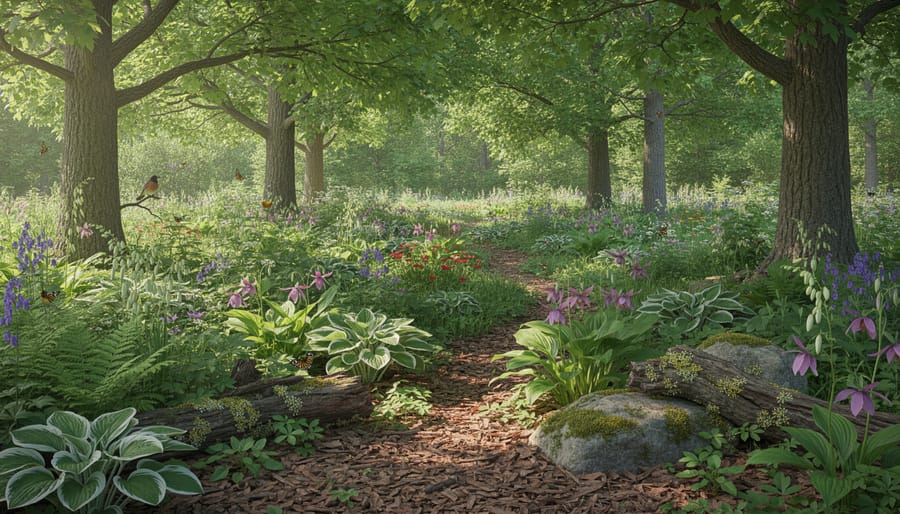
Creating a thriving understory layer beneath your trees isn’t just beautiful—it’s one of the most impactful steps you can take toward a sustainable landscape. These shade-loving plants naturally occur in woodland environments, which means they’re perfectly adapted to competing with tree roots and thriving in dappled light.
For North American gardens, native wild ginger creates a glossy groundcover while supporting spring pollinators. Coral bells offer stunning foliage variety and attract hummingbirds, while Solomon’s seal provides graceful arching stems that deer typically leave alone. If you’re working with deeper shade, consider native ferns like lady fern or Christmas fern—they’re incredibly low-maintenance once established.
During a recent conversation with master gardener Patricia Chen, she shared a wonderful insight: “I always tell people to visit local natural areas and observe what’s already thriving under similar conditions. Those plants are your blueprint for success.” This approach ensures you’re selecting species that will flourish without constant intervention.
Remember to choose plants native to your specific region. What works beautifully in the Pacific Northwest might struggle in the Southeast, and vice versa. Your local native plant society can provide excellent recommendations tailored to your area’s conditions. By selecting regionally appropriate understory plants, you’re creating habitat for local insects, birds, and other wildlife while reducing your need for supplemental watering and fertilizers—a true win-win for both you and the environment.
Welcoming Wildlife Without Inviting Problems
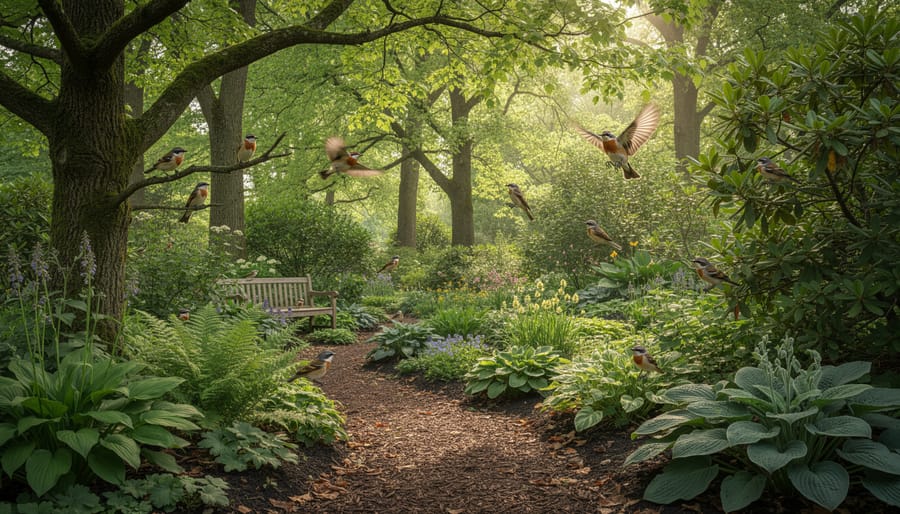
Creating wildlife-friendly spaces doesn’t mean your garden needs to look messy. Start with strategically placed brush piles tucked into corner beds or behind taller shrubs. These become cozy shelters for ground-nesting birds and beneficial insects while remaining virtually invisible from main viewing areas.
Water features work wonders for attracting life to your landscape. A simple birdbath with fresh water brings songbirds daily, while a shallow dish with pebbles creates a safe landing spot for butterflies and bees. For something more ambitious, consider a small recirculating fountain that adds gentle sound while preventing mosquito breeding.
I spoke with garden designer Maria Chen, who shared her favorite tip: “Layer your habitat features vertically. Place a decorative bird feeder near eye level, add a toad house beneath hostas, and install a mason bee hotel on a fence post. This maximizes wildlife appeal without cluttering your space.”
Don’t forget dead wood! A partially buried log becomes a salamander hideaway and decomposition hub for beneficial fungi. Position it along a woodland edge where it looks intentional rather than forgotten. These thoughtful touches transform your shade garden into a thriving ecosystem that looks purposeful and beautiful.
Maintenance Practices That Sustain Rather Than Deplete
The shift toward sustainable landscape maintenance often feels counterintuitive at first. We’ve been conditioned to think tidy gardens require constant intervention, but nature thrives on a different rhythm. The good news? Working with these natural cycles typically means less work, not more.
Start by reimagining your relationship with fallen leaves. Rather than raking every leaf from your garden beds, leave them where they land under trees and shrubs. This natural mulch insulates plant roots, feeds soil organisms, and provides essential winter habitat for beneficial insects. Save the raking for lawns and pathways where leaves might smother grass or create slip hazards.
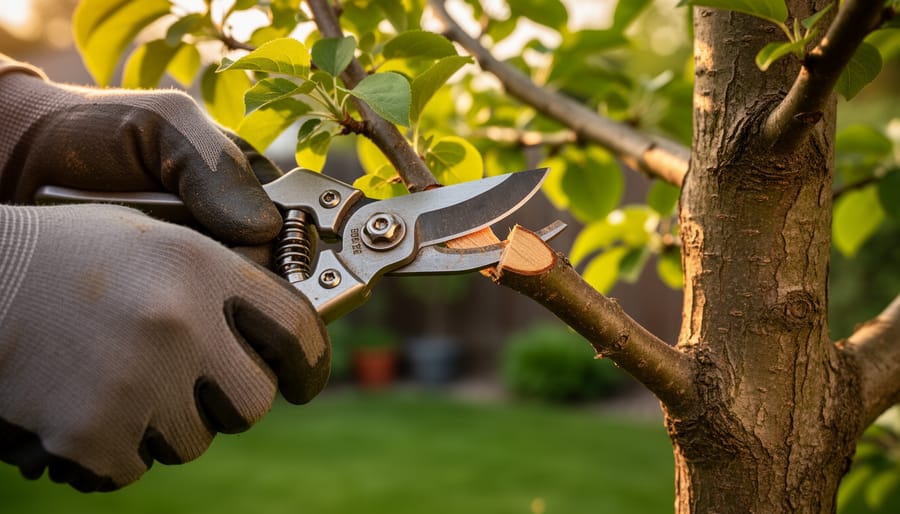
When it comes to proper pruning techniques, less is often more. Many shade plants naturally develop beautiful forms without constant shaping. Focus pruning efforts on removing dead, damaged, or crossing branches rather than creating formal shapes that require frequent maintenance. Time these interventions to match plant dormancy periods, which reduces stress and eliminates the need for repeated corrections.
Power equipment might seem efficient, but manual tools often work just as well for smaller gardens while reducing noise, emissions, and soil compaction. A good pair of hand pruners, a rake, and a wheelbarrow can handle most shade garden tasks beautifully.
Margaret Chen, a landscape designer with thirty years of experience, recalls her own transition: “I used to obsess over keeping everything perfectly groomed. Then I started leaving seed heads standing through winter, and suddenly my garden came alive with birds. I stopped weekly edging, and ground beetles moved in to control slugs. My garden became healthier while I spent less time maintaining it. That’s when I realized sustainability isn’t about sacrifice—it’s about working smarter.”
The key is timing your interventions thoughtfully. Spring cleanup can wait until temperatures consistently stay above fifty degrees, giving overwintering insects time to emerge. This patient approach creates resilience while honoring the interconnected web of life your garden supports.
Your First Three Steps Toward a Sustainable Shade Garden
Ready to transform that shady spot into a sustainable haven? Let me walk you through three simple steps that will get you started today. Remember, this is about progress, not perfection. Even small changes make a real difference for your garden and the environment.
Step one is all about observation. Spend 15 minutes in your shade garden at different times of day, noting where the darkest and brightest spots are. Check how water flows after a rain or watering session. Does it pool anywhere? Run off too quickly? Grab your phone and snap a few photos. I do this every season in my own garden, and it never fails to reveal something new. This simple awareness will guide every decision you make going forward, preventing costly mistakes like planting sun-lovers in deep shade or water-thirsty plants in dry zones.
Step two is choosing just one native shade plant for your area. Visit a local nursery and ask about their easiest native groundcovers or shrubs. Native plants are naturally adapted to your local conditions, which means less water, less fussing, and happier plants. Start with a single flat of native ferns, wild ginger, or whatever thrives naturally in your region’s forests. Plant them in a small test area and watch how they respond.
Step three involves improving your soil with a thin layer of compost or shredded leaves. You don’t need to dig or till. Simply spread a one to two inch blanket over existing soil, mimicking how forests naturally build rich earth. This feeds beneficial organisms, improves moisture retention, and gives your new plants the best possible start.
That’s it. Three achievable steps that launch your sustainable shade garden journey today.
You have the power to make a real difference, right in your own backyard. Every choice you make toward landscape sustainability creates ripples that extend far beyond your garden fence. When you plant a native tree, improve your soil health, or welcome pollinators into your space, you’re contributing to something bigger than yourself.
The beauty of sustainable gardening is that you don’t need to transform your entire landscape overnight. Start with one small change. Maybe it’s adding a single native plant to your shade garden this season, or trying out mulching for the first time. Celebrate each step forward, knowing that even these seemingly modest actions add up to meaningful environmental impact.
Remember, you’re not alone on this journey. You’re joining a passionate and growing community of gardeners who understand that caring for the earth starts right at home. We’re all learning together, sharing successes and setbacks, and discovering that sustainable practices often lead to healthier, more beautiful gardens that require less work over time. Your commitment to landscape sustainability matters, and every small action you take today plants seeds for a greener tomorrow.