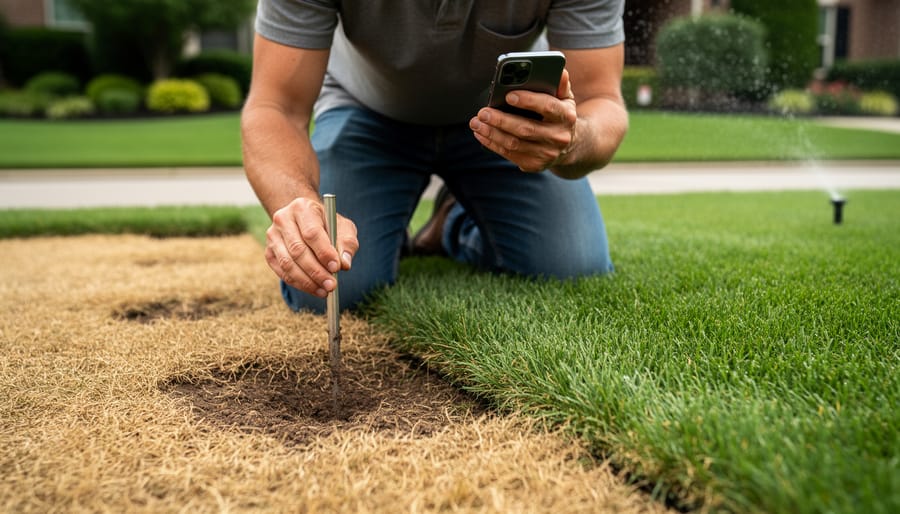
Inspect your lawn for irregular brown patches, thinning grass, or unusual discoloration that doesn’t match typical drought stress or fertilizer burn patterns. When mysterious symptoms appear without clear cause, you’re facing what lawn care professionals increasingly call “Disease X”—a catch-all term for undiagnosed turf problems that don’t fit standard disease profiles.
Check soil moisture levels by pushing a screwdriver six inches deep into affected areas; if it slides in easily despite brown grass, you’ve ruled out drought and confirmed a genuine disease issue. Look closely at individual grass blades for telltale signs like powdery residue, dark spots, or water-soaked appearance that indicate fungal or bacterial infection.
Document when symptoms first appeared and what weather conditions preceded them, since most lawn diseases thrive in specific temperature and humidity ranges. Take clear photos of affected areas from multiple angles and collect samples of diseased grass blades in a sealed plastic bag for potential laboratory analysis.
The good news? Most mysterious lawn diseases respond to the same fundamental treatment approach: improving air circulation through dethatching, adjusting watering schedules to early morning only, and applying appropriate fungicides based on your grass type. Understanding what you’re dealing with transforms anxiety into actionable solutions, helping you restore your lawn’s health systematically rather than guessing at random treatments.
What Exactly Is ‘Disease X’ in Your Lawn?
If you’ve been searching for answers about mysterious patches, discoloration, or strange patterns appearing in your lawn, you’ve probably come across the term “Disease X.” Don’t worry – this isn’t some apocalyptic lawn plague! In the gardening world, Disease X simply refers to those frustrating lawn problems that don’t quite match the textbook descriptions of common turf diseases.
Think of it as a placeholder name for the unidentified culprit behind your lawn’s troubles. Maybe you’re seeing symptoms that look like brown patch but occur at the wrong time of year, or perhaps the damage pattern doesn’t quite fit any disease you’ve researched online. That’s Disease X territory.
Here’s why identifying lawn diseases can feel like detective work: grass diseases often share similar symptoms like yellowing, browning, or thinning turf. Environmental stress, pest damage, and nutrient deficiencies can mimic disease symptoms too. Add in the fact that multiple issues sometimes occur simultaneously, and you’ve got yourself a real puzzle.
The term also applies to emerging diseases that experts are still studying. As climate patterns shift and new fungal strains develop, we occasionally see conditions that even seasoned lawn care professionals haven’t encountered before.
I learned this firsthand when talking with longtime gardener Maria Chen, who discovered an unusual ring pattern in her Kentucky bluegrass. After weeks of confusion, she found it was actually a combination of dollar spot fungus and grub damage working together – not exactly what the disease guides predicted!
The key takeaway? Proper diagnosis matters tremendously. Applying the wrong treatment wastes time, money, and can actually make problems worse. When you’re stumped, there’s no shame in collecting samples and consulting your local extension office for expert analysis.
The Most Common Culprits Behind Mystery Lawn Diseases
Fungal Diseases That Disguise Themselves
Fungal diseases can be real tricksters, often masking themselves as other issues or mimicking each other’s symptoms. Let me walk you through some of the most common culprits and how to spot them.
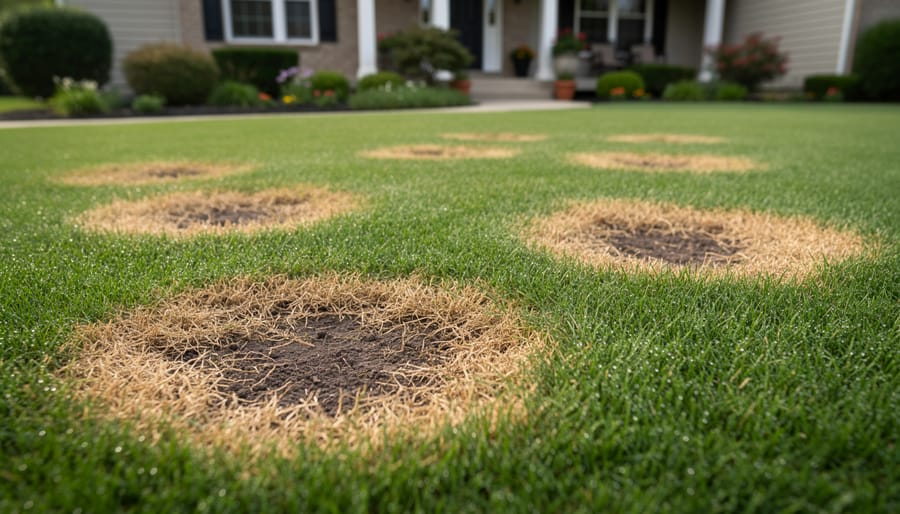
Brown patch is probably the most notorious disguise artist in your lawn. It creates circular patches of dead grass that can range from a few inches to several feet wide. The telltale sign? A distinctive dark, water-soaked ring around the edge of the patch, especially visible in early morning dew. The grass blades themselves often have irregular tan lesions with dark brown borders.
Dollar spot gets its name from the silver dollar-sized patches it creates, though these can merge into larger irregular areas. Look for bleached, straw-colored spots on individual grass blades with a distinctive hourglass shape. In the morning, you might notice cobweb-like fungal threads connecting the blades.
Then there’s fairy ring, which creates those mysterious circles or arcs of dark green grass, sometimes accompanied by mushrooms. While it looks magical, it’s actually fungi working underground, releasing nitrogen as they decompose organic matter.
Red thread and pink patch often confuse homeowners because they appear during cool, wet weather. You’ll see pink or red thread-like growths extending from the grass blades, giving affected areas a pinkish hue from a distance.
The key to identification is observing when symptoms appear, the pattern they create, and examining individual grass blades closely. Taking photos throughout the day helps capture those subtle morning clues that disappear by afternoon.
Environmental Stress That Looks Like Disease
Before you panic about a mysterious lawn disease, let’s take a breath and look at some common environmental culprits that often masquerade as illness. I’ve seen countless gardeners worry themselves sick over what turned out to be simple stress factors!
Drought stress is a big one. When grass doesn’t get enough water, it turns yellow or brown, wilts, and develops that thin, patchy appearance that screams “disease!” But look closer—drought-stressed grass typically shows uniform color changes across affected areas, not the irregular spots or rings that true diseases create.
Chemical burn from over-fertilizing or improper herbicide application can also fool you. It usually appears as yellowing or browning in distinct patterns that match where you walked or sprayed. If you recently applied any lawn products, this might be your answer.
Then there are nutrient deficiencies, which cause overall yellowing or poor growth. A simple soil test can reveal exactly what your lawn needs—no guesswork required! These environmental issues are actually easier to fix than diseases, so don’t skip this detective work before treating for something more serious.
Emerging and Region-Specific Threats
While many lawn diseases are well-documented, some emerging threats and region-specific challenges deserve your attention. Climate change is shifting disease patterns, bringing traditionally southern problems like take-all root rot further north, catching homeowners off guard. Similarly, warm-season grasses in transitional zones now face unfamiliar fungal pressures.
Your local conditions matter enormously. Coastal areas might battle salt-tolerant pathogens, while high-altitude lawns face unique cold-weather diseases. I recently spoke with a gardener in the Pacific Northwest who discovered their lawn suffered from Microdochium patch, a cool-season disease uncommon in other regions. They’d spent months misdiagnosing it as simple winter damage.
Don’t overlook newer threats like rapid blight, which has spread across several states in recent years, causing sudden yellowing and decline. The best defense? Connect with your local extension office or master gardener program. These experts understand your area’s specific challenges and can identify diseases you won’t find in general lawn care guides. They’re invaluable resources for staying ahead of emerging threats in your neighborhood.
Warning Signs Your Lawn Has Disease X
Spotting lawn disease can feel like detective work, especially when symptoms overlap or appear gradually. I remember chatting with my neighbor last spring—she thought her lawn simply needed more water, but what looked like drought stress turned out to be something more serious. Let me walk you through what to watch for.
The most common warning sign is discolored patches that don’t respond to your usual care routine. You might notice circular spots of yellow, brown, or even grayish grass that seem to expand over time. These patches can range from silver-dollar size to several feet across, and they often have a distinct border where healthy grass meets affected areas.
Take a closer look at the grass blades themselves. Diseased turf often displays lesions, spots, or unusual markings on individual blades. You might see tan or brown lesions with darker borders, or a fuzzy, cotton-like growth in early morning dew. Some diseases create a water-soaked appearance, making the grass look greasy or slimy to touch.
Texture changes are another telltale sign. Walk across your lawn—does it feel spongy or matted down in certain areas? Diseased grass often loses its springy resilience and may have a distinctive musty or moldy smell, particularly in humid conditions.
Here’s what makes identification tricky: many lawn diseases mimic other problems. That brown patch could be disease, insect damage, pet urine, or simply compacted soil. Timing matters too—some diseases only appear during specific weather conditions, like prolonged humidity or after heavy rainfall.
When should you investigate further? If you’ve ruled out the obvious culprits—watering issues, fertilizer burn, or pest damage—and the problem persists or spreads despite your best efforts, it’s time to dig deeper. Take photos over several days to track progression, and consider collecting a sample for your local extension office. They can provide accurate diagnosis and treatment recommendations tailored to your specific situation.
Your Action Plan for Diagnosing the Problem
Simple Tests You Can Do at Home
Before calling in a professional, you can play lawn detective right in your own backyard! These simple tests require nothing more than your hands, eyes, and a few minutes of your time.
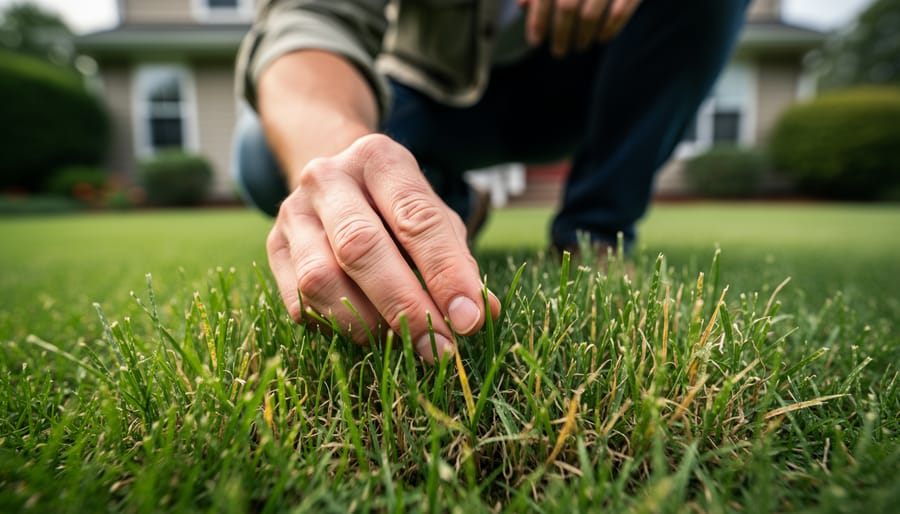
Start with the tug test, which I learned from master gardener Helen Rodriguez during a recent garden tour. Gently pull on a handful of affected grass. Healthy grass has strong roots and resists your pull, while diseased grass often comes up easily, sometimes without any roots attached. This tells you whether the problem is affecting the crown and root system or just the blades themselves.
Next, examine individual grass blades closely. Look for spots, lesions, discoloration patterns, or unusual textures. Are the tips brown while the base stays green? Do you see circular spots with darker borders? These clues point to specific diseases. Early morning is the best time for this inspection, as dew often makes disease symptoms more visible.
Pay attention to patterns across your lawn. Does the damage appear in circular patches, streaks following your mowing pattern, or irregular shapes? Circular patches often indicate fungal diseases, while streaky patterns might suggest issues related to lawn maintenance practices.
Finally, monitor the progression over several days. Take photos to track changes. Does the problem spread quickly or remain contained? Rapid spread during humid weather strongly suggests fungal disease, while slow progression might indicate environmental stress or nutrient deficiencies.
When to Call in the Experts
Sometimes, despite your best detective work, lawn diseases can be genuinely puzzling. If you’ve tried identifying the problem but your lawn continues to decline, it’s time to call in reinforcements—and there’s no shame in that! Your local Cooperative Extension Service is an invaluable (and often free) resource. These offices employ trained diagnosticians who can examine samples and provide accurate identification. Simply collect a fresh sample showing both healthy and affected areas, seal it in a paper bag, and bring it to their office.
When you’re dealing with persistent problems or large-scale damage, a certified lawn care professional can be worth their weight in grass seed. They bring specialized equipment and experience diagnosing tricky cases. Look for professionals certified by organizations like the Professional Lawn Care Association of America.
Before your consultation, document everything: when symptoms first appeared, weather conditions, your maintenance routine, and what treatments you’ve already tried. Take clear photos from multiple angles. This information helps experts make faster, more accurate diagnoses.
Remember, seeking professional help isn’t admitting defeat—it’s smart gardening. Think of it as adding another tool to your lawn care toolkit, ensuring your green space gets exactly what it needs to thrive.
Proven Treatments That Actually Work
Cultural Practices That Heal Your Lawn
Sometimes the best medicine for your lawn isn’t found in a bottle—it’s in how you care for it day to day. Think of these cultural practices as building your lawn’s immune system, making it naturally resistant to disease before problems even start.
Start with proper watering practices. Deep, infrequent watering encourages strong root growth, while frequent shallow watering keeps grass weak and vulnerable. Water early in the morning so grass blades dry quickly—wet grass overnight is like rolling out the welcome mat for fungal diseases.
Mowing height matters more than you might think. Set your mower to leave grass at least 3 inches tall. Taller grass shades the soil, reducing stress and preventing many disease-causing organisms from thriving. Always use sharp blades too—ragged cuts from dull blades create entry points for pathogens.
Aeration works wonders for compacted soil. When soil is packed down tight, water pools on the surface and roots struggle to breathe. Running an aerator over your lawn once or twice a year opens up those airways and improves drainage dramatically.
Speaking of drainage, take a walk around your yard after a heavy rain. Notice where water collects? Those soggy spots are disease hotspots. Adding soil to low areas or installing simple drainage solutions can eliminate these problem zones entirely. These foundational practices address the root causes that make disease possible in the first place.
When and How to Use Fungicides Safely
Fungicides should be your last resort, not your first line of defense. I always tell fellow gardeners to think of them as prescription medication for your lawn—only use them when cultural practices haven’t worked and the disease threatens serious damage.
Timing is everything when applying fungicides. They work best as preventatives or at the very first signs of disease, not after your lawn is already heavily damaged. For many fungal diseases, this means applying during periods of high humidity or when weather conditions favor disease development. Early morning applications allow the product to dry before evening dew, maximizing effectiveness.
Consider organic options first. Neem oil, copper-based fungicides, and biological controls containing beneficial bacteria can manage many lawn diseases without harsh chemicals. I’ve had excellent results with compost tea applications, which boost your lawn’s natural defenses. These gentler options are safer around children and pets, though you should still keep everyone off the lawn until products dry completely.
If synthetic fungicides become necessary, read labels carefully and follow all safety instructions. Wear protective gear, avoid windy days, and never apply more than recommended—it won’t work better and can harm your lawn and environment. Keep pets and children indoors during application and for the specified waiting period, typically 24-48 hours.
Always rotate fungicide types to prevent resistance, and remember that fungicides treat symptoms, not underlying problems. Address drainage issues, improve air circulation, and adjust your maintenance practices to prevent future outbreaks naturally.
Stop Disease X Before It Starts
The best defense against mysterious lawn diseases? A lawn so healthy that problems don’t stand a chance. Think of it like building your own immune system—when you’re well-rested and eating right, you’re less likely to get sick. Your lawn works the same way.
Start with the foundation: healthy soil. I can’t stress this enough. Most lawn diseases take hold when grass is already stressed, and poor soil is often the culprit. Getting a soil test might not sound exciting, but it’s like having a roadmap to success. You’ll discover exactly what your lawn needs instead of guessing. Building resilient lawns starts beneath the surface, and knowing your soil’s pH and nutrient levels puts you miles ahead.
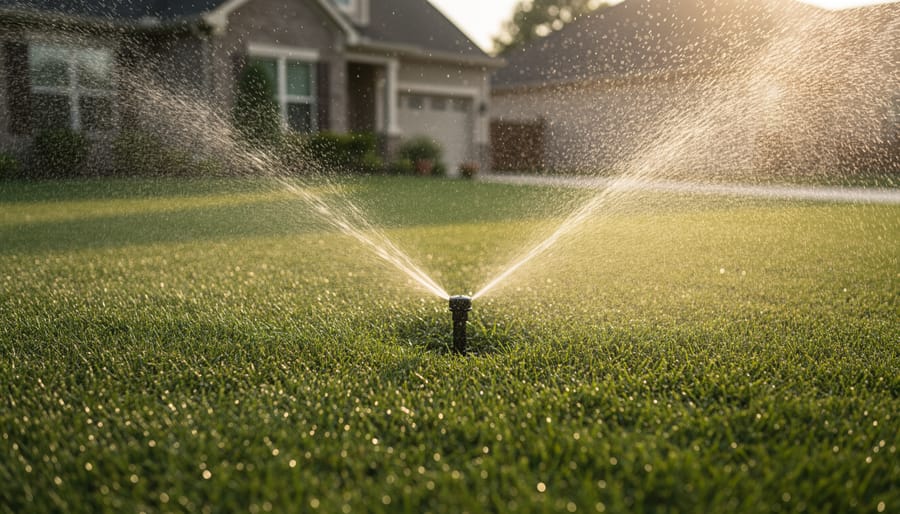
Water wisely, not frequently. Here’s what I’ve learned: deep, infrequent watering encourages strong root systems that can weather stress. Shallow, daily watering creates weak roots and keeps the grass surface damp—a welcome mat for fungal diseases. Aim for about one inch of water per week, delivered early in the morning so grass blades dry quickly.
Choose the right grass for your region and conditions. If you’re planting shade-loving grass in full sun, you’re fighting an uphill battle. Match your grass type to your yard’s specific conditions, and you’ll see the difference immediately.
Don’t scalp your lawn when mowing. Keeping grass at the higher end of its recommended height range promotes deeper roots and shades out weeds. Those clippings? Leave them. They return valuable nutrients to the soil and reduce your fertilizer needs.
Aerate compacted areas annually. Compacted soil restricts root growth and water penetration, leaving grass vulnerable. A simple core aeration each fall works wonders.
Finally, avoid over-fertilizing. More isn’t better—it’s just more. Excess nitrogen creates lush, weak growth that diseases love. Follow soil test recommendations, and your lawn will thank you with steady, resilient growth that stands strong against whatever Disease X might throw its way.
You’ve made it through the detective work, and here’s the truth: even the most mysterious lawn diseases don’t stand a chance when you’re armed with knowledge and determination. That puzzling brown patch or strange discoloration that sent you searching doesn’t have to be a permanent fixture in your yard.
Remember, every experienced gardener has faced their share of lawn mysteries. The difference between a struggling lawn and a thriving one often comes down to patient observation and taking action when something seems off. You now know how to spot the warning signs, understand what your grass is trying to tell you, and respond with the right treatment strategy.
Your lawn is resilient, and so are you. Whether you’re dealing with fungal spots, bacterial blights, or environmental stress, the tools and techniques we’ve covered will help you restore your turf to health. Keep monitoring, stay consistent with your care routine, and don’t hesitate to adjust your approach as you learn what works best for your specific conditions.
We’d love to hear about your lawn recovery journey! Share your experiences, photos, or questions with fellow gardening enthusiasts in the comments or your local gardening community. Your story might be exactly what another frustrated homeowner needs to hear.