Transform any indoor space into a thriving, sustainable garden by combining drought-defying gardening techniques with smart water management systems. Position plants strategically near south-facing windows to maximize natural light exposure, reducing artificial lighting needs and energy consumption. Install a closed-loop hydroponic system that recycles water and nutrients, cutting water usage by up to 90% compared to traditional gardening methods. Select moisture-loving plants like peace lilies and spider plants that naturally purify indoor air while thriving in humid environments created by water-efficient misting systems. Create vertical growing spaces using recycled materials and self-watering planters to maximize limited indoor square footage while maintaining optimal moisture levels. This sustainable approach not only produces fresh herbs and vegetables year-round but also creates a living ecosystem that enhances air quality and brings nature’s beauty indoors.
Smart Water Systems for Indoor Gardens
Automated Irrigation Solutions
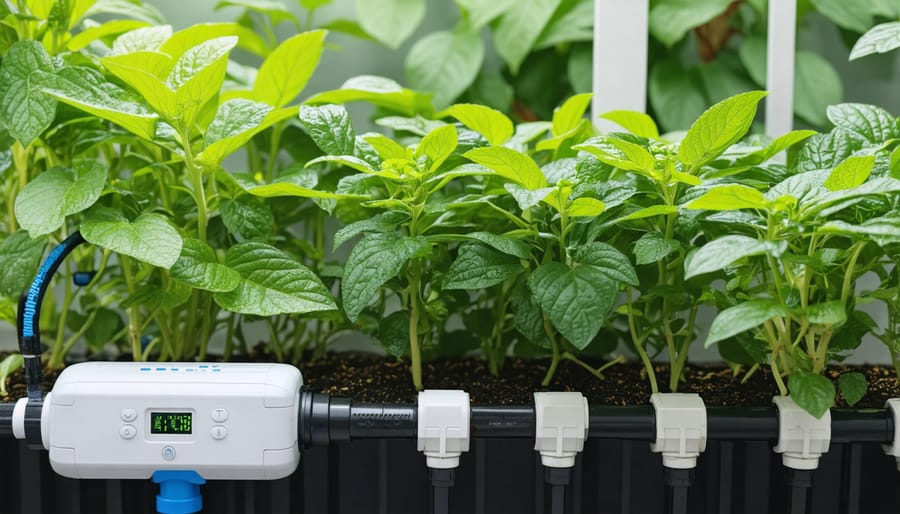
Automated irrigation systems have revolutionized indoor gardening, making it easier than ever to maintain a thriving sustainable garden while conserving water. These smart systems range from simple self-watering pots to sophisticated WiFi-enabled controllers that monitor soil moisture levels and deliver exactly what your plants need.
The heart of any automated system is the moisture sensor, which acts like a watchful gardener, constantly checking if your plants are thirsty. When the soil becomes too dry, the system automatically waters your plants, ensuring they receive consistent moisture without waste. Many systems now come with smartphone apps, allowing you to monitor and adjust watering schedules from anywhere.
One of the biggest benefits of automated irrigation is water conservation. By delivering water directly to plant roots and only when needed, these systems can reduce water usage by up to 50% compared to manual watering. They also help prevent common problems like overwatering and root rot, which often plague indoor gardens.
For busy gardeners, these systems provide peace of mind. No more worrying about your plants while you’re away on vacation or forgetting to water them after a long day at work. Some advanced systems even factor in environmental conditions like humidity and temperature to optimize watering schedules.
Setting up an automated system doesn’t have to be complicated. Start with a simple drip irrigation kit and expand as your garden grows. Remember, even the most basic automated system can make a significant difference in both plant health and water conservation.
Water Recycling Methods
Water recycling in your indoor garden isn’t just eco-friendly – it’s a smart way to maximize your resources while creating a thriving green space. By implementing effective water conservation strategies, you can significantly reduce your garden’s environmental impact and water bills.
One of the simplest methods is collecting drainage water from your plants in saucers or trays. This excess water can be reused for other plants, ensuring no drop goes to waste. Consider installing a compact water collection system beneath your growing area to make this process more efficient.
Gray water recycling is another fantastic option for indoor gardens. Water from activities like washing vegetables or cooking can be collected and used for watering non-edible plants. Just remember to avoid using water containing harsh chemicals or soaps.
Hydroponic systems are particularly effective at water conservation, using up to 90% less water than traditional gardening methods. The water in these systems can be continuously recycled, only requiring occasional topping up to replace what’s absorbed by the plants or lost through evaporation.
For those with multiple plants, setting up a condensation collection system can help capture moisture from the air. This works especially well in humid environments or when using grow lights that generate heat. A simple dehumidifier can also serve double duty by collecting water while maintaining optimal growing conditions.
Water-Efficient Plant Selection
Low-Water Indoor Plants
Creating a water-efficient indoor garden starts with selecting the right plants. These climate-smart plant varieties not only reduce your water consumption but also require less maintenance, making them perfect for busy plant parents.
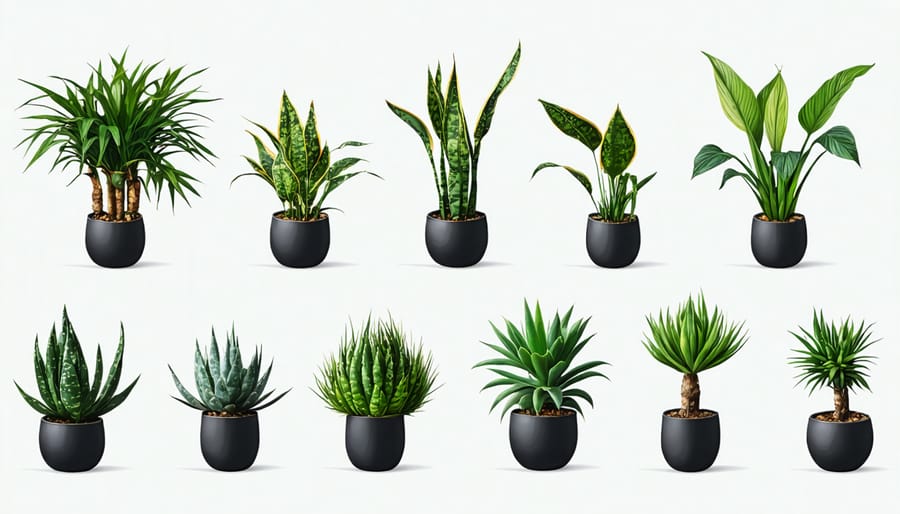
Snake Plants (Sansevieria) are excellent low-water champions, thriving in bright to low light conditions and requiring watering only every 2-3 weeks. Their striking vertical leaves add architectural interest to any room while purifying the air.
ZZ Plants (Zamioculcas zamiifolia) are practically indestructible and perfect for beginners. Their glossy leaves store water efficiently, meaning they can go weeks between waterings. They’re also excellent at adapting to various light conditions.
Succulents and cacti are natural choices for water-conscious gardeners. Species like Jade Plant, Aloe Vera, and String of Pearls have evolved to store water in their leaves or stems, making them incredibly drought-tolerant.
Chinese Evergreen (Aglaonema) offers beautiful variegated foliage and exceptional drought resistance. These adaptable plants can brighten up low-light corners while requiring minimal water.
Remember to always check soil moisture before watering – these plants prefer to dry out between waterings, and overwatering is often more harmful than underwatering. A simple moisture meter or the finger test (inserting your finger about an inch into the soil) can help you determine when it’s time to water.
Grouping Plants by Water Needs
One of the smartest ways to maintain a water-efficient indoor garden is to group plants according to their water needs. This practice, often called hydrozoning, helps prevent both overwatering and underwatering while making your gardening routine more manageable.
Start by creating three distinct plant zones: high, moderate, and low water needs. Plants like ferns, peace lilies, and calatheas typically need frequent watering and high humidity, so they should be grouped together. Moderate-water plants such as philodendrons, pothos, and spider plants can form another cluster. Desert natives like succulents, cacti, and snake plants prefer drier conditions and should be arranged in their own water-wise section.
By organizing your plants this way, you can develop an efficient watering schedule and better monitor each group’s moisture needs. Consider placing high-water-need plants closer to your water source and in naturally humid areas like bathrooms. Low-water plants will thrive in brighter, warmer spots where water evaporates more quickly. This thoughtful arrangement not only conserves water but also helps your plants thrive in their ideal conditions.
Sustainable Soil and Container Solutions
Moisture-Retaining Soil Mixes
Creating the perfect healthy garden soil composition is essential for reducing water waste in your indoor garden. The key lies in choosing materials that retain moisture while maintaining proper aeration and drainage.
A well-balanced moisture-retaining mix typically consists of three main components: organic matter, water-holding minerals, and structural elements. Start with a base of high-quality potting soil, then add coconut coir or peat moss at about 30% of the total volume. These materials act like tiny sponges, holding water and releasing it gradually to your plants’ roots.
For enhanced water retention, incorporate vermiculite or perlite, which create small pockets that trap moisture while preventing soil compaction. A ratio of 10-15% of these minerals works well for most indoor plants. Adding aged compost (about 20% of the mix) not only improves water retention but also provides essential nutrients.
Consider mixing in water-storing crystals or polymer granules for plants that need consistent moisture. These absorb water when you water your plants and slowly release it as the soil dries out. Just remember to use them sparingly – a little goes a long way!
For succulents and cacti, adjust the ratio to include more drainage materials like coarse sand or pumice, while still maintaining some moisture-holding capacity through a smaller proportion of organic matter.
Self-Watering Container Options
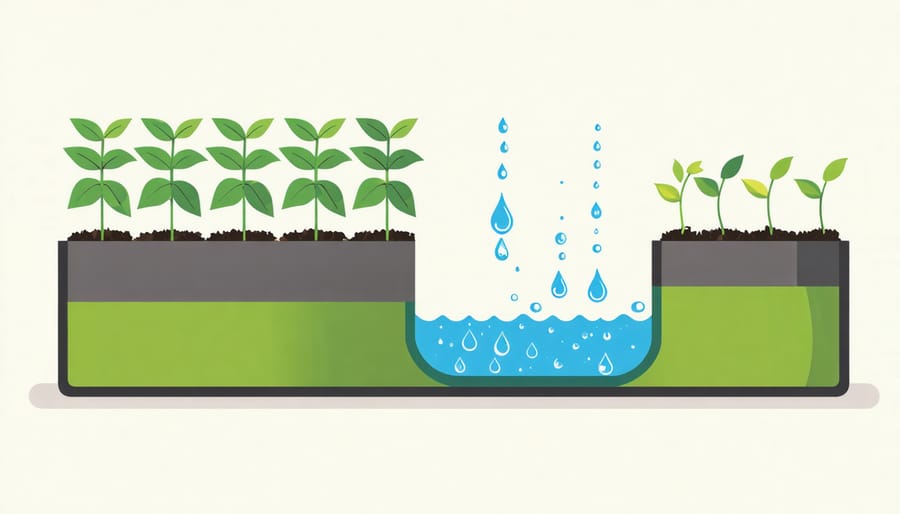
Self-watering containers are game-changers for indoor gardeners, offering a smart solution to maintain consistent moisture levels while reducing water waste. These innovative planters feature a reservoir at the bottom that stores excess water, allowing plants to drink only what they need through a wicking system.
One popular option is the double-pot system, where a smaller pot with drainage holes sits inside a larger waterproof container. The space between them serves as a water reservoir, and the soil naturally draws up moisture through capillary action. This setup is perfect for busy gardeners or those who tend to either overwater or underwater their plants.
For those who enjoy DIY projects, you can create your own self-watering container using recycled materials. A simple design involves converting a large plastic bottle into a planter by cutting it in half and inverting the top portion to create a reservoir. More advanced options include using food-grade buckets or storage containers with wicking chambers made from fabric or rope.
Commercial self-watering planters come in various sizes and styles, from sleek modern designs to traditional terracotta looks. Some feature water level indicators, making it easy to monitor when it’s time to refill. These containers are particularly effective for moisture-loving herbs and vegetables, helping maintain optimal growing conditions while conserving water.
Remember to clean and sanitize self-watering containers regularly to prevent algae growth and ensure proper functioning of the wicking system.
Monitoring and Maintenance Tips
Water Usage Tracking
Tracking water usage in your indoor garden isn’t just good for the environment – it’s essential for maintaining healthy plants and managing resources efficiently. Start by installing a simple water meter on your irrigation system or using a marked watering can to measure exact amounts. Keep a gardening journal to record how much water each plant receives and how it responds over time.
For tech-savvy gardeners, smart moisture meters can provide real-time soil moisture readings, helping you water only when necessary. These devices often connect to smartphone apps, making it easy to monitor multiple plants and receive watering alerts. Some advanced systems even track humidity levels and water consumption patterns over time.
A practical DIY method is the “finger test” – insert your finger about an inch into the soil. If it feels dry at that depth, it’s time to water. Combine this with weight testing your plant containers before and after watering to develop an intuitive sense of your plants’ needs.
Consider collecting condensation from air conditioners or dehumidifiers to supplement your water supply. Track this collected water in your journal too – you might be surprised by how much you can save! Remember to adjust your tracking methods seasonally, as plants typically need less water during winter months.
Seasonal Adjustments
Indoor gardening requires different approaches as seasons change, even when your plants are sheltered from direct outdoor conditions. During summer months, your plants may need more frequent watering due to increased indoor temperatures and longer daylight hours. Consider misting heat-loving plants in the morning to maintain humidity levels and prevent water evaporation during peak afternoon temperatures.
In winter, most indoor plants enter a period of dormancy, requiring less water. Reduce your watering frequency by about 25-30% during these months, but continue monitoring soil moisture levels carefully. The dry air from heating systems can affect your plants, so using a humidity tray or small humidifier can help maintain optimal growing conditions.
Spring and fall are transition periods where you’ll need to gradually adjust your watering schedule. Pay attention to signs from your plants – yellowing leaves might indicate overwatering, while brown, crispy edges could signal underwatering. Keep a gardening journal to track seasonal changes and how your plants respond to different watering patterns.
Remember that location matters too – plants near heating vents or air conditioning units may need more frequent water adjustments throughout the year. Using moisture meters can help you maintain consistent soil moisture levels as you adapt to seasonal changes.
Creating a sustainable indoor garden is more than just a hobby – it’s a step towards a greener, more sustainable lifestyle that benefits both you and the environment. By implementing water-efficient systems, choosing the right plants, and following mindful maintenance practices, you can create a thriving indoor garden that uses resources responsibly while bringing nature into your living space.
Remember that sustainable gardening is a journey, not a destination. Start small, learn from your experiences, and gradually expand your garden as you become more confident. The key is to work with nature rather than against it, using natural solutions whenever possible and being mindful of resource consumption.
Whether you’re growing herbs for your kitchen, maintaining air-purifying plants, or creating a lush tropical paradise in your living room, sustainable practices will help ensure your garden thrives while minimizing its environmental impact. By sharing your knowledge and success stories with others, you become part of a growing community of indoor gardeners committed to sustainable practices.
Take the first step today – your sustainable indoor garden awaits!