Your garden holds remarkable power—not just to feed your family or beautify your yard, but to transform the environment one plant at a time. Every decision you make, from the fertilizer you choose to the way you water, ripples outward, affecting soil health, local wildlife, water quality, and even the air you breathe.
Sustainable gardening isn’t about perfection or following rigid rules. It’s about working with nature rather than against it, creating a thriving ecosystem that practically takes care of itself while saving you money and effort. When you build healthy soil teeming with beneficial organisms, you’ll spend less on fertilizers and pesticides. When you choose native plants adapted to your climate, you’ll drastically reduce watering needs and maintenance time. When you welcome pollinators and natural pest predators, you’ll watch problems solve themselves.
The beauty of sustainable practices is that they compound over time. Your soil becomes richer each season. Your plants grow stronger and more resilient. Your garden requires less intervention while producing more abundance. You’re not just growing tomatoes or roses—you’re cultivating a legacy, a small but significant answer to larger environmental challenges.
Whether you’re planting your first raised bed or tending an established landscape, the sustainable approach offers something invaluable: the satisfaction of knowing your garden gives back more than it takes. That’s the kind of gardening worth doing, and it’s simpler to start than you might think.
What Sustainable Gardening Actually Means (Without the Buzzwords)
Let’s strip away the fancy terminology and get to the heart of what sustainable gardening really means in your backyard. At its core, it’s simply working with nature instead of against it—think of it as being a good neighbor to the ecosystem around you.
Here’s the everyday reality: sustainable gardening means creating a garden that takes care of itself as much as possible. When you choose plants that naturally thrive in your climate, you’re not constantly battling to keep them alive with extra water and fertilizers. My neighbor Linda learned this the hard way after trying to grow tropical hibiscus in our cold Canadian winters—she finally switched to native perennials and now spends her weekends enjoying her garden instead of fussing over it.
It’s about building healthy soil that feeds your plants naturally, rather than relying on synthetic chemicals. Think of it like cooking a nutritious meal from scratch versus grabbing fast food—both fill you up, but one’s better for long-term health. When you add compost to your beds or let fallen leaves decompose, you’re creating that “home-cooked” soil environment.
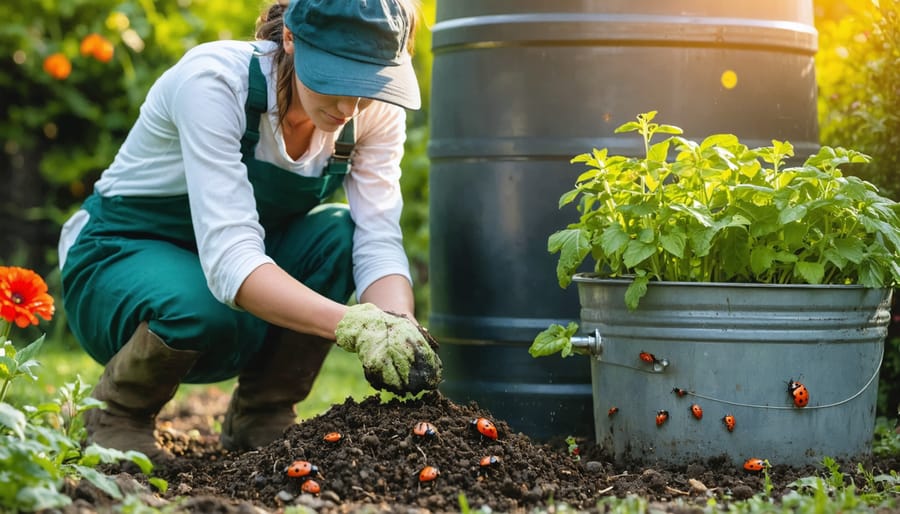
These sustainable garden practices also mean welcoming beneficial insects instead of trying to eliminate every bug you see. That ladybug munching on aphids? She’s doing your pest control for free.
Essentially, sustainable gardening is about making smart choices that save you time, money, and effort while creating a healthier space for plants, pollinators, and people. It’s not about perfection—it’s about progress and working in harmony with what nature already does best.
The Real Cost of Traditional Gardening Methods
What Chemical Fertilizers Do to Your Soil’s Future
Think of synthetic fertilizers as fast food for your soil—they deliver quick nutrients but nothing that sustains long-term health. When you rely on chemical fertilizers, you’re essentially bypassing the natural ecosystem that makes soil truly productive.
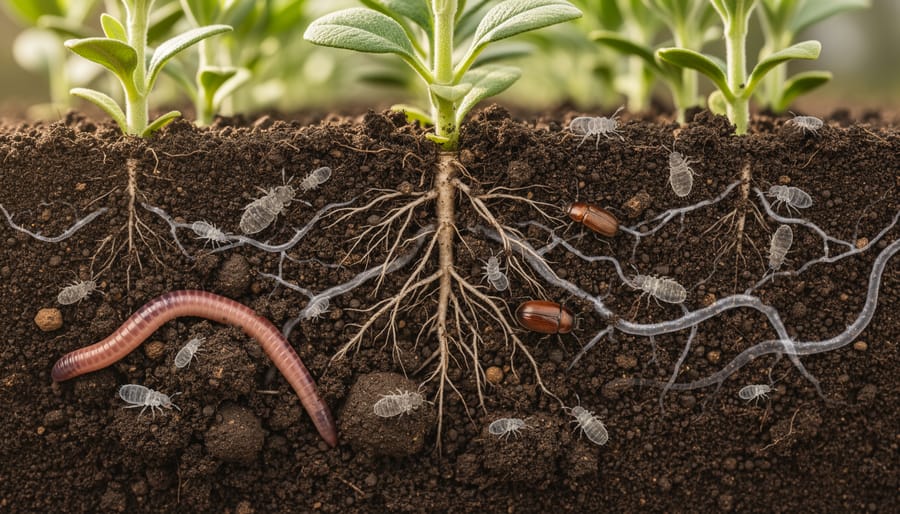
Here’s what happens: synthetic fertilizers provide nitrogen, phosphorus, and potassium directly to plants, which sounds great initially. However, they don’t feed the millions of beneficial microorganisms, earthworms, and fungi that create healthy soil structure. Without regular organic matter to munch on, these tiny workers gradually disappear. I learned this the hard way in my first vegetable garden, watching my soil become compacted and lifeless despite regular feeding.
Chemical fertilizers also create a dependency cycle. Since they’re water-soluble, they wash away quickly, requiring frequent applications. Meanwhile, your soil loses its natural ability to hold and release nutrients on its own. Over time, you’ll need more fertilizer to achieve the same results.
The salt content in synthetic fertilizers can burn plant roots and kill beneficial organisms, further degrading soil quality. In sustainable gardening, we focus on feeding the soil itself with compost and organic matter, which builds a self-sustaining system that actually improves year after year.
The Water Crisis Happening in Your Own Backyard
You might not realize it, but your garden could be contributing to water waste right in your own neighborhood. Traditional overhead sprinklers can lose up to 50% of water to evaporation, especially during hot afternoons. That’s like pouring half your watering can straight onto the pavement! Even worse, excess water running off lawns and gardens carries fertilizers, pesticides, and soil directly into storm drains, eventually reaching local streams and rivers.
I learned this lesson the hard way when my neighbor pointed out the mini-river flowing from my garden into the street after every watering session. That runoff wasn’t just wasting water I’d paid for—it was picking up nutrients and chemicals along the way, contributing to algae blooms in our community pond.
The good news? Simple changes make a huge difference. Drip irrigation delivers water directly to plant roots, reducing waste by 30-50%. Mulching keeps soil moist longer, meaning less frequent watering. Rain barrels capture free water while reducing strain on municipal systems during dry spells. These aren’t complicated fixes—they’re practical solutions that save water, protect local waterways, and honestly, save you time standing around with a hose.
How Sustainable Gardening Saves You Money and Effort
Building Soil That Feeds Itself
Here’s the secret that experienced gardeners love: you can create soil that practically feeds itself, slashing your fertilizer bills while growing healthier plants. The key lies in building healthy soil through composting and adding organic matter.
When you compost kitchen scraps, grass clippings, and fallen leaves, you’re transforming waste into black gold. This nutrient-rich material feeds beneficial microorganisms, earthworms, and fungi that create a thriving underground ecosystem. These tiny helpers break down organic matter and release nutrients exactly when your plants need them—it’s like having a team of fertilizer factories working for you around the clock.
I’ve spoken with several master gardeners who haven’t purchased chemical fertilizers in years. One shared that after just two seasons of regular composting, her soil became so fertile that her tomatoes practically grew themselves. The difference was dramatic: deeper root systems, fewer pest problems, and harvests that made her neighbors envious.
The beauty of this approach is its simplicity. Start small with a basic compost bin or even just a designated pile in your yard. Add your kitchen scraps, yard waste, and watch nature work its magic. Over time, you’ll build soil that sustains itself, saving money while creating the perfect environment for your plants to thrive.
Plants That Come Back Stronger Each Year
I’ve learned this lesson the hard way in my own garden: sustainable practices don’t just maintain your plants, they actually build them up year after year. When you focus on soil health through composting and mulching, you’re creating a foundation that gets richer with time. My perennial beds now bounce back from drought and pest pressure far better than they did five years ago, simply because the soil is alive with beneficial organisms.
Here’s what makes the difference: sustainable gardens develop deep, extensive root systems because the soil structure encourages downward growth. Plants grown in chemically dependent gardens often have shallow roots, making them vulnerable to stress. Meanwhile, my sustainably grown tomatoes shrug off a hot week much better than my neighbor’s heavily fertilized ones.
The resilience extends beyond individual plants. Diverse plantings create natural pest management systems that improve over time. I spoke with master gardener Elena Rodriguez, who shared that her twenty-year-old sustainable garden now requires minimal intervention. “The ecosystem balances itself,” she explained. “Beneficial insects patrol automatically, and diseases rarely take hold.”
This self-sufficiency means you’re not constantly troubleshooting problems or replacing failed plants. Your garden genuinely becomes easier to manage as the years pass, rewarding your initial investment in sustainable methods with increasing returns.
Your Garden as a Wildlife Sanctuary
The Pollinator Effect on Your Harvest
Here’s the thing about sustainable gardening—it creates an invitation that pollinators simply can’t resist. When you embrace organic practices and skip the synthetic pesticides, you’re essentially rolling out the welcome mat for bees, butterflies, and other beneficial insects. I’ve watched my own garden transform over the years, and the difference is remarkable.
These hardworking visitors are nature’s productivity boosters. A single honeybee colony can pollinate up to 300 million flowers daily, and when they’re buzzing around your vegetable patch, you’ll notice it in your harvest basket. Tomatoes become more abundant, squash plants produce reliably, and fruit trees yield noticeably better crops. Research shows that gardens with diverse pollinator populations can see yield increases of 20-50% in many crops.
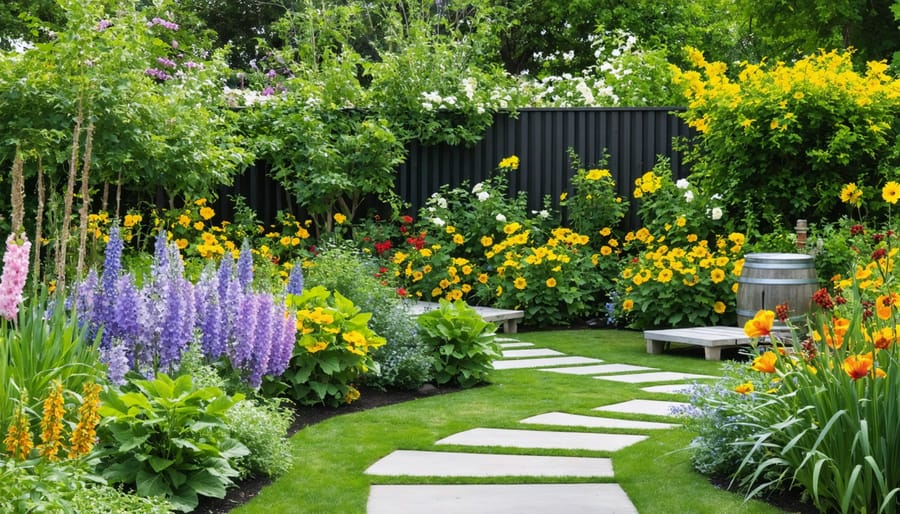
The beauty of sustainable gardening is that creating pollinator habitat doesn’t require extra work. Native plants, pesticide-free zones, and leaving some areas a bit wild naturally attract these helpful creatures. You’re not just growing food—you’re cultivating a thriving ecosystem that works harder for you with each passing season.
Natural Pest Control That Actually Works
Here’s the wonderful truth: when you embrace sustainable gardening, nature does much of the pest control work for you. By cultivating biodiversity in your garden, you create a balanced ecosystem where beneficial insects and wildlife keep pest populations in check naturally.
I learned this firsthand when I stopped reaching for chemical sprays and instead planted a border of marigolds and yarrow around my vegetable beds. Within weeks, ladybugs and lacewings moved in, happily devouring aphids that once plagued my tomatoes. Birds visiting my native shrubs started snacking on caterpillars, and ground beetles took care of slug eggs.
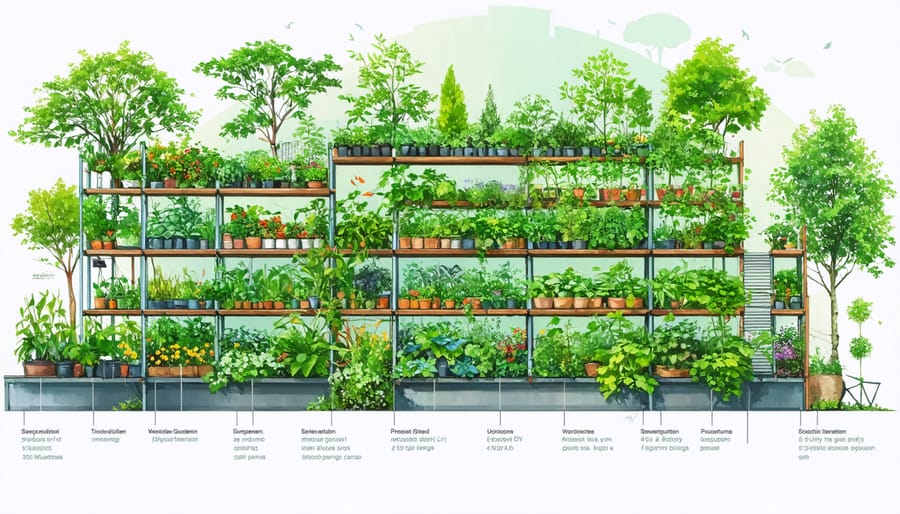
This approach to natural pest control works because diverse gardens support predator insects, birds, and beneficial organisms that feed on common pests. When you include flowering herbs, native plants, and varied heights in your garden design, you’re essentially hiring a free security team that works around the clock.
The best part? You’ll never worry about harmful residues on your produce or accidentally harming pollinators. Your garden becomes safer for children, pets, and wildlife while staying beautifully productive.
Climate Change Starts (and Stops) in Your Backyard
Here’s something I find incredibly empowering: every time you plant a seed, mulch a bed, or skip the chemical fertilizer, you’re participating in climate action. Your backyard isn’t just your little corner of the world—it’s part of a much bigger picture.
Let me share what really happens when you garden sustainably. Those plants you’re growing? They’re actively pulling carbon dioxide from the atmosphere and storing it in their roots and the soil. Your vegetable patch is essentially a carbon bank. Even better, when you add compost and avoid tilling too much, you’re keeping that carbon locked away underground where it belongs. It might not sound dramatic, but multiply your efforts by millions of gardens worldwide, and we’re talking about significant carbon sequestration.
Then there’s water. By choosing native plants, adding rain barrels, and using mulch to retain moisture, you’re reducing the strain on local water supplies. I spoke with master gardener Elena Rodriguez last month, who told me her sustainable practices cut her water usage by 60 percent. That’s not just good for the environment—it shows up in lower utility bills too.
And here’s the kicker about growing your own food: those tomatoes didn’t travel thousands of miles in a refrigerated truck. You’ve just eliminated transportation emissions entirely. No plastic packaging, no industrial farming inputs, just you, the soil, and fresh food.
The beauty of climate-resilient gardening strategies is they work both ways—you’re helping the planet while preparing your garden to weather climate changes. Your individual choices ripple outward, creating real environmental impact that starts right outside your door.
Building Soil Health That Lasts Generations
Every time you build healthy soil, you’re not just improving this season’s harvest—you’re creating a living legacy. Think of it as a gift that keeps giving, long after you’ve hung up your garden gloves for the day.
Healthy soil is actually a thriving ecosystem packed with billions of microorganisms, earthworms, and beneficial fungi. When you practice sustainable gardening through composting, avoiding harsh chemicals, and using cover crops, you’re building this underground community stronger each year. I’ve seen gardens where families have been enriching the same beds for decades, and the difference is remarkable—the soil becomes so fertile and well-structured that plants practically thrive on their own.
Here’s what makes this truly special: soil you improve today will be even better ten years from now if you keep nurturing it sustainably. Your children or the next homeowner will inherit earth that drains properly, holds nutrients efficiently, and supports robust plant growth without constant intervention. One gardener I interviewed shared how her grandmother’s compost pile, started in the 1960s, created soil so rich that tomatoes now grow with minimal fertilizing.
This legacy extends beyond your backyard. As climate patterns shift and food security becomes increasingly important, every patch of healthy soil contributes to our collective resilience. By making sustainable choices now, you’re ensuring that future generations have fertile ground to grow their own food, maintain local ecosystems, and experience the joy of gardening you’ve discovered.
Where to Start Without Overwhelming Yourself
The beauty of transitioning to sustainable gardening is that you don’t need to overhaul your entire garden overnight. In fact, starting small is often the key to lasting change. Think of it as planting a seed that will grow into something bigger over time.
Begin with what you already have. Look around your garden and identify one area where you can make a simple swap. Perhaps you have a compost bin sitting unused in your garage, or maybe you’ve been buying vegetables at the farmer’s market and have kitchen scraps that could nourish your soil instead of filling your trash can. Starting your composting journey is as straightforward as designating a corner of your yard and tossing in those vegetable peels.
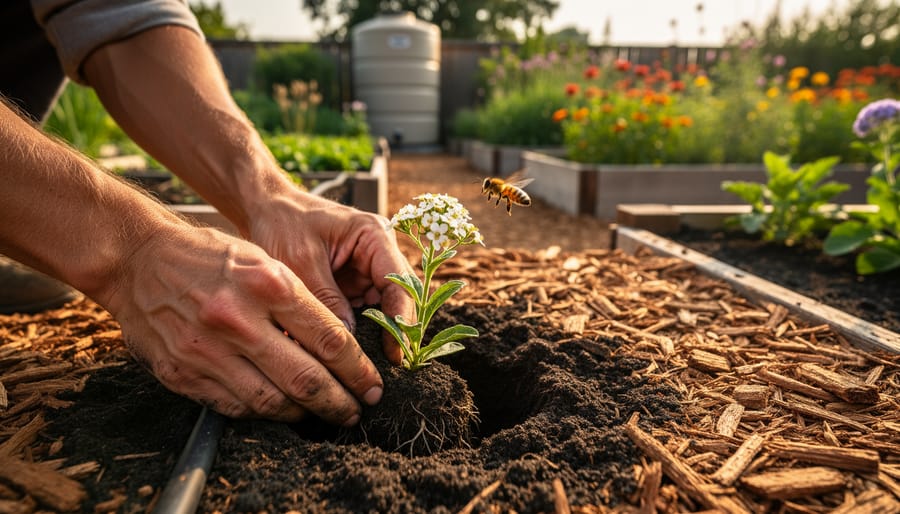
Another easy entry point is choosing just one native plant to add to your garden this season. Visit a local nursery and ask which plants are indigenous to your area. You’ll be amazed at how much easier these plants are to maintain compared to exotic varieties that demand constant attention.
If you’re already watering regularly, consider placing a rain barrel under your downspout. This single action can save gallons of municipal water while giving your plants the chlorine-free hydration they prefer.
Remember, every gardener I’ve spoken with started their sustainable journey with baby steps. One told me she began by simply letting her grass clippings stay on the lawn instead of bagging them. Another started by eliminating just one chemical fertilizer and replacing it with compost tea.
The most important thing is to start somewhere, anywhere. Choose the change that feels most manageable to you right now. As you experience the benefits firsthand, you’ll naturally feel motivated to incorporate more sustainable practices. Progress, not perfection, is what creates lasting transformation in your garden.
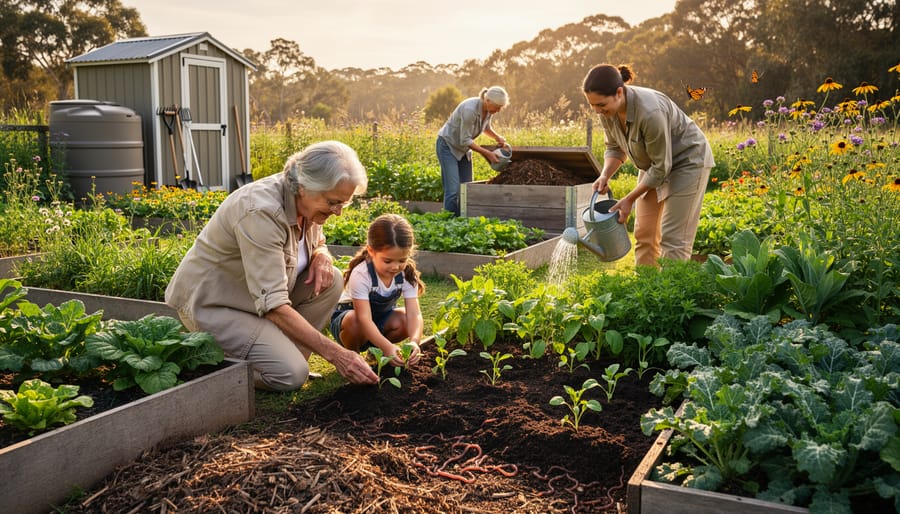
Your garden, no matter how small, is part of something much bigger than the plot of soil in your backyard. Every choice you make—from composting kitchen scraps to welcoming beneficial insects—sends ripples outward. You’re creating habitat for wildlife, reducing strain on landfills, conserving precious water resources, and even inspiring neighbors who peek over the fence and wonder how your plants look so vibrant.
The beauty of sustainable gardening is that it doesn’t require perfection. Start with one practice that resonates with you, whether that’s collecting rainwater, planting natives, or simply skipping the synthetic fertilizers. Each small step builds momentum, and before you know it, these choices become second nature.
Your garden is your opportunity to be part of the solution. It’s where you can nurture the earth while it nurtures you back, creating abundance that extends far beyond your own harvest basket. So grab your trowel, get your hands dirty, and know that you’re not just growing plants—you’re cultivating a healthier future for everyone.