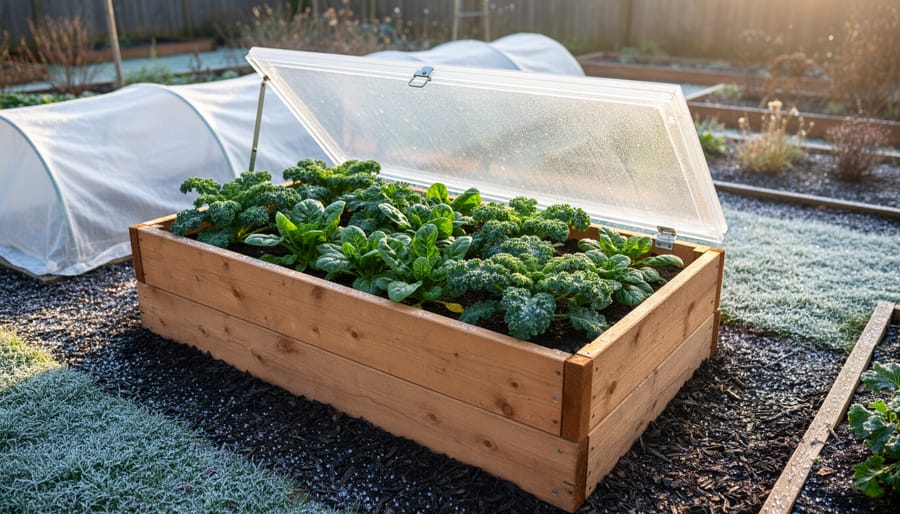
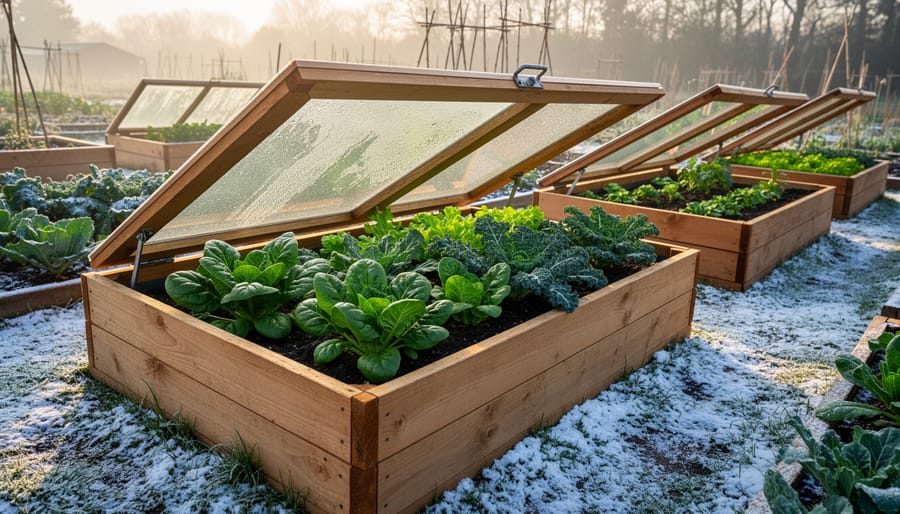
Extend your harvest into winter by installing cold frames over established beds in late September, giving cool-season crops like kale, spinach, and carrots protection from frost while maintaining air circulation on sunny days. Layer row covers directly over plants when temperatures drop below 25°F, creating a microclimate that adds 4-8 degrees of frost protection without expensive infrastructure.
Plan succession plantings every two weeks from March through August, ensuring continuous harvests as climate shifts make traditional planting dates less reliable. Choose varieties bred for your specific challenge—bolt-resistant lettuce for unexpected heat waves, quick-maturing tomatoes for shortened summers, and cold-hardy greens that sweeten after frost.
Build soil resilience by adding 2-3 inches of compost each fall, improving water retention during droughts and drainage during heavy rains that increasingly define our growing seasons. Mulch pathways and bare soil heavily to moderate temperature swings that stress plant roots and disrupt the soil ecosystem.
Track your garden’s microclimates by noting which areas thaw first in spring and hold warmth longest in fall. These protected zones become your season-extension powerhouses, allowing you to plant heat-lovers earlier and keep cold-tolerant crops productive through December and beyond.
The climate challenges facing today’s gardeners demand new approaches, but the reward is profound: fresh, homegrown food twelve months a year. Whether you’re weathering scorching summers or unpredictable freezes, these proven techniques transform obstacles into opportunities for year-round abundance.
What Is 4-Season Gardening and Why It Matters Now
Four-season gardening is the practice of growing food throughout the entire year, not just during the traditional spring and summer months. It means planning your garden so that something is always growing, whether that’s hardy greens thriving under winter snow, cold-weather crops flourishing in autumn, or early spring vegetables getting a head start before the last frost. This approach combines smart crop selection, season extension techniques, and an understanding of microclimates to keep your garden productive no matter what the calendar says.
Why does this matter more than ever? Our climate is changing in ways that make year-round gardening both trickier and more essential. You’ve probably noticed it yourself: unseasonable warm spells followed by sudden freezes, summer droughts that seem more intense, or spring arriving weeks earlier than it used to. These unpredictable weather patterns are disrupting traditional growing seasons and making it harder to rely on old gardening wisdom passed down through generations.
This is exactly why learning to climate-proof your garden has become so important. Four-season gardening helps build resilience into your food supply. When grocery store shelves face disruptions or produce prices spike, having a productive garden year-round provides security and peace of mind. It’s not just about saving money, though that’s certainly a bonus. It’s about taking control of where your food comes from and reducing your environmental footprint by growing locally in your own backyard.
The beauty of four-season gardening is that it works with nature’s rhythms rather than against them. You’re not trying to grow tomatoes in January. Instead, you’re discovering vegetables that actually prefer cooler weather and learning techniques that protect plants during challenging conditions. It’s sustainable, practical, and incredibly rewarding when you harvest fresh greens on a snowy February morning.
Understanding Your Microclimate for Year-Round Success
Reading Your Garden’s Temperature Zones
Your garden is full of microclimates – little pockets where temperatures can differ by 5 to 10 degrees from one spot to another. Learning to read these zones is like getting insider information about where your plants will thrive year-round.
Start by walking your garden at different times of day with a simple outdoor thermometer. Notice where morning sun hits first and which areas stay shaded longest. That sunny south-facing wall? It’s probably your warmest spot, perfect for heat-loving crops or early spring plantings. Low-lying areas and north-facing spots tend to be your coldest zones, where frost lingers and cool-season crops excel.
I keep a garden journal where I note first and last frost dates for different areas. You’ll be surprised how much variation exists even in a small yard! Place min-max thermometers in several locations – one in your sunniest spot, one in shade, and one in an exposed area. Check them weekly during seasonal transitions.
Pay attention to wind patterns too. Areas sheltered by fences or buildings often stay several degrees warmer than exposed sections. Over time, you’ll develop an intuitive sense of your garden’s temperature personality, helping you choose the right spot for each crop throughout the seasons. This knowledge becomes invaluable when planning succession plantings and selecting which varieties to grow when.
Working with What You’ve Got
Every garden has its unique personality, with natural features that can become your greatest allies in year-round growing. I learned this firsthand when I discovered my north-facing brick wall actually retained heat beautifully for cool-season crops during autumn.
Start by mapping your garden’s microclimates. South-facing walls are goldmines for extending seasons, as they absorb daytime heat and radiate it back at night. Position cold frames or plant tender greens within a few feet of these thermal batteries to gain those precious extra degrees. Existing windbreaks, whether hedgerows, fences, or buildings, create calmer growing zones where you can push seasonal boundaries further than expected.
For exposed areas, create your own protection gradually. Fast-growing Jerusalem artichokes or annual sunflowers make excellent temporary windbreaks while you establish permanent solutions. In shaded spots, embrace what thrives there rather than fighting it. Kale, Swiss chard, and Asian greens actually appreciate some shade during transitional seasons, often producing sweeter leaves.
One gardener I interviewed transforms her heavily shaded corner into a winter herb garden using reflective mulches and light-colored walls to bounce available light around. She says her parsley and cilantro stay productive through December this way.
Remember, working with your garden’s quirks rather than against them saves energy and creates more resilient growing spaces.
Season Extension Techniques That Actually Work
Cold Frames and Row Covers for Beginners
Cold frames and row covers are like giving your plants their own cozy winter jackets! These simple structures create microclimates that can extend your growing season by several weeks on both ends, and they’re surprisingly easy to set up.
Let’s start with cold frames. Think of them as miniature greenhouses hugging the ground. To build a basic cold frame, you’ll need an old window (check salvage yards for great deals!) and some scrap lumber. Create a rectangular box about 12 inches high in the back and 8 inches in the front, sloping toward the sun. Attach the window on top as a lid, and you’re done! Place it against a south-facing wall for extra warmth, and prop the lid open on mild days to prevent overheating. I learned this the hard way when I accidentally cooked my lettuce seedlings one sunny February afternoon.
Row covers are even simpler. These lightweight fabric blankets drape directly over plants or rest on hoops made from PVC pipe or wire. For season extension, choose medium-weight covers that allow light and water through while trapping heat. They typically add 4-8 degrees of frost protection. Installation is straightforward: secure the edges with soil, rocks, or landscape staples to prevent wind damage. Remember to remove covers when plants need pollination or when temperatures rise above 70 degrees during the day.
Hoop Houses and Unheated Greenhouses
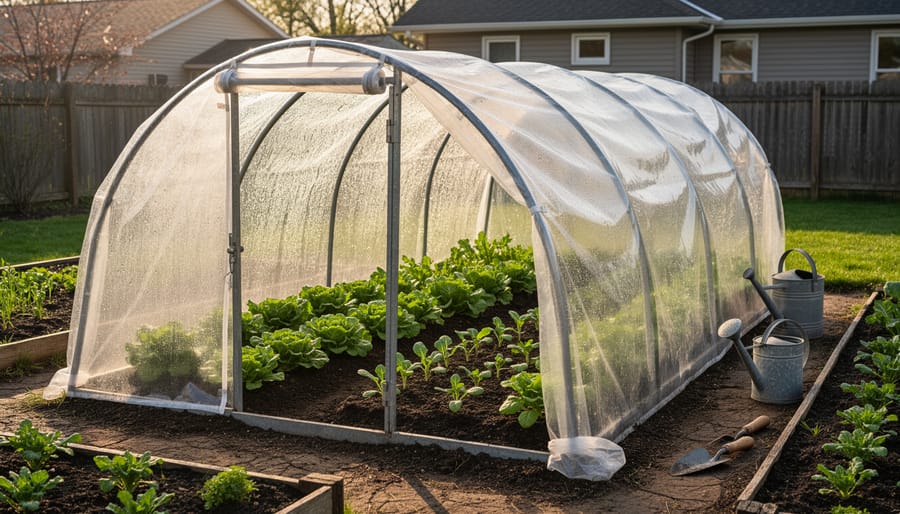
When you’re ready to level up from basic row covers and cold frames, hoop houses and unheated greenhouses offer a sweet spot between low-tech solutions and fully heated structures. These are ideal investments when you’ve tested the waters with simpler methods and know you’re committed to year-round growing.
The beauty of these structures lies in their versatility. They trap solar heat during the day and provide enough thermal mass to buffer nighttime temperature drops without requiring expensive heating systems. I’ve found they’re particularly worthwhile if you’re growing crops that need more headroom, like tall tomatoes or climbing beans, or if you want to seriously extend your harvest of cool-season favorites like lettuce, spinach, and Asian greens well into winter.
Timing matters when considering this investment. If you’re consistently maxing out your cold frames or finding yourself frustrated by limited space, it’s time to think bigger. Crops that benefit most include leafy greens, root vegetables like carrots and beets, and early spring transplants that need protection from late frosts.
Managing temperature without heating requires attention to ventilation. Install roll-up sides or automatic vent openers that trigger when internal temperatures climb too high. Even in winter, a closed greenhouse can overheat on sunny days and stress your plants. Layer protection inside with row covers during extreme cold snaps, and consider thermal mass techniques like water barrels that absorb daytime heat and release it slowly at night. This passive approach keeps your operation sustainable and your energy costs minimal.
Creative Low-Cost Alternatives
You don’t need expensive equipment to extend your growing season. I’ve found some of my best success using creative, low-cost solutions that work just as well as pricey commercial options.
Cloches are wonderfully simple. I’ve made them from cut-off plastic milk jugs, old glass jars, and even repurposed clear storage bins. Last spring, I saved an entire row of peppers from a surprise frost using nothing but inverted mason jars. Just remember to remove them during warm days to prevent overheating.
Wall O’ Waters are brilliant for heat-loving plants like tomatoes. These water-filled sleeves create a protective microclimate, absorbing daytime heat and releasing it at night. A friend of mine starts her tomatoes three weeks earlier than neighbors by using these simple devices.
Straw bales offer fantastic insulation for raised beds. I stack them around my winter garden perimeter, creating a windbreak that keeps temperatures several degrees warmer. Come spring, those same bales become excellent mulch or can even serve as growing containers themselves.
Don’t overlook repurposed materials. Old windows make excellent cold frame lids, row covers can be fashioned from sheer curtains, and bubble wrap provides surprising insulation when wrapped around containers. The key is thinking creatively about what you already have available.
Choosing the Right Crops for Each Season
Winter Warriors: Crops That Laugh at Frost
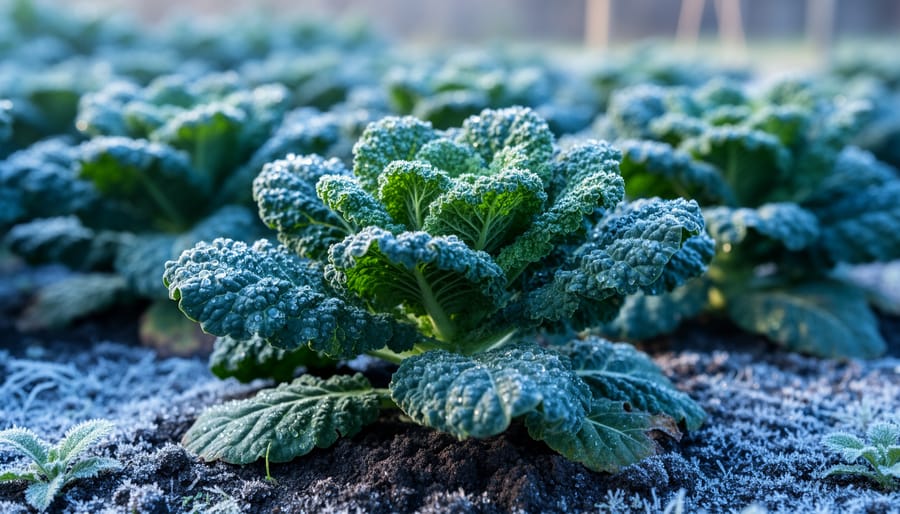
Not all plants surrender when temperatures drop—some actually thrive when Jack Frost comes calling. These cold-weather champions not only tolerate freezing conditions but often develop sweeter, more complex flavors after exposure to frost. Getting to know these hardy varieties will transform your perception of what’s possible in the garden beyond summer.
Kale stands as perhaps the ultimate winter warrior. Varieties like Winterbor and Redbor can handle temperatures down to 10°F and actually taste better after a good freeze, as the plant converts starches to sugars for protection. I’ve harvested perfect kale leaves from beneath six inches of snow, and they were the sweetest of the entire season.
Spinach is another reliable performer, especially varieties like Space and Tyee, bred specifically for cold tolerance. Plant these in late summer, and you’ll enjoy harvests well into winter. Mache, also called corn salad, might be less familiar but deserves a spot in every winter garden—it’s incredibly cold-hardy and offers a delicate, nutty flavor that brightens dark winter days.
Winter lettuces such as Winter Density and North Pole provide crisp greens when you’d least expect them. Brussels sprouts actually require cold weather to develop their signature flavor—try Long Island Improved or Diablo for reliable crops.
Don’t overlook root vegetables like carrots, parsnips, and turnips. Purple Top turnips and Bolero carrots can stay in the ground all winter in many climates, giving you fresh vegetables to harvest as needed. Parsnips, particularly the Gladiator variety, become remarkably sweet after frost exposure, transforming from bland to brilliant.
The secret? Start these crops at the right time—typically late summer through early fall—so they’re established before the hardest freezes arrive.
Planning Your Planting Calendar
Creating a planting calendar might sound complicated, but think of it as a simple roadmap that keeps your garden productive throughout the year. The key is succession planting, which means planting crops at intervals so you’re harvesting something in every season.
Start by dividing your year into four growing periods based on your local climate. In my garden, I’ve found that thinking in three-week blocks makes planning much easier. For spring (March-May), focus on cool-season crops like lettuce, peas, and spinach. Summer (June-August) is perfect for heat-lovers such as tomatoes, peppers, and beans. Fall (September-November) brings another opportunity for cool-season crops, while winter (December-February) is ideal for hardy greens under protection and root vegetables that can overwinter.
Here’s a simple framework you can adapt: Create a chart with months across the top and your available growing space down the side. Mark when to start seeds indoors, transplant outdoors, and expected harvest times. For example, plant lettuce every three weeks from early spring through fall for continuous harvests. When your spring peas finish in June, immediately follow with beans or cucumbers in that same spot.
Don’t forget to account for your first and last frost dates, which are becoming less predictable with changing weather patterns. I recommend keeping notes each year about what worked and adjusting accordingly. Many gardeners I’ve spoken with use simple notebooks or phone apps to track their planting dates and harvest windows. This historical data becomes invaluable for planning future seasons and adapting to your specific microclimate.
Building Climate-Resilient Soil
Organic Matter Is Your Best Friend
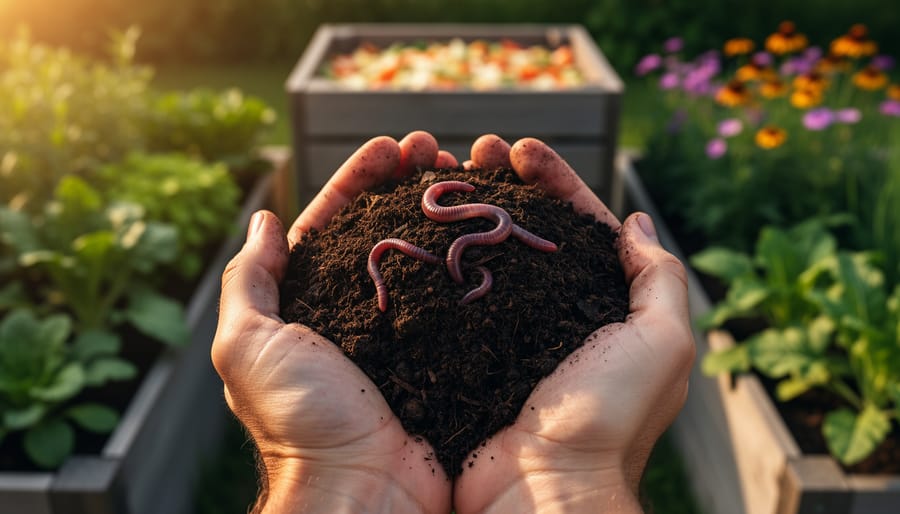
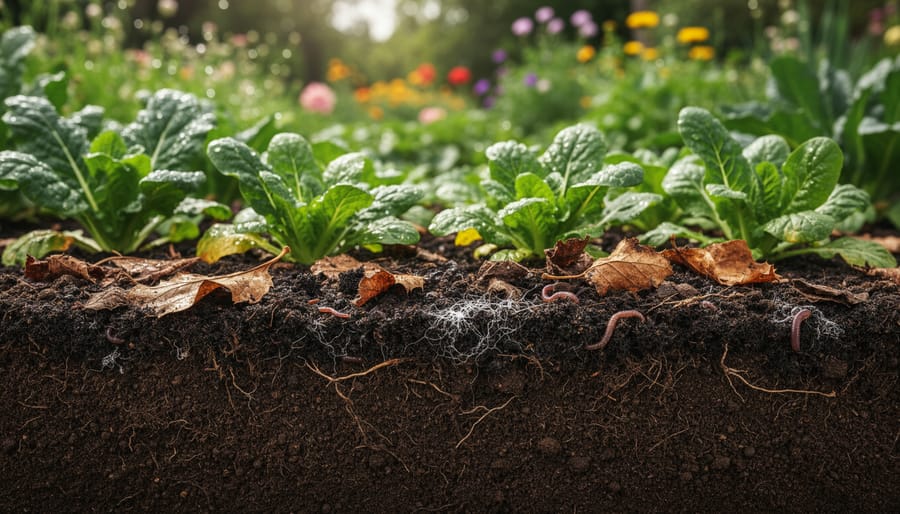
Think of your garden soil as a living, breathing entity that needs regular nourishment, especially when you’re asking it to perform year-round. The secret weapon? Organic matter and compost. These materials are absolute game-changers for four-season gardening, acting as natural insulators, moisture managers, and fertility boosters all at once.
Compost works wonders in every season. In spring and summer, it feeds your plants with slow-release nutrients. Come fall and winter, that same compost helps regulate soil temperature, preventing those damaging freeze-thaw cycles that can heave plants right out of the ground. I’ve seen firsthand how a two-inch layer of finished compost can keep my winter greens cozy even during cold snaps.
Cover crops deserve special mention here. Plant them in fall between harvest and spring planting, and they’ll protect your soil from erosion while adding valuable nitrogen and organic matter when you turn them under. Crimson clover and winter rye are particularly hardy choices that actually improve soil structure.
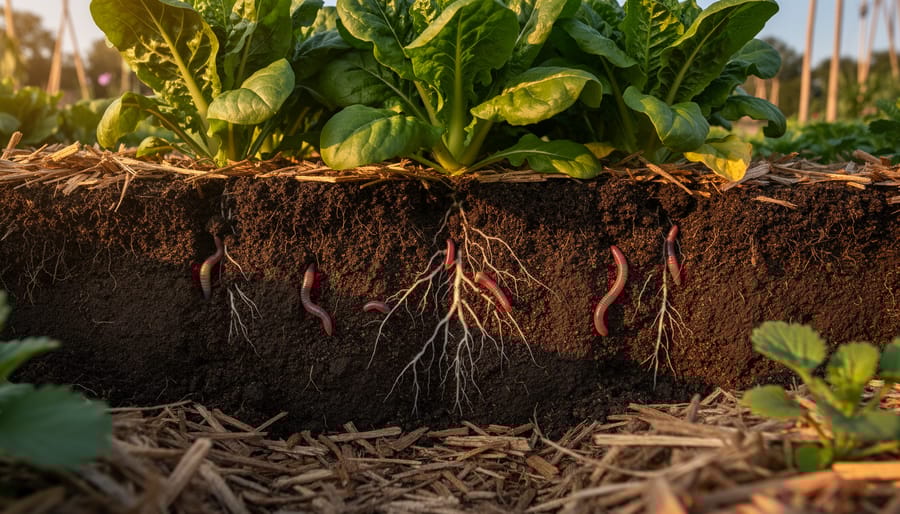
Mulch is your finishing touch. Apply organic mulches like straw or shredded leaves around plants in fall to insulate roots, maintain consistent moisture levels, and suppress weeds. As they break down, they feed the soil too. This triple-action approach means you’re constantly building soil health while protecting your garden investments through every seasonal challenge.
Protecting Soil During Extreme Weather
Your soil is the foundation of year-round gardening success, and protecting it during extreme weather keeps your garden resilient through every season. Let’s explore some practical strategies that work beautifully, no matter what Mother Nature throws your way.
When heavy rains threaten, erosion becomes your main concern. I’ve learned that keeping your soil covered is absolutely essential. Mulch acts like a protective blanket, cushioning the impact of raindrops and slowing water runoff. Apply 2-3 inches of organic mulch around plants, or better yet, keep cover crops growing year-round. They anchor soil with their roots while their foliage breaks the force of falling rain. On sloped areas, consider creating simple contour beds or swales that catch water and guide it gently across your garden rather than letting it rush downhill.
During drought periods, the same mulching strategy helps you conserve precious moisture. Deep watering less frequently encourages stronger root systems, and adding compost improves your soil’s water-holding capacity tremendously. Think of compost as a sponge that stores moisture for thirsty plants during dry spells.
Winter presents unique challenges, but don’t assume your soil biology goes completely dormant. Those beneficial microbes and earthworms remain active in milder winter periods. Protect them by maintaining that mulch layer, which insulates the soil and moderates temperature swings. Adding aged manure or compost in late fall gives them food to work with during warmer winter days. You might also try tarping unused beds, which keeps soil loose and workable while protecting its structure from harsh freeze-thaw cycles.
Water Management Across the Seasons
Water management looks dramatically different as the seasons shift, and understanding these variations is key to keeping your garden thriving year-round. I’ve learned through plenty of trial and error that what works in July might spell disaster in January, so let’s explore how to keep your plants perfectly hydrated no matter what Mother Nature throws your way.
During winter months, greenhouse and cold frame crops need surprisingly little water. The cooler temperatures and reduced sunlight mean plants aren’t actively growing as vigorously, so their water needs drop accordingly. I typically water my winter greens about once every five to seven days, checking soil moisture with my finger before making the call. Overwatering in winter can lead to fungal issues and root rot, so less is definitely more. Always water in the morning to allow any excess moisture to evaporate before temperatures drop at night.
As spring arrives, gradually increase watering frequency as plants wake up and days lengthen. This transition period requires close observation since weather can swing wildly between warm and cold. I keep a simple journal to track rainfall and adjust my watering schedule accordingly.
Summer presents the opposite challenge, especially with increasingly unpredictable heat waves becoming more common. Implementing water conservation strategies becomes essential. Mulching heavily around plants helps retain soil moisture, and watering deeply but less frequently encourages stronger root systems. I’ve found that soaker hoses or drip irrigation systems work wonderfully for efficient water delivery while minimizing evaporation.
Fall watering requires another adjustment as you transition crops and prepare beds for winter. Continue watering newly planted fall crops regularly until they’re established, but reduce frequency as temperatures cool. Rain barrels become your best friend throughout the year, capturing unpredictable precipitation for use during dry spells. By staying flexible and responsive to seasonal changes, you’ll develop an intuitive sense for what your garden needs when.
Common Challenges and How to Overcome Them
Even the most dedicated four-season gardeners encounter obstacles along the way. The good news? Most challenges have straightforward solutions once you know what to look for.
Unexpected freezes can be particularly nerve-wracking, especially during those unpredictable shoulder seasons. I learned this lesson the hard way when a late April frost caught me off-guard and damaged my newly transplanted seedlings. Now I keep row covers and old bedsheets on hand throughout spring and fall. If frost threatens, drape these protective layers over plants in the evening and remove them once temperatures rise. For cold frames and hoop houses, add an extra layer of insulation like bubble wrap or frost blankets during extreme cold snaps. Consider keeping gallon jugs of water inside your growing structures—they absorb heat during the day and release it at night, providing passive temperature regulation.
Pest management in protected growing spaces requires a different approach than outdoor gardens. The enclosed environment that keeps your plants warm also creates ideal conditions for aphids, whiteflies, and fungus gnats to thrive. Good air circulation is your first line of defense, so open vents on warmer days to prevent humidity buildup. Regular inspection helps you catch problems early—I make it a habit to check under leaves every few days. For persistent issues, managing pests naturally works wonderfully in enclosed spaces, where beneficial insects and organic sprays are highly effective.
When weather refuses to cooperate—whether through unexpected heat waves or prolonged cold spells—flexibility becomes essential. If winter proves milder than expected, take advantage by direct-seeding cold-hardy crops earlier. During harsh conditions, focus your energy on maintaining what you have rather than pushing new plantings. Sometimes the best strategy is simply riding out difficult weather while planning your next move.
Remember, experienced gardeners aren’t those who never face problems—they’re the ones who’ve learned to adapt and keep going. Each challenge teaches you something valuable about your specific climate and microclimate, making you better prepared for next season.
Starting Small: Your First Year-Round Garden
I remember my first attempt at year-round gardening like it was yesterday. I confidently planted twelve different varieties in late October, convinced I’d be harvesting mountains of vegetables all winter. Reality? Most of them struggled, and I learned a valuable lesson: starting small is the secret to success.
For your first year, I recommend beginning with just two or three cold frames or a single small hoop house, maybe 4 feet by 8 feet. This manageable size lets you learn the basics without feeling overwhelmed by maintenance or initial costs. You’ll quickly understand how temperature fluctuates, when to vent on sunny days, and how much water your plants actually need.
Focus on the foolproof champions: spinach, lettuce, arugula, and radishes. These hardy greens practically grow themselves through cooler months and forgive beginner mistakes. Add some kale if you’re feeling adventurous. These crops tolerate temperature swings, don’t mind a light frost, and reward you with harvests in just weeks.
Here’s a simple first-year plan: Start in late summer by planting your cold frames with lettuce and spinach. As you harvest through fall, add succession plantings every two weeks. By winter, you’ll have established greens that continue producing, even if slowly. Come spring, you’ll already be weeks ahead of traditional gardeners.
Keep your expectations realistic. Your winter lettuce might grow slower than summer crops, and that’s perfectly normal. You won’t feed your entire family year-round from one cold frame, but imagine the joy of harvesting fresh salad greens in January! That first winter harvest, however small, is worth celebrating. Each leaf you pick is proof that four-season gardening works, building your confidence for expanding next year.
Growing food year-round isn’t just possible—it’s becoming increasingly essential. As climate patterns shift and weather becomes less predictable, the skills you develop through four-season gardening transform from interesting experiments into valuable tools for resilience and food security. You’re not just extending your harvest; you’re building knowledge that adapts to whatever conditions come your way.
The beauty of four-season gardening is that you don’t need to master everything at once. Start small. Maybe it’s just a cold frame protecting your spinach through December, or a simple row cover experiment with winter lettuces. Each season teaches you something new about your particular microclimate, your soil’s behavior in different conditions, and which varieties thrive when temperatures drop.
I’ve talked with gardeners who initially felt intimidated by season extension techniques, only to discover that growing through winter became their favorite gardening time—fewer pests, less competition from weeds, and the pure satisfaction of harvesting fresh greens while snow falls outside.
Remember, every experienced year-round gardener started exactly where you are now. They experimented, learned from setbacks, and celebrated small victories. Climate challenges aren’t going away, but your ability to adapt and grow food in all seasons makes you more capable of weathering whatever comes next.
This season, choose one technique that excites you and give it a try. Build your resilience one planting, one season, and one harvest at a time. Your garden—and your future self—will thank you.