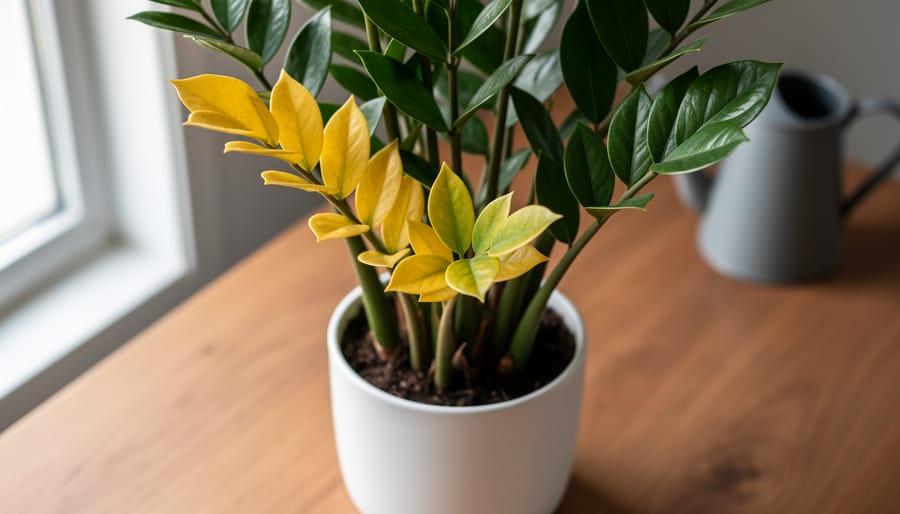
Check your ZZ plant’s stems and base for soft, mushy spots and dark discoloration—these are telltale signs of root rot, the most common disease affecting these otherwise bulletproof houseplants. Gently remove the plant from its pot and inspect the roots; healthy ones are white or light tan and firm, while diseased roots appear black, brown, and feel slimy to the touch. If you catch the problem early, trim away all affected roots with sterilized scissors, let the remaining healthy roots air dry for a few hours, and repot in fresh, well-draining soil.
Your ZZ plant’s resilience is one of its greatest qualities, but even these hardy plants can fall victim to fungal and bacterial diseases when conditions aren’t quite right. Overwatering is the culprit behind most ZZ plant health problems, creating the perfect environment for pathogens to thrive. The good news? Most diseases are preventable with proper care, and even sick plants can often make a full recovery when you act quickly.
In this guide, I’ll walk you through identifying every common ZZ plant disease, from root rot to leaf spot, and give you clear, step-by-step solutions to nurse your plant back to health. You’ll also learn the preventive care techniques that keep these gorgeous plants thriving for years to come.
Understanding Your ZZ Plant’s Natural Defenses
Here’s some good news that might ease your worries: ZZ plants are actually remarkably disease-resistant! These resilient beauties evolved in the drought-prone regions of eastern Africa, which gave them some impressive natural defenses that make them one of the toughest houseplants you can grow.
The secret lies in their thick, waxy leaves and robust rhizomes (those potato-like structures beneath the soil). These features help ZZ plants store water efficiently and create a natural barrier against many pests and pathogens. Think of them as the plant world’s version of built-in armor! Their slow-growing nature also means they’re not constantly producing tender new growth that diseases typically target.
In their natural habitat, ZZ plants thrive in well-draining rocky soil with minimal water and moderate light. When you replicate these conditions indoors through proper ZZ plant care, you’re working with their natural defenses rather than against them.
A healthy ZZ plant should have glossy, deep green leaves that stand upright, and firm rhizomes when you gently feel them through the soil. The stems should be sturdy, and any new growth emerges as bright lime-green shoots that gradually darken with age.
Understanding these natural strengths helps you recognize when something’s genuinely wrong versus normal behavior. For instance, occasional yellowing of the oldest bottom leaves is perfectly natural as the plant sheds them, not necessarily a sign of disease.

The Most Common ZZ Plant Disease: Root Rot
What Root Rot Looks Like
Root rot can be tricky to spot at first since it starts beneath the soil, but your ZZ plant will give you clear warning signs. The most obvious symptom is yellowing leaves that feel soft or droopy rather than firm and glossy. Unlike natural aging where only the oldest leaf yellows, root rot typically affects multiple leaves across the plant.
When you gently squeeze the stems near the soil line, they’ll feel mushy or hollow instead of firm. This is your plant literally rotting from the inside out. You might also notice a distinct unpleasant smell coming from the soil, similar to rotten eggs or decay. That odor is a telltale sign of bacterial activity breaking down the roots.
To check your plant’s roots without causing unnecessary stress, gently loosen the soil around the edges of the pot and carefully ease the root ball out. Healthy ZZ plant roots should be white or light tan and feel firm to the touch. Diseased roots appear dark brown or black, feel slimy, and may fall apart when you handle them.
Here’s a gentle way to inspect: water your plant a day before checking, as moist soil releases more easily from the roots. Work slowly and support the base of the stems as you lift. Even if things look concerning, remember that ZZ plants are remarkably resilient and can often bounce back with proper care.

Why Root Rot Happens
Root rot happens when your ZZ plant’s roots stay too wet for too long, creating the perfect environment for harmful fungi and bacteria to take over. Think of it like leaving your feet in wet socks all day – not comfortable and definitely not healthy! The most common culprit is overwatering, which many of us do with the best intentions because we want our plants to thrive.
When soil stays constantly soggy, the tiny air pockets that roots need to breathe get filled with water instead. Without oxygen, the roots become weak and vulnerable. This is when opportunistic fungi like Pythium and bacteria move in, literally eating away at the root tissue. It’s one of the most prevalent common plant diseases among houseplants.
Poor drainage makes things worse. If your pot doesn’t have drainage holes or you’re using heavy, compact soil that holds moisture like a sponge, water can’t escape. Contaminated potting soil can also introduce these harmful organisms right from the start. The good news? Understanding these causes means you’re already on your way to preventing root rot in the first place.
Saving a ZZ Plant with Root Rot
Good news! Even if your ZZ plant has root rot, there’s a very good chance you can save it. I’ve rescued several myself, and each time I’m amazed by how resilient these plants can be. The key is acting quickly and following a systematic approach.
Start by carefully removing your plant from its pot and gently shaking off excess soil. This might feel scary, but trust me, your plant is tougher than you think! Rinse the roots under lukewarm water so you can see what you’re working with. Healthy roots should be white or tan and firm, while rotted roots appear black, brown, and mushy.
Using clean, sharp scissors or pruning shears, cut away all the affected roots. Be ruthless here because leaving even small bits of rot behind can restart the problem. If the rot has spread into the rhizomes (those chunky potato-like parts), trim those sections too until you see healthy tissue. Don’t worry if you have to remove quite a bit – ZZ plants are incredibly forgiving and will bounce back.
Next, prepare a fresh pot with drainage holes and well-draining soil. A cactus or succulent mix works perfectly. Let the trimmed roots air dry for a few hours before repotting to prevent introducing moisture to fresh wounds.
Once repotted, place your plant in bright, indirect light and hold off on watering for about a week. This gives the roots time to heal. Going forward, water only when the soil is completely dry, usually every two to three weeks. Your ZZ plant will thank you with fresh, glossy growth in no time!
Leaf Spot Diseases That Affect ZZ Plants
Identifying Leaf Spot Problems
Not all brown spots on your ZZ plant signal disease, and learning the difference can save you from unnecessary worry. Natural aging causes the lowest, oldest leaves to yellow and eventually develop brown spots before dying off – this is perfectly normal and nothing to panic about.
Disease-related leaf spots, however, look distinctly different. Fungal leaf spots typically appear as dark brown or black circular marks, often with a yellow halo around them. These spots may start small but gradually expand and multiply across the leaf surface. If you notice the spots feel slightly mushy or have a water-soaked appearance, you’re likely dealing with a fungal or bacterial issue.
Bacterial leaf spots tend to be more irregular in shape and may have a greasy or wet look to them. They often spread rapidly when conditions are warm and humid. In contrast, brown tips or edges usually indicate watering issues or low humidity rather than disease.
Here’s your quick checklist: Are multiple leaves affected? Are spots spreading? Do they appear wet or sunken? If you answered yes to these questions, you’re probably looking at a disease problem rather than natural aging. The good news is that catching these signs early makes treatment much more effective, so your detective work is already paying off.

Treating and Preventing Leaf Spots
Good news – leaf spots are typically easier to tackle than root rot, and with the right approach, your ZZ plant can bounce back beautifully!
Start by removing any affected leaves at their base using clean, sharp scissors or pruning shears. This isn’t just about aesthetics; it prevents the problem from spreading to healthy foliage. I learned this the hard way with my first ZZ plant when I left spotted leaves hoping they’d recover – they didn’t, and the issue spread.
Air circulation is your next priority. ZZ plants growing in stuffy corners or overcrowded spaces are prime candidates for fungal infections. Move your plant to a spot with better airflow, but avoid placing it directly in front of fans or air conditioning vents. Sometimes simply spacing out your plant collection makes all the difference.
Adjusting your watering technique is crucial. Always water at soil level rather than overhead, keeping moisture off the leaves and stems. Those glossy leaves might look thirsty, but they prefer staying dry. Also, ensure you’re only watering when the top few inches of soil are completely dry – typically every two to three weeks.
For persistent fungal issues, fungicides can help, though they’re usually a last resort for ZZ plants. Look for products containing copper or neem oil, which are gentler and more beginner-friendly. Follow label instructions carefully, and apply in the evening to avoid leaf burn. Most gardeners, including expert horticulturist Maria Chen I interviewed, recommend trying cultural fixes first before reaching for treatments.
Remember, prevention beats treatment every time. Once you’ve addressed the immediate problem, maintain proper spacing, careful watering, and good light conditions to keep those spots from returning.
Pest-Related Disease Issues
While ZZ plants are remarkably resilient, they’re not entirely immune to pest problems. What many gardeners don’t realize is that these uninvited guests can do more than just damage leaves—they can actually open the door to serious disease issues that might otherwise never affect your plant.
Spider mites, mealybugs, and scale insects are the most common culprits you’ll encounter with ZZ plants. These tiny pests feed by piercing plant tissue and sucking out the sap, which weakens your plant considerably. Think of it like repeatedly poking tiny holes in your plant’s defense system. Each feeding site becomes a potential entry point for fungal and bacterial pathogens that would normally be kept at bay by the plant’s healthy outer layer.
I’ve seen this firsthand with a friend’s ZZ plant that developed a scale infestation. Within weeks, the weakened stems began showing signs of fungal infection—something that healthy ZZ plants typically resist with ease. The combination of pest damage and disease created a downward spiral that was much harder to reverse than dealing with either problem alone.
Mealybugs are particularly troublesome because they excrete honeydew, a sticky substance that encourages sooty mold growth. This black, powdery fungus doesn’t directly harm your plant, but it blocks sunlight and further stresses an already compromised ZZ plant.
The good news? Catching pest problems early makes all the difference. Check your plant regularly, especially where leaves meet stems—a favorite hiding spot for these pests. If you spot any suspicious activity, implementing effective pest management strategies immediately will protect your ZZ plant from developing those troublesome secondary infections.
Creating the Perfect Environment to Prevent Disease
The Watering Schedule That Keeps ZZ Plants Healthy
Here’s the golden rule for ZZ plant watering: when in doubt, wait it out. These resilient beauties thrive on neglect, and I can’t stress enough how less truly is more when it comes to keeping them hydrated.
During the growing season (spring and summer), water your ZZ plant only when the top two to three inches of soil feel completely dry. Stick your finger into the soil – if it feels even slightly moist, hold off. I typically find myself watering mine every two to three weeks, though your conditions may vary. In fall and winter, cut back dramatically to once a month or even less, as the plant enters dormancy.
The finger test is your best friend, but you can also lift the pot – a light pot means dry soil. Some experienced gardeners I’ve interviewed swear by moisture meters for beginners who want extra confidence. Whatever method you choose, remember that proper watering techniques make all the difference in preventing root rot.
When you do water, give the plant a thorough soak until water drains from the bottom, then empty the saucer. This encourages healthy root growth while preventing that dreaded waterlogged situation we discussed earlier.

Soil and Container Choices That Matter
Getting your ZZ plant’s foundation right is like giving it a health insurance policy against disease! The golden rule here is drainage, drainage, drainage. Choose a pot with drainage holes—this isn’t negotiable if you want to avoid root rot. As for materials, terracotta pots are fantastic because they’re breathable and wick away excess moisture, though plastic pots work perfectly fine if you’re careful with watering.
Your soil mix should be chunky and fast-draining. Standard potting soil alone is too dense for ZZ plants. I love making a simple DIY mix: combine two parts regular potting soil with one part perlite and one part coarse sand or orchid bark. This creates air pockets that roots adore while preventing water from sitting around too long.
Here’s a quick test: water your mix and watch how fast it drains. If water pools on top for more than a few seconds, add more perlite. Trust me, your ZZ plant will thank you with those gorgeous glossy leaves, and you’ll spend far less time worrying about fungal infections and root problems down the road!
Environmental Factors to Monitor
Your ZZ plant thrives in stable conditions, and understanding how environmental factors affect disease susceptibility is key to keeping it healthy. These resilient plants prefer bright, indirect light but tolerate low light surprisingly well. However, too much direct sunlight can stress the plant, making it vulnerable to issues. If you notice your ZZ plant struggling, check its lighting first.
Temperature stability matters more than you might think. ZZ plants do best between 65-75°F and dislike sudden temperature swings. Keep them away from drafty windows, heating vents, and air conditioning units. Cold drafts can weaken your plant’s defenses against disease.
Humidity is where ZZ plants really shine for busy plant parents. They tolerate typical household humidity levels of 30-50% beautifully, unlike many tropical plants. However, avoid placing them in bathrooms with excessive moisture, as this can encourage fungal growth.
Here’s a practical tip: if you live in a dry climate, your ZZ plant will actually be less prone to fungal diseases. In humid environments, ensure excellent air circulation around your plant. These simple disease prevention strategies work wonders for maintaining healthy ZZ plants year-round.
When to Worry and When to Relax
Here’s something that might ease your mind: ZZ plants are incredibly forgiving, and what looks like a crisis often isn’t! Before you panic, let’s separate normal plant behavior from genuine problems.
That single yellow leaf near the base? Probably just your plant shedding old growth to make room for new shoots. This is completely natural, especially if the rest of the plant looks healthy and vibrant. Think of it like trees losing leaves in autumn—it’s part of their life cycle.
Now, here’s when you should pay attention. If you’re seeing multiple yellowing leaves, mushy stems, or a sudden change in your plant’s appearance, it’s time to investigate. Brown tips alone usually point to watering issues rather than disease, while widespread spotting or fuzzy growth signals something more serious.
I like to use what I call the “three strikes” rule: if you notice three or more concerning symptoms happening together—like yellowing plus soft stems plus a funky smell—that’s your cue to take action.
Quick confidence-building checklist: Check the soil moisture by sticking your finger two inches deep. Gently wiggle the base—it should feel firm, not loose or wobbly. Look at the overall plant—does most of it still look glossy and upright? If you answered yes to these, you’re likely dealing with a minor issue that simple care adjustments can fix. Remember, ZZ plants are survivors by nature, so even if something’s wrong, you’ve got time to correct course without losing your green friend.
Here’s the good news: managing ZZ plant diseases is much more straightforward than you might think. With the basics of proper watering, good drainage, and a watchful eye, you’re already equipped to keep your ZZ plant thriving for years to come. Trust your instincts when something seems off with your plant. That little voice telling you the soil feels too wet or those leaves don’t look quite right? Listen to it.
Every gardener, no matter how experienced, has lost a plant or two along the way. I’ve spoken with master gardeners who still occasionally overwater, and seasoned plant collectors who’ve dealt with unexpected fungal outbreaks. These challenges are simply part of the learning journey, and each one teaches us to become better plant parents.
Your ZZ plant is remarkably resilient and forgiving. Even if you’ve made mistakes, most issues are reversible when caught early. Keep observing, stay curious, and don’t be too hard on yourself. The fact that you’re here, learning and seeking solutions, means you’re exactly the kind of caring gardener your plants need. Welcome to a wonderful community of plant lovers who are all growing and learning together.