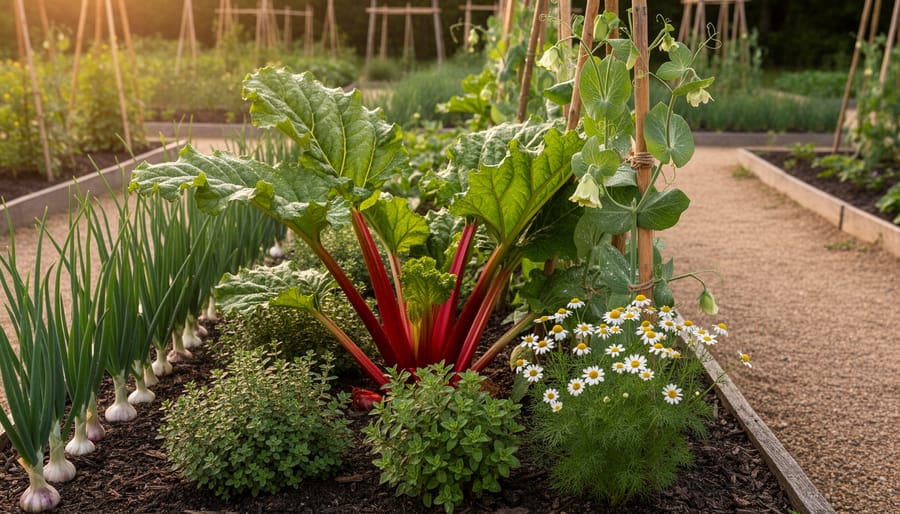
Rhubarb’s towering leaves and sprawling root system create unique growing conditions that smart gardeners can harness through strategic companion planting. Plant low-growing herbs like thyme, oregano, and chamomile beneath rhubarb’s canopy to create a living mulch that suppresses weeds while retaining soil moisture. Position nitrogen-fixing plants such as peas and beans near rhubarb to naturally enrich the soil, feeding your rhubarb without synthetic fertilizers. Surround your rhubarb patch with alliums like garlic, onions, and chives to deter common pests including aphids and beetles while maximizing garden space.
Understanding companion planting principles transforms rhubarb from a solitary garden resident into the centerpiece of a thriving mini-ecosystem. This perennial powerhouse offers shade, wind protection, and structural support for companion plants while benefiting from their pest-deterring properties and soil improvements.
The secret lies in choosing plants that thrive in rhubarb’s partial shade without competing for nutrients or space. Since rhubarb occupies the same spot for years, your companion choices create a permanent partnership that either flourishes or fails. Getting it right means less weeding, fewer pests, and healthier plants all around.
This guide reveals which companions work best based on practical experience and proven results, explains the science behind successful pairings, and identifies plants you should never grow near rhubarb. You’ll discover how to build a self-maintaining rhubarb guild that works harder while you work less.
Understanding Rhubarb’s Growing Needs
Before we dive into which plants make the best neighbors for your rhubarb, let’s talk about what rhubarb really wants from its home in your garden. Trust me, understanding these preferences will make all the difference when you’re selecting companion plants.
Rhubarb is a true perennial powerhouse that will stick around for years, often decades, once established. This long-term commitment means you’ll want to get the planting location right from the start. Unlike annuals that rotate each season, rhubarb creates a permanent presence in your garden bed.
When it comes to soil, rhubarb has some definite opinions. It thrives in rich, well-draining soil with plenty of organic matter worked in. Think of it as a heavy feeder that appreciates a good meal. The soil pH should ideally fall between 6.0 and 6.8, slightly acidic to neutral. Poor drainage is rhubarb’s enemy, as soggy roots can lead to crown rot.
Space is another critical factor. Each rhubarb plant needs about 3 to 4 feet of breathing room in all directions. Those massive leaves aren’t just for show; they’re solar panels that fuel those delicious stalks. This generous spacing requirement actually creates opportunities for companion planting underneath and around the perimeter.
As for sunlight, rhubarb is pleasantly flexible. While it performs best in full sun, producing the most robust stalks, it tolerates partial shade quite well. In fact, in warmer climates, some afternoon shade can be beneficial.
These characteristics matter tremendously when choosing companions. You’ll want plants that share similar soil preferences, won’t compete aggressively for nutrients, can handle the shade cast by those enormous leaves, and don’t mind being in the same spot year after year.
What Makes a Good Living Mulch for Rhubarb
Living mulch is one of those wonderful gardening techniques that sounds fancy but is actually quite simple. Instead of covering soil with wood chips or straw, you’re using low-growing plants as a living carpet around your rhubarb. Think of it as creating a miniature plant community where everyone has a role to play.
So what makes a plant a good living mulch candidate for rhubarb? First, it needs to stay low to the ground. You don’t want anything that will compete for sunlight with your rhubarb’s magnificent leaves. Ideal companions typically grow no more than six to eight inches tall, forming a dense mat rather than reaching upward.
Shallow roots are equally important. Rhubarb has an extensive root system that doesn’t appreciate competition in its space. The best living mulches spread horizontally near the soil surface, leaving the deeper layers to your rhubarb’s established roots.
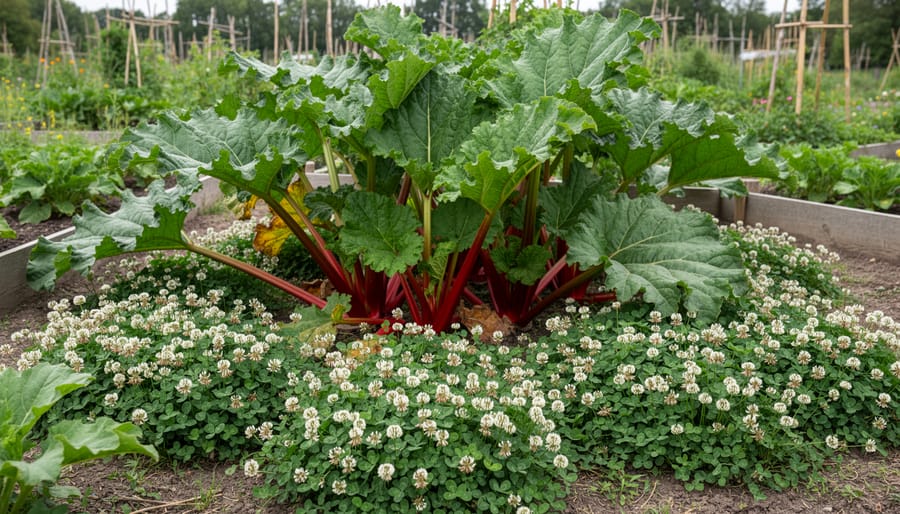
Here’s where it gets exciting: nitrogen-fixing plants like clover are absolute champions as living mulches. They pull nitrogen from the air and deposit it in the soil, essentially fertilizing your rhubarb naturally. This is particularly valuable since rhubarb is a heavy feeder that appreciates rich soil.
Finally, effective weed suppression is non-negotiable. A good living mulch should form a thick enough cover to prevent weeds from establishing themselves, saving you countless hours of weeding. When plants check all these boxes—low-growing, shallow-rooted, nitrogen-fixing, and weed-suppressing—they become invaluable partners in your rhubarb patch, creating a thriving, self-sustaining ecosystem.
Best Companion Plants to Grow with Rhubarb
Nitrogen-Fixing Living Mulches
One of my favorite companion planting strategies for rhubarb is using nitrogen-fixing living mulches. These clever little plants do double duty, enriching your soil while keeping weeds at bay and moisture locked in. Clover and vetch are particularly wonderful choices that work beautifully around rhubarb’s sprawling leaves.
When I interviewed master gardener Sarah Chen last spring, she explained why this partnership works so well. Legumes like clover have special nodules on their roots that capture nitrogen from the air and convert it into a form plants can use. Since rhubarb is a heavy feeder that appreciates nitrogen-rich soil, this natural fertilization system creates a win-win situation.
For practical planting, I recommend Dutch white clover or crimson clover as the easiest options for beginners. Simply scatter seeds around your established rhubarb plants in early spring or fall, lightly rake them into the soil, and keep the area moist until germination. The clover will fill in quickly, creating a lush carpet beneath the rhubarb canopy.
Managing these living mulches is refreshingly simple. Trim them back occasionally if they start climbing too enthusiastically up your rhubarb stems, and consider cutting them down in late fall to add nitrogen-rich organic matter directly to the soil. Hairy vetch works similarly but grows more aggressively, making it better suited for larger garden spaces. The beauty of this approach is that you’re feeding your rhubarb naturally while reducing your weeding and watering chores.
Aromatic Herbs That Protect and Enhance
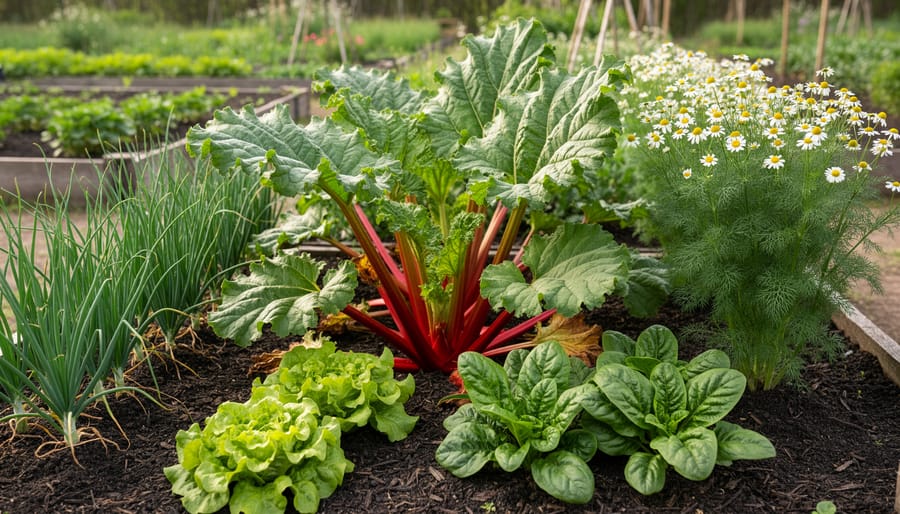
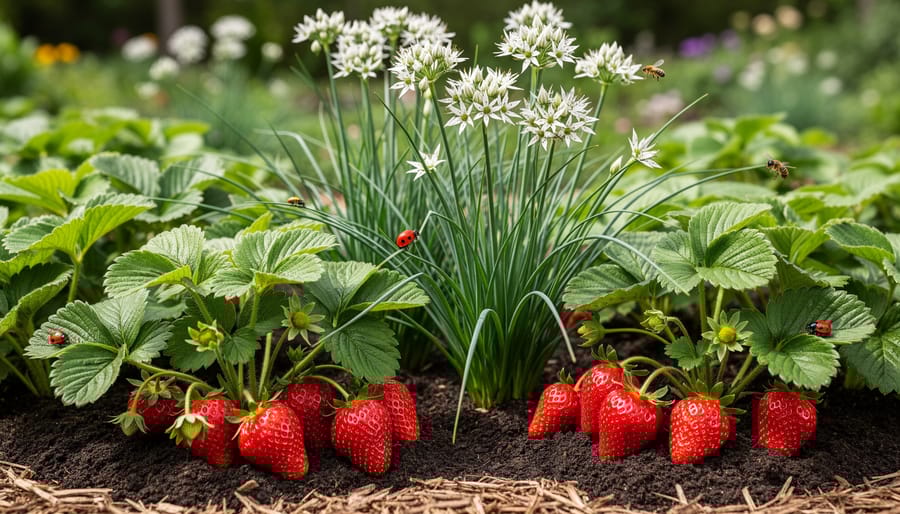
Aromatic herbs make wonderful neighbors for rhubarb, offering protection from pests while contributing to overall garden health. I’ve found that alliums—the onion family—are particularly effective companions. Garlic, chives, and onions all produce sulfur compounds that naturally repel aphids, beetles, and other soft-bodied insects that might otherwise trouble your rhubarb. These natural pest deterrents work quietly in the background while adding visual interest to your rhubarb patch.
Plant garlic cloves or chive divisions about 12 inches from your rhubarb crown in early spring or fall. Chives are especially lovely, producing pretty purple blooms that attract beneficial pollinators. I like to tuck them along the perimeter of my rhubarb bed, creating a fragrant barrier.
Chamomile is another fantastic option. This gentle herb releases calcium and other minerals as its roots break down, feeding the soil your rhubarb loves. Tansy, with its button-like yellow flowers, repels ants and beetles while adding a cottage garden charm. Plant both about 18 inches away to give everything room to flourish.
These beneficial herb combinations create a living ecosystem around your rhubarb. The key is moderation—you want companions that support without competing for resources. Start with just a few plants and observe how they interact with your rhubarb throughout the growing season.
Ground Cover Companions for Weed Suppression
Creating a living carpet around your rhubarb plants serves double duty by suppressing weeds and making your garden bed more productive. The key is choosing companions that stay low to the ground and won’t compete for the nutrients your hungry rhubarb crowns need.
Strawberries make ideal rhubarb neighbors, spreading cheerfully between the large leaves while their shallow roots occupy a different soil layer than rhubarb’s deeper root system. I’ve found that planting strawberries about 18 inches away from the rhubarb crown gives both plants room to thrive. You’ll get two harvests from one space, and the strawberry foliage creates dense coverage that weeds simply can’t penetrate.
Nasturtiums offer another fantastic option, particularly if you’re dealing with aphids. These vibrant, fast-growing plants cascade beautifully around rhubarb stalks, and their peppery leaves are edible too. They self-seed readily, returning year after year without any effort on your part. Just keep them from climbing directly onto your rhubarb.
Sweet alyssum and creeping thyme work wonderfully as edging plants that gradually fill in bare soil. Both stay extremely low, require minimal nutrients, and actually improve soil structure over time. I particularly love sweet alyssum because it attracts beneficial insects while creating a frothy white border that makes the rhubarb’s bold foliage stand out even more. These ground covers transform empty dirt into productive, weed-free garden space.
Beneficial Flowering Plants
Flowers bring more than beauty to your rhubarb patch—they’re hardworking companions that attract pollinators and beneficial insects. Marigolds are my top choice, particularly French marigolds, which release compounds that deter aphids and soil pests. I plant them in clusters around my rhubarb border, creating a cheerful barrier that’s as functional as it is pretty.
Calendula, with its bright orange blooms, attracts hoverflies and lacewings—tiny predators that feast on aphids and other troublesome insects. These self-seeding annuals return year after year, making them wonderfully low-maintenance. I also recommend nasturtiums, which act as trap crops by luring aphids away from your rhubarb. When garden expert Sarah Raven visited my plot, she noted how the combination of calendula and borage created a “pollinator highway” that benefited the entire garden. These flowering companions transform your rhubarb bed into a vibrant ecosystem while supporting healthy, productive plants.
Plants to Keep Away from Your Rhubarb
While rhubarb is generally an easygoing garden companion, certain plants just don’t play well together. Understanding these mismatches helps you avoid common planting mistakes and keeps your rhubarb thriving for years to come.
First on the avoid list are members of the brassica family, including cabbage, broccoli, and cauliflower. These heavy feeders compete aggressively with rhubarb for nutrients, particularly nitrogen and potassium. Since rhubarb already has substantial nutrient needs, this competition weakens both plants. I learned this the hard way when my rhubarb production dropped noticeably after planting cabbage nearby.
Sunflowers and corn are also poor companions, despite their charm. Their extensive root systems create fierce underground competition for water and nutrients. Additionally, their height casts unwanted shade on rhubarb plants, which prefer full sun exposure for optimal growth.
Steer clear of dock and sorrel, even though they’re botanical relatives of rhubarb. These plants share the same pest and disease vulnerabilities, particularly attracting beetles and aphids. Planting them together essentially creates a buffet for troublesome insects.
Melons, pumpkins, and other sprawling cucurbits present a different problem. Their aggressive vines can quickly overwhelm rhubarb crowns, blocking sunlight and creating damp conditions that encourage fungal diseases. The competition for space becomes problematic as both plants mature.
Finally, avoid planting other perennial vegetables like asparagus too close to your rhubarb. Both are long-lived plants with extensive root systems that need room to establish themselves. Crowding them together means constant competition and reduces productivity for both crops. Give each perennial its own dedicated space, and you’ll enjoy better harvests from both.
How to Plant and Maintain Your Rhubarb Living Mulch System
Getting your rhubarb living mulch system established is easier than you might think! I’ve found that spring or early fall are the ideal times to introduce companion plants, when both your rhubarb and new additions can settle in without extreme heat stress.
Start by assessing the space around your rhubarb crowns. You’ll want to maintain at least 18-24 inches of clear ground immediately surrounding the base of each plant. This breathing room prevents competition for nutrients and makes harvesting those gorgeous stalks much easier. Think of it as your rhubarb’s personal space bubble!
For planting your companions, begin with the taller, more substantial plants like comfrey or horseradish. Position these 24-30 inches away from your rhubarb crown, placing them where they won’t block sunlight to lower-growing companions. I like to plant comfrey on the north or east sides when possible. Dig holes twice the width of your transplant’s root ball and amend with compost before settling them in.
Next, add mid-height plants like garlic or chives in a loose ring around the outer edge, spacing them 8-12 inches apart. Finally, tuck in low-growing options like strawberries or nasturtiums to fill gaps, allowing 6-8 inches between plants. Remember, living mulch should create a tapestry, not a crowded mess.
Water everything thoroughly after planting and apply a light layer of organic mulch to help retain moisture while your companions establish. During the first season, monitor soil moisture weekly and water during dry spells.
For ongoing maintenance, resist the urge to overfeed. These plant communities actually thrive with minimal intervention. Each spring, top-dress with a 2-inch layer of compost around the entire planting area. Remove any dead foliage in late fall, but leave perennial companions undisturbed. Divide overcrowded companions every 3-4 years to maintain balance and vigor in your system.
Real Results: What I’ve Learned from My Rhubarb Patch
I’ve been growing rhubarb for eight seasons now, and my companion planting journey has been full of both delightful surprises and humbling lessons. My biggest success? Planting garlic cloves around my rhubarb crowns in fall. Not only did the garlic deter aphids beautifully, but harvesting it in early summer gave my rhubarb the extra breathing room it needed during its peak growing period. These proven plant partnerships truly transformed my patch.
My most memorable failure happened when I enthusiastically planted beans too close to my rhubarb’s drip line. I thought I was being clever, but the rhubarb’s massive leaves shaded them completely, and the beans produced almost nothing. Lesson learned: respect that rhubarb canopy and give it adequate space.
What works consistently well for me is creating a living border using chives and nasturtiums about eighteen inches from the rhubarb’s base. The chives bloom gorgeously in spring, while nasturtiums trail throughout summer, acting as a trap crop for aphids. I’ve also had wonderful results interplanting strawberries on the sunnier side of my patch, where they get morning light before the rhubarb leaves fully expand.
My advice? Start small with just two or three companion plants, observe how they interact with your specific rhubarb variety and microclimate, then expand from there. Every garden tells its own story.
Companion planting with living mulches transforms your rhubarb patch from a simple growing space into a thriving, self-sustaining ecosystem. By choosing plants that naturally suppress weeds, retain moisture, and enrich the soil, you’re working with nature rather than against it. The beauty of this approach is that there’s no single perfect formula—what works brilliantly in a cool coastal garden might need tweaking in a hot, dry climate.
I encourage you to start small and experiment. Try planting a few clover seeds around your rhubarb this spring, or tuck some nasturtiums along the edges. Keep notes on what thrives and what struggles in your specific conditions. You might discover that white Dutch clover becomes your best friend for moisture retention, or that calendula attracts beneficial insects you never knew you needed.
The sustainable benefits speak for themselves: less time weeding, reduced water usage, healthier soil year after year, and a garden that practically takes care of itself once established. Your rhubarb will reward your efforts with vigorous growth and abundant harvests. Remember, every garden is unique, and finding your ideal companion combinations is part of the adventure. Happy planting!