Design garden pathways at least 48 inches wide to accommodate wheelchairs and walkers comfortably, using firm, stable surfaces like decomposed granite or smooth concrete with a non-slip finish. This width allows two people to walk side-by-side or pass each other easily, creating opportunities for conversation and connection during garden visits.
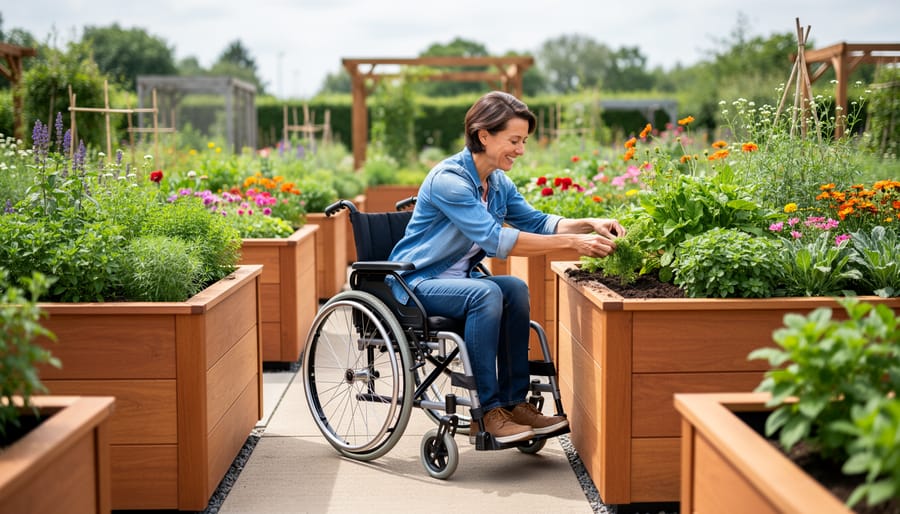
Install raised beds between 24 and 32 inches high with wide edges for seating, enabling gardeners with limited mobility to reach plants without bending or kneeling. Position these beds within arm’s reach from pathways, keeping the planting depth no more than 18 inches from the bed’s edge so everyone can participate in planting, harvesting, and enjoying the sensory rewards of growing.
Incorporate multi-sensory elements at varying heights to engage visitors of all abilities. Plant fragrant herbs like lavender and rosemary near seating areas, add textured foliage such as lamb’s ear at touch-height, and include wind chimes or water features for auditory interest. These layers of sensory experience transform your garden into a therapeutic space that welcomes and nourishes everyone who enters.
Universal design isn’t about creating separate “accessible” spaces—it’s about crafting gardens where every visitor naturally feels included. Whether you’re retrofitting an existing garden or starting fresh, these principles enhance everyone’s experience while ensuring no one faces barriers to enjoying nature’s healing power. The beauty of universal design lies in its simplicity: when we design for the widest range of abilities, we create better gardens for all.
What Universal Design Really Means in Your Garden
The Seven Principles That Transform Your Space
Creating an accessible garden starts with understanding seven powerful principles that work together like a well-tended ecosystem. Let me walk you through each one with practical examples you can implement today.
Equitable use means everyone can enjoy your garden equally. Install raised beds at varying heights, from 24 inches for seated gardeners to 36 inches for those standing. Include ground-level beds too, so everyone finds their perfect spot regardless of mobility.
Flexibility in use acknowledges that we all garden differently. Design paths wide enough for wheelchairs, walkers, or simply two friends strolling side-by-side. Provide both sunny and shaded seating areas, and offer tools with interchangeable handles that work for different grip strengths.
Simple and intuitive design eliminates confusion. Use clear, pictorial signs at plant markers. Create logical layouts where the toolshed sits near the potting bench, and the water source connects directly to thirsty beds.
Perceptible information reaches everyone through multiple senses. Combine visual plant labels with textured markers or braille. Edge pathways with contrasting colors and materials so borders are obvious to everyone, including those with low vision.
Tolerance for error means forgiving design. Install slip-resistant surfaces on paths and around water features. Use rounded edges on raised beds instead of sharp corners, and place thorny plants away from main walkways.
Low physical effort keeps gardening joyful, not exhausting. Choose lightweight containers, install drip irrigation to reduce watering tasks, and position frequently used items within easy reach without bending or stretching.
Appropriate size and space for approach ensures comfortable access. Maintain 5-foot turning radiuses at path intersections, keep 48 inches of clear space in front of raised beds, and ensure gates accommodate mobility devices with 36-inch minimum widths.
Beyond Ramps: The Full Spectrum of Accessibility
True accessibility goes far beyond installing a ramp at the garden entrance. Through thoughtful landscape design, we can create spaces that welcome everyone, regardless of their physical, sensory, cognitive, or emotional needs.
For those with visual impairments, texture becomes a language all its own. Incorporate plants with distinctive tactile qualities like lamb’s ear, ornamental grasses, and architectural succulents. Use contrasting colors between pathways and planting beds, and consider adding fragrant plants at nose height to create sensory landmarks that help with navigation.
Sound plays a vital role for visitors with hearing differences. Wind chimes, rustling grasses, and water features provide auditory cues while creating a calming atmosphere. However, be mindful that some individuals on the autism spectrum may find certain sounds overwhelming, so include quiet zones without these elements.
Raised beds at varying heights accommodate wheelchair users and those who struggle with bending. Consider adding seating areas every 50 feet along pathways, allowing visitors to rest and enjoy the space at their own pace. This benefits not only those with mobility challenges but also older adults experiencing age-related changes.
For cognitive accessibility, use clear signage with simple language and visual symbols. Create predictable pathways with obvious beginnings and ends. Some people benefit from enclosed spaces that feel secure, while others prefer open areas that reduce anxiety.
Remember, what helps one person often benefits many others, creating truly inclusive gardens where everyone feels welcome and valued.
Pathways That Actually Work for Real People
Width, Surface, and Slope Considerations
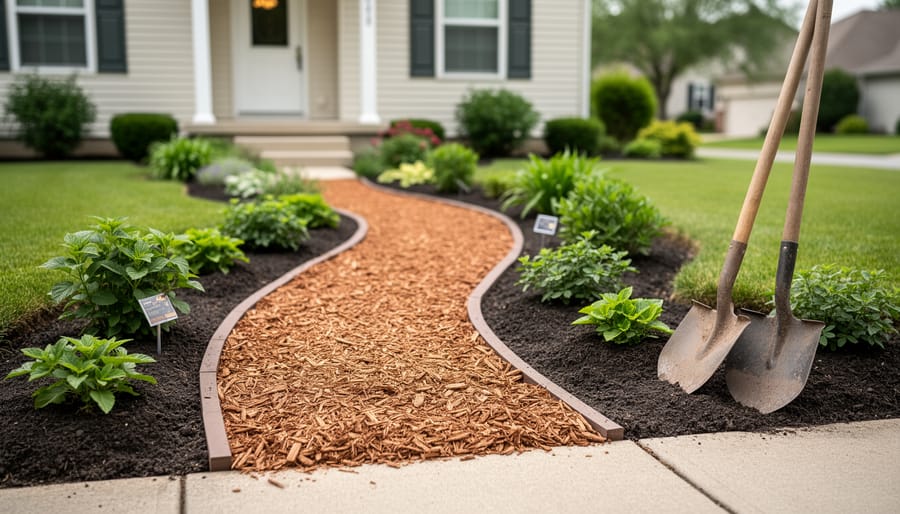
Creating pathways that everyone can navigate comfortably starts with getting the measurements right. For therapeutic gardens, aim for a minimum width of 48 to 60 inches, which allows wheelchair users to turn around easily and permits two people to walk side by side. If you’re working with space constraints, 36 inches is the absolute minimum, but wider is always better for creating that welcoming, inclusive feel.
The surface material you choose makes all the difference in accessibility. Let’s compare a few popular options. Concrete pavers offer excellent stability and durability, with minimal maintenance required. They drain well and provide smooth wheelchair navigation, though they can be pricey upfront and may crack in freeze-thaw cycles. Decomposed granite creates a natural, softer look that’s easier on the budget, but it requires regular maintenance and can wash away during heavy rains. You’ll also need edging to keep it contained. Rubber surfaces, made from recycled materials, provide wonderful cushioning for anyone prone to falls and offer superior traction when wet. However, they’re typically the most expensive option and can heat up significantly in direct sun.
Slope considerations are crucial for safe access. Keep pathways at a maximum 5 percent grade, which translates to one foot of rise for every 20 feet of length. Anything steeper requires handrails and rest areas every 30 feet. These rest spots should include level landing areas, at least 60 by 60 inches, where visitors can catch their breath and simply enjoy the garden surroundings.
Creating Comfortable Journey Points
Creating rest points throughout your garden isn’t just thoughtful—it’s essential for making your space truly accessible to everyone. I learned this lesson when my neighbor, who uses a walker, mentioned she loved visiting my garden but could only explore half of it before needing to head home. That conversation changed how I designed outdoor spaces forever.
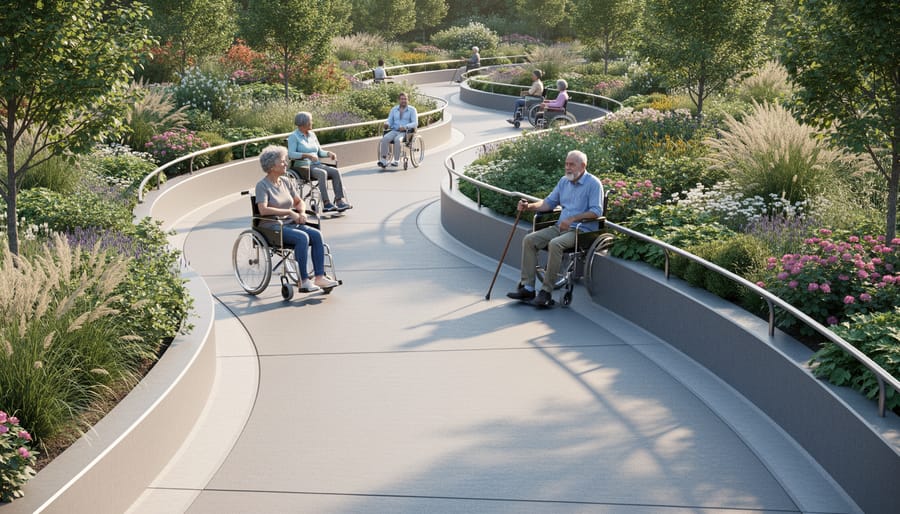
Start by placing benches or rest areas every 50 to 100 feet along main pathways. This distance works well for people with limited stamina, mobility aids, or those who simply want to pause and appreciate their surroundings. Choose benches with backs and armrests, positioned at a height of 17 to 19 inches, making it easier for people to sit down and stand up comfortably.
Shade structures are equally important, especially in warmer climates. Consider pergolas, large umbrellas, or strategically planted trees near seating areas. These provide relief from sun exposure and make the garden usable during more hours of the day.
Here’s a game-changer: design circular routes whenever possible. Loop paths eliminate the need for tight turns or backing up, which can be challenging for wheelchair users or anyone with mobility aids. A continuous path also creates a sense of journey and discovery, encouraging visitors to explore without worrying about retracing their steps or finding enough space to turn around.
If your garden layout requires dead-end paths, include a turning circle with at least a 5-foot diameter at the end, allowing wheelchairs and mobility scooters to rotate comfortably.
Raised Beds and Vertical Gardens That Bring Plants Within Reach
The Sweet Spot: Height and Depth Measurements
Getting the dimensions right makes all the difference between a garden bed that welcomes everyone and one that creates unnecessary barriers. Let me share some measurements that have proven successful in countless therapeutic gardens I’ve visited.
For wheelchair users and seated gardeners, the sweet spot sits between 24 and 30 inches high. This range allows comfortable access without awkward reaching or shoulder strain. I’ve watched gardeners light up when they can finally tend plants at eye level rather than bending uncomfortably. Standing gardeners typically prefer beds around 36 inches tall, which saves backs and knees from excessive bending.
Now here’s the crucial part many people overlook: depth matters just as much as height. From a seated position, most people can comfortably reach about 24 inches across a bed. If you’re designing a bed accessible from both sides, you can go up to 48 inches wide, but single-sided beds should max out at that 24-inch depth. Trust me, anything deeper becomes frustrating quickly.
Don’t forget knee clearance underneath raised beds. Wheelchair users need at least 27 inches of clearance height and 30 inches of width to roll up close. The clearance should extend at least 19 inches deep under the bed. These measurements transform a garden from merely present to genuinely welcoming.
Material Choices and Edge Design
Choosing the right materials for your accessible raised beds makes all the difference in creating a space that’s both safe and inviting. Untreated cedar and composite materials are excellent choices—they’re durable, splinter-free, and won’t leach chemicals into your soil. I always recommend avoiding pressure-treated lumber in food gardens, especially when people will be touching surfaces frequently.
The edges of your beds deserve special attention. Design them with a flat, smooth cap at least 4 inches wide. This creates a comfortable resting spot for arms while planting or weeding, and it can support some weight if someone needs to sit briefly. Rounded edges are gentler on forearms than sharp corners—your body will thank you after a long gardening session!
Think beyond traditional raised beds too. Vertical gardening systems open up wonderful possibilities for people with limited reach or mobility. Wall-mounted planters, tiered shelf systems, and tower gardens bring plants to comfortable heights while requiring less bending. These options also integrate beautifully into low-maintenance garden design, maximizing space while minimizing physical strain.
Remember, the goal is creating a garden that feels welcoming and manageable for everyone who enters it. With thoughtful material selection, you’re building a space that will serve gardeners well for years to come.
Sensory Elements That Engage Every Visitor
Texture, Fragrance, and Sound in Plant Selection
A truly accessible garden engages all the senses, creating memorable experiences for everyone who visits. When selecting plants, think beyond just visual appeal and consider how different textures, fragrances, and sounds can enrich the garden experience.
For tactile interest, fuzzy lamb’s ear is a universal favorite that practically begs to be touched. Ornamental grasses offer graceful movement and varying textures, from fine and feathery to bold and architectural. Position these sensory plants along pathway edges where they’re easily accessible to all visitors.
Fragrant plants add another delightful dimension to your space. Lavender, rosemary, and various mint varieties release their aromas when brushed against or gently touched. Here’s a key accessibility tip: place these aromatic plants at nose-height for seated visitors, typically around 24 to 36 inches from ground level. Raised beds and containers work beautifully for this purpose.
Don’t overlook the power of sound in the garden. Ornamental grasses create soothing rustling sounds in the breeze, while plants with interesting seed pods, like money plant or poppy, add gentle rattling notes. These auditory elements help visitors with visual impairments navigate and enjoy the space more fully.
During my conversation with accessible garden designer Maria Chen, she emphasized that multisensory plantings transform gardens from places to simply look at into interactive spaces that welcome everyone to fully participate and connect with nature.

Water Features and Wind Elements
Water features serve a dual purpose in accessible gardens—they create soothing soundscapes while acting as auditory landmarks that help visually impaired visitors navigate independently. I’ve found that recirculating fountains with adjustable flow rates work beautifully, allowing you to customize the sound intensity from a gentle trickle to a more robust splash. Position these features at key decision points along pathways, creating a natural wayfinding system.
Consider installing your water feature at varying heights to accommodate visitors in wheelchairs. A tiered fountain with basins at 18 inches and 30 inches allows everyone to touch and interact with the water safely. The therapeutic benefits are remarkable—the negative ions produced by moving water can reduce stress and improve mood.
Wind elements add another sensory dimension without requiring maintenance. Bamboo wind chimes produce deep, resonant tones, while metal chimes offer brighter sounds. Place them where natural breezes are common but not overwhelming. Kinetic sculptures, like wind spinners or mobiles, provide visual interest and create subtle sounds as they move.
One garden designer I spoke with shared how she combines low-pitched chimes near rest areas and higher-pitched ones at garden entrances, creating an intuitive sound map. This thoughtful layering transforms your garden into a multisensory haven that welcomes everyone.
Lighting and Wayfinding for Safety and Independence
Illumination Without Glare
Thoughtful garden lighting design makes all the difference when creating an accessible therapeutic space. The goal is to illuminate pathways clearly without creating harsh glare that can be disorienting, especially for visitors with visual impairments or cognitive conditions.
I’ve found that soft, downward-facing fixtures work beautifully along walkways. They cast light where it’s needed without shining directly into eyes. Solar-powered path lights have come a long way in recent years and offer an eco-friendly solution that requires no complicated wiring. For more reliable brightness, low-voltage LED systems provide consistent illumination and use minimal energy.
Here’s something many gardeners overlook: color temperature matters tremendously. Warm white lights around 2700-3000K create a welcoming atmosphere and reduce eye strain, while cooler temperatures above 4000K can feel harsh but improve visibility for tasks. I typically recommend warmer tones for seating areas and slightly cooler options for active pathways.
Position lights to minimize shadows on steps and level changes, as these shadows can create confusion about depth. Spacing fixtures every six to eight feet usually provides adequate coverage without overwhelming the senses.
Signs, Markers, and Tactile Cues
Clear wayfinding makes your therapeutic garden welcoming for everyone. Think of signage as your garden’s friendly guide, helping visitors navigate confidently and safely.
Start with large-print signs featuring high-contrast color combinations—black text on white or yellow backgrounds work beautifully. Position them at eye level for both standing and seated visitors. Adding braille labels beneath written text ensures everyone can identify plant names, path directions, and special garden features independently.
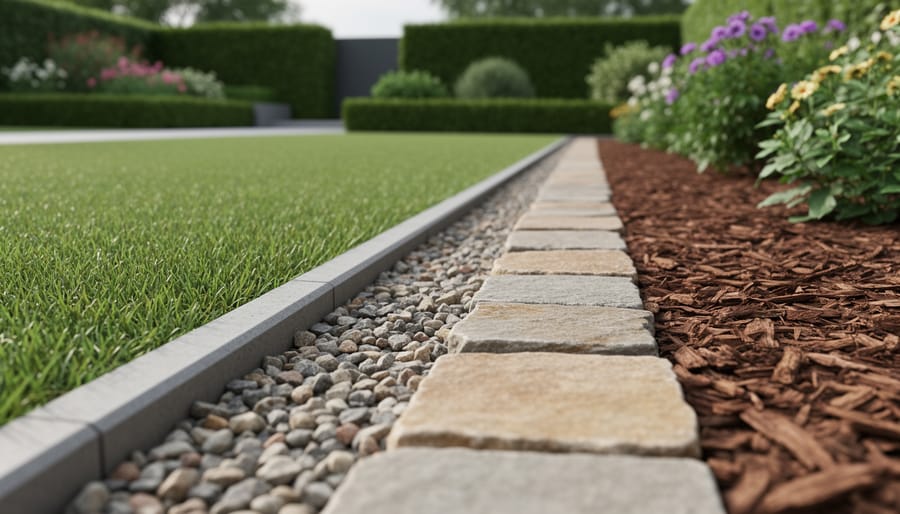
Tactile cues create navigation magic underfoot. Consider bordering main pathways with a distinctive texture—perhaps smooth pavers alongside rougher decomposed granite—so visitors can feel the transition. Landscape designer Maria Chen shared with me how she uses brick edging along one side of paths, creating a tactile “handrail” at ground level that guides visitors naturally.
Color contrast isn’t just attractive; it’s functional. Paint raised bed edges in colors that stand out against the soil and surrounding landscape. Use contrasting tones where paths meet lawns or where steps change elevation. These visual cues help those with low vision perceive depth and boundaries clearly, preventing trips and creating confidence to explore freely.
Therapeutic Features That Promote Healing and Wellbeing
Quiet Zones and Social Spaces
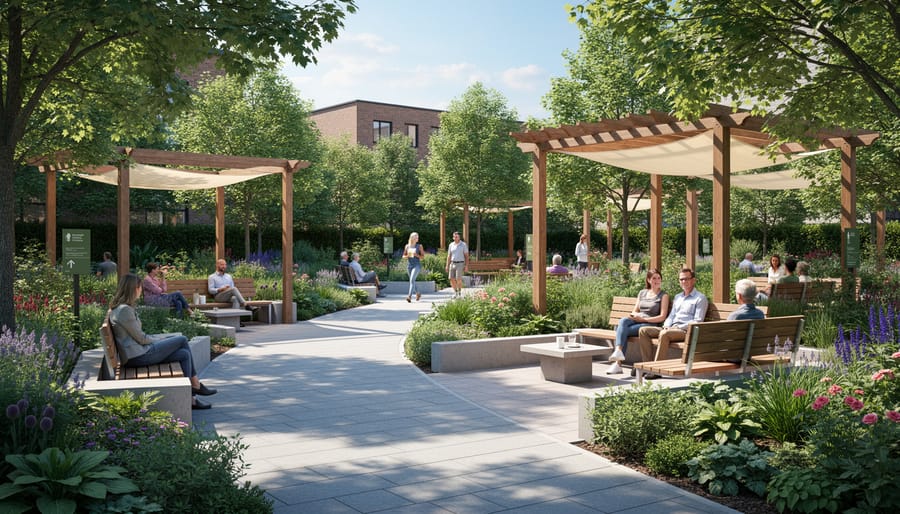
Every therapeutic garden needs breathing room—spaces where visitors can choose their own adventure, whether that’s quiet reflection or cheerful conversation with friends. Think of these zones as the garden’s personality spectrum, offering something for every mood and need.
For peaceful retreat areas, consider creating intimate garden rooms using tall hedges, trellises covered in climbing roses, or simple wooden screens. These naturally enclosed spaces provide visual and auditory privacy without feeling closed off. A small pergola with hanging baskets overhead creates a cozy ceiling while maintaining an open, airy feel. I’ve found that even a curved bench tucked behind fragrant lavender plants can become someone’s favorite thinking spot.
On the flip side, your social spaces should feel welcoming and inclusive. An arbor-covered gathering area with a circular seating arrangement naturally encourages conversation. Keep pathways wide enough—at least 60 inches—so wheelchair users can easily join the group. Add movable chairs alongside fixed benches to accommodate different comfort needs and positioning preferences.
The magic happens when you position these zones thoughtfully. Place quiet areas away from main pathways, perhaps screened by ornamental grasses that whisper in the breeze. Site your social hub near the garden entrance where it feels accessible and inviting. This intentional balance between stimulation and calm lets each visitor find exactly what they need.
Activity Areas for Different Abilities
Creating activity zones that welcome everyone transforms your garden into a truly inclusive space. Consider designating separate areas for different engagement levels—perhaps a gentle walking path with exercise stations, a seated horticultural therapy zone, and an adaptive raised bed area where visitors can work at their own pace.
Accessible tool storage makes all the difference. Install pegboards or magnetic strips at multiple heights, from 30 inches for wheelchair users to 54 inches for standing gardeners. Label each tool clearly with both text and images, so everyone knows exactly where things belong.
Potting benches deserve special attention. I’ve seen remarkable success with multi-height designs featuring work surfaces at 28-32 inches for seated gardeners and 36-42 inches for those who prefer standing. Add knee clearance of at least 27 inches underneath, and you’ve created a workspace that truly serves everyone.
Don’t forget practical touches like cushioned kneeling pads, long-handled tools with ergonomic grips, and container gardens at varying heights. These thoughtful additions ensure that gardening remains joyful and accessible, regardless of physical ability or stamina levels.
Practical Tips for Retrofitting Your Existing Garden
Quick Wins That Make Immediate Impact
You don’t need a complete overhaul to transform your yard into a more accessible space. Start with strategic seating by placing sturdy benches every 30 to 50 feet along pathways, giving everyone a chance to rest and enjoy the surroundings. Upgrade path surfaces to firm, slip-resistant materials like decomposed granite or textured concrete that accommodate wheelchairs and walkers while remaining stable in wet weather.
Consider converting just one raised bed to a comfortable working height of 24 to 30 inches, making it accessible from a seated position. This single modification can make gardening possible for someone who might otherwise struggle. Install grab bars near steps and transitions between levels, painting them in contrasting colors so they’re easy to spot.
Better lighting makes an enormous difference for visitors with low vision. Add solar path lights or low-voltage LED fixtures to illuminate walkways and work areas, reducing tripping hazards and extending usable hours. These straightforward changes create immediate improvements in comfort and safety, welcoming more people into your garden space without major construction or expense.
Long-Term Improvements Worth Planning
Creating a truly accessible garden often requires larger projects that take time and investment. Don’t let this discourage you! Breaking improvements into manageable phases makes them achievable for most budgets.
Start by widening main pathways to at least 48 inches, allowing wheelchair users and those with mobility aids to navigate comfortably. If your garden has slopes, consider regrading problem areas to achieve gentle 1:20 ratios or installing switchback paths that reduce steepness. These earth-moving projects are best tackled during dry seasons when soil is easier to work.
Installing accessible water sources like lever-handle spigots at multiple heights can be phased in as you upgrade irrigation systems. Similarly, adding covered pavilions or pergolas provides essential shade and weather protection, perfect for multi-season planning when budgets allow.
Document your vision in a garden planning journal, sketching layouts and noting which improvements matter most to your garden’s users. Prioritize changes that remove immediate barriers first, then layer in comfort features over subsequent years. Many gardeners find spring and fall ideal for major construction, preserving summer months for enjoying the space while work continues around its edges.
Real Gardens, Real Impact: Interview Insights
I recently had the pleasure of speaking with Sarah Chen, a landscape designer who has spent fifteen years creating accessible gardens for rehabilitation centers, senior living communities, and private homes. Her passion for this work shines through every project she touches.
“My breakthrough moment came when I redesigned a therapy garden for a stroke recovery center,” Sarah shares. “We installed raised beds at three different heights—24, 30, and 36 inches—to accommodate wheelchair users, those who preferred standing, and everything in between. But the real magic happened when we added a vertical herb wall. Patients who couldn’t bend down could still experience the joy of pinching fresh basil and rosemary. I watched people who hadn’t smiled in weeks light up when they touched those plants.”
Sarah emphasizes that accessible design isn’t about making gardens look clinical or institutional. “One family wanted a garden for their daughter who uses a mobility device. We created 4-foot-wide pathways with a smooth, firm surface, but we edged them with fragrant lavender and thyme. The paths became part of the garden’s beauty, not just a functional element.”
Her most important lesson? Start with conversations, not blueprints. “I always ask, ‘What do you want to feel in your garden? What activities matter most?’ One client mentioned missing the sound of water. We installed a recirculating fountain with an easy-access shut-off valve at waist height. Simple adjustments can restore independence and joy.”
When I ask about common mistakes, Sarah doesn’t hesitate. “People often focus only on wheelchair access and forget about other needs. Consider visual impairments, limited grip strength, or sensitivity to sun exposure. Good design layers solutions—tactile plant markers help everyone, not just those with vision challenges.”
Her encouragement to anyone starting this journey is heartfelt: “You don’t need to renovate everything at once. Replace one traditional bed with a raised version. Widen a single pathway. Add a bench with armrests. Each small change opens doors for someone. I’ve seen gardens transform lives—giving people back their connection to nature, their sense of purpose, and their dignity. That’s worth every effort.”
Here’s the truth about accessible garden design: it isn’t a specialized subset of gardening or an optional extra feature. It’s simply thoughtful, welcoming design that opens the door wider, inviting more people to experience the profound joy and healing that gardens offer.
You don’t need to overhaul your entire space tomorrow. Start with one meaningful improvement. Maybe that’s adding a comfortable bench along your main pathway, widening a gate by twelve inches, or choosing containers at varied heights. Each small change creates a ripple effect, making your garden more inviting not just for people with mobility challenges, but for aging parents, pregnant friends, children, and anyone recovering from injury or surgery.
The beauty of universal design is that it benefits everyone. Those wider paths? They’re easier for wheelbarrows too. Raised beds? They save everyone’s backs. Good lighting and clear signage? They help all your visitors feel confident and welcome.
When we create accessible gardens, we’re saying something powerful: you belong here. This space was designed with you in mind. Gardens have always been places of connection, healing, and growth. By embracing accessibility, we multiply that positive impact exponentially, ensuring these green spaces truly serve their communities.
Your garden can be a place where everyone, regardless of ability, can dig their hands into soil, harvest fresh tomatoes, or simply sit surrounded by beauty. That’s not just good design. That’s gardening at its very best.